

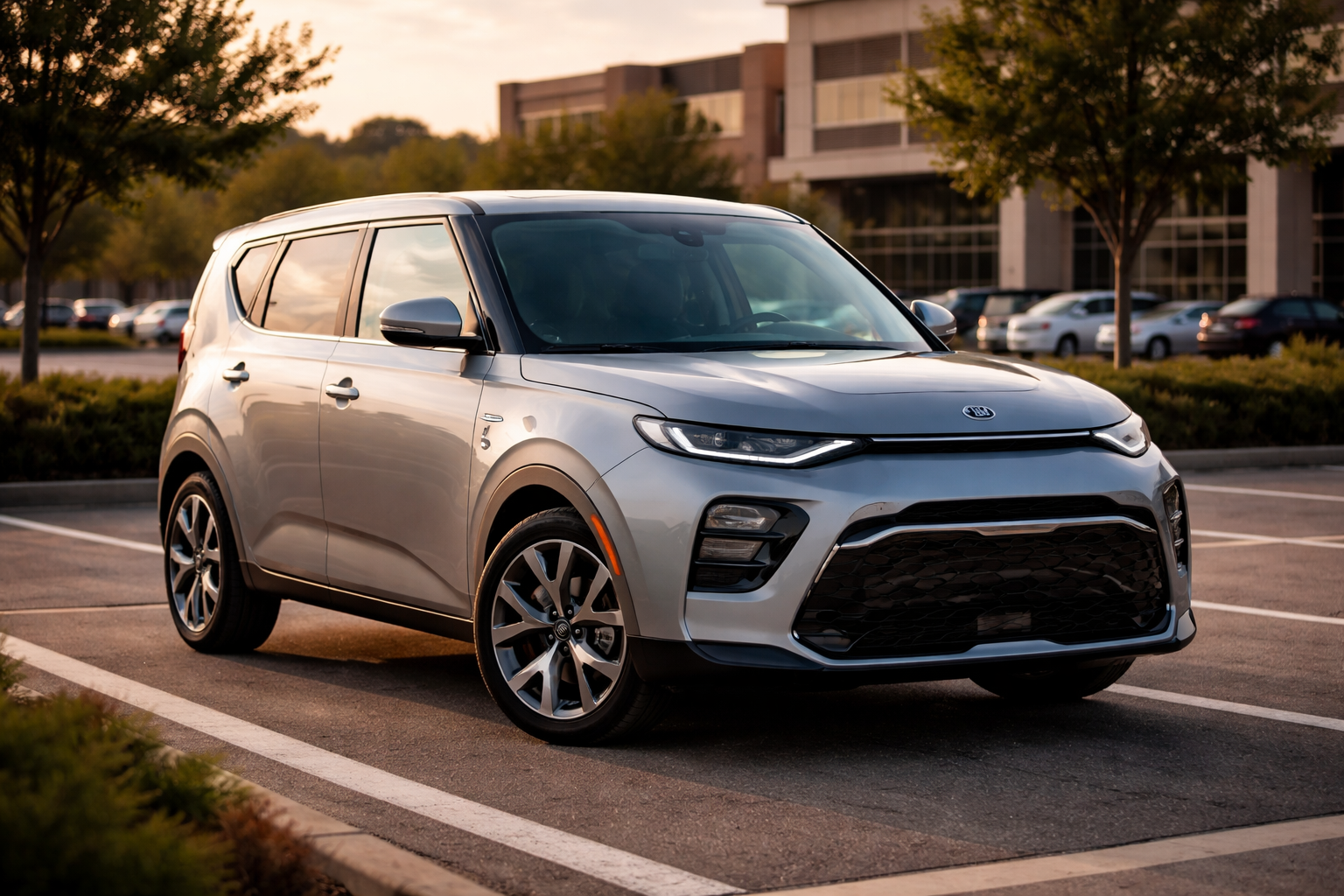
The Kia Soul is discontinued in the U.S., and for a lot of people that lands with a weird kind of sadness. Not dramatic sadness. Not “cancel my plans, I need a minute” sadness. More like the feeling you get when a store, snack, or TV show you took for granted suddenly disappears and you realize it was doing more emotional work in your life than you thought.
That’s the Kia Soul problem in a nutshell. It was never the coolest car in the room in the usual way. It wasn’t trying to be a sports coupe, a rugged body-on-frame SUV, or some luxury statement. It was a box. A cheerful, weird, upright, extremely useful box. And somehow that was enough. More than enough, actually. For years, it carved out a lane most automakers barely knew how to describe.
Now that it’s gone, the obvious question is why. Why kill the Soul when so many people still recognized it instantly? Why end one of the most distinctive affordable cars in America at a time when car design keeps drifting toward the same rounded crossover soup? And what does the end of the Soul say about where the U.S. market is headed?
Those are fair questions. Because the Soul wasn’t just another small car. It was one of the rare affordable vehicles with actual personality. You could spot it from across a parking lot. You could explain it in one sentence. And even people who didn’t want one usually knew exactly what it was.
That kind of clarity is rare now. So yes, the Soul being discontinued matters more than it might look on paper.
This article is the clean version of the story — why the Kia Soul ended after the 2025 model year, what probably drove that decision, what it means for current owners, what buyers should do now if they still want one, and why this odd little car deserves more respect than “hamster ad nostalgia” gives it.
What “Kia Soul discontinued” actually means
Let’s start with the plain part. “Kia Soul discontinued” means the Soul has reached the end of the line in the U.S. market after the 2025 model year. It is not moving quietly into a hidden trim level. It is not taking a gap year. It is not waiting behind the curtain for a surprise 2026 reboot. The current U.S. story is simpler: the Soul has been retired from Kia’s active model range.
That matters because internet car chatter is full of vague phrases like “phased out,” “paused,” or “expected to return.” None of that is especially useful when someone is actually trying to buy a car, keep a car, or understand whether a nameplate still has a future. In this case, the answer is direct. The Soul’s U.S. run ended with the 2025 model year.
And no, that does not mean Souls instantly vanish from roads, parts catalogs, service bays, or used-car sites. Discontinued is not erased. It just means the production story is over, and the car moves from “current model” to “existing fleet and used market” status.
Why this one feels different
Cars get discontinued all the time. Most of them do not create much noise outside enthusiast circles. A trim disappears, a sedan fades out, another crossover arrives, and the market shrugs. The Soul feels different because it was never generic enough to disappear quietly.
It had shape. Real shape. It had branding people remembered. It had a simple pitch: easy to park, easy to load, easy to live with, and way more spacious-feeling inside than its footprint suggested. It was one of the few affordable vehicles that managed to feel practical and self-aware at the same time.
And honestly, that combination is harder to replace than some people think. Plenty of compact crossovers are competent. Fewer are recognizable. Even fewer are lovable in that offbeat, slightly stubborn way the Soul was. It didn’t try to look like a baby luxury SUV. It looked like a Soul. That sounds obvious, but it matters.
That is why the discontinuation hits people who were never even owners. The car had identity. Identity is sticky.
So why did Kia pull the plug?
The short answer is probably the one nobody finds very romantic: market pressure, changing priorities, and a shrinking amount of room for niche affordable cars inside a lineup that now leans harder into larger crossovers, electrification, and higher-margin products.
That sounds dry, so let’s make it more human. Automakers don’t usually kill recognizable models because they hate them. They kill them because the model stops fitting the plan well enough. Sometimes sales are falling. Sometimes the factory logic changes. Sometimes the lineup gets crowded. Sometimes the future money is in a different shape, size, or powertrain category.
The Soul was still famous, but fame and strategic fit are not the same thing.
A few likely forces were working against it:
- U.S. buyers keep drifting toward larger crossovers
- Affordable small cars are harder to justify when margins are tighter
- Kia’s lineup now has more pressure around SUVs, hybrids, and EVs
- The Soul’s oddball body style was beloved by some, but not broad-market enough forever
That last point is the painful one. Distinctive design helps you stand out. It can also limit how many buyers you reach once the market gets more conservative or more trend-driven. The Soul thrived for years by being proudly unlike other vehicles. But that same uniqueness may have made it easier to cut once the brand looked at the rest of the showroom and asked where future volume and profit were really going to come from.
The Soul helped build modern Kia, and that’s part of the irony
Here’s the thing people should not miss: the Soul was not some minor side character in Kia’s American story. It helped change how people saw the brand. A lot. It arrived at the moment when Kia was still trying to shake off a much older reputation and prove it could make cars people actually wanted, not just cars people tolerated because the payment was low.
The Soul helped with that shift because it felt confident. It didn’t act like the brand was begging for approval. It showed up looking weird on purpose and made the weirdness the selling point. That was a big deal. It taught people to associate Kia with design confidence, pop-culture awareness, and a little humor without becoming a joke.
That’s why the hamster ads still get mentioned, even now. Not because the ads are the whole story, but because they represented a real turning point. The Soul gave Kia cultural visibility that far exceeded what a single subcompact runabout should normally be able to do.
Which makes the discontinuation a little ironic. The car that helped make Kia feel cooler in the U.S. is leaving at a moment when Kia is bigger, stronger, and more ambitious than ever.
| What the Soul gave Kia | Why it mattered |
|---|---|
| Distinctive design | It made Kia look braver and less generic |
| Strong cultural recognition | People who knew nothing about specs still knew the Soul |
| Urban practicality | It gave Kia a genuinely useful small vehicle with character |
| Brand personality | It helped move Kia beyond “cheap transportation” thinking |
That table is part of why the Soul deserves more than a quick goodbye. It did real work for the brand.
Was it just about bad sales?
Not exactly. That is usually too simple. Sales matter, of course. They always do. But discontinuations usually come from a stack of reasons, not one clean number. A car can still sell decently and still not fit the long-range product strategy. A car can still have a loyal following and still lose the internal fight for manufacturing resources or future investment.
The Soul’s sales were not zero. It was not some forgotten museum piece collecting dust in the configurator. But the larger market was moving. Buyers kept rewarding roomier crossovers, electrified vehicles, and models that fit more squarely into the biggest demand lanes. Meanwhile, the Soul occupied a strange, wonderful little pocket of the market that fewer automakers seem interested in serving now.
And there is the harder truth: affordable oddballs are often first in line when lineup simplification starts. They make less money, they serve narrower taste, and they usually need the company to really believe in them. Once that belief shifts, the math gets cold fast.
So no, the Soul didn’t necessarily die because nobody cared. It likely died because not enough people cared in exactly the way a modern product plan needed them to.
What owners should know now
If you already own a Kia Soul, the discontinuation is not some immediate crisis. Your car did not become unsupported overnight. That is not how this works. The biggest practical effects usually show up more slowly, and even then, they often matter less than people fear at first.
Here is the calm version.
If you own a Soul now, the main questions are usually about parts, service, resale value, and future maintenance. Kia still has a large owner base here, and the Soul has been around for years, which helps. Vehicles with big installed populations do not just lose serviceability because production ends.
What current owners should keep in mind:
- Routine maintenance and normal service should stay straightforward for a long while
- Common wear parts are usually not the main worry after discontinuation
- Resale can go two ways — softer because the model is dead, or oddly sticky because fans still want one
- Clean, well-kept Souls may become more appealing in the used market than people expect
That last point is worth watching. Cars with real identity sometimes age better emotionally than the market predicts. Not always, but sometimes. The Soul may never become a collectible in the glamorous sense, but it could absolutely become one of those discontinued cars people start hunting once they realize nothing else scratches the same itch.
What buyers should do if they still want one
If you wanted a Soul and kept putting it off, well, here we are. The decision got less theoretical. At this point, the choice is mostly between remaining 2025 inventory where available and the used market.
That does not automatically make the hunt miserable. In fact, it may sharpen the value question. Used Souls always had one big advantage: they were easy to understand. You were not paying for some vague lifestyle promise. You were paying for packaging, visibility, personality, and generally sensible daily use. That logic still holds.
People shopping now should focus on:
- Condition over trim prestige
- Service history
- Insurance quotes before purchase
- Whether they want the Soul for city use, family utility, or simply because nothing else feels like it
And yes, that last reason is legitimate. Buying a car because it feels right is not irrational when you still respect the numbers.
The Soul was always a feel-right car more than a flex car. That is part of its whole charm.
What replaces the Soul? That depends on what you loved about it
This is where the market gets annoying. There is no perfect replacement because the Soul’s appeal was a mix of things most rivals do not combine in quite the same way. If you loved the upright seating, easy entry, boxy packaging, and quirky look, you are not simply shopping a list of identical substitutes.
Still, buyers usually split into a few camps:
| If you loved the Soul for… | You’ll probably care most about… | Your replacement search will lean toward… |
|---|---|---|
| Its boxy practicality | Easy loading, good headroom, smart space use | Small crossovers with upright cabins |
| Its city-friendly size | Parking ease, visibility, low running costs | Subcompact crossovers or hatchback-style options |
| Its personality | Design that does not blend in | Honestly, this is the hardest part to replace |
| Its affordability | Entry price and real-world value | Used market first, then budget crossovers |
That last row is where many buyers will end up. The Soul was one of those vehicles that made sense financially without feeling lifeless. That’s a harder trick than automakers tend to admit.
The bigger market lesson here is not subtle
The end of the Soul says something bigger about the U.S. market. Americans keep saying they want affordable, distinctive, practical vehicles. But the market keeps rewarding bigger crossovers, richer trim ladders, and products that are easier to sell at higher margins. That tension matters. The Soul lived in the space between what people say they value and what the market keeps drifting toward anyway.
In that sense, the Soul’s discontinuation is not only about one quirky car going away. It is also about the shrinking room for inexpensive vehicles with strong identity. If a model like the Soul cannot keep its place forever, what does that tell us about the rest of the affordable-fun middle ground?
Honestly, probably nothing cheerful.
It suggests the U.S. market is getting less friendly to odd little vehicles that do one thing brilliantly without also becoming bigger, taller, pricier, or more obviously profitable. The Soul survived longer than many cars with similar weirdness probably would have. But even it was not immune to the pressure.
Will Kia ever bring it back?
That is the kind of question people ask because they want the answer to be yes, and I get it. But right now there is no clean reason to write that story. No confirmed reboot. No obvious next-generation preview. No visible plan that says the Soul is coming back in some fresh electric or hybrid form for the U.S. market.
Could the name return someday in a different shape? Sure. Automakers revive names all the time. But that possibility is not the same thing as a real comeback story. For now, the cleanest answer is this: do not buy emotionally into a comeback that does not exist yet.
That said, the Soul does leave behind something valuable — proof that buyers do respond to strong identity when the pricing and usefulness feel honest. Whether Kia learns from that in a future model is a different question, but the lesson is sitting right there.
FAQ
Is the Kia Soul really discontinued?
Yes. In the U.S., the Kia Soul is discontinued after the 2025 model year.
Why did Kia discontinue the Soul?
Kia has not framed it as one single dramatic reason, but the likely factors include shifting U.S. demand, lineup priorities, and the shrinking business case for a niche affordable boxy hatchback-crossover.
Can you still buy a new Kia Soul?
Possibly, depending on remaining dealer inventory, but the production run has ended and the model is no longer continuing as an active future-year U.S. lineup entry.
Will Kia still make parts for the Soul?
Current owners should still expect normal service and parts support for common maintenance and repairs, especially because so many Souls were sold over the years.
Is the Kia Soul worth buying used now?
For many buyers, yes. A used Soul can still make a lot of sense if you want practicality, visibility, personality, and a shape that uses space well.
What replaced the Kia Soul?
There is no single perfect replacement. Buyers will mostly end up looking at small crossovers, hatchback-like utility vehicles, or the used market if they want something with a similar vibe.
Could the Kia Soul come back later?
Anything is possible in the auto industry, but there is no confirmed U.S. return plan right now.
Conclusion
The Kia Soul being discontinued feels bigger than the end of one affordable car because it closes off a very specific kind of choice. Not just cheap transportation. Not just quirky styling. A genuinely useful, recognizably odd, easy-to-like vehicle that managed to be practical without dissolving into generic crossover wallpaper.
That is what people will miss. Not only the shape, not only the ads, not only the nostalgia. They will miss the clarity of it. The Soul knew what it was. It didn’t chase every trend. It didn’t try to become everything for everyone. It stayed weird enough to matter.
And honestly, that may be why the discontinuation stings. Cars like the Soul remind people that affordable vehicles do not have to be anonymous. They can still have character. They can still make you smile when you walk up to them in a parking lot. They can still feel like a choice, not a default.
So yes, the Kia Soul is gone from the U.S. new-car future. But the reason people care is simple: there still are not many vehicles that do what it did in quite the same way. And once something like that disappears, the market usually gets a little more boring than the spreadsheets ever admit.





Leave a Reply