

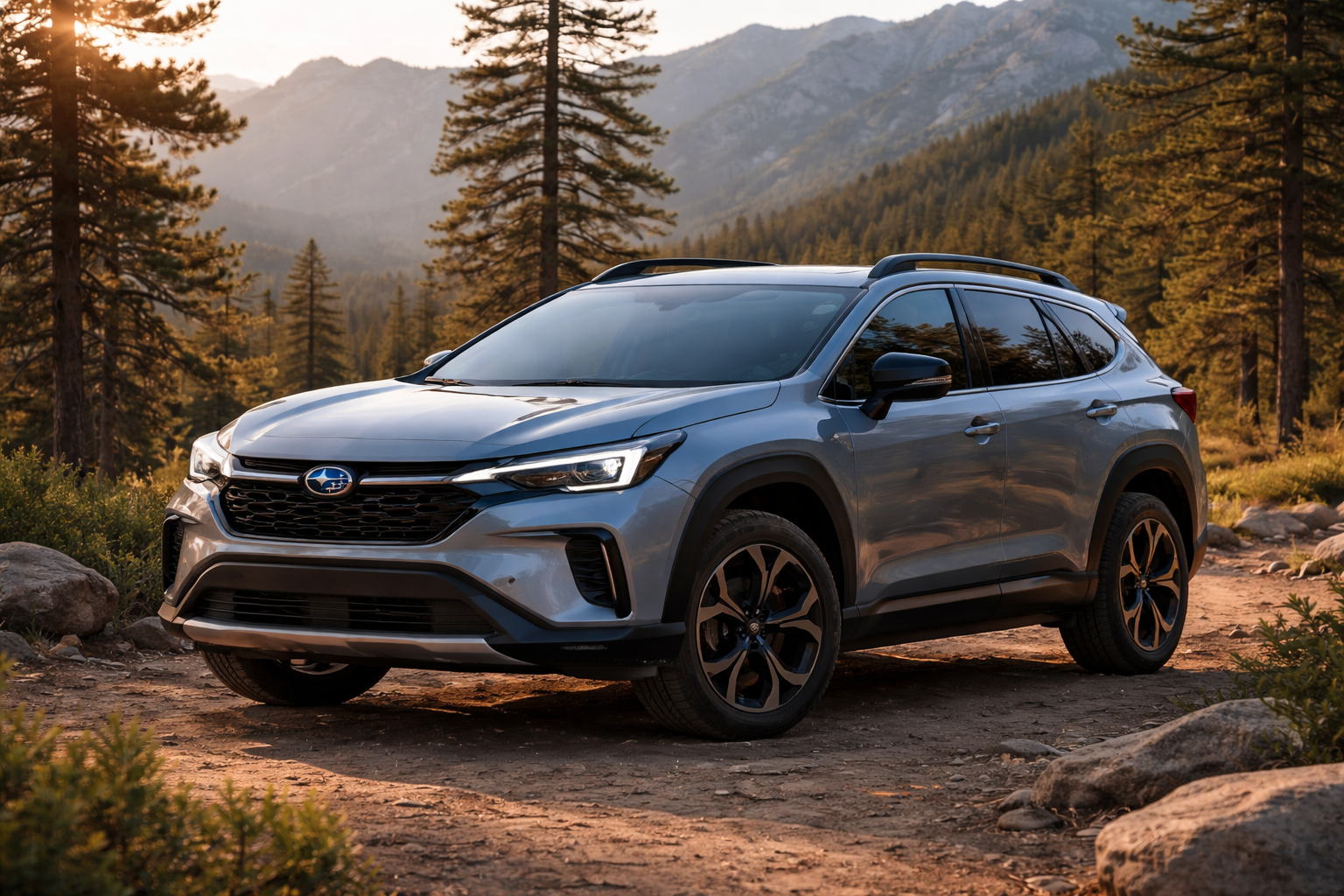
If you’ve been waiting for Subaru to make an electric SUV that feels less like a polite experiment and more like a proper Subaru, the Trailseeker is the first one that really leans into that job. Not halfway. Not in a shy, compliance-car way. It shows up with more power, more attitude, more clearance, more towing, and a much clearer sense of what it wants to be.
That matters because Subaru buyers in the U.S. are a pretty specific crowd. They like practicality, sure, but not bland practicality. They like weather confidence, trailhead usefulness, dog-and-gear usefulness, ski-trip usefulness, awkward-lumber-run usefulness. They want a vehicle that feels ready before the road does. And that has always been the tension with EVs for brands like Subaru. The electric part is modern and necessary. The Subaru part still has to feel honest.
The 2026 Subaru Trailseeker looks like the clearest attempt yet to solve that tension.
It is not a fake rugged trim with some black cladding and a mood board. It arrives with real headline numbers: 375 horsepower, standard Symmetrical All-Wheel Drive, 8.5 inches of ground clearance, dual-function X-MODE, and up to 3,500 pounds of towing. That is a very different conversation from “nice commuter EV with outdoorsy styling.” It is Subaru saying, in plain language, that its next electric step should feel familiar to the people who already trust the badge.
And honestly, that was the right call.
The Trailseeker is not trying to out-luxury a Mercedes EV or out-tech a Tesla on raw theater. It is trying to answer a more grounded question: what would an electric Subaru look like if it was built for American buyers who still expect a Subaru to be sturdy, roomy, all-weather, and mildly adventurous even on a Tuesday?
That is the lens that makes this vehicle interesting. Not as a future fantasy. Not as a design sketch. As a real upcoming U.S. model that tells us where Subaru thinks its EV identity has to go next.
What the Subaru Trailseeker actually is
The Trailseeker is an all-new electric SUV for the U.S. market, set to arrive as a 2026 model. It sits in Subaru’s growing EV story as something stronger and more purpose-built than a simple “we also have one now” offering. Subaru is clearly framing it as an adventure-friendly electric SUV with the sort of numbers and features that make American buyers look twice.
That starts with the drivetrain. Trailseeker comes with a dual-motor all-electric setup making 375 horsepower. For a Subaru SUV, that is a big statement. Not because horsepower alone tells the whole story, but because it changes the tone immediately. You stop thinking “efficient crossover.” You start thinking “quick, sure-footed, family-capable electric wagon-ish SUV that might actually be fun.”
Subaru is also leaning into the familiar pieces that longtime owners expect:
- Standard Symmetrical All-Wheel Drive
- 8.5 inches of ground clearance
- Dual-function X-MODE with Grip Control
- A useful towing rating up to 3,500 pounds
That list is the whole pitch in miniature. Power, traction, clearance, and real-life utility. It is not trying to reinvent Subaru from scratch. It is trying to translate Subaru into EV language without losing the accent.
Why the Trailseeker matters more than just another EV launch
Subaru did not only need another EV. It needed a more convincing EV. That is the difference.
The American market is packed with electric crossovers now. Some are sleek. Some are fast. Some are full of screens. Some are honestly just anonymous blobs with battery packs. Subaru cannot win by becoming one more generic entry in that pile. It has to offer something buyers can recognize as Subaru even before they get into the details.
The Trailseeker starts doing that by refusing to look fragile. It has raised roof rails, protective lower cladding, a more upright stance, and proportions that read more like “gear hauler with intent” than “aerodynamic appliance.” That sounds simple, but it matters. EV design sometimes gets so obsessed with smooth efficiency that vehicles start looking detached from normal life. Trailseeker looks like it still expects dirt, weather, dogs, backpacks, and maybe an overstuffed Costco run on the way home.
That is not a small branding point. That is Subaru’s whole emotional lane in the U.S.
And then there is the broader timing. Buyers who are open to EVs but nervous about range, charging, winter performance, and real-world usefulness do not need more abstract promises. They need a vehicle that speaks their language. NACS compatibility, battery preconditioning for cold-weather charging, ground clearance that is actually meaningful, and a shape that does not make cargo feel like an afterthought — those are the details that make a model feel less theoretical.
Trailseeker is interesting because it seems to understand that.
The power headline is not just for bragging rights
375 horsepower is the number everyone will repeat first, and that makes sense. It is clean, easy, and sounds good in a headline. But the more useful question is what that power means in the way Americans actually drive.
It means the Trailseeker should have no problem feeling strong merging onto highways, climbing grades with passengers and gear, or carrying the extra visual and practical heft Subaru built into it. It also means this will not feel like a reluctant EV, one of those models where the badge promises capability but the drivetrain feels tuned mostly for apology.
And yes, a lot of EVs are quick now. That part is not special on its own anymore. What changes the story is combining that power with Subaru’s version of utility. This is not a low-slung performance machine. It is an electric SUV with real clearance, AWD, roof rails, towing, and cabin space. So the 375-hp figure lands differently. It is not there to show off. It is there to support the whole mission.
That is a subtle but important difference.
| Key Trailseeker number | What it tells you | Why U.S. buyers may care |
|---|---|---|
| 375 horsepower | This is a genuinely strong EV drivetrain | Quick passing, easy highway merging, less strain with cargo |
| 8.5 inches ground clearance | It is built for more than smooth pavement | Snow, ruts, trail roads, broken surfaces |
| Up to 3,500 pounds towing | There is real utility here | Small trailers, bikes, gear, weekend stuff |
| Dual-motor AWD | Subaru kept traction central to the identity | Bad weather confidence still matters in America |
That table is basically the vehicle’s personality in four lines.
It looks like Subaru finally stopped tiptoeing
There is a design lesson here too. Trailseeker does not look embarrassed to be useful. A lot of electric SUVs still try very hard to look like futuristic lifestyle objects first and practical vehicles second. Subaru went in a different direction. The Trailseeker looks like it expects to do things. Carry things. Deal with weather. Get dusty. Sit in a ski-lot row without looking out of place.
That is why the exterior works, at least on paper and in official photos. You get protective cladding, a higher roofline, available 20-inch wheels, and raised rails, but the design does not collapse into old-school boxiness either. It still has the clean EV cues buyers now expect. It just does not let those cues erase the Subaru part.
And honestly, that balance is harder than it sounds. Go too soft and you lose identity. Go too rugged and it starts feeling like costume design. The Trailseeker seems to land in the middle. It feels shaped by utility, but not imprisoned by it.
That matters because design trust is real. People want to believe an SUV when it hints at capability. If a vehicle looks too precious, the message gets weird fast.
The cabin may be the quieter win
Specs get attention, but the interior may do more of the long-term work. Subaru says the Trailseeker is built around a roomy, open cabin with a fully flat rear floor and ample cargo space. That sounds like basic EV packaging talk, and part of it is. But in American daily life, that stuff matters more than splashy brochure language.
A flat rear floor changes how people load a vehicle, how passengers sit, how bags slide around, how the cabin feels on long trips. Same with general openness. Same with rear-seat usefulness. Same with cargo shape. Buyers live with those things every day. They remember them.
Subaru also says the Trailseeker gets a 14-inch touchscreen, standard wireless Apple CarPlay and Android Auto, dual wireless chargers, and standard EyeSight driver-assist tech. That is the part where the vehicle stops being “Subaru’s rugged EV idea” and becomes a properly current family vehicle. It has to do both jobs now. Be adventurous enough for the brand, and normal enough for school runs, work commuting, grocery stops, and long interstate weekends.
And that is where the Trailseeker starts sounding more complete than some first-wave EV efforts. It is not only about hardware. It is about daily livability.
- A big 14-inch screen without making the cabin feel all-screen, all-day
- Wireless phone integration because people expect it now
- Dual wireless chargers because one charger is never enough in real life
- Water-resistant StarTex on lower trims, which feels very Subaru
That last detail is a very Subaru move. Fancy enough, but still a little muddy-boots-aware.
Charging and range: the part buyers will study hardest
Now we get to the part that can make or break any EV conversation in America. Range and charging. Subaru’s official story here is pretty straightforward. Trailseeker launched with a claim of more than 260 miles from its 74.7-kWh battery, and later official material moved that to about 280 miles. It also gets NACS compatibility and battery preconditioning to help quick charging in colder weather.
That combination matters more than any one number alone.
Range around 280 miles is not a class-dominating flex. Let’s just say that out loud. Some rivals go farther. Buyers will notice. But that does not automatically kill the Trailseeker, because the rest of the charging story is stronger than a single headline number suggests. NACS compatibility matters. Cold-weather battery preconditioning matters. Fast-charging access matters. If charging feels easier and more predictable, a merely decent range number can become a lot more livable.
And here is the nuance a lot of EV discussions miss: range anxiety is rarely just about total miles. It is about friction. How annoying is the charging? How sketchy is the network? How hard is winter on the battery? How often does the plan feel fragile? Subaru seems to understand that reducing charging friction is part of making Trailseeker credible.
That does not mean buyers should ignore the range. They should absolutely compare it. But they should compare the whole experience, not just one sticker number.
| Charging and EV detail | What Subaru is promising | What it means in real life |
|---|---|---|
| Battery size | 74.7-kWh lithium-ion pack | Solid middle-ground battery for family EV duty |
| Estimated range | About 280 miles | Enough for normal commuting and road trips with planning |
| NACS compatibility | Built for a broader charging ecosystem | Less charging stress, more route flexibility |
| Battery preconditioning | Helps cold-weather fast charging | Especially useful in northern states and winter travel |
That is a much healthier way to read the EV side of the Trailseeker story.
Trim levels tell you Subaru expects real volume here
Another sign Subaru is serious: Trailseeker is not arriving as some one-trim placeholder. It comes in Premium, Limited, and Touring forms. That is a normal, committed lineup move. It tells buyers this is not a curiosity parked in one corner of the showroom. Subaru is planning for actual choice and actual scaling.
Premium starts with the core identity pieces: AWD, 375-hp drivetrain, X-MODE, EyeSight, 14-inch multimedia, StarTex upholstery, heated front seats, raised rails, power rear gate, dual wireless charging, and 18-inch wheels. That already sounds complete enough for a lot of buyers.
Limited adds the stuff American shoppers in this price zone tend to notice quickly: Harman Kardon audio, Digital Key, panoramic view monitor, heated rear outboard seats, heated steering wheel, 20-inch wheels, and a cargo-area power outlet. That is a very practical feature ladder.
Touring pushes farther into comfort territory with a panoramic glass roof, smart rearview mirror, heated and ventilated front seats, radiant leg heater, and available leather-trimmed upholstery. Again, this is not Subaru treating the Trailseeker like an eco side project. It is treating it like a real model line.
- Premium feels like the honest sweet spot
- Limited looks like the family-road-trip trim
- Touring is clearly the comfort-first version
That is a good trim structure because it is easy to understand without sounding stripped at the bottom or silly at the top.
So where does Trailseeker fit in Subaru’s lineup?
That is the practical buyer question, and it is the right one. Trailseeker is not here to replace the Outback in spirit, even if some of the same people will look at both. It is not just the electric Solterra with a mood swing either. It lands more like Subaru’s attempt to build a roomier, more muscular electric SUV that can carry some of the emotional weight its gas models have carried for years.
In plain English: it is for buyers who want Subaru capability and Subaru normality, but no gas engine. That sounds obvious, yet it is harder to nail than it seems. EV buyers still want a vehicle that feels legible. Trailseeker looks legible.
It is also arriving at a moment when many American buyers are more open to EVs than they were a few years ago, but still picky about how the transition feels. They do not just want an EV. They want an EV that fits their habits and self-image. Subaru appears to know that. Trailseeker is not selling futurism. It is selling continuity, just electrified.
FAQ
What is the Subaru Trailseeker?
The Subaru Trailseeker is an all-new all-electric SUV for the U.S. market arriving as a 2026 model.
How much power does the Subaru Trailseeker have?
Subaru says the Trailseeker delivers 375 horsepower from its dual-motor electric setup.
How much range does the Trailseeker have?
Official Subaru information moved from more than 260 miles at launch to about 280 miles in later material.
Does the Trailseeker have all-wheel drive?
Yes. It comes standard with Subaru Symmetrical All-Wheel Drive.
How much can the Subaru Trailseeker tow?
Subaru says the Trailseeker can tow up to 3,500 pounds.
When is the Subaru Trailseeker coming out?
Subaru says the 2026 Trailseeker is coming in spring 2026.
What trims will the Trailseeker offer?
Subaru lists Premium, Limited, and Touring trims for the U.S. Trailseeker lineup.
Conclusion
The Subaru Trailseeker matters because it does not feel like Subaru checking a box. It feels like Subaru finally deciding what its electric identity should sound like in America. Strong. Useful. Weather-ready. A little rougher around the edges in a good way. Not trying to be the flashiest EV in the lot, just one that makes immediate sense to the people who already understand why Subarus keep showing up at trailheads, ski lots, and rainy parking lots all over the country.
There is still a lot buyers will want to know when it gets closer — pricing, final EPA numbers, real-world charging behavior, dealer rollout, and whether the cabin feels as solid as the spec sheet suggests. Those are fair questions. They should stay open until real drives and real ownership data show up.
But the early read is pretty clear. Trailseeker looks like the most Subaru-shaped EV the brand has shown American buyers yet. And honestly, that may be exactly what the company needed.




Leave a Reply