

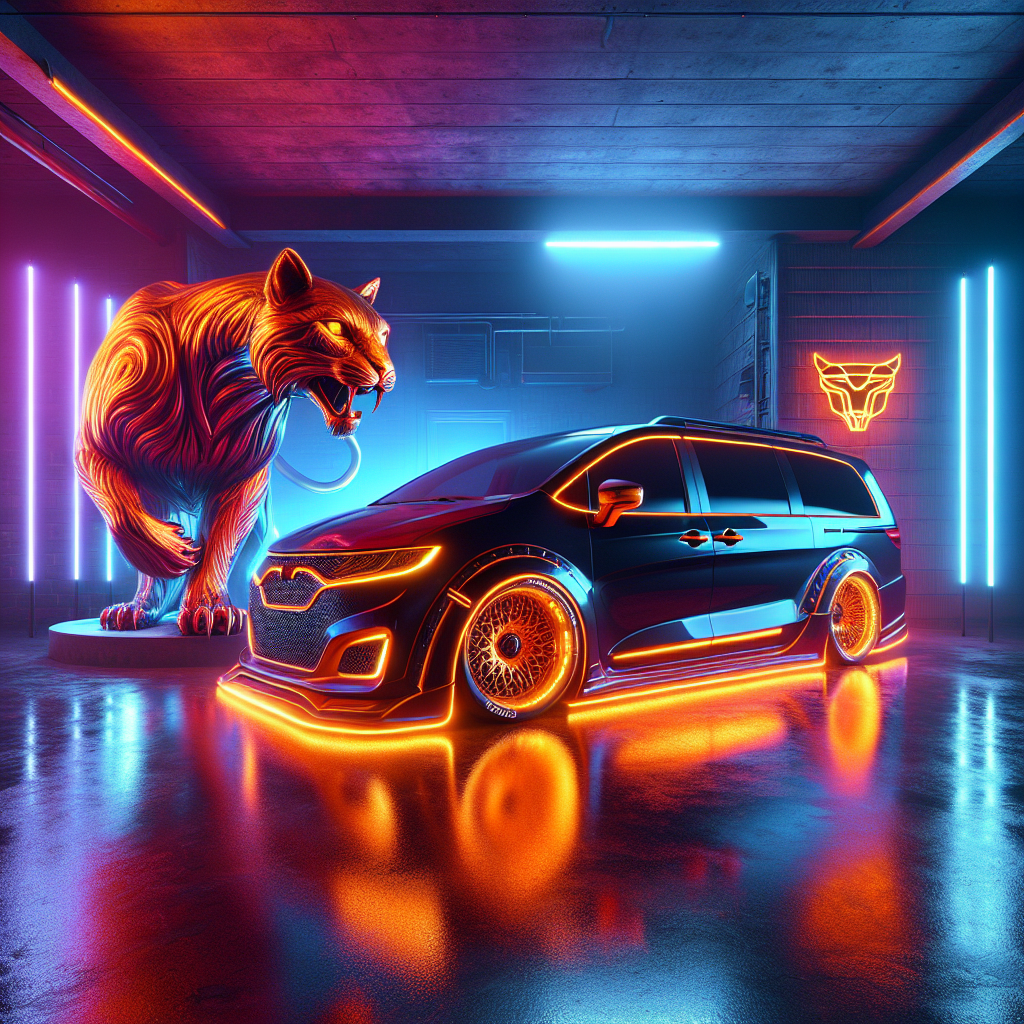
Why You Need a Hellcat Minivan Right Now
Have you ever imagined dropping the kids off at school in a hellcat minivan that leaves supercars in the dust at a red light? Think about it for a second. You pull up next to a brand new Italian exotic in what looks like a typical suburban grocery-getter. The light turns green, the supercharger whines like a banshee, and you completely gap a half-million-dollar machine while your groceries stay perfectly secure in the back. It is absolute, unadulterated automotive poetry. Let me tell you a quick story. A buddy of mine runs a custom performance shop over in Kyiv. Usually, he spends his days tweaking European luxury sedans or fixing up drift cars. But one freezing winter evening, he looked at a salvaged 6.2L V8 engine sitting in the corner and then at his shop’s clunky old delivery van. That look was the spark of pure madness. He decided to shoehorn that massive supercharged beast right into the family hauler. Seeing that contraption fire up for the first time, spitting flames and shaking the garage windows, completely changed my perspective on what makes a car truly cool. The thesis here is simple: putting ridiculous amounts of power into a vehicle designed purely for utility creates the ultimate sleeper, blending extreme shock value with hilarious practicality.
The concept of taking a notoriously boring chassis and injecting it with weapons-grade horsepower is not entirely new, but doing it with modern supercharged muscle takes it to an entirely different stratosphere. A build like this requires you to completely rethink how a vehicle functions. You are essentially taking an engine designed for a rear-wheel-drive performance coupe and forcing it into a chassis built for front-wheel-drive fuel efficiency and safety ratings. The engineering hurdles are massive, but the payoff is legendary. You get the stealth factor of a soccer mom’s daily driver with the performance of a drag strip monster.
Let’s look at the actual numbers to see why this concept breaks the brains of traditional car enthusiasts. You are combining the ultimate utility vehicle with the ultimate brute-force power plant.
| Vehicle Setup | Horsepower (HP) | Estimated 0-60 mph | Practicality & Cargo Space |
|---|---|---|---|
| Standard V6 Minivan | 287 HP | 7.5 seconds | Excellent (140+ cu. ft.) |
| Stock Dodge Charger Hellcat | 717 HP | 3.6 seconds | Average (16.5 cu. ft. trunk) |
| The Custom Hellcat Minivan | 707+ HP | Under 4.0 seconds | Unmatched (Full cargo + insane speed) |
The value proposition here is heavily tilted toward fun and functionality. Consider two specific examples of how this changes your automotive life. First, the highway merge. Instead of praying for a gap in traffic while flooring a struggling V6, you casually tap the throttle, the supercharger screams, and you instantly match the speed of the fastest lane. Second, track days. Imagine rolling up to a local drag strip with a child seat still strapped in the back. The sheer psychological damage you inflict on opponents when a sliding-door van outruns their tuned sports cars is priceless.
Here are three reasons you absolutely need this kind of build in your life:
- Ultimate Sleeper Status: Nobody expects a family hauler to have over 700 horsepower. You command absolute stealth until the exact moment you decide to unleash hell.
- Uncompromised Utility: You do not have to sacrifice your ability to carry plywood, massive flat-screen TVs, or a giant load of groceries just because you want to go fast.
- The Ultimate Conversation Starter: Every time you open the hood at a gas station or a car meet, you will draw a crowd of confused, amazed, and deeply respectful gearheads.
Origins of the Supercharged People Mover
To truly appreciate the sheer absurdity of dropping a 707-horsepower engine into a family vehicle, you have to look back at the origins of hot-rodding utility vehicles. Back in the 1970s, the custom van craze took hold. People were slapping wild paint jobs, side pipes, and upgraded V8s into cargo vans. However, those were mostly about style rather than pure, face-melting speed. As we moved into the late 80s and 90s, the minivan became the staple of suburban life. It was the ultimate symbol of giving up your automotive dreams. Manufacturers tried to spice them up occasionally—think of the turbo minivans of the 80s or the mid-engine supercharged Previa—but they were always fundamentally compromised.
Evolution of Engine Swaps
Engine swapping has always been the cornerstone of car culture. The traditional formula was simple: find a lightweight chassis and shove the biggest possible V8 into it. But eventually, builders got bored. Doing an LS swap on a classic muscle car or an old import became too common. Builders started looking for the most ironic, ridiculous chassis they could find. The release of the 6.2L supercharged HEMI engine changed the landscape. Suddenly, you had a crate engine package that delivered reliable, turnkey supercar power. The challenge wasn’t making power anymore; it was fitting that massive block into places it definitely did not belong.
Modern State of the Culture
Now that we are pushing through 2026, the automotive landscape is heavily dominated by silent electric vehicles and soulless autonomous pods. EV swaps are everywhere, and honestly, they are incredibly fast. But they lack soul. The visceral roar of a supercharged V8 minivan has become a rebellious middle finger to the sterilization of modern cars. It is a mechanical protest against boredom. Builders are using advanced 3D scanning and CNC plasma tables to fabricate subframes that can handle the violent torque, turning what used to be a backyard hack job into high-end automotive engineering. The culture has shifted from just making things fast to making the impossible actually drivable and reliable.
The Anatomy of a Supercharged V8
Let’s talk mechanics. You cannot just bolt a massive engine to factory engine mounts meant for a transverse V6 and call it a day. The heart of this beast is the 6.2-liter HEMI V8, topped with a 2.38-liter twin-screw supercharger. This setup forces massive amounts of compressed air into the combustion chambers. When you mash the pedal, the bypass valve slams shut, the supercharger forces up to 11.6 PSI of boost down the engine’s throat, and the resulting explosion generates over 650 lb-ft of torque. That much twisting force requires absolute perfection in fuel delivery, timing, and cooling. You are managing miniature controlled explosions that generate immense heat.
Chassis Reinforcement and Physics
The biggest enemy of a high-horsepower build is chassis flex. A standard family van is basically a big metal box with large holes cut out for sliding doors and a massive rear hatch. It is not rigid. If you drop 700 horsepower into it without reinforcement, the torque twist could literally crack the windshield or bend the frame permanently. Builders have to weld in custom tubular subframes, stitch-weld the factory seams, and sometimes even integrate a roll cage disguised behind the interior trim. Furthermore, aerodynamics become a serious issue. You are pushing a brick through the air. At 150 mph, the air pressure building up under the flat floor of a minivan acts like a parachute, creating terrifying lift.
Here are the crucial mechanical facts you must respect when attempting this build:
- Cooling is critical: The supercharger requires its own dedicated cooling circuit with an intercooler pump and heat exchanger, otherwise it will heat-soak and pull timing.
- Custom Driveshafts: A stock front-wheel-drive transaxle will instantly shatter. You must convert to rear-wheel drive or all-wheel drive, requiring a custom shortened driveshaft that can handle 1000+ horsepower shock loads.
- Braking Physics: A 4,500-pound brick moving at 130 mph requires massive 6-piston calipers and 15-inch rotors to stop safely before running out of tarmac.
- Wiring Integration: You are merging a standalone performance ECU with a body control module that still needs to operate power sliding doors and air conditioning. It is a massive headache.
Step 1: Choosing the Base Chassis
Before you even look at an engine, you need the right shell. You want a van that has relatively little rust and a strong factory frame. Popular choices are the older Dodge Grand Caravans or Chrysler Pacificas, mostly because keeping it within the Mopar family makes some wiring slightly easier. Strip the entire interior out. You need a blank canvas to see exactly where the cutting needs to happen. Remove the factory engine, transmission, and the entire front subframe. You are going to be making a lot of sparks.
Step 2: Sourcing the Powertrain
Finding a reliable 6.2L supercharged engine is going to be your biggest expense. You can buy a brand new crate engine, which comes with a massive price tag, or you can hunt Copart for a wrecked donor car. Buying a wrecked car is often smarter because you get the engine, the heavy-duty 8-speed automatic transmission (the 8HP90), the wiring harness, the gas pedal, and the ECU all at once.
Step 3: Custom Fabricating the Mounts
This is where the real fabrication begins. You are converting a transverse (sideways) layout to a longitudinal (front-to-back) layout. You will have to cut out the factory firewall and transmission tunnel to make room for the massive bellhousing and transmission. Using CAD software or good old-fashioned cardboard templates, design custom engine mounts that bolt the block directly to the reinforced frame rails. Tack weld everything in place, measure the driveline angle three times, and then fully weld it.
Step 4: Upgrading the Suspension and Brakes
With the engine sitting in the bay, focus on making the thing stop and turn. The stock suspension will collapse under the weight of the cast-iron block V8. You need custom-valved coilovers in the front and a completely fabricated rear suspension setup. Most builders opt to graft in the independent rear suspension subframe from the donor car. Do not skimp on brakes. Fit the largest drilled and slotted rotors you can cram behind the wheels.
Step 5: Managing the Electrical Nightmare
Grab a large cup of coffee, because wiring is terrible. You will need an aftermarket wiring harness designed for engine swaps. The goal is to get the engine running independently on its own ECU, while sending the necessary signals (like coolant temp and tachometer) to the factory dashboard so the gauges still work. Many builders use CAN-bus translator modules to get the different computers to talk to each other so your power windows still roll down.
Step 6: Reinforcing the Drivetrain
Connecting the transmission to the rear wheels requires a custom-length driveshaft made of thick aluminum or carbon fiber. The rear differential must be upgraded—often to a Ford 9-inch or a heavily built independent rear end with upgraded half-shafts. When you dump the throttle, the tires are going to hook up, and the weakest link in the driveline will snap immediately if you haven’t overbuilt it.
Step 7: The Initial Shakedown Run
Once everything is bolted in, wired up, and filled with fluids, it is time for the shakedown. Leave the front bumper off. Start the engine, check for massive fuel or oil leaks, and listen for abnormal whining. Take it on a slow drive around the block to ensure the brakes work and the transmission shifts. Gradually increase the load. Hook up a laptop with HP Tuners to monitor air/fuel ratios and transmission line pressures. Once you confirm it is solid, you can finally lay down a massive set of tire marks in your neighborhood.
Myths & Reality
Myth: You can just drop the engine in and bolt it up to the stock transmission.
Reality: Absolutely not. The factory transaxle is designed for a fraction of the power and sits sideways. You have to completely re-engineer the vehicle to a rear-wheel-drive setup, which involves cutting the floorpan and creating a new transmission tunnel.
Myth: A build like this is totally undrivable on the street and is just for YouTube views.
Reality: With modern electronic fuel injection and custom tuning, a 700+ horsepower engine can actually idle smoothly in traffic, run the air conditioning, and be completely docile until you aggressively hit the throttle.
Myth: You can build this cheap if you do the work in your backyard.
Reality: Even if labor is free, the cost of the engine, custom fabrication materials, aftermarket ECU, and heavy-duty drivetrain parts will easily cost tens of thousands of dollars.
Myth: It will handle like a sports car once you lower it.
Reality: You can improve the suspension drastically, but you cannot change physics. It still has a high center of gravity and the aerodynamic profile of a refrigerator.
How much horsepower does a Hellcat minivan have?
If utilizing the standard factory tune on the 6.2L supercharged engine, it produces exactly 707 horsepower and 650 lb-ft of torque. If heavily modified with smaller supercharger pulleys and E85 fuel, it can easily push past 900 horsepower.
Is it street legal?
This entirely depends on your local emission laws and vehicle inspection regulations. In many areas, as long as it passes safety checks, has working lights, and passes a sniffer test (or is registered in an exempt county), it can be driven legally on public roads.
Can it hold groceries?
Yes. Despite the massive rear differential and custom suspension underneath, most builders design the interior to retain a flat load floor, meaning you can still fit plywood, groceries, or multiple passengers depending on the seat configuration.
What transmission do I use?
You absolutely must use a heavy-duty transmission rated for extreme torque. The factory 8HP90 8-speed automatic is the gold standard, though some wild builders have managed to adapt heavy-duty Tremec manual transmissions for maximum engagement.
How bad is the gas mileage?
It is spectacularly terrible. When cruising gently on the highway, you might see 15 miles per gallon. Under heavy acceleration, you will be measuring your fuel economy in gallons per mile. It is not built for eco-friendly commuting.
Can I buy one pre-built?
Occasionally, one pops up at a high-end auto auction like Barrett-Jackson or on specialty car builder websites, but they are incredibly rare. You generally have to commission a custom performance shop to build one for you from scratch.
Is a Hellcat minivan safe?
Safety is relative. It retains a steel roof and basic crash structures, but when you multiply a vehicle’s horsepower by three, you exceed the design limits of the factory safety engineering. It requires a highly skilled, incredibly respectful driver to keep it out of a ditch.
Building a supercharged, high-horsepower family hauler is the ultimate expression of automotive freedom. It completely breaks the rules of what a vehicle is supposed to be, turning mundane daily chores into adrenaline-fueled adventures. If you have the budget, the fabrication skills, and a healthy dose of insanity, taking on this project will result in one of the most legendary rides on the street. Share this guide with your mechanic buddies and see who has the courage to start cutting up a van!





Leave a Reply