

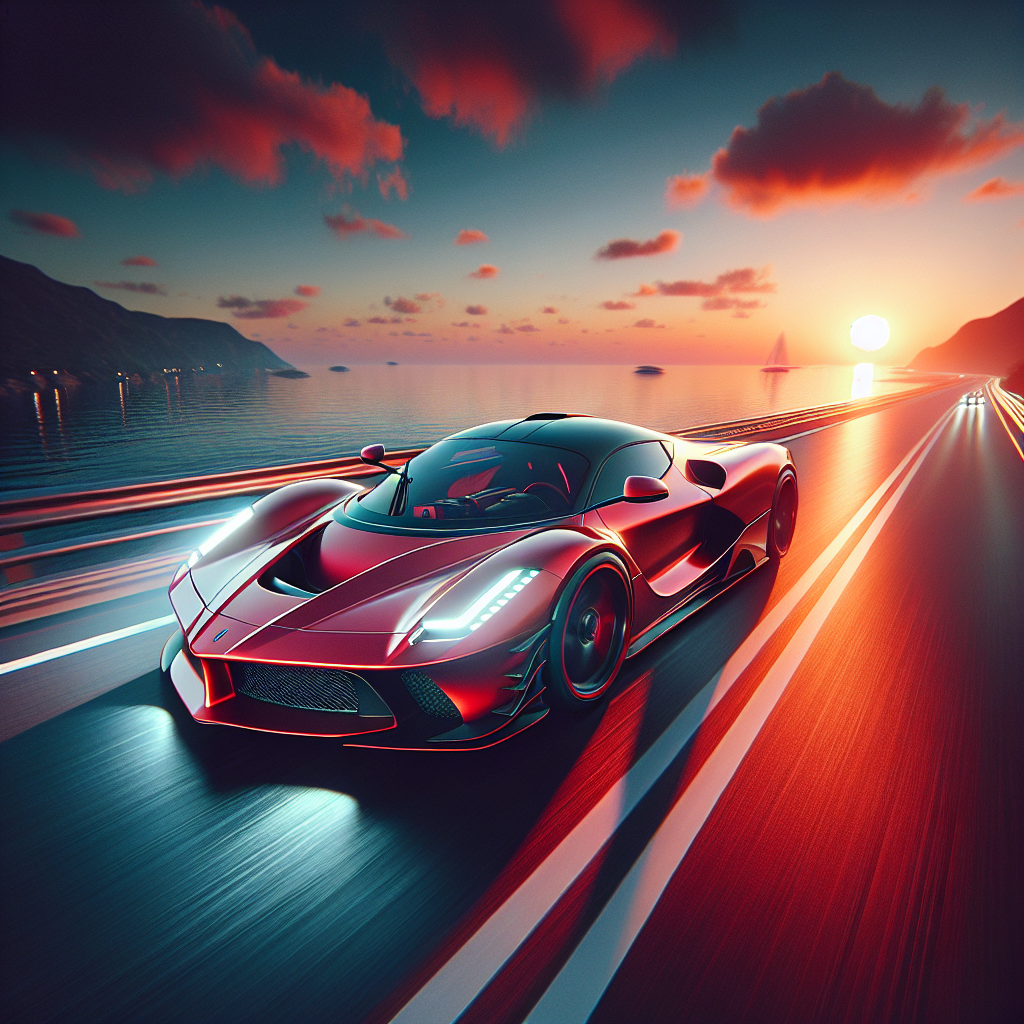
Why the New Ferrari Testarossa Has the Car World Buzzing
Are we finally witnessing the ultimate comeback of the 80s icon with the rumored new Ferrari Testarossa? I don’t know about you, but my social media feeds have been absolutely exploding with spy shots, renders, and whispers from Maranello about the return of the ultimate poster car. Listen, we all love the ultra-modern hybrid hypercars pushing insane lap times, but there is something fundamentally pure and deeply emotional about the side-straked legend making a comeback. It hits right at the core of car culture nostalgia.
I was grabbing a quick espresso near the Fiorano test track late last month—a buddy of mine runs a small cafe right on the edge of town—when we heard it. It was a guttural, naturally aspirated howl bouncing off the ancient brick buildings. A few minutes later, a heavily camouflaged prototype blasted past. Sure, the body panels were wrapped in that chaotic black-and-white swirl vinyl, but you couldn’t hide those incredibly wide rear haunches and the aggressive, sweeping side intakes. It was practically screaming its identity.
This isn’t just another limited-run special edition. The new Ferrari Testarossa represents a massive philosophical shift for the brand. It is about bridging the gap between analog emotion and digital precision. This revival is exactly what enthusiasts have been begging for. It takes the visual drama of the Miami Vice era and injects it with cutting-edge motorsport technology. If you have been waiting for a machine that prioritizes driving passion over mere spreadsheet statistics, you are going to want to hear everything about this masterclass in automotive engineering.
The Core Philosophy Behind the Modern Red Head
So, what exactly is the blueprint for a modern interpretation of such an iconic machine? The original was known for its wide stance, its flat-12 engine, and, of course, those iconic cheese-grater side strakes. Recreating that magic without falling into the trap of cheap nostalgia requires a very delicate touch. The engineering team has clearly decided to focus on three main pillars: sensory engagement, aerodynamic functionality disguised as retro styling, and breathtaking mechanical craftsmanship.
Let’s look at the raw numbers and see how this rumored modern beast stacks up against its ancestor and a current benchmark model. The progression of performance is simply staggering when you put it on paper.
| Specification | Original 1984 Testarossa | SF90 Stradale | New Ferrari Testarossa (Expected) |
|---|---|---|---|
| Engine Type | 4.9L Flat-12 naturally aspirated | 4.0L Twin-Turbo V8 + 3 Electric Motors | 6.5L V12 with mild-hybrid KERS |
| Horsepower | 385 hp | 986 hp | 850+ hp |
| 0-60 mph (0-100 km/h) | 5.2 seconds | 2.5 seconds | 2.8 seconds |
| Design Philosophy | Wedge-shaped, analog, grand tourer | Hyper-focused, downforce-heavy track weapon | Retro-futuristic analog feel, grand touring focus |
The value proposition of the new Ferrari Testarossa goes way beyond raw speed. First, it offers an incredible investment potential. Special series vehicles that tap into legacy nameplates historically appreciate faster than standard production cars. Second, it delivers an unmatched emotional connection; you are getting a roaring V12 engine pushed right behind your head, delivering the purest soundtrack preserved by synthetic fuel advancements. It is an automotive concert.
Here are the top three reasons you should be genuinely excited about this car:
- The Return of Real Physical Controls: Rumors strongly indicate a move away from capacitive touchscreens on the steering wheel, returning to tactile, satisfying physical dials and switches in the cabin.
- Active Aerodynamic Side Strakes: Those iconic side vents are not just for show anymore. They will physically articulate, opening wider when the massive engine requires more cooling and flattening out to reduce drag during high-speed runs.
- A Focus on Grand Touring over Track Times: Rather than breaking your spine with rock-hard suspension, this car is tuned to cross entire continents comfortably at absurd speeds, just like the original.
Origins of the Red Head
The 1984 Paris Auto Show Shockwave
You cannot truly appreciate the new Ferrari Testarossa without looking back at the absolute earthquake the original caused when it dropped. Unveiled at the Paris Auto Show in 1984, it was nothing short of a cultural phenomenon. Penned by Pininfarina, it threw the traditional curved, organic lines of previous decades right out the window. It was wide, it was aggressive, and it was unapologetically bold. The sheer width of the rear track—necessary to package the side-mounted radiators—created an intimidating road presence that still breaks necks today.
Evolution Through the 90s
The design didn’t stay static. As the 80s rolled into the 90s, the car evolved into the 512 TR, which brought significant mechanical updates. The engine was lowered in the chassis to drastically improve the center of gravity and handling, curing some of the twitchy characteristics of the early cars. Then came the F512 M, the final and most controversial iteration with exposed headlights replacing the iconic pop-ups. Each version maintained the core soul—a massive twelve-cylinder engine singing an intoxicating tune while consuming miles of asphalt effortlessly.
Modern State of Retro Design
As we push right through 2026, the automotive industry has hit peak nostalgia. Car enthusiasts are suffering from digital fatigue. We are surrounded by electric SUVs that look like computer mice and feature synthetic engine noises piped through speakers. The cultural pendulum is swinging hard back toward mechanical authenticity. Design studios are realizing that leveraging heritage DNA is the most effective way to stand out. The new Ferrari Testarossa perfectly captures this zeitgeist. It takes a silhouette permanently etched into the minds of the 80s generation and re-sculpts it using modern carbon fiber, resulting in a machine that feels timeless rather than dated.
Aerodynamic Witchcraft and V12 Mechanics
Fluid Dynamics Disguised as Art
Building a car that looks like an 80s wedge but handles like a modern supercar requires serious engineering sorcery. The original car was notoriously tricky at the absolute limit because its aerodynamics generated more lift than downforce at high speeds. The engineers for the new Ferrari Testarossa have fundamentally flipped that script. They are utilizing completely flat underbodies and aggressive rear diffusers that suck the car onto the road without needing an ugly, massive rear wing. The air flows precisely over the cabin, channels through those side strakes to feed the hungry radiators, and exits out the back to reduce the turbulent wake.
The V12 Hybrid Powertrain Mechanics
The beating heart of this machine is an absolute marvel. Rather than going fully electric, they have engineered a masterpiece of internal combustion assisted by electricity. It is designed to deliver immediate throttle response while keeping emissions strictly compliant. Let me break down the facts of what is happening under that rear glass:
- Kinetic Energy Recovery System (KERS): Similar to Formula 1 technology, the electric motor captures braking energy and deplows it instantly to fill in the torque curve while the V12 revs up.
- Thermal Efficiency: New high-pressure fuel injection systems allow the 6.5L engine to burn fuel much more efficiently, generating massive power without massive waste.
- Acoustic Tuning: Exhaust headers are geometrically tuned like a musical instrument to ensure the exhaust gas pulses harmonize perfectly, creating a high-pitched scream rather than a low rumble.
- Titanium Internals: Using ultra-lightweight titanium connecting rods allows the massive engine to spin up to an astonishing 9,000 RPM instantly.
The Ultimate 7-Day Buyer’s Guide
Day 1: Establish Your Dealership Relationship
You do not just walk into a showroom and buy a new Ferrari Testarossa. These allocations are heavily guarded. On day one, you need to sit down with your local dealership principal. Go over your purchase history, express your genuine passion for the brand’s heritage, and make it abundantly clear that this car will be driven, not just locked in a vault to flip for profit. They want to sell to true ambassadors.
Day 2: Review the Tailor Made Program
Once you secure a spot, day two is about dreaming. Access the ultra-exclusive Tailor Made program catalog. This isn’t about picking red or yellow; this is about choosing between heritage paints from the 1950s or custom multi-layer metallic finishes. Spend hours looking at how light interacts with the massive side strakes on digital configurators to ensure your color choice highlights the car’s aggressive width.
Day 3: Finalize Your Exterior Paint Spec
Make your final exterior decision. While Rosso Corsa is the default, consider shades like Bianco Fuji or a deep, menacing Nero Daytona. The original Miami Vice car was famous in white, and speccing the new Ferrari Testarossa in a pearlescent white is the ultimate nod to its pop-culture royalty status. Ensure your brake caliper colors complement the badges.
Day 4: Select Interior Materials
The interior should be a sanctuary of speed. For day four, avoid the standard black leather. Look into rich, heritage-inspired options like Cuoio (tan) or deep Bordeaux leather. Combine this with matte carbon fiber to bring that perfect blend of vintage warmth and modern technical precision. Decide if you want Daytona-style seats with the iconic perforated horizontal strips.
Day 5: Plan the Garage Infrastructure
A car of this magnitude requires a proper home. Use day five to assess your garage. You will need a perfectly level floor for the low front splitter, proper climate control to protect the bespoke leather from humidity, and a dedicated high-voltage outlet. Even though it is a mild hybrid, keeping the battery tender active is crucial for the onboard computers when the car sits for weeks.
Day 6: Organize Financing or Asset Liquidation
Time to handle the business end. We are talking about an asset that will likely cost north of half a million dollars before options. Organize your capital. Whether you are liquidating stocks, setting up specialized exotic car financing, or moving business funds, ensure the liquidity is ready so you don’t stall the allocation process when the factory demands the first massive deposit.
Day 7: Submit the Expression of Interest
This is the final step. Review every single option code with your dealer. Sign the heavy paperwork, place your deposit, and receive your official factory welcome box. From here, the excruciating but thrilling wait begins as your personalized V12 masterpiece moves from a concept on a screen to a physical object being hand-assembled in Italy.
Myths and Reality
Myth: The new car is just a reskinned Roma.
Reality: Not even close. While the brand shares parts to reduce costs, the new Ferrari Testarossa features a completely bespoke mid-engine architecture designed specifically to handle the immense weight and power of a V12, whereas the Roma is a front-engine V8 grand tourer.
Myth: It will be a fully silent electric vehicle.
Reality: Enthusiasts panicked over this, but the factory knows better. It utilizes a hybrid system strictly for performance enhancement and emissions compliance, but the primary power plant remains a screaming, naturally aspirated internal combustion engine.
Myth: The iconic side strakes are fake aesthetic pieces.
Reality: Everything on a modern supercar must serve a purpose. Those dramatic strakes are fully functional active aerodynamic components that channel massive amounts of air to cool the immense powertrain and generate downforce.
Myth: You can buy one just because you have the money.
Reality: Wealth is just the entry ticket. To get an allocation for a flagship revival like this, you typically need a deep history of purchasing V12 models from the brand and attending official rallies and racing events.
Frequently Asked Questions
Will the new Ferrari Testarossa have a manual transmission?
Unfortunately, no. The immense torque and hybrid integration require a lightning-fast dual-clutch automatic transmission to manage the power safely and effectively without destroying the drivetrain.
How many units will be produced?
While official numbers are unconfirmed, insiders suggest it will be an unnumbered but strictly time-limited production run, likely constrained to a 24 to 36-month manufacturing window to maintain extreme exclusivity.
Can I still get a V12 engine in 2026?
Yes. Despite tightening global emission regulations, the engineers have utilized synthetic fuel compatibility and mild-hybrid technology to keep the legendary twelve-cylinder engine alive and completely road-legal.
Does it have the pop-up headlights?
Safety regulations killed pop-up headlights decades ago. However, the designers have cleverly disguised ultra-thin LED matrix beams under a dark visor lip, giving the illusion of the classic hidden headlight aesthetic.
How much will the new Testarossa cost?
Expect a base price hovering around the $600,000 mark. But once you dive into the custom Tailor Made options, out-the-door prices will easily eclipse $800,000.
Will it be faster than the SF90?
No, and it isn’t trying to be. The SF90 is a hyper-focused track weapon. This car focuses entirely on raw emotion, driver engagement, and breathtaking grand touring style over absolute Nurburgring lap times.
When will the first deliveries happen?
If the reveal happens later this year, VIP clients who secured their allocations early can expect to take delivery of their cars sometime in late Q3 or Q4 of next year.
Is it a good investment?
Absolutely. Front-engine V12s hold their value well, but mid-engine flagship V12 revivals historically skyrocket in value on the secondary market almost immediately after production ends.
So, there you have it. The new Ferrari Testarossa is shaping up to be much more than a nostalgia play; it is a definitive statement that pure automotive passion is still alive and well, even as the industry rapidly changes. It combines the wildest aesthetic elements of the 80s with the absolute pinnacle of modern engineering. If you enjoyed this breakdown, make sure to drop a comment below with your dream color spec, and share this guide with your fellow gearhead friends to keep the conversation going!




Leave a Reply