

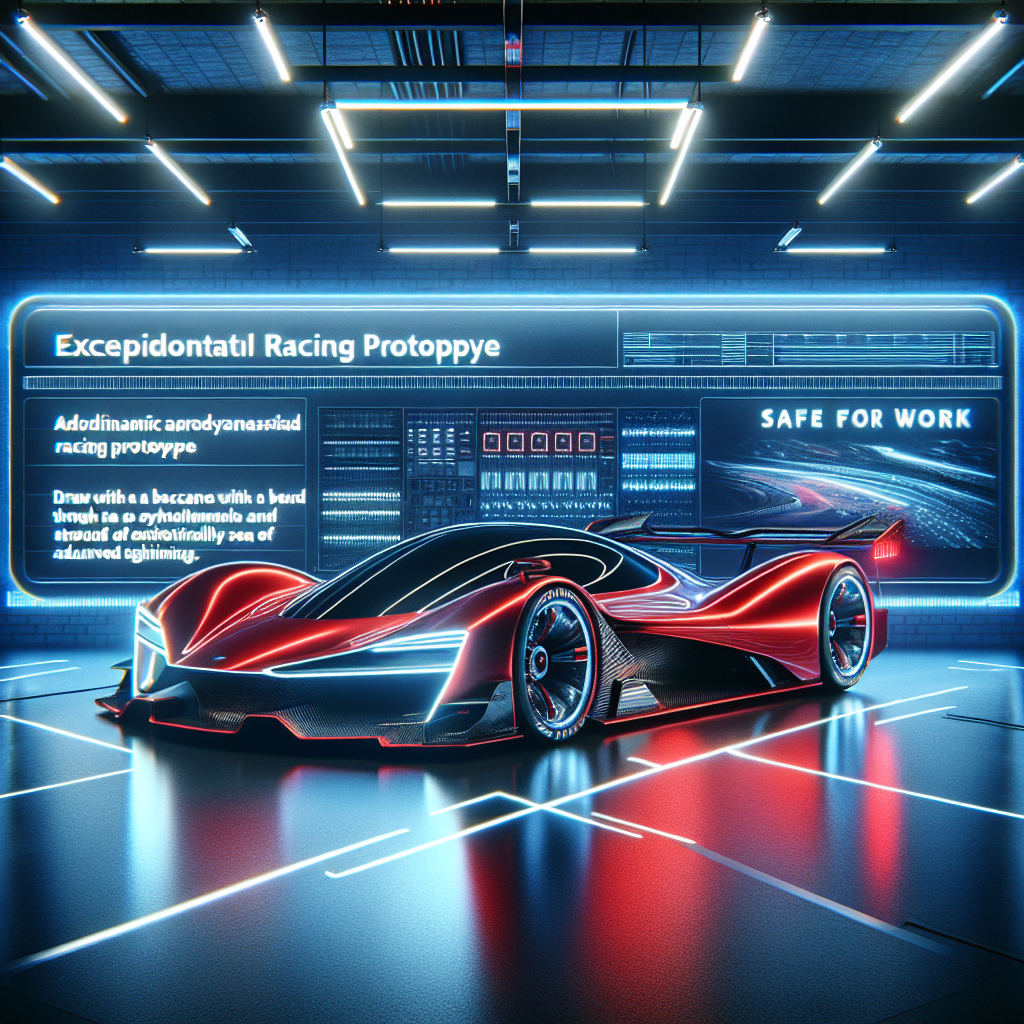
SF90 XX: Breaking the Boundaries of Extreme Track Performance
Do you know what happens when a legendary Italian automaker completely stops playing nice and throws the rulebook out the window? When you first look at the SF90 XX, you instantly realize that you are staring at a street-legal track monster that defies all traditional automotive logic. I am telling you, this is not just another fast car; it is a violent, beautiful testament to what engineering can achieve when limits are ignored. Just a few weeks ago, right here in Kyiv, I was grabbing a coffee near the city center when I saw a covered transport truck unloading what looked like an aerodynamic spaceship. Even under the camouflage wrap, the massive fixed rear wing and the incredibly low, aggressive stance gave it away immediately. Car culture in Ukraine is incredibly resilient, and seeing local enthusiasts already buzzing about allocating deposits for this exact model shows just how massive its global impact truly is.
You might honestly think that a hybrid hypercar is simply a compliance trick to satisfy modern emissions regulations, but the reality behind this specific beast is way more brutal and purpose-driven. This machine takes the highly capable hybrid foundation of the standard model and aggressively injects it with raw, unfiltered, track-focused aggression. It is absolutely not just a car; it is a permanent statement of absolute dominance on the tarmac. I am going to walk you through exactly why this incredible hypercar has completely rewritten the established playbook for hybrid performance vehicles, breaking down its complex aerodynamics, its immense electrified power, and the legendary track lineage it carries. If you love speed, you are definitely in the right place right now. Grab a seat, and let me show you what makes this Italian masterpiece tick.
The Beating Heart and Aerodynamic Soul of the SF90 XX
Let us get straight into what actually makes the SF90 XX a monumental leap forward in high-performance automotive engineering. At its very core, this car is heavily focused on maximizing every single drop of kinetic energy and aerodynamic potential. The engineering team in Maranello took the already ridiculous hybrid V8 powertrain and basically pushed it straight into the stratosphere. But as any racing driver will quickly tell you, raw power is absolutely nothing without precise control, which is exactly why the aerodynamics are the true unsung heroes here. This car actively generates more downforce than almost anything else with a valid license plate right now.
To put things into a clearer perspective, let us look directly at how the extreme XX version stacks up against the standard SF90 Stradale.
| Feature / Metric | Standard SF90 Stradale | SF90 XX Stradale |
|---|---|---|
| Combined Power Output | 986 horsepower | 1,016 horsepower |
| Maximum Downforce | 390 kg @ 250 km/h | 530 kg @ 250 km/h |
| Weight and Aero Focus | Active rear spoiler | Fixed rear wing, -10 kg weight reduction |
The pure value proposition here is utterly staggering. First of all, you get the intense exclusivity of the legendary XX program—a program historically reserved strictly for track-only billionaires—now legally available for your Sunday morning coffee run. Second, the hybrid system provides instant torque-fill, virtually eliminating turbo lag entirely. Imagine you are rocketing out of a tight hairpin corner on a mountain pass; the electric motors pull you forward violently while a twin-turbo V8 screams right behind your head. It is a dual personality that excels whether you are attacking apexes at Monza or aggressively carving up a scenic coastal highway.
Here are three core advantages of this extreme setup:
- Instant Throttle Response: Three independent electric motors provide immediate power delivery the exact millisecond your foot hits the pedal, masking any mechanical delay from the internal combustion engine.
- Unprecedented Downforce: The fixed rear wing—the very first one fitted on a road-going Ferrari since the legendary F50—literally pins the back of the car to the road, inspiring massive confidence at high speeds.
- Qualifying Mode: A highly specialized software feature that actively unleashes maximum electrical output from the battery cells for blistering, uncompromising lap times when you need it most.
The Origins of the Exclusive XX Program
To truly understand this car, we need to trace the bloodline. The entire XX program started back in 2005 with the FXX, which was basically an Enzo turned up to eleven. It was not street legal. You could not take it home. The factory kept the car, and highly vetted, ultra-wealthy clients were invited to act as gentleman test drivers at exclusive track days. This created a mobile laboratory where engineers gathered massive amounts of telemetry data. Following the FXX came the 599XX and then the wild, hybrid FXX-K based on the LaFerrari. These cars were incredibly loud, violently fast, and totally uncompromising. They set the gold standard for what a manufacturer could achieve when they ignored noise regulations, crash safety requirements, and pedestrian impact standards.
Evolution into the Electrified Hybrid Era
The timeline naturally evolved. The LaFerrari was the brand’s first serious foray into hybrid hypercars, utilizing a KERS-style system lifted directly from Formula 1. However, that was a mild hybrid setup designed purely for bursts of speed, paired with a massive naturally aspirated V12. The technological shift truly materialized with the introduction of the standard SF90, which fully embraced a plug-in hybrid architecture featuring forced induction via a twin-turbo V8. This was a massive philosophical shift for Maranello. They realized that electric motors could be used not just for efficiency, but for advanced torque vectoring, completely changing how the front end of the car gripped the tarmac during cornering.
The Modern State of the Track-Ready Hypercar
Now that we are deep into 2026, the underlying hybrid technology has profoundly matured. The SF90 XX represents a highly pivotal moment in automotive history where the thick line dividing a track-only laboratory experiment and a fully road-legal supercar has entirely vanished. We are living in an era where battery density, thermal management systems, and advanced aerodynamics have caught up with the wild imaginations of the engineers. You now have a vehicle that embodies decades of closed-course racing data, perfectly refined and packaged with a set of license plates.
Aerodynamics and Fluid Dynamics Explained
Let us talk about the invisible force shaping this car: aerodynamics. The massive fixed rear wing is just the most obvious piece of a highly complex puzzle. Beneath the skin, the car utilizes a completely redesigned front S-Duct on the hood. When the car moves forward, high-pressure air entering the front bumper is aggressively channeled out through the hood, seamlessly generating front-end downforce without adding significant drag. At the rear, the fixed wing works in tandem with a patented “shut-off Gurney.” This is an active aerodynamic element located beneath the wing. On long straights, a mechanical flap drops down to stall the airflow, significantly reducing aerodynamic drag and allowing for maximum top speed. During heavy braking or aggressive cornering, the flap retracts, allowing the high-pressure air to slam against the fixed wing, instantly generating massive grip.
The Hybrid Powertrain Matrix
Mechanically, the setup is a total marvel of packaging. You have a mid-mounted 4.0-liter twin-turbocharged V8 engine that has been meticulously upgraded with polished inlet and exhaust tracts, new pistons, and a higher compression ratio. But the true magic happens with the three electric motors. Two are positioned independently on the front axle, and one sits snugly between the V8 engine and the eight-speed dual-clutch transmission. This configuration allows for incredibly precise Torque Vectoring. When you turn into a corner, the car actively spins the outside front wheel slightly faster than the inside wheel, physically dragging the nose of the car perfectly into the apex.
- The V8 engine alone produces an astonishing 786 horsepower at 7,900 rpm.
- The lithium-ion battery pack holds 7.9 kWh of energy, carefully positioned behind the seats for optimal weight distribution.
- The front electric motors handle reversing completely; there is no mechanical reverse gear in the transmission, saving crucial weight.
- The redesigned flat floor massively accelerates airflow velocity under the car, creating a powerful vacuum effect that sucks the chassis to the ground.
Day 1: Understanding the eManettino Steering Wheel Dial
Your first day with the car is all about understanding the software. Start the engine, but keep the eManettino dial in standard hybrid mode. Drive around town and learn how the vehicle seamlessly transitions between pure electric silence and screaming V8 power. Feel the unique sensation of stealth mode as you quietly glide through your neighborhood, knowing you have over a thousand horsepower literally at your fingertips.
Day 2: Mastering the Front Axle Torque Vectoring
Find an empty, wide backroad or a massive deserted parking lot. Start to push the front end a little harder into corners. You will actively feel the steering wheel load up as the twin front electric motors drag the car through the turn. It feels entirely different from a traditional rear-wheel-drive supercar. The grip limit is artificially extended by the computer, making the car feel impossibly agile despite the added weight of the battery packs.
Day 3: Engaging the Aggressive Qualifying Mode
Today is the day you unlock the full 1,016 horsepower. Turn the dial to Qualifying Mode. This tells the battery management system to prioritize extreme power discharge over energy conservation. Find a long, empty, and perfectly legal stretch of tarmac. The acceleration is violent. The extra boost from the electric motors fills the torque curve entirely, pinning you back into the carbon fiber bucket seats with zero hesitation.
Day 4: Experiencing Aerodynamic Awareness
Take the car onto a high-speed highway or an open track straight. Pay close attention to how the car behaves as you cross 150 km/h. You will start to feel the massive fixed rear wing and the front aero ducts working together. The steering will become significantly heavier and more planted. The car stops feeling like it is driving on the road and starts feeling like it is aggressively cutting directly through the atmosphere.
Day 5: Braking Point Recalibration
The new ABS EVO system integrated into this hypercar is basically black magic. It utilizes sensor fusion to measure exactly how much grip each individual tire has at any given millisecond. Because of this, you can brake incredibly late into a corner. Spend this day practicing threshold braking. Hit the carbon-ceramic brakes hard and notice how the car remains perfectly stable without any nervous twitching from the rear end.
Day 6: Complete Track Day Setup
Now you are ready for a real circuit. Check your tire pressures carefully, ensuring the Michelin Pilot Sport Cup 2 tires are at the optimal temperature. Dive into the digital telemetry system on the dashboard. Set up your lap timer. This is where the car truly belongs. Combine the torque vectoring, the qualifying mode, and the extreme downforce to post lap times that will embarrass dedicated race cars.
Day 7: The Cool Down and Telemetry Review
After a grueling track session, put the car back into a relaxed mode to cool down the massive brakes and battery thermal management system. Park it in your garage and download the telemetry data collected by the car’s onboard computers. Review your braking points, throttle applications, and G-forces. The car actually teaches you how to be a better, faster, and more precise driver through its data.
Debunking Common Myths About the Car
Myth: It is literally just a standard SF90 with an aftermarket body kit glued on.
Reality: Absolutely not. It features completely redesigned aerodynamics, an upgraded engine with lighter internals, highly revised suspension geometries, and entirely new software logic explicitly designed for track dominance. It is a fundamentally different driving experience.
Myth: Hybrids are far too heavy for serious track use.
Reality: While the battery adds weight, the immense instantaneous torque and the highly advanced front-axle torque vectoring completely mask the bulk. The system manipulates physics so well that it is actively more agile and faster around a circuit than significantly lighter, non-hybrid competitors.
Myth: The massive fixed wing ruins top speed.
Reality: Ferrari engineers implemented active aero elements like the shut-off Gurney that actively stall the fixed wing on long straights. This significantly reduces aerodynamic drag, allowing the car to maintain exceptional high-speed stability without sacrificing straight-line velocity.
Is the SF90 XX actually road legal?
Yes, it absolutely is. This model makes historical waves because it is the very first vehicle explicitly developed under the extreme XX program that actually comes with a license plate bracket straight from the factory, making it completely legal for public roads.
How much total horsepower does it produce?
The hypercar produces a completely mind-bending 1,016 cv (metric horsepower) combined. The tuned V8 engine provides 786 hp, while the three sophisticated electric motors supply the remaining output, working in absolute perfect harmony.
Can it drive on pure electric power alone?
Yes, it features a dedicated eDrive mode. It can travel quietly on pure electric power for approximately 25 kilometers (about 15 miles) using strictly the front electric motors, making it surprisingly friendly for quiet, early-morning neighborhood exits.
What is the official top speed?
Despite the incredibly aggressive downforce elements prioritizing cornering speed over straight-line runs, the vehicle can still hit an astonishing top speed of around 320 km/h (199 mph) thanks to the active drag reduction systems.
How many units are actually being manufactured?
Exclusivity is completely guaranteed. Maranello is firmly capping production at exactly 799 Stradale (coupe) models and 599 Spider (convertible) models, and practically all of them were instantly spoken for by top-tier clients.
What is the primary difference between the Stradale and Spider?
The Stradale is the fixed-roof coupe, offering peak structural rigidity. The Spider features an intricate retractable hard top that allows for open-air driving, which adds slightly to the overall curb weight but vastly amplifies the auditory experience of the V8.
Does the transmission actually have a reverse gear?
No, the eight-speed dual-clutch transmission entirely lacks a physical reverse gear to save crucial rotational weight. Reversing maneuvers are handled completely silently by running the front-mounted electric motors backward.
Is the suspension far too stiff for regular public roads?
While the baseline suspension setup is aggressively firm for circuit use, it includes a highly effective ‘bumpy road’ suspension mode toggle on the steering wheel. This significantly softens the magnetic dampers, making it surprisingly compliant on less-than-perfect city streets.
How does the ABS EVO system improve track times?
The ABS EVO system utilizes a highly advanced 6-way dynamic chassis sensor to predict exactly how much grip is available. This allows the driver to brake extremely deep into the corner while simultaneously turning the steering wheel without spinning out.
Is it faster than the LaFerrari around the Fiorano test track?
Yes, significantly faster. Thanks to the massive evolution in tire compound technology, explosive all-wheel-drive traction, and superior aerodynamic downforce, this new hybrid completely obliterates the lap times set by the older hypercar generation.
Look, if you are truly serious about experiencing the absolute bleeding edge of automotive engineering, the SF90 XX is the undeniable peak. It seamlessly bridges the gap between hyper-advanced electric propulsion and the screaming, visceral emotion of a classic internal combustion engine. Drop a comment below if you think the hybrid era has officially surpassed the golden age of purely gasoline supercars, and definitely share this guide with anyone obsessed with going incredibly fast!





Leave a Reply