

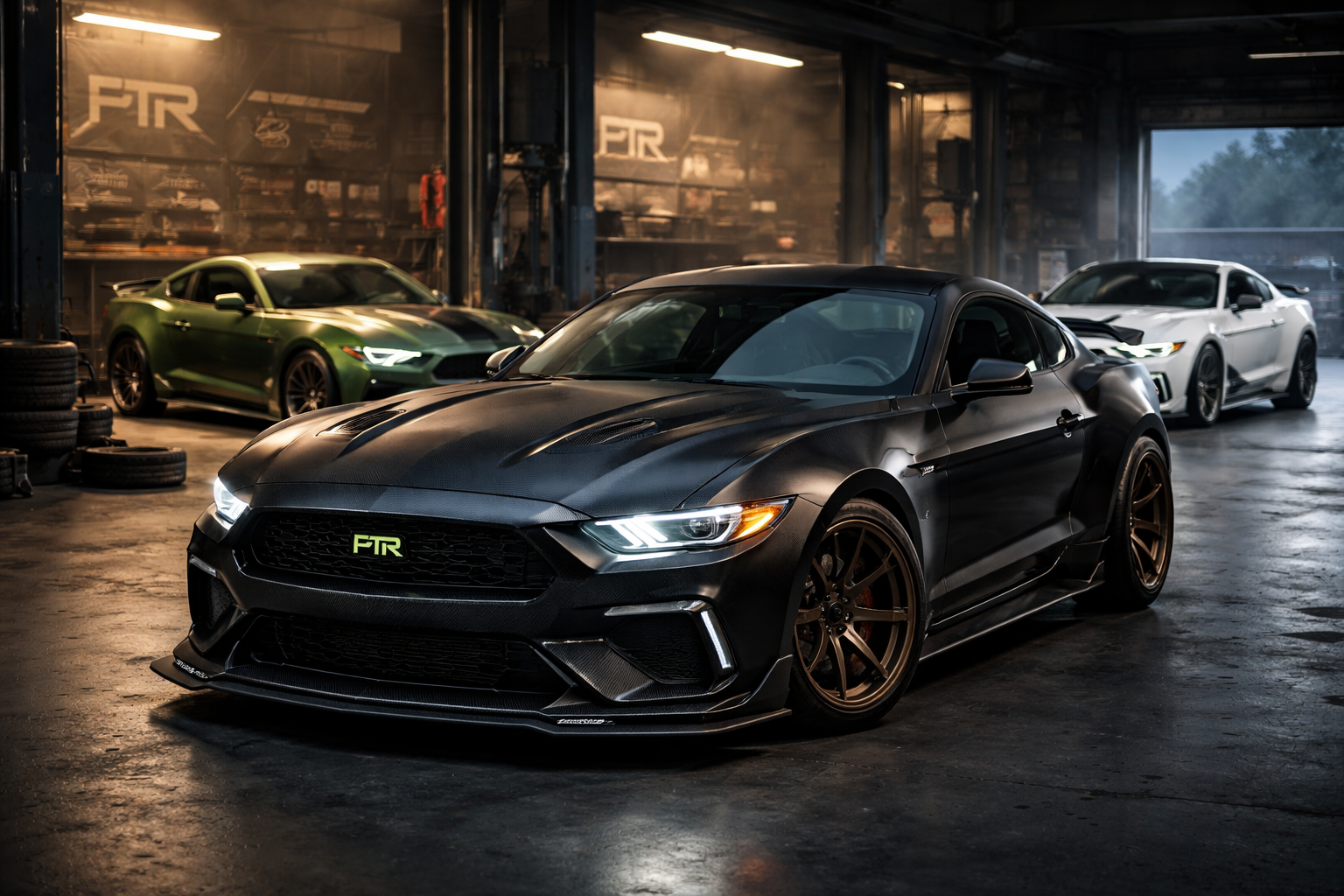
Say “RTR Mustang” to ten car people and you might get ten slightly different answers. One person pictures Vaughn Gittin Jr. throwing down in a tire-smoke cloud. Another thinks of the signature grille lights and a Mustang that looks mean before it even starts. Someone else jumps straight to the Spec 3 and starts talking horsepower. And then there’s the newer wrinkle: the first factory-built Ford Mustang RTR, which changed the conversation again.
That’s part of what makes the topic fun. RTR Mustang is not just one car. It’s a whole performance identity built around the Ford Mustang — part styling brand, part suspension-and-aero philosophy, part motorsport attitude, part serious modern package engineering. If you only know it as “that Mustang with the lit grille,” you’re missing a lot. And if you only know it as a drift thing, same problem.
The real story is bigger. RTR has spent years turning Mustangs into something more specific than just modified pony cars. The best way to describe it is probably this: RTR takes the Mustang and pushes it toward a sharper, more aggressive, more driver-minded version of itself without pretending every buyer wants the same kind of performance. That flexibility matters. It is why the RTR world now stretches from appearance-and-handling upgrades to serious power builds — and now, finally, to a Ford factory-built Mustang RTR as well.
That’s why the name keeps showing up. Because it means something. It has history, visual identity, motorsport credibility, and just enough variation to keep people arguing about which version is the “real” one. Honestly, that’s a pretty healthy sign for a performance sub-brand.
This guide is the clean version for U.S. readers. What an RTR Mustang actually is, how the lineup works now, how the factory-built 2026 Mustang RTR changes the story, what makes a Spec 2 different from a Spec 3 or Spec 5, and why RTR still matters in a Mustang world that is already crowded with strong factory trims. Not hype. Not brochure poetry. Just the version that makes sense.
What RTR actually stands for
RTR stands for “Ready to Rock,” which sounds a little loud until you realize the whole brand is intentionally loud in the right ways. It was founded by Vaughn Gittin Jr., and the brand’s identity has always been tied to driving culture that feels active, not polished into blandness. Drift. Track. Street. Style. Personality. That mix is the point.
And yes, plenty of tuning or builder brands say they’re about “lifestyle” or “experience.” RTR tends to feel more convincing because it comes from a real motorsport root and a very recognizable design language. The cars don’t just wear parts. They tend to project a point of view. That’s harder to fake.
RTR also isn’t just one product lane anymore. That matters if you’re trying to understand the modern Mustang lineup. You have:
- The new factory-built Ford Mustang RTR, created in partnership with Ford
- Built-by-RTR Spec vehicles based on GT chassis, like Spec 2 and Spec 3
- High-end or limited builds like the Spec 5
- Standalone RTR parts and bundles for owners who want the look or pieces without a full serialized car
That structure is what confuses people at first, but it’s also what makes RTR interesting. It’s not a one-note catalog. It’s more like a small performance ecosystem built around the Mustang.
The big change: Ford finally did a factory-built Mustang RTR
This is the part that matters a lot more than it may sound at first. In late 2025, Ford and RTR announced the first-ever factory-built Ford Mustang RTR. That’s a real shift. For years, RTR had been a respected outside force in Mustang culture. Now it moved into a much more official lane.
And the way Ford did it is interesting. The factory-built 2026 Mustang RTR is based on the EcoBoost Mustang, not the V8 GT. That choice tells you something immediately. Ford and RTR were not trying to create just another obvious “bigger V8, more noise, more hood” special. They were trying to make the most exciting turbocharged Mustang in a more accessible part of the lineup.
The official formula is pretty sharp:
- 2.3-liter EcoBoost base
- 315 horsepower and 350 lb-ft in factory form
- Ford-patented anti-lag system for faster throttle response
- Standard Electronic Drift Brake
- Standard Active-Valve Performance Exhaust
- Suspension and cooling know-how pulled in from higher-performance Mustang hardware
And then there’s the available Ford Performance Parts tune, which takes the car to 350 horsepower and 400 lb-ft while keeping the factory warranty. That is a very smart move, honestly. It gives enthusiasts a real step-up option without forcing them into warranty anxiety or a full custom route.
What matters most is not just the numbers. It’s the attitude of the thing. This factory-built Mustang RTR isn’t trying to be the biggest hammer in the Mustang range. It’s trying to be sharp, reactive, playful, drift-happy, and very specifically tuned around turbo four-cylinder balance. That’s a different lane, and it gives the car a real identity instead of making it feel like an imitation of a GT.
Then there’s the other side: the serialized RTR Spec cars
If the factory-built Mustang RTR is the big brand milestone, the Spec cars are still the heart of how many enthusiasts think about RTR. These are the cars that feel most like the classic modern RTR formula: start with a Mustang, then turn it into something sharper, more aggressive, more individualized, and more deeply aligned with RTR’s design and suspension philosophy.
The current 2026 RTR lineup gives that formula three very different flavors.
| RTR model | What it starts from | Why it exists |
|---|---|---|
| Factory-built Mustang RTR | Ford EcoBoost Mustang | Official Ford-RTR collaboration with factory integration and warranty-friendly path |
| RTR Spec 2 | Any 2026 Mustang GT chassis | Styling, chassis tuning, suspension, serialized identity, broad customization |
| RTR Spec 3 | Any 2026 Mustang GT chassis | Spec 2 foundation plus serious supercharged power |
| RTR Spec 5 | High-end limited build | Halo-level RTR expression with extreme output and exclusivity |
That chart helps, because otherwise all the names start blurring together fast.
Spec 2 is probably the most “RTR Mustang” RTR Mustang
This sounds odd, but stay with me. The Spec 2 is probably the cleanest expression of what most people think of when they picture an RTR Mustang. Not because it is the most powerful. It isn’t. And not because it is the rarest. It isn’t. It lands there because it combines the brand’s visual identity, serialized authenticity, suspension work, wheel-and-tire stance, and real driver-focused upgrades in a way that feels complete without tipping into “you built a small monster and now you have to live with it every day.”
RTR says the 2026 Spec 2 starts at $18,995 above the base Mustang GT and can be built from any 2026 Mustang GT chassis. The package includes the expected aggressive body pieces — upper grille with LED air intakes, lower grille, corner grilles, chin splitter, hood vent, rocker splitters, quarter splitters, decklid spoiler — but the more interesting bits are underneath. Adjustable front and rear sway bars. Adjustable shocks and struts. Lowering springs. Staggered 20-inch wheels with Nitto tires. Serialized dash plaque. Certificate of authenticity. Warranty coverage from RTR.
That combination tells you the Spec 2 is not just a styling dress-up kit. It’s very much a handling-and-identity package. The visuals are a big part of the point, sure, but the suspension tuning is what makes it feel like a real vehicle concept instead of just an accessory catalog.
That’s why it makes so much sense as the emotional core of the lineup. It looks unmistakably RTR, drives more seriously than stock, but still stays in a zone many real buyers can imagine using on actual roads.
Spec 3 is where the power conversation gets silly, in a good way
If Spec 2 is the balanced expression, Spec 3 is where RTR leans over the table and says, “Okay, but what if we stop being polite?”
The 2026 Spec 3 starts at $33,995 above the base Mustang GT and gets the 3.0L Ford Performance Whipple supercharger setup. Official output: 810 horsepower and 615 lb-ft of torque. That’s not a casual number. That’s a number that changes the whole tone of the vehicle before you even get to the rest of the package.
And the rest of the package is still substantial. You’re not just buying a dyno sheet. The Spec 3 keeps the chassis and visual identity of the RTR world intact, with the same aggressive aero pieces, tactical performance suspension components, serialized details, staggered wheel fitment, and Nitto rubber. The supercharger doesn’t replace the RTR formula. It drops a massive power figure right into the middle of it.
That matters because high-power Mustang builds can go wrong in a hurry. A lot of them become number-chasing objects that are hilarious in short bursts and weirdly compromised everywhere else. The whole idea behind an RTR Spec 3 is that it should still feel like a complete vehicle, not just a blower kit with body panels attached.
That’s where the real appeal lives. Not only “810 horsepower.” More like: “810 horsepower inside a package that still knows what it wants to be.”
| Spec | Official starting point | Output or focus | Best for |
|---|---|---|---|
| Factory-built Mustang RTR | EcoBoost-based Ford build | 315 hp / 350 lb-ft stock, optional 350 hp / 400 lb-ft tune | Buyers who want official Ford-RTR integration and playful turbo character |
| Spec 2 | $18,995 above GT base vehicle | Chassis, style, suspension, serialized identity | Drivers who want a full RTR car without chasing huge horsepower |
| Spec 3 | $33,995 above GT base vehicle | 810 hp / 615 lb-ft with Whipple supercharger | Buyers who want serious power without losing the RTR chassis-and-style formula |
| Spec 5 | $159,999 including base GT 401A + Performance Pack | 870+ hp / 660 lb-ft, limited 50 units | Collectors and top-tier buyers who want the halo expression |
That’s a pretty wide spread, which is why the term “RTR Mustang” can mean very different things depending on who’s talking.
And yes, the Spec 5 exists to be outrageous
Every serious performance lineup eventually gets to the halo build. The car that isn’t there to be the logical middle choice. It’s there to show the ceiling. That’s the Spec 5.
RTR says the 2026 Spec 5 is limited to 50 units for the model year and starts at $159,999 including the base Mustang GT 401A with Performance Package. It packs 870-plus horsepower and 660 lb-ft from a 3.0-liter Whipple Stage 2 supercharger system, plus all the drama and exclusivity you’d expect from the most extreme RTR road car.
This is not the version most people will buy. That isn’t the point. The point is to make the rest of the lineup feel connected to something aspirational and slightly unhinged. Halo cars do emotional work for a brand. The Spec 5 does that job very clearly.
It also says something useful about RTR’s confidence right now. The brand doesn’t feel like it’s trying to stay small and careful. It feels like it wants a full pyramid — accessible entry point, balanced middle, extreme top.
What makes an RTR Mustang feel different from a stock Mustang
This is where enthusiasts split into camps. Some will say power is the answer. Some will say no, it’s the styling. Others will tell you it’s the suspension and stance. The honest answer is that an RTR Mustang feels different because the package is trying to change the whole character, not just one number.
That starts with design. RTR’s visual language is aggressive without being random. The grille lights are iconic now. The aero pieces feel purposeful. The stance matters. Even sitting still, an RTR car tends to look like it has its own mood.
Then there’s the suspension. This is the part casual observers skip and serious drivers notice. Adjustable sway bars, shocks, struts, lowering springs, wheel fitment, and tire choice change the car in ways that are less flashy but more lasting. They change how the car turns in, settles, rotates, and communicates.
And finally, there’s the culture side. RTR isn’t trying to sell a generic “premium performance” idea. It leans into drift influence, driving personality, and a kind of controlled rowdiness. That doesn’t mean every RTR owner is going to go full Formula Drift in an industrial park. It just means the cars are designed with more attitude than many factory packages dare to show.
- More visual identity than a normal appearance package
- More chassis intent than a simple bolt-on styling kit
- More cultural personality than a lot of corporate performance sub-brands
That blend is the reason the RTR name stuck.
Why RTR matters in a world where Ford already makes strong Mustangs
This is a fair question. Ford already has the Mustang GT. It has Dark Horse. It has GTD at the wild end. So why does RTR still matter? Because RTR doesn’t occupy the exact same emotional lane as Ford’s internal hierarchy.
Ford performance Mustangs often scale upward through factory logic: more performance, more track cred, more engineering focus. RTR adds something more subcultural. More style-forward. More drift-shaped. More custom-feeling even when the car is built to a formal package. It gives Mustang buyers a different flavor of seriousness.
That’s important. Performance culture isn’t one lane anymore. Some buyers want lap times and engineering bragging rights. Some want swagger and stance. Some want tunability. Some want to feel connected to a real enthusiast story instead of a committee-approved performance brochure. RTR speaks especially well to that last group.
And now that Ford has done an actual factory-built Mustang RTR, the relationship feels more official without losing the outsider flavor that made RTR attractive in the first place. That’s a tricky balance. So far, it looks like they’ve handled it well.
FAQ
What is an RTR Mustang?
An RTR Mustang is a Ford Mustang that has been developed or upgraded through RTR’s performance and styling ecosystem, ranging from factory-built collaborations to serialized Spec vehicles and parts packages.
What does RTR stand for on a Mustang?
RTR stands for “Ready to Rock.” It’s the performance brand founded by Vaughn Gittin Jr. and closely associated with Mustang culture.
Is the 2026 Mustang RTR factory-built by Ford?
Yes. Ford and RTR announced the first-ever factory-built Ford Mustang RTR, based on the EcoBoost Mustang, for the 2026 model year.
How much power does the factory-built Mustang RTR make?
In factory form it makes 315 horsepower and 350 lb-ft of torque, with an available Ford Performance Parts tune that takes it to 350 horsepower and 400 lb-ft.
What is the RTR Spec 3?
The RTR Spec 3 is a built-from-GT RTR Mustang that adds a 3.0L Ford Performance Whipple supercharger for 810 horsepower and 615 lb-ft, along with RTR styling and suspension upgrades.
What is the difference between RTR Spec 2 and Spec 3?
Spec 2 focuses on styling, chassis tuning, suspension, and serialized identity. Spec 3 builds on that formula and adds major supercharged power.
Is the RTR Mustang just a body kit?
No. Styling is a big part of the identity, but the RTR formula also includes suspension development, wheel-and-tire setup, serialized builds, and in some versions major powertrain upgrades.
Conclusion
The reason RTR Mustang still matters is pretty simple. It gives the Mustang a different kind of edge than Ford’s normal performance ladder does. Less corporate, more cultural. Less generic “sport package,” more fully formed point of view. That difference has kept RTR relevant for years, even as the Mustang world around it kept evolving.
Now, with the factory-built 2026 Mustang RTR officially in the picture, the brand feels like it’s entering a new phase. More validated, more visible, but still rooted in the same drift-and-driver attitude that made people care in the first place. That’s not an easy thing to pull off. Plenty of sub-brands lose their soul the second they get too official. RTR doesn’t look like it has done that.
And maybe that’s the cleanest takeaway. RTR Mustang isn’t just one spec, one power figure, or one set of lights in the grille. It’s a version of Mustang culture with its own tone — one that still feels loud, deliberate, and unmistakably itself.
Honestly, in a performance world full of polished sameness, that counts for a lot.





Leave a Reply