

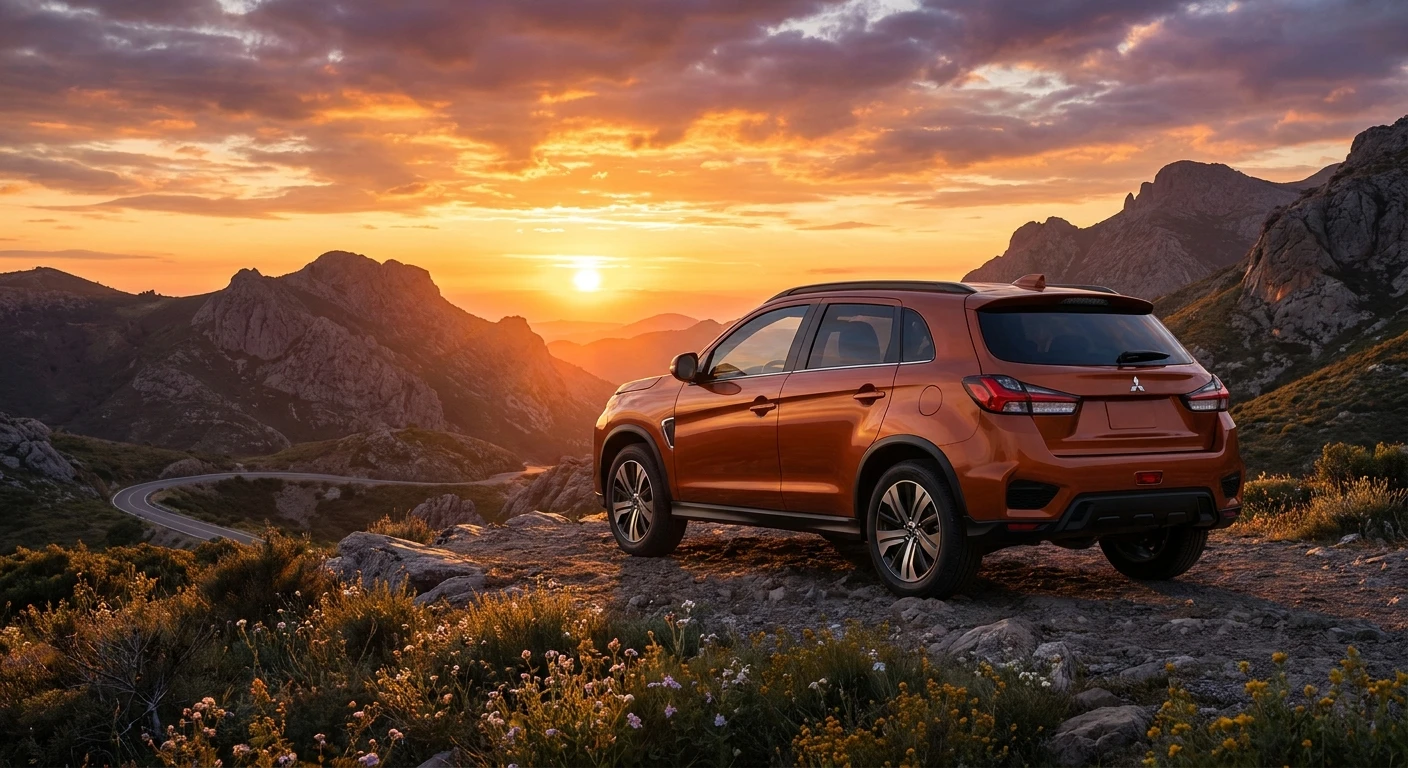
The 2024 Chevy Trailblazer: Everything You Need to Know
If you are looking for a practical, stylish, and unexpectedly punchy subcompact SUV, the 2024 Chevy Trailblazer is actively reshaping what drivers expect from an entry-level crossover. Let us skip the fluff. You want a vehicle that handles grocery runs, weekend road trips, and daily highway commuting without burning through your bank account or boring you to tears. The recent mid-cycle refresh for this model brings significant aesthetic upgrades and standard technology that used to be locked behind premium paywalls. The crossover segment is notoriously crowded right now. Nearly every automaker has a small, lifted hatchback they call an SUV. But this specific model distinguishes itself with aggressive styling, excellent interior packaging, and a surprisingly high driving position that gives you excellent visibility. You are getting the commanding view of a larger truck but the footprint of a nimble city car. The purpose of this guide is to break down the mechanical updates, the technology upgrades, and the precise differences between the trim levels so you can figure out exactly which configuration fits your daily routine.
When analyzing the core benefits of this vehicle, the value proposition heavily relies on its versatility and standard tech. For example, the base LS trim now comes standard with a massive 11-inch touchscreen, making it one of the most tech-forward entry-level vehicles on the market. Another example of its value is the dual-tier cargo floor, which allows you to hide valuables or drop the floor lower to accommodate taller items like potted plants or large coolers. It is all about maximizing a small footprint.
Read also: Epic 2024 colorado Specs & Review; Chevy Equinox 2024: Full Specs and Review.
| Trim Level | Drivetrain Options | Standout Feature |
|---|---|---|
| LS & LT | FWD or AWD | Standard 11-inch touchscreen and 17-inch wheels |
| Activ | FWD or AWD | Off-road tuned suspension and functional skid plate |
| RS | FWD or AWD | Sporty blacked-out exterior accents and flat-bottom steering wheel |
You have several distinct reasons to consider adding this vehicle to your driveway. Here is exactly why it stands out:
- Surprising Interior Volume: Despite being a subcompact crossover, the front passenger seat folds completely flat. This allows you to haul items up to 8.5 feet long, which is incredibly rare for a vehicle in this size class.
- Generous Standard Technology: Every single model for this year includes wireless Apple CarPlay and Android Auto, eliminating cable clutter entirely.
- Distinct Personalities: Unlike competitors that offer one generic look, you can choose between the rugged aesthetic of the Activ trim or the street-focused, sporty vibe of the RS trim.
These features combine to create a vehicle that punches far above its weight class, delivering utility that rivals much larger, more expensive SUVs.
The Origins of the Trailblazer Name
To truly understand the current iteration, you have to look back at where the badge originated. The nameplate first appeared in the late 1990s as a high-end luxury trim level for the Chevrolet S-10 Blazer. It offered premium leather, advanced audio systems, and styling cues that set it apart from standard workhorse SUVs. By 2002, General Motors decided the name was strong enough to stand on its own, launching a dedicated midsize SUV on the GMT360 body-on-frame platform. This early 2000s version was powered by the legendary Vortec 4200 inline-six engine. It was a rugged, truck-based family hauler capable of serious towing and off-roading. However, as the market shifted toward better fuel economy and car-like handling, the original heavy, thirsty model was eventually phased out in North America by the end of the 2000s.
The Evolution into a Subcompact Crossover
After a long hiatus in the North American market, the badge was resurrected for the 2021 model year. However, it was no longer a massive, truck-based SUV. The automotive landscape had changed dramatically, and consumers were demanding small, efficient crossovers that were easy to park in urban environments. The new iteration was built on the VSS-F platform, making it a unibody crossover. This transition upset some traditionalists who wanted a heavy-duty towing rig, but it was a brilliant strategic move. The new lightweight architecture provided excellent fuel economy, nimble handling, and a much lower price point, instantly making it a massive sales success among young professionals and small families.
The Modern State of the Trailblazer
Fast forward to the current market, and the 2024 model year represents a significant mid-cycle refresh. The designers tightened up the exterior styling, giving it narrower, more aggressive daytime running lights and a redesigned front fascia that makes it look like a smaller sibling to the midsize Blazer. The modern state of this vehicle is defined by heavy customization. Buyers can opt for contrasting roof colors, such as a white roof on a blue body, or a crimson roof on a black body. New paint options like Cacti Green and Copper Harbor Metallic keep the aesthetic fresh and highly competitive against rivals like the Subaru Crosstrek and the Kia Seltos.
Under the Hood: Three-Cylinder Turbo Dynamics
Mechanically, this crossover relies on a modern approach to engine design: downsized displacement with turbocharging. You get a choice between two turbocharged three-cylinder engines. The base engine is a 1.2-liter making 137 horsepower, while the upgrade is a 1.3-liter producing 155 horsepower and 174 lb-ft of torque. Because it is a three-cylinder, the engine has a unique, slightly gruff exhaust note compared to a traditional four-cylinder. The turbocharger ensures that maximum torque is available at very low RPMs, meaning the car feels incredibly quick and punchy when accelerating away from stoplights or merging onto city highways. If you select front-wheel drive, the engine is paired with a Continuously Variable Transmission (CVT) to maximize fuel efficiency. If you opt for all-wheel drive, you get a traditional, smooth-shifting 9-speed automatic transmission.
Cabin Tech and Connectivity
The interior technology overhaul is the biggest story for the 2024 refresh. General Motors completely redesigned the dashboard to accommodate a massive digital footprint. You are no longer looking at analog dials and small calculator-style screens. The driver gets an 8-inch digital instrument cluster that displays speed, navigation prompts, and vehicle health metrics clearly. Paired with this is the 11-inch center infotainment screen. The system is highly responsive, featuring quick boot times and crisp resolution.
- The 1.2L engine achieves an EPA-estimated 30 MPG in the city and 31 MPG on the highway.
- The larger 1.3L engine with front-wheel drive actually improves efficiency slightly, hitting up to 33 MPG on the highway.
- Chevy Safety Assist is standard across all trims, providing Automatic Emergency Braking, Front Pedestrian Braking, and Lane Keep Assist with Lane Departure Warning.
- The AWD system is selectable, meaning you can manually disconnect the rear axle to save fuel during dry, summer driving.
Step 1: Assess Your Daily Cargo and Passenger Needs
Before heading to a dealership, honestly evaluate what you carry on a daily basis. The cargo area offers 25.3 cubic feet of space behind the rear seats. If you regularly transport large dogs, bulky sports equipment, or strollers, you need to test if that space is sufficient. Remember to factor in the fold-flat front passenger seat if you occasionally buy lumber or long flat-pack furniture.
Step 2: Choose Between the 1.2L and 1.3L Engines
The base 1.2L engine is perfectly fine for low-speed urban driving. However, if your daily commute involves highway merging, steep hills, or carrying a full cabin of passengers, you absolutely need to upgrade to the 1.3L turbocharged engine. The extra torque makes a massive difference in high-speed passing maneuvers.
Step 3: Decide on FWD vs. AWD
Do not buy all-wheel drive just because you think you need it for one snowstorm a year. FWD models are cheaper, lighter, and get better gas mileage. However, if you live in an area with prolonged winter weather or frequently drive on unpaved dirt roads, the AWD system with the 9-speed automatic transmission is well worth the extra investment.
Step 4: Pick Your Personality (RS vs. Activ)
If you want the top-tier trims, you have to choose an aesthetic. The RS features dark chrome accents, a mesh grille, and dual exhaust outlets for a street-racer look. The Activ trim takes a more rugged approach, featuring unique shock absorbers tuned for gravel roads, chunkier tires, and a functional front skid plate.
Step 5: Test the Tech Interface
Spend at least ten minutes sitting in the driver’s seat testing the new 11-inch screen. Connect your phone via Bluetooth to test the wireless Apple CarPlay or Android Auto. Ensure you are comfortable with the menu layouts and the digital gauge cluster before signing any paperwork.
Step 6: Evaluate the Ride Stiffness
During your test drive, intentionally find some rough pavement or potholes. Because this is a subcompact crossover with a short wheelbase, the ride can feel slightly stiff, especially on the RS trim with its larger 19-inch wheels. Make sure the ride quality aligns with your comfort preferences.
Step 7: Finalize the Paint and Roof Color Combinations
This car offers some of the best color combinations in the industry. Take the time to look at the two-tone roof options. A contrasting roof not only makes the car look much more premium but also helps it stand out in massive, crowded parking lots.
Myths & Reality
Myth: The 3-cylinder engine shakes violently and is too weak for highway driving.
Reality: The engine utilizes active noise cancellation and specialized motor mounts to smooth out vibrations. The 1.3L turbo provides peak torque at just 1,600 RPM, making it feel highly responsive and plenty capable of sustaining highway speeds without straining.
Myth: It is just a smaller version of the standard Blazer.
Reality: Despite the similar styling and shared nameplate heritage, they share zero mechanical components. They sit on completely different architectures, utilize completely different engine families, and target entirely different consumer segments.
Myth: The Activ trim is built for heavy-duty rock crawling.
Reality: The Activ trim features revised shock tuning for better comfort on washboard dirt roads and a skid plate for minor brush deflection. It lacks the ground clearance, low-range gearing, and locking differentials required for actual off-roading.
Does it have wireless Apple CarPlay and Android Auto?
Yes. Every single trim level for the 2024 model year includes wireless Apple CarPlay and Android Auto as standard equipment, along with the 11-inch touchscreen.
How much cargo space does it offer?
You get 25.3 cubic feet of space with the rear seats up, and a maximum of 54.4 cubic feet when the second row is folded down flat.
Can it tow a trailer?
Yes, but it is limited. When properly equipped with the trailering package and the 1.3L engine, it is rated to tow up to 1,000 pounds, which is enough for a small utility trailer or jet ski.
What is the real-world gas mileage?
Most drivers see around 29 to 30 MPG in mixed driving conditions with the AWD 1.3L model, while FWD models can comfortably achieve 31 to 33 MPG on highway road trips.
Does the front passenger seat actually fold flat?
Yes. The front passenger seat can be folded completely forward and flat, creating a long cargo channel that accommodates items up to 8.5 feet in length.
Is the RS trim actually faster?
No. The RS trim is strictly an appearance and handling package. It uses the exact same 1.3L turbocharged engine as the Activ and LT trims, so straight-line acceleration is identical.
Does it come with a spare tire?
Yes, unlike many modern vehicles that only provide a tire inflation kit, most trims include a compact spare tire tucked under the rear cargo floor.
The 2024 Chevy Trailblazer proves that you do not need to spend massive amounts of money to get a stylish, highly functional, and tech-loaded vehicle. By offering punchy turbocharged engines, brilliant cargo solutions like the fold-flat front seat, and aggressive styling options, it perfectly balances urban practicality with weekend utility. If you are ready to upgrade your daily commute, check out the local inventory and schedule a test drive today to see how this subcompact powerhouse handles the road.





Leave a Reply