

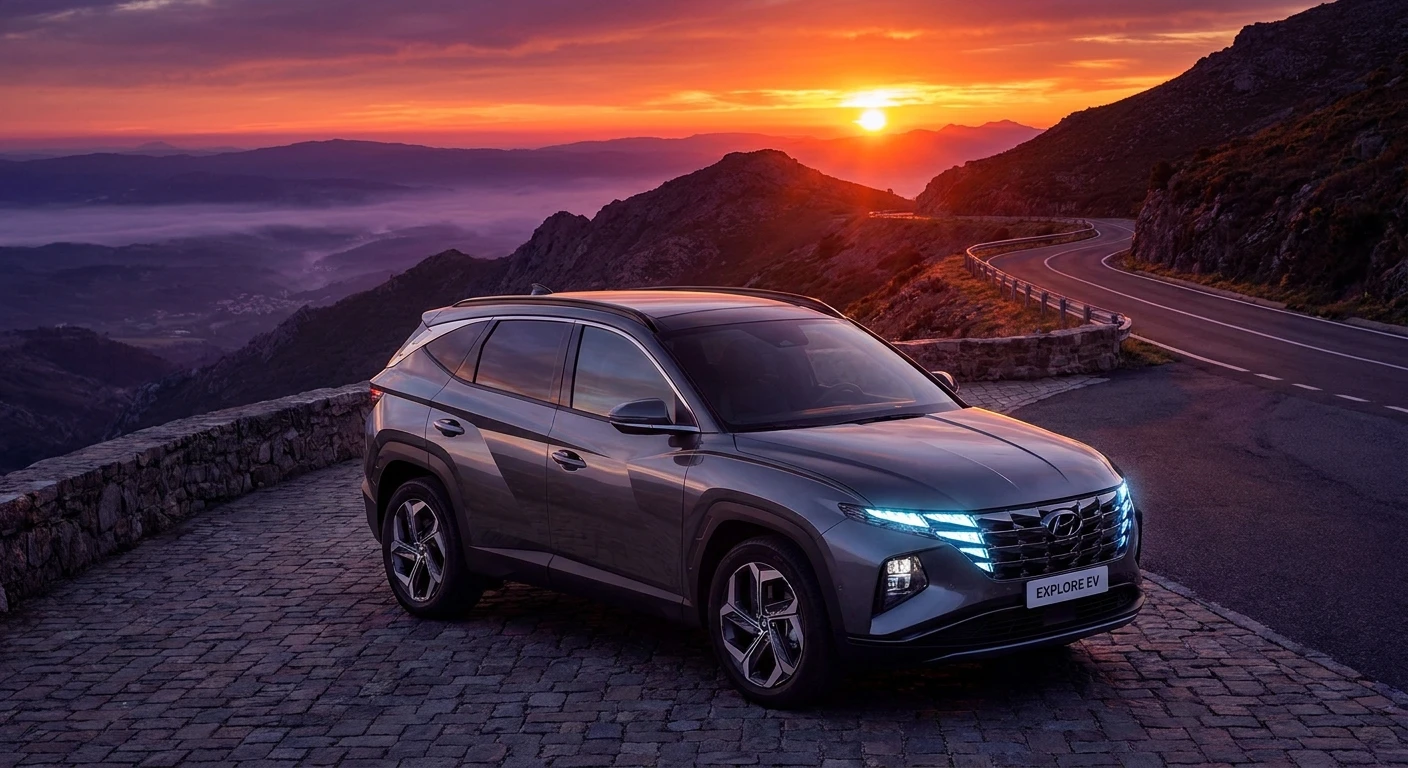
Why the 2023 Hyundai Tucson Redefined the Compact SUV Market
The 2023 Hyundai Tucson stands out as a radical departure from the mundane design language typically found in the family crossover segment. You look at the exterior of this vehicle and immediately notice the daring, geometric angles that challenge conventional automotive styling. It is a compact sport utility vehicle that brings luxury-level aesthetics to an accessible price point. When you analyze the compact SUV market of recent years, it becomes obvious that automakers often play it safe. They rely on soft curves and predictable profiles to appeal to the masses. The engineers and designers behind this specific model threw out that playbook entirely.
Finding a family hauler that actually turns heads in a parking lot is rare, but the parametric dynamics featured on this crossover achieve exactly that. From the seamlessly integrated daytime running lights that hide within the front grille when turned off, to the dual-cockpit interior layout, the vehicle prioritizes an emotional connection with the driver. We are talking about a daily commuter that feels distinctly premium. You sit inside, grab the steering wheel, and notice the lack of a traditional gauge cluster hood, which opens up your forward visibility immensely. By balancing this striking visual identity with practical cargo volume and advanced safety mechanics, this crossover proved that sensible family transportation does not have to be boring.
Read also: Review of the Kia K4 2025: A Bold Sedan; 2024 cadillac xt4 Review and Complete Guide.
Core Benefits and Practical Applications
Understanding the fundamental value proposition of this crossover requires looking beyond the sheet metal. The vehicle delivers tangible, everyday benefits that ease the stress of modern commuting and family transportation. Whether you are navigating tight urban parking garages or embarking on cross-country road trips, the intelligent packaging provides a distinct advantage over legacy competitors in the same weight class.
| Feature Set | Direct Driver Benefit | Real-World Example |
|---|---|---|
| SmartSense Safety Suite | Reduces driving anxiety through active collision avoidance and monitoring. | Blind-Spot Collision-Avoidance Assist actively pulses the brakes if you try to merge into an occupied lane on the highway. |
| Parametric Hidden Lights | Provides a unique visual signature while maintaining high-lumen output for night visibility. | The front grille appears completely dark when parked, but illuminates like a pair of wings when you start the engine at night. |
| HTRAC All-Wheel Drive | Maximizes traction dynamically based on wheel slippage and steering angle. | Automatically shifts power to the rear wheels when accelerating on a rain-slicked road to prevent front-wheel spin. |
These specific systems highlight a philosophy focused on proactive utility rather than reactive solutions. You benefit from engineering that anticipates your needs before you even realize you have them. When looking at the overall driving experience, the vehicle consistently over-delivers in three primary categories that families care about most.
- Striking Visual Aesthetics: The bold body creases and distinctive lighting signatures mean you never lose your vehicle in a crowded supermarket lot. It brings a level of prestige normally reserved for European luxury brands.
- Exceptional Cabin Capacity: Despite its compact footprint, the clever interior packaging maximizes rear legroom, allowing tall adults to sit comfortably behind a tall driver without their knees brushing the seatback.
- Diverse Powertrain Flexibility: By offering standard internal combustion, traditional hybrid, and plug-in hybrid variants, the lineup caters to almost every specific fuel economy requirement and commute distance.
Origins of the Tucson Nameplate
To appreciate the massive leap forward this vehicle represents, you need to look back at the origins of the nameplate. Hyundai first introduced the model in 2004 as a 2005 model year vehicle. Back then, it was a budget-friendly, highly utilitarian entry into a rapidly expanding crossover market. It shared a platform with the Elantra of the time and was primarily known for its affordability rather than its driving dynamics or styling. It was a humble beginning, defined by plastic body cladding and a strictly function-over-form mentality.
Evolution of the Fourth Generation
The fourth generation, which launched for the 2022 model year, marked a total reinvention. The 2023 edition refined this aggressive new direction. The design team adopted a theme called “Sensuous Sportiness.” This evolutionary leap meant ditching every single design cue from the third generation. The wheelbase was stretched, the track was widened, and the technological integration moved from optional add-ons to core foundational architecture. This was no longer just the cheaper alternative to a Honda CR-V or a Toyota RAV4; it became a direct, formidable competitor that often outpaced its rivals in raw feature count.
Modern State of the 2023 Lineup
By the time the 2023 iteration rolled into showrooms, the vehicle had firmly established itself as a technological powerhouse. The manufacturer streamlined the trim levels and made minor adjustments to standard equipment based on driver feedback from the previous year. The modern state of this specific model year represents a sweet spot for buyers looking on the pre-owned market today. You get the fully matured fourth-generation styling, the updated infotainment software straight from the factory, and the bulletproof reliability of the revised Smartstream engine family.
Powertrain Architecture and Hybrid Mechanics
The mechanical underpinnings of this SUV are where the engineering team truly excelled. The standard internal combustion models rely on a 2.5-liter, naturally aspirated four-cylinder Smartstream engine. This block utilizes both direct injection and multi-port injection. By switching between these two fuel delivery methods depending on engine load and RPM, the computer optimizes both low-end torque and high-speed fuel efficiency while minimizing carbon buildup on the intake valves. It pairs with a highly responsive 8-speed automatic transmission that utilizes a traditional torque converter rather than a continuously variable transmission, resulting in crisp, predictable gear shifts.
Aerodynamics and Structural Rigidity
Aerodynamic drag and structural flex are the enemies of both fuel economy and cabin quietness. The chassis utilizes high-strength steel extensively, resulting in a passenger safety cell that actively resists twisting when cornering or traversing uneven terrain. This rigidity allows the suspension dampers to do their job more effectively, absorbing road impacts rather than passing them through the floorboards. The underbody features aerodynamic paneling that smooths airflow beneath the vehicle, reducing the drag coefficient and minimizing wind noise at highway speeds.
- E-Handling Technology: Hybrid models use the electric motor to apply subtle braking forces to individual wheels during cornering, shifting the weight balance to improve turn-in response.
- Smartstream Valve Duration: Continuously Variable Valve Duration (CVVD) technology independently controls the opening and closing duration of the valves, boosting performance and reducing emissions simultaneously.
- Acoustic Laminated Glass: High-tier trims utilize specialized layered glass in the front windows to actively deaden sound wave frequencies generated by tire tread and wind resistance.
- Thermal Management Module: An integrated module replaces the traditional thermostat to manage engine coolant temperatures more precisely, drastically reducing engine warm-up times in cold climates.
Step 1: Configuring Your Driver Profile and Seating
When you first bring the vehicle home, immediately set up the personalized driver profiles in the central infotainment screen. This system ties your radio presets, climate control preferences, and Bluetooth device priorities to a specific user. Adjust the multi-way power seat and mirrors, then save these coordinates. This prevents the annoyance of manually readjusting the cabin every time someone else borrows the keys.
Step 2: Mastering the Digital Instrument Cluster
Spend time flipping through the menus on the digital gauge cluster via the steering wheel controls. You need to understand how to switch between the traditional analog-style dials and the digital readouts. More importantly, locate the tire pressure monitoring screen and the all-wheel-drive torque distribution graphic, which provide critical real-time diagnostics while you drive.
Step 3: Customizing the SmartSense Safety Suite
The active safety features are highly sensitive straight from the factory. Navigate into the vehicle settings menu to adjust the warning timing of the Forward Collision-Avoidance Assist and the Lane Keeping Assist. If you find the steering wheel nudges too aggressive for your daily commute, you can tailor the intervention levels to provide acoustic warnings rather than physical steering corrections.
Step 4: Exploring the HTRAC Drive Modes
Locate the toggle switch on the center console for the drive modes. Take the vehicle to a safe, open stretch of road and switch between Normal, Sport, and Smart modes. Pay close attention to how the throttle map changes and how the steering weight increases in Sport mode. Smart mode is particularly clever, as it monitors your pedal inputs and automatically cycles between economy and performance settings on the fly.
Step 5: Utilizing the Bluelink Connected Services
Download the companion smartphone application and sync it to your vehicle’s VIN. This grants you the ability to remotely lock the doors, check the fuel level, and initiate the remote start sequence. Setting up a customized remote start preset that automatically activates the heated seats and steering wheel will completely change how you approach cold winter mornings.
Step 6: Optimizing Climate and Ventilation
The cabin features a unique multi-air mode that diffuses airflow through hidden micro-perforations across the dashboard rather than blasting it strictly through the main vents. Activate this feature to maintain the target cabin temperature without the discomfort of direct, high-velocity air blowing onto your face or hands.
Step 7: Organizing the Cargo Space for Maximum Utility
Drop the rear seats using the convenient release levers located right inside the cargo area. Familiarize yourself with the dual-level cargo floor. You can actually drop the floor panel down an extra couple of inches to accommodate taller items like potted plants or large coolers, or keep it raised to create a perfectly flat loading surface from the bumper to the front seats.
Myths and Realities
Myth: The touch-capacitive center console is impossible to operate safely without looking away from the road.
Reality: While it lacks physical knobs, the system features a logical layout with distinct hazard and climate zones. Muscle memory develops within a few days of ownership, and the redundant voice commands handle almost every major function seamlessly.
Myth: The aggressive styling creates massive blind spots for the driver.
Reality: The beltline actually dips slightly at the front windows, offering excellent lateral visibility. Furthermore, the available Blind-Spot View Monitor projects a live camera feed of your blind spot directly into the instrument cluster whenever you activate the turn signal.
Myth: The standard 2.5L engine is too weak for a vehicle of this size.
Reality: Producing 187 horsepower, the standard engine is perfectly calibrated for city commuting and highway cruising. The transmission’s gearing maximizes low-end torque, making it feel surprisingly eager off the line.
Myth: The complex hybrid systems will cost a fortune to maintain over time.
Reality: The hybrid battery and specific drivetrain components are covered by an exceptionally long factory warranty, greatly reducing long-term financial risk for the owner.
What is the exact cargo capacity behind the rear seats?
You get an impressive 38.7 cubic feet of space with the rear seats raised. When you fold the rear seats completely flat, that volume expands to a cavernous 74.8 cubic feet, making it one of the most spacious options in its specific class.
Does the infotainment system support wireless smartphone integration?
This depends heavily on the trim level. The standard 8-inch touchscreen supports wireless Apple CarPlay and Android Auto. However, if you upgrade to the larger 10.25-inch navigation display, you must use a wired USB connection for those same smartphone projection features.
What is the towing capacity?
When properly equipped with trailer brakes, the internal combustion models can tow up to 2,000 pounds. Without trailer brakes, the capacity is restricted to 1,650 pounds, which is still plenty for a small utility trailer or a pair of personal watercraft.
Is the hybrid version worth the extra upfront cost?
If you do a lot of stop-and-go city driving, absolutely. The hybrid powertrain not only delivers significantly better fuel economy, but the addition of the electric motor also boosts total system horsepower, making it noticeably quicker and smoother during acceleration than the standard gas engine.
How large is the panoramic sunroof?
The available panoramic sunroof spans almost the entire length of the cabin roof. It drastically brightens the interior and features a power sunshade that retracts with the push of a button for open-air driving.
Are the rear seats suitable for tall adults?
Yes, rear-seat passengers enjoy 41.3 inches of legroom. Furthermore, the rear seatbacks actually recline, allowing adults to find a comfortable resting angle during long highway journeys.
Does the vehicle offer ventilated front seats?
Yes, higher trim levels like the Limited provide both heated and ventilated front seats, utilizing a high-efficiency fan system to pull heat away from your body during humid summer months.
What kind of warranty coverage was provided at launch?
It debuted with a 10-year/100,000-mile powertrain limited warranty and a 5-year/60,000-mile new vehicle limited warranty, setting an industry benchmark for peace of mind.
Summary and Next Steps
The 2023 Hyundai Tucson dramatically shifted the expectations for daily family transport by merging aggressive styling with incredible interior practicality. It proves you do not have to compromise on bold design to get stellar safety ratings and fuel efficiency. If you are currently evaluating the compact crossover market, getting behind the wheel of this specific model year is an absolute necessity to feel the difference firsthand. Check your local certified pre-owned listings today and schedule a comprehensive test drive to experience these advanced features yourself.





Leave a Reply