

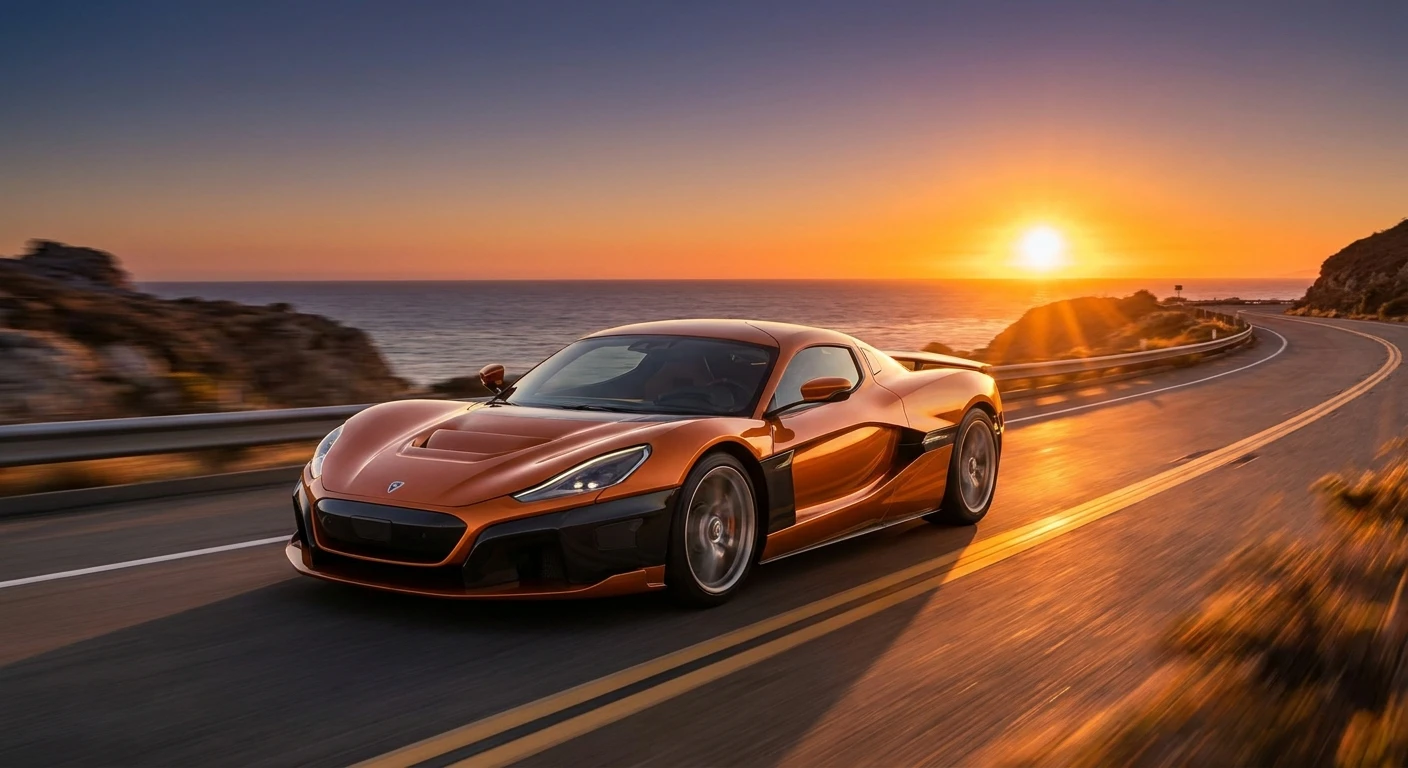
What Makes the 2024 Chevrolet Corvette a True Supercar
If you want a mid-engine marvel that absolutely redefines the American sports car landscape, the 2024 Chevrolet Corvette stands in a class of its own. Transitioning away from the traditional front-engine layout fundamentally altered the physics, balance, and visual presence of this iconic vehicle, catapulting it straight into exotic territory. You get the aggressive stance of a European supercar alongside the reliability and roaring V8 heritage that enthusiasts have demanded for decades. This generation is not just an incremental update; it represents a complete architectural overhaul that maximizes traction, optimizes weight distribution, and delivers blistering acceleration metrics that challenge cars costing three times as much.
Owning a high-performance vehicle usually means sacrificing daily drivability, yet this platform proves that compromise is a thing of the past. The engineering team designed a cabin that wraps around the driver like a fighter jet cockpit, placing every control precisely where you need it. High-resolution displays provide real-time telemetry, while luxury touches ensure long road trips are remarkably comfortable. Whether you are seeking a weekend canyon carver, a dominant track-day weapon, or a striking daily commuter, this vehicle adapts seamlessly to your lifestyle. The combination of magnetic suspension technology, a lightning-fast dual-clutch transmission, and advanced aerodynamic profiling results in a driving experience that feels hardwired to your senses.
Read also: Ultimate 2024 corvette stingray Driver Guide; 2024 cadillac xt4 Review and Complete Guide.
Finding Your Perfect Configuration and Value
Choosing the right version of this machine requires understanding the distinct personalities of its available configurations. You have three primary avenues: the baseline Stingray, the track-focused Z06, and the all-weather, hybrid-assisted E-Ray. Each variant targets a specific type of driver while maintaining the core ethos of accessible, heart-pounding performance. The Stingray offers the classic pushrod V8 experience, providing massive low-end torque for immediate thrust off the line. Moving up to the Z06 changes the character entirely, introducing a high-revving flat-plane crank engine that screams all the way to an 8,600 RPM redline. Then you have the groundbreaking E-Ray, which pairs the standard V8 with a front-mounted electric motor, creating an all-wheel-drive monster capable of terrifying acceleration regardless of road conditions.
| Trim Level | Powertrain Setup | Horsepower Output |
|---|---|---|
| Stingray | 6.2L LT2 V8 (RWD) | 490 – 495 HP |
| Z06 | 5.5L LT6 V8 (RWD) | 670 HP |
| E-Ray | 6.2L V8 + Electric Motor (e-AWD) | 655 HP |
The value proposition of this lineup is unmatched in the global automotive market. Competitors from Germany and Italy often require a much larger financial commitment for similar, or sometimes inferior, performance metrics. Here is why this platform remains the ultimate smart choice for performance enthusiasts:
- Performance-to-Price Ratio: You get a carbon-fiber-intensive, mid-engine supercar chassis for the price of a high-end luxury sedan. The acceleration and lateral grip numbers rival hypercars from a decade ago.
- Uncompromised Practicality: The packaging includes both a front trunk (frunk) and a rear trunk. You can easily fit two golf bags or a week’s worth of luggage, making it a highly functional touring car.
- Accessible Maintenance: Unlike exotic brands that require engine-out services for minor repairs, this vehicle utilizes an established dealer network and proven engine architectures, keeping long-term ownership costs highly reasonable.
Origins
The story begins in 1953 at the General Motors Motorama in New York City. The original C1 was a fiberglass-bodied roadster powered by a modest “Blue Flame” inline-six engine. While visually striking, it lacked the performance to match its sporting looks. Everything shifted when engineer Zora Arkus-Duntov joined the program. He championed the integration of the small-block V8 engine, transforming the car into a legitimate performance machine. Arkus-Duntov quickly realized that to compete on the global racing stage, the engine needed to move behind the driver to improve traction and balance. Although he built numerous mid-engine prototypes like the CERV I and CERV II, corporate conservatism kept the production car front-engined for over six decades.
Evolution
Through the ensuing generations, the platform continuously refined the front-engine, rear-wheel-drive layout. The C2 introduced the iconic “Sting Ray” moniker and independent rear suspension. The C3 brought aggressive, shark-like styling. The C4 modernized the chassis, while the C5 introduced the rear-mounted transaxle for a near-perfect 50/50 weight distribution. By the time the C7 generation arrived with its massive supercharged Z06 and ZR1 variants, the front-engine architecture had reached its absolute physical limit. The front tires simply could not put that much power down effectively. The only way forward was to finally execute Duntov’s original vision.
Modern State
The launch of the C8 generation completely rewrote the rulebook. Moving the engine behind the cabin shifted the weight bias rearward, allowing the rear tires to bite into the pavement during hard acceleration. The current iteration represents the pinnacle of this mid-engine philosophy. With the addition of hybrid technology in the E-Ray and the sophisticated aerodynamics of the Z06, the brand has created a family of supercars that command respect on the Nürburgring just as easily as they handle daily highway commutes. It is the realization of a seventy-year dream, meticulously engineered for the modern driving enthusiast.
Powertrain and Aerodynamics Explained
The engineering underneath the skin is highly sophisticated. The standard LT2 6.2-liter V8 utilizes dry-sump lubrication, ensuring the engine remains fully oiled even during sustained high-G cornering on a racetrack. It is mated exclusively to an 8-speed Tremec dual-clutch transmission (DCT). This gearbox pre-selects the next gear, allowing for shifts that occur in mere milliseconds—faster than a professional driver could ever shift a manual. For the Z06, the engineers developed the entirely bespoke LT6 engine. By utilizing a flat-plane crankshaft, they reduced the rotational mass, allowing the engine to spool up incredibly fast and emit a high-pitched wail reminiscent of legendary European track cars.
Chassis and Magnetic Ride Control
Aerodynamics dictate the aggressive body lines. Massive side scoops channel cool air into the engine bay and transmission coolers, while the front fascia manages airflow to generate downforce without excessive drag. The true magic, however, lies in the suspension. The Magnetic Selective Ride Control system uses shock absorbers filled with a magnetorheological fluid. An electromagnetic coil alters the viscosity of this fluid up to 1,000 times per second, allowing the car to instantly transition from a plush, compliant cruiser to a stiff, responsive track weapon at the turn of a dial. Here are the core scientific and technical facts that define the platform:
- The standard LT2 engine utilizes active fuel management, capable of deactivating four cylinders under light loads to maximize highway efficiency.
- The Z06 LT6 engine produces 670 naturally aspirated horsepower, making it the most powerful naturally aspirated production V8 in history.
- The E-Ray features a 1.9 kWh lithium-ion battery pack that charges passively via regenerative braking and excess engine power, requiring no plug-in charging.
- The drag coefficient and downforce balance can be drastically altered using available aero packages, yielding hundreds of pounds of downforce at track speeds.
- Launch control utilizes advanced wheel-slip algorithms to manipulate engine torque in real-time, resulting in 0-60 mph times under 3.0 seconds across the lineup.
Day 1: Taking Delivery and Initial Inspection
Taking possession of this machine is an event. Start by walking around the vehicle to inspect the paint finish, carbon fiber components, and panel alignments. Have the dealer demonstrate the front lift system, which uses hydraulics to raise the nose of the car over steep driveways and speed bumps. Pair your smartphone to the infotainment system and set up your driver profile, which will save your mirror, seat, and steering wheel positions.
Day 2: Understanding Infotainment and Driver Modes
Spend time in the driveway navigating the digital instrument cluster and the central touchscreen. Familiarize yourself with the core driving modes: Weather, Tour, Sport, and Track. Each mode adjusts the steering weight, exhaust valve position, throttle mapping, and magnetic suspension stiffness. Link your Apple CarPlay or Android Auto to ensure seamless navigation and media playback during your upcoming drives.
Day 3: The First Break-In Drive
The first 500 miles are critical for a long engine life. The internal computer actually limits the torque output in the lower gears and lowers the visual redline on the dash to prevent accidental over-revving. Take a scenic drive that varies your RPMs and speeds. Avoid hard braking, aggressive cornering, and cruise control. This varying load helps seat the piston rings and gears properly.
Day 4: Testing the Z-Mode Customization
Once you understand the preset modes, program your personalized “Z-Mode” (accessible via the steering wheel button). This allows you to mix and match settings. For example, you might want the softest suspension setting for bumpy roads, combined with the loudest exhaust setting and the sharpest steering response. Z-Mode makes the car perfectly tailored to your exact daily preferences.
Day 5: Exploring Handling and Grip
Find a quiet, twisty backroad to experience the mid-engine dynamics. Notice how quickly the nose turns in when you move the steering wheel. Because the heavy engine is behind you, the front tires have less mass to push, resulting in razor-sharp turn-in. Feel the immense grip out of corners as the rearward weight bias plants the rear tires firmly into the asphalt.
Day 6: Commuting and Daily Usability
Use the car for standard errands. Test the capacity of the frunk by picking up groceries. Notice how the dual-clutch transmission behaves smoothly in stop-and-go traffic when left in automatic mode. Activate the digital rearview mirror, which uses a roof-mounted camera to provide a wide, unobstructed view behind you, completely bypassing the rear engine cover blind spots.
Day 7: The Weekend Road Trip
Pack the rear trunk with your weekend bags and hit the interstate. Put the car in Tour mode, let the active fuel management kick in, and enjoy the premium audio system. You will quickly realize that despite its aggressive supercar aesthetic, it is an exceptionally capable grand tourer that eats up highway miles in absolute comfort.
Myth: The Car Only Performs Well in a Straight Line
Reality: While older front-engine American muscle cars had this reputation, this mid-engine chassis handles with clinical precision. It pulls well over 1.0G on a skidpad and features handling dynamics that rival the finest track cars from Stuttgart and Maranello.
Myth: Mid-Engine Cars Are Too Hard to Maintain
Reality: The engineers designed the engine bay to be accessible for routine maintenance. While some major services require effort, basic fluid changes, brake jobs, and filter replacements are straightforward, meaning you will not face the astronomical service bills typical of European exotics.
Myth: The Cabin Lacks Space for Taller Drivers
Reality: Unlike many compact European supercars, this cabin is designed with the American consumer in mind. It offers generous legroom and headroom, comfortably accommodating drivers over six feet tall without feeling cramped.
Myth: The Hybrid Model Needs to Be Plugged In
Reality: The E-Ray is a traditional hybrid, not a plug-in hybrid (PHEV). The small battery pack charges entirely through regenerative braking and excess engine power, requiring absolutely zero grid charging.
What is the starting price for the base model?
The standard Stingray trim offers incredible value, starting in the high $60,000s, though most buyers add options that push the final transaction price higher depending on the desired trim level and performance packages.
Does it come with a manual transmission?
No, there is no manual transmission offered. The vehicle utilizes an advanced 8-speed dual-clutch automatic transmission that shifts faster than a manual, keeping the turbocharged or naturally aspirated powerband optimal at all times.
Is the E-Ray fully electric?
No, the E-Ray is an all-wheel-drive hybrid. It pairs the standard 6.2L V8 driving the rear wheels with an electric motor driving the front wheels, creating a combined output of 655 horsepower.
How much horsepower does the Z06 have?
The track-focused Z06 variant features a naturally aspirated 5.5-liter flat-plane crank V8 engine that produces a massive 670 horsepower, revving out to 8,600 RPM.
Is the car rear-wheel drive or all-wheel drive?
The Stingray and Z06 models are strictly rear-wheel drive. The E-Ray model is the only variant that offers all-wheel drive, utilizing its electric front axle.
What is the top speed?
Depending on the trim and the aerodynamic packages equipped, top speeds exceed 190 mph, with standard Stingray models capable of hitting 194 mph under the right track conditions.
Does it have a front lift system?
Yes, an optional GPS-enabled front suspension lift system is available. It can raise the front of the car nearly two inches to clear obstacles and can memorize up to 1,000 locations to activate automatically.
Conclusion
The 2024 Chevrolet Corvette stands as a monumental achievement in automotive engineering. It proves that you do not need to spend half a million dollars to experience the thrill of a mid-engine supercar. With multiple powertrain options, breathtaking design, and daily driving comfort, it demands attention. If you are ready to experience the pinnacle of American performance, contact your local dealership to schedule a test drive or use the online configurator to build your exact dream machine today!





Leave a Reply