

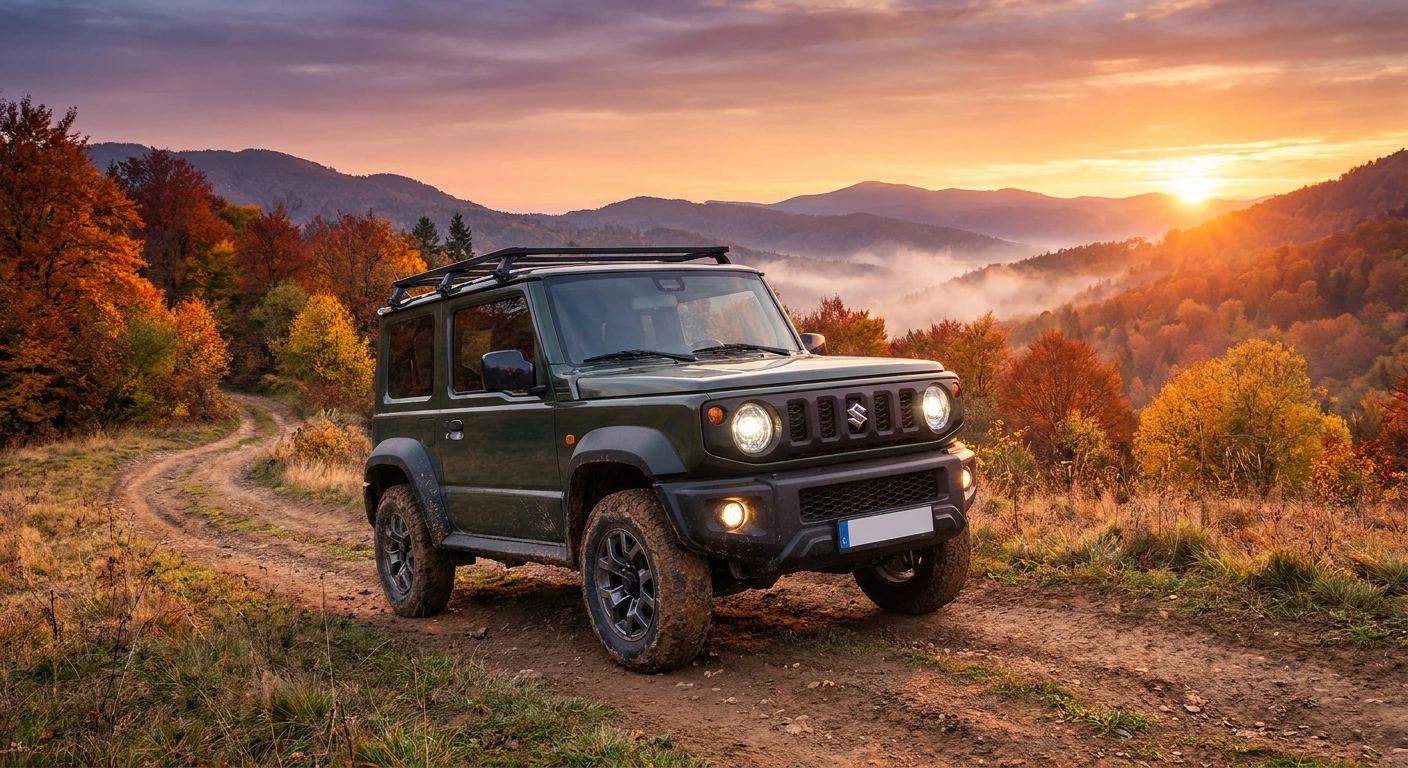
What Makes the Bronco Sport 2024 a True Off-Road Contender?
If you are searching for a versatile utility vehicle that seamlessly blends daily commuting comfort with weekend trail-blazing capability, the Bronco Sport 2024 strikes an incredibly impressive balance. Entering the highly competitive compact SUV market, this particular model year stands out by offering genuine ruggedness in a segment largely dominated by pavement-focused crossovers. You do not have to compromise on style or substance here. Built on a platform designed for agility, it delivers exceptional maneuverability both in crowded city streets and on tight, unpredictable forest trails. The design language intentionally pays homage to classic rugged off-roaders, featuring a boxy silhouette, short overhangs, and aggressive front fascia. But beyond the aesthetics, the hardware backs up the attitude. It is equipped with advanced four-wheel-drive technology and specialized terrain management software that actively adjusts to changing ground conditions. From its distinct safari-style roof that maximizes interior cargo volume to the wash-out interior materials on higher trims, every detail is engineered with the outdoor enthusiast in mind. Whether you are navigating heavy winter snow or packing up for a summer camping expedition, this vehicle proves that you do not need a massive, heavy truck to enjoy authentic off-road experiences. It represents a practical, functional, and highly capable choice for modern drivers who demand versatility.
The Core Benefits and Practical Advantages
When you evaluate the primary value proposition of this vehicle, it becomes clear why it has gained such immense popularity. The engineering team successfully engineered a tough off-pavement vehicle that still maintains exceptional on-road manners. Unlike heavy body-on-frame SUVs that tend to wander on the highway and consume massive amounts of fuel, this unibody design offers a smooth, car-like ride during your daily commute. Yet, when the pavement ends, the specialized suspension geometry and robust all-wheel-drive system engage to provide serious traction. The distinctive throwback styling is not just for looks; the upright windshield and flat hood allow for excellent forward visibility, which is crucial for picking a line through rocky trails. Let us examine how the different configurations stack up for various lifestyles.
Read also: 2024 Bronco Sport: Complete Specs and Trim Guide; 2025 Land Cruiser: Specs, Features & Complete Buyer's Guide.
| Trim Level | Standard Engine Output | Best Suited For |
|---|---|---|
| Big Bend | 1.5L EcoBoost (181 hp) | Daily commuting and light weekend camping trips. |
| Outer Banks | 1.5L EcoBoost (181 hp) | Urban drivers who want premium interior comfort and style. |
| Badlands | 2.0L EcoBoost (250 hp) | Serious outdoor enthusiasts requiring maximum off-road traction. |
To fully appreciate the everyday utility of this compact SUV, consider these three major practical benefits:
- Standard All-Wheel Drive: Every single trim level comes straight from the factory with power sent to all four wheels, ensuring excellent grip in rain, sleet, or snow without requiring an expensive upgrade.
- G.O.A.T. Modes Technology: The standard terrain management system (Goes Over Any Type of Terrain) allows the driver to instantly optimize transmission shift points, steering feel, and throttle response via a simple rotary dial.
- Safari-Style Roof Design: The uniquely stepped roofline significantly increases rear headroom for tall passengers and allows owners to transport two full-size mountain bikes standing upright in the cargo area.
The Origins of the Bronco Nameplate
Early Generations and Legacy
The original vehicle carrying this iconic name debuted in 1966 as a specialized two-door, four-wheel-drive utility vehicle designed specifically to compete with post-war recreational jeeps. It was famously simple, rugged, and highly capable, quickly earning a massive cult following among off-road racers and outdoor adventurers. Over the subsequent decades, the model grew significantly in size, eventually transitioning into a large, heavy truck-based SUV that dominated the 1980s and 1990s. However, changing consumer preferences regarding fuel efficiency and vehicle size led to its eventual discontinuation in 1996, leaving a massive void in the market for drivers who wanted genuine trail capability wrapped in a functional, everyday package.
Evolution into the Compact Sport Segment
Fast forward to the early 2020s, and the automotive landscape had completely shifted toward car-based crossover platforms. Recognizing a massive opportunity, engineers decided to resurrect the legendary badge, but this time they took a dual-pronged approach. Alongside the massive, traditional body-on-frame version, they introduced the Sport variant—a more compact, accessible, and agile sibling. By utilizing an extensively modified and reinforced unibody architecture, they created a vehicle that captured the spirit of the original 1966 model while delivering the safety, efficiency, and comfort expected by modern families. This strategic move effectively created a brand-new sub-segment: the rugged compact crossover.
Modern State of the Off-Road Crossover
By the time the current model year arrived, the vehicle had firmly established itself as a leader in this niche. To keep the lineup fresh and appealing, designers introduced nostalgic design packages, such as the Free Wheeling edition, which features vibrant, retro-inspired sunset graphics and specialized wheels that recall the custom vans and trucks of the late 1970s. Furthermore, a robust aftermarket community has developed, allowing owners to easily source specialized roof racks, lighting kits, and overlanding gear. Whether exploring the used car markets or buying brand new, drivers are discovering that this vehicle offers an incredibly well-rounded package that balances heritage styling with cutting-edge engineering.
Scientific and Technical Deep Dive
Analyzing the EcoBoost Powertrains
Beneath the hood, the engineering strategy relies entirely on advanced forced induction. Buyers have access to two powerful EcoBoost engine options. The standard powerplant is a highly efficient 1.5-liter turbocharged three-cylinder engine. While some aggressive drivers and reviewers have noted that the base model can feel slightly under-powered when passing at high highway speeds, it utilizes direct fuel injection and twin-independent variable camshaft timing to extract 181 horsepower and 190 lb-ft of torque. For those requiring serious grunt, the top-tier Badlands trim is equipped with a 2.0-liter turbocharged four-cylinder that drastically increases output to 250 horsepower and a massive 277 lb-ft of torque. Both engines are paired strictly with an advanced 8-speed automatic transmission equipped with an external oil cooler for sustained heavy-duty use.
Advanced Terrain Management Engineering
The true scientific marvel of this vehicle lies in its specialized H.O.S.S. (High-Performance Off-Road Stability Suspension) system and its intelligent driveline. On the premium off-road trims, the standard rear differential is replaced by an advanced twin-clutch rear drive unit. This liquid-cooled mechanical system can actively vector torque, meaning it can send virtually all available rear-wheel power to a single wheel if the other three lose traction. This technology mimics a traditional mechanical locking differential but operates much faster via continuous electronic monitoring.
- Approach and Departure Angles: The modified front bumper design on specialized trims allows for an impressive 30.4-degree approach angle, preventing front-end damage when tackling steep inclines.
- Water Fording Capacity: Strategic placement of the air intake and heavy-duty electrical sealing allow the vehicle to safely traverse up to 23.6 inches of standing water.
- Suspension Articulation: Upgraded monotube rear shocks provide increased dampening power, preventing the hydraulic fluid from aerating and fading over miles of washboard dirt roads.
- Underbody Protection: Heavy-duty steel bash plates physically protect the fuel tank, engine oil pan, and transfer case from direct rock impacts.
Actionable 7-Day Off-Road Familiarization Plan
Day 1: Mastering the Cabin and Tech
Before taking your new SUV into the wilderness, spend your first day strictly analyzing the interior. Sit in the driver’s seat and familiarize yourself with the 8-inch touchscreen interface, pairing your smartphone via wireless integration. Adjust the seating position to ensure you have a clear view over the flat hood, and locate all the physical buttons for the climate control, traction control, and hazard lights. Understanding where these controls are by touch alone will prevent distractions later when you are navigating tricky obstacles.
Day 2: Understanding G.O.A.T. Modes
Take the vehicle to an empty, safe dirt lot or a quiet gravel road to test the different terrain settings. Rotate the center dial to engage Sand, Slippery, or Mud/Ruts modes. Pay close attention to how the steering weight changes, how the throttle pedal becomes either more responsive or intentionally dulled, and how the transmission holds lower gears for engine braking. Knowing exactly how the computer behaves in each setting is critical for building confidence.
Day 3: Testing On-Road Manners
Spend a full day driving the vehicle in a purely urban and highway environment. Focus on its turning radius in tight parking lots and its acceleration when merging onto fast-moving freeways. You will quickly discover that the unibody platform provides excellent stability and minimal body roll during cornering. This day proves that you do not have to suffer through a harsh, bouncy ride during your Monday through Friday commute.
Day 4: Engaging Mild Dirt Trails
Find a well-maintained, designated forest service road or mild dirt trail. Engage the appropriate terrain mode and practice keeping a smooth, steady pace. Focus on scanning the trail ahead for deep ruts or large rocks. Practice positioning the vehicle’s tires on the highest points of the trail to maximize your ground clearance, letting the suspension absorb the impacts rather than scraping the underbelly.
Day 5: Exploring Water Fording Limits
If you have access to a safe, shallow, and legal water crossing, carefully practice your fording technique. Never enter water if you cannot visually confirm the depth or the speed of the current. Enter the water slowly at an angle to create a gentle bow wave in front of the bumper, and maintain a steady, low speed to prevent water from splashing up toward the engine intake. Always check your brakes immediately after exiting the water.
Day 6: Utilizing Cargo and Roof Space
Back in your driveway, practice configuring the interior cargo space. Fold down the rear seats to see the completely flat load floor. If your vehicle is equipped with the specialized rubberized flooring, note how easily it can be wiped clean. If you purchased roof crossbars, practice securing your kayak, cargo box, or mountain bikes. Properly distributing weight keeps the vehicle’s center of gravity low and stable.
Day 7: Planning the Ultimate Overland Trip
Now that you completely understand the mechanical limits and capabilities of your SUV, sit down with a detailed topographic map and plan a weekend overlanding trip. Map out fuel stops, select a dispersed campsite, and pack your recovery gear, first aid kit, and emergency supplies. You are now fully prepared to utilize the vehicle exactly as the engineers intended.
Myths and Reality
Myth: The vehicle is merely a reshaped Ford Escape and cannot handle real trails.
Reality: While the two vehicles share a fundamental unibody platform, the suspension architecture, the intelligent all-wheel-drive programming, the physical ground clearance, and the overall structural reinforcements are heavily modified. It is engineered specifically to withstand repeated off-road abuse that would easily break a standard crossover.
Myth: The base three-cylinder engine is too weak for highway driving.
Reality: The 1.5-liter turbocharged engine generates a highly respectable 181 horsepower and 190 lb-ft of torque. Because turbocharged engines deliver their peak torque very early in the rev range, the vehicle accelerates briskly away from stoplights and easily maintains 70 mph on the highway without constantly struggling.
Myth: You cannot take a vehicle without a solid front axle over rocks.
Reality: Independent front and rear suspensions have evolved dramatically. With the advanced twin-clutch rear drive unit mimicking mechanical lockers, and high-clearance bash plates protecting vital components, the premium trims can conquer surprisingly technical rock gardens safely.
Frequently Asked Questions & Conclusion
Does the Bronco Sport 2024 offer a manual transmission?
No, there is no manual transmission available. All models and engine configurations are exclusively paired with an incredibly responsive 8-speed automatic transmission.
What kind of fuel economy can I expect?
The 1.5-liter base engine delivers excellent efficiency, generally achieving around 25 mpg in the city and 28 mpg on the highway. The larger 2.0-liter engine prioritizes power, yielding slightly lower figures around 21 mpg city and 26 mpg highway.
Can I remove the doors and the roof?
Unlike its larger body-on-frame sibling, this model features a fixed roof and fixed doors to maintain unibody structural rigidity. However, you can opt for a traditional power moonroof for open-air driving.
Is the Badlands trim genuinely worth the financial upgrade?
If you plan on driving through deep mud, tackling rock crawling trails, or traversing deep sand, the upgraded 2.0-liter engine, advanced twin-clutch 4WD system, and specialized off-road suspension make the Badlands trim absolutely essential and worth every penny.
Does it come with standard driver-assist safety features?
Yes, a comprehensive suite of advanced safety technology, including pre-collision assist with automatic emergency braking, blind-spot monitoring, and lane-keeping assist, comes completely standard across the entire lineup.
How much weight is the vehicle rated to tow?
When properly equipped with the factory towing package, the base 1.5L models can tow up to 2,000 pounds. Stepping up to the 2.0L Badlands trim increases the maximum towing capacity to a very respectable 2,200 pounds.
Is there a hybrid or electric version available this year?
For this specific model year, the manufacturer relies strictly on the two traditional turbocharged gasoline engines. A hybrid powertrain is not currently offered in this specific lineup.
In conclusion, if you want an SUV that handles the daily school run effortlessly while still possessing the rugged DNA to disappear into the woods on the weekend, consult the experts at Greenbrier Ford or your local dealer to test drive one today. Book a test drive, explore the various trims, and start planning your next great outdoor adventure!



Leave a Reply