

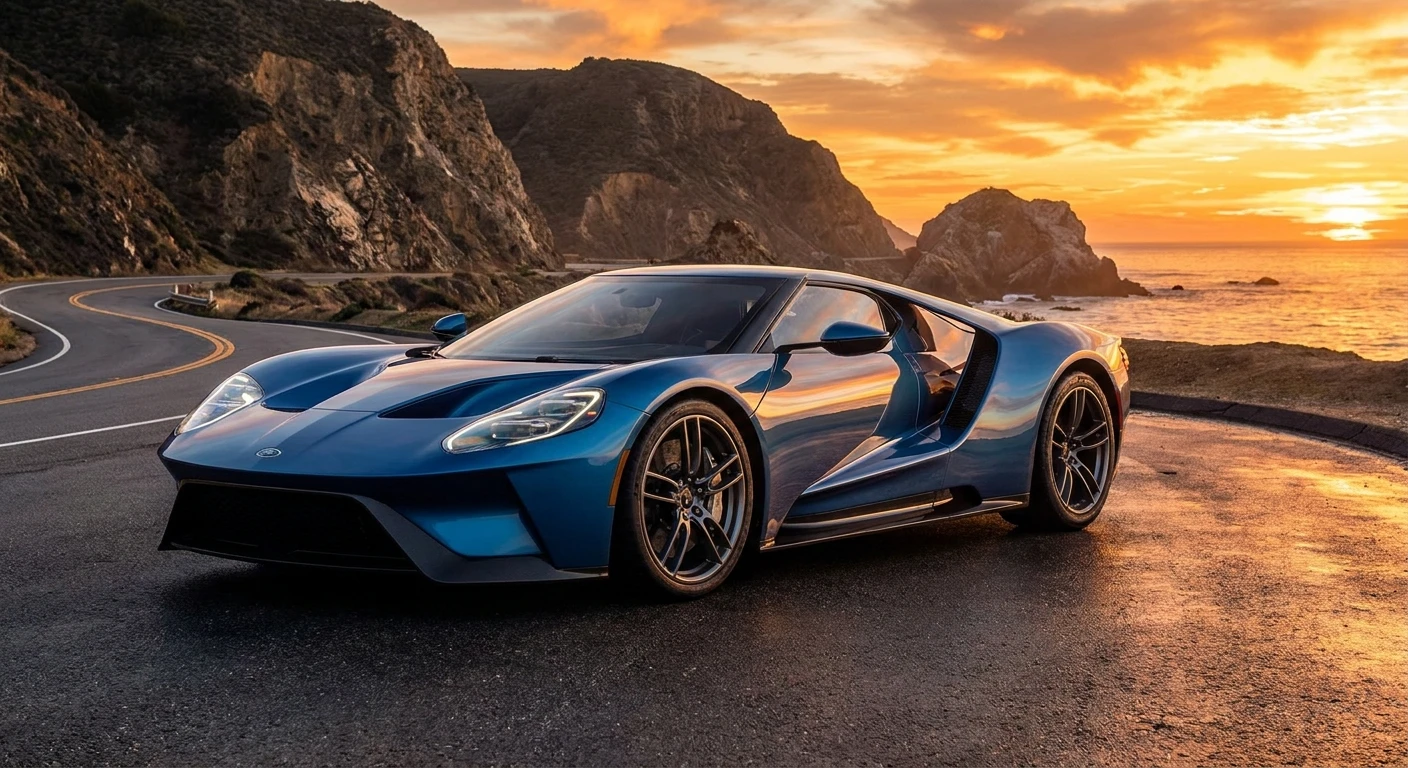
Why the 2023 Corvette Dominates the Modern Sports Car Market
Listen up, if you are looking for the absolute pinnacle of American automotive engineering right now, the 2023 Corvette is exactly where your search ends. Chevrolet has completely rewritten the rulebook with the C8 generation, and this specific model year brings everything into sharp focus. The introduction of the awe-inspiring Z06 and the highly anticipated 70th Anniversary Edition packages make this particular year a massive milestone for enthusiasts and casual drivers alike. When you sit behind the wheel of a modern mid-engine performance vehicle, you expect razor-sharp handling, blistering acceleration, and a driver-focused cockpit. This machine delivers all of that and more, without demanding the astronomical price tag usually associated with European supercars. We are talking about a car that aggressively competes with brands like Porsche, Ferrari, and McLaren, right off the showroom floor. The driving dynamics are simply unreal, offering a level of precision that makes canyon carving feel effortless. From the aggressive styling cues to the roar of the naturally aspirated V8 engine positioned right behind your ears, every single detail has been engineered for maximum adrenaline. If you are serious about performance, it is time to look at exactly what makes this vehicle a generational masterpiece.
Core Benefits: Performance, Usability, and Unbeatable Value
Let us break down exactly what you are getting when you invest in a 2023 Corvette. The value proposition here is undeniably strong. You are essentially getting hypercar-level performance metrics for a fraction of the cost. For example, the base Stingray can hit 60 miles per hour in just 2.9 seconds. That is faster than many cars that cost three times as much. Another prime example of this value is the daily drivability. Unlike high-strung track toys that punish you over bumps and speed humps, the available magnetic ride control suspension adapts in milliseconds, allowing this car to cruise comfortably on long road trips. You even get a surprising amount of cargo space with both a front trunk (frunk) and a rear trunk.
Read also: Ultimate Guide to the 2024 Chevrolet Corvette; 2022 Corolla Complete Review and Buying Guide.
To really understand the lineup, check out how the main configurations stack up:
| Model & Trim | Engine Setup | Key Differentiator |
|---|---|---|
| Stingray (1LT, 2LT, 3LT) | 6.2L LT2 V8 (490-495 hp) | Incredible daily driver capability and immense value. |
| Z06 (1LZ, 2LZ, 3LZ) | 5.5L LT6 V8 (670 hp) | Flat-plane crank, track-focused aerodynamics, wider stance. |
| 70th Anniversary Edition | Available on 3LT & 3LZ | Exclusive White Pearl or Carbon Flash paint, unique badging, custom luggage. |
Here are the top three reasons this specific model year stands above the rest:
- The Z06 Arrival: 2023 marks the highly anticipated debut of the track-destroying Z06 variant, bringing the most powerful naturally aspirated production V8 in history.
- Heritage and Exclusivity: The 70th Anniversary packages add serious collector value, marking seven decades of continuous production for this legendary nameplate.
- Refined Tech: By the fourth year of the C8 generation, early software quirks have been ironed out, delivering a flawlessly integrated infotainment and digital gauge cluster experience.
The interior layout wraps around the driver like a fighter jet cockpit, putting every critical control at your fingertips. It is a bold design choice that reinforces the feeling of piloting something truly extraordinary.
The Origins of the American Sports Car
To fully appreciate the 2023 Corvette, we need to take a quick look back at where this lineage started. The original model debuted in 1953 at the Motorama display in New York. It was a humble beginning. The first cars featured a somewhat anemic inline-six engine and a two-speed automatic transmission. However, the sweeping fiberglass body captured the imagination of the public. Soon after, visionary engineer Zora Arkus-Duntov stepped in, demanding that the car be fitted with a proper V8. That pivotal decision transformed a stylish cruiser into a legitimate performance machine, laying the groundwork for the decades of dominance that followed on both the street and the track.
Evolution Through the Generations
From the split-window C2 Sting Ray of 1963 to the technologically advanced C7, every generation pushed boundaries. We saw the introduction of fuel injection, independent rear suspensions, and advanced aerodynamics. The C4 brought electronic dashboards and lateral grip that defied logic in the 1980s, while the C5 and C6 generations perfected the transaxle layout for better weight distribution. But even as horsepower climbed past 700 in the C7 ZR1, engineers hit a physical limit. A front-engine, rear-wheel-drive layout simply could not put that much power to the ground effectively without breaking traction. A radical change was absolutely necessary.
The Modern State of the C8 Platform
That radical change arrived with the C8 platform. Moving the engine behind the driver completely shifted the weight distribution, putting more mass over the rear drive wheels. The 2023 model year represents the maturation of this mid-engine architecture. It is no longer just a novelty; it is a proven platform that is breaking lap records worldwide. The balance is exquisite, virtually eliminating understeer during aggressive cornering. Chevrolet proved that they could successfully overhaul an icon, and the 70th-anniversary milestone perfectly bridges the gap between a rich, historic past and a hyper-advanced, mid-engine future.
The Anatomy of the High-Performance V8 Engines
Let us get technical and talk about what is actually powering these beasts. The standard Stingray utilizes the LT2 6.2-liter pushrod V8. It is a masterpiece of small-block engineering, utilizing a dry-sump oil system to ensure the engine stays lubricated even under extreme G-forces on the track. But the real engineering marvel for 2023 is the LT6 engine found in the Z06. This 5.5-liter V8 ditches the traditional cross-plane crankshaft for a flat-plane crank design. This allows the engine to rev to a screaming 8,600 RPM redline, producing a sound that rivals Italian exotics. The LT6 utilizes dual overhead camshafts and fully CNC-machined combustion chambers to flow massive amounts of air.
Aerodynamics and Downforce Innovations
Going fast in a straight line is easy; staying glued to the pavement at 180 miles per hour requires serious aerodynamics. The 2023 Corvette utilizes a flat underbody to channel air smoothly beneath the car, reducing lift. The Z06 takes this further with available carbon fiber aero packages that include dive planes, underbody strakes, and a massive rear wing that generates over 734 pounds of downforce at 186 mph. Every vent and scoop on the bodywork is functional, directing air to feed the engine intakes, cool the massive brakes, or regulate the transmission temperature.
- Dry-Sump Lubrication: Prevents oil starvation during high-G cornering by storing oil in a separate reservoir rather than a traditional oil pan.
- Tremec TR-9080 DCT: An 8-speed dual-clutch transmission that executes shifts in roughly 100 milliseconds without interrupting torque delivery to the wheels.
- Magnetic Selective Ride Control 4.0: Suspension dampers filled with magnetorheological fluid that adjust firmness up to 1,000 times per second based on road conditions.
- eLSD (Electronic Limited-Slip Differential): Actively modulates torque split between the rear wheels to maximize traction out of tight corners.
Step 1: Complete the Break-In Period Carefully
If you just picked up your 2023 Corvette, the most critical step is respecting the 500-mile break-in period. The digital tachometer actually displays a lowered redline during this phase. Avoid wide-open throttle, hard braking, and aggressively downshifting. Vary your engine speeds on the highway to properly seat the piston rings and let the transmission gears mesh perfectly.
Step 2: Master the Driver Mode Selector
You have an incredibly intelligent computer managing your drive. Spend time scrolling through Weather, Tour, Sport, and Track modes. Each mode adjusts the steering weight, throttle response, exhaust valves, and suspension stiffness. Use the customizable ‘My Mode’ to blend your favorite settings for daily commuting.
Step 3: Set Up the Performance Data Recorder (PDR)
Insert a high-capacity SD card into the glovebox slot and activate the PDR. This built-in telemetry system records high-definition video of your drives with an overlay of speed, RPM, G-force, and track maps. It is an invaluable tool for analyzing your lap times or simply recording a scenic mountain drive with your friends.
Step 4: Calibrate the Z-Mode Button
The silver ‘Z’ button on your steering wheel is a shortcut to maximum attack mode. Dive into the infotainment screen and configure Z-Mode to your absolute most aggressive preferences. When you encounter a perfect stretch of twisty road, one press of this button instantly transforms the car’s personality without taking your eyes off the road.
Step 5: Protect the Exterior Paint
Because the car sits so incredibly low to the ground, it acts like a magnet for rock chips. Before doing any serious driving, invest in high-quality Paint Protection Film (PPF) for the front bumper, hood, side mirrors, and behind the wheels. Adding a ceramic coating on top of the PPF will make washing off bugs and brake dust infinitely easier.
Step 6: Learn the Dual-Clutch Transmission Dynamics
A dual-clutch transmission (DCT) behaves slightly differently than a traditional automatic. At slow parking lot speeds, it might feel slightly mechanical—this is normal. Pulling both aluminum paddle shifters toward you simultaneously disengages the clutches, putting the car in a temporary neutral state so you can rev the engine freely.
Step 7: Schedule Regular Track-Oriented Maintenance
If you plan to use this car as intended on a road course, standard maintenance schedules do not apply. You need to switch to high-temperature racing brake fluid, align the suspension to aggressive track specifications, and add the recommended two quarts of additional transmission fluid to prevent starvation during sustained high-G corners.
Common Myths Debunked
Myth: The 2023 Corvette is too difficult to drive daily because it is too low and stiff.
Reality: Thanks to Magnetic Ride Control and the available GPS-enabled front axle lift system, you can easily clear steep driveways and speed bumps. The ride in Tour mode is as comfortable as a luxury sedan.
Myth: You need to spend European supercar money to get genuine track-level performance.
Reality: The C8 platform consistently puts down lap times that rival or beat cars from Italy and Germany that cost hundreds of thousands of dollars more.
Myth: The mid-engine layout ruined the classic American muscle feel.
Reality: While the balance is drastically improved, the pushrod V8 in the Stingray retains that classic, thunderous low-end torque and unmistakable exhaust rumble that fans demand.
Myth: Maintenance costs are astronomical because it is an exotic mid-engine car.
Reality: Despite the exotic layout, it still utilizes a massive network of Chevrolet dealerships and parts availability, keeping service costs remarkably reasonable compared to foreign competitors.
What is the top speed of the 2023 Corvette Stingray?
With the standard setup, the Stingray can reach a verified top track speed of 194 mph. Models equipped with the Z51 performance package sacrifice a few miles per hour of top speed for better aerodynamic downforce, topping out around 184 mph.
Does the 2023 Corvette Z06 have a flat-plane crank?
Yes, the LT6 engine in the Z06 utilizes a bespoke flat-plane crankshaft. This design reduces rotational mass, allowing the engine to rev incredibly fast up to its 8,600 RPM redline while producing a distinctive, high-pitched exotic exhaust note.
Is there a manual transmission option available?
No, there is no traditional three-pedal manual transmission offered for the C8 generation. All models come exclusively with an advanced 8-speed dual-clutch automatic transmission that features lightning-fast manual shifting via steering wheel paddles.
What is the fuel economy of the base model?
Considering the immense power on tap, the base Stingray is surprisingly efficient. It is EPA-rated at 16 mpg in the city and 24 mpg on the highway, thanks to active fuel management that can deactivate four cylinders during highway cruising.
Does it have Apple CarPlay and Android Auto?
Absolutely. The infotainment system comes standard with wireless Apple CarPlay and wireless Android Auto, seamlessly integrating your smartphone navigation, music, and communications directly into the primary touchscreen.
How much horsepower does the Z06 produce?
The Z06 pushes out a staggering 670 horsepower from its naturally aspirated 5.5-liter V8. This makes it the most powerful naturally aspirated V8 engine ever placed in a production vehicle.
Is the 70th Anniversary Edition worth it?
For collectors and enthusiasts, yes. It provides unique aesthetic upgrades, exclusive paint colors (White Pearl Metallic Tri-coat or Carbon Flash Metallic), special badging, and a custom luggage set that will undoubtedly increase its future resale value.
Where is the engine located?
Unlike generations C1 through C7, the engine is located right behind the passenger cabin, making it a true mid-engine layout. This significantly improves weight distribution, traction, and overall handling dynamics.
At the end of the day, getting behind the wheel of a 2023 Corvette is an experience that completely rewrites your expectations of what an American sports car can be. Whether you opt for the brilliant daily-drivable Stingray or the track-focused fury of the Z06, you are buying into a legacy of uncompromising performance. Stop waiting on the sidelines—head down to your local specialist, build your dream spec, and experience the mid-engine revolution for yourself today!





Leave a Reply