

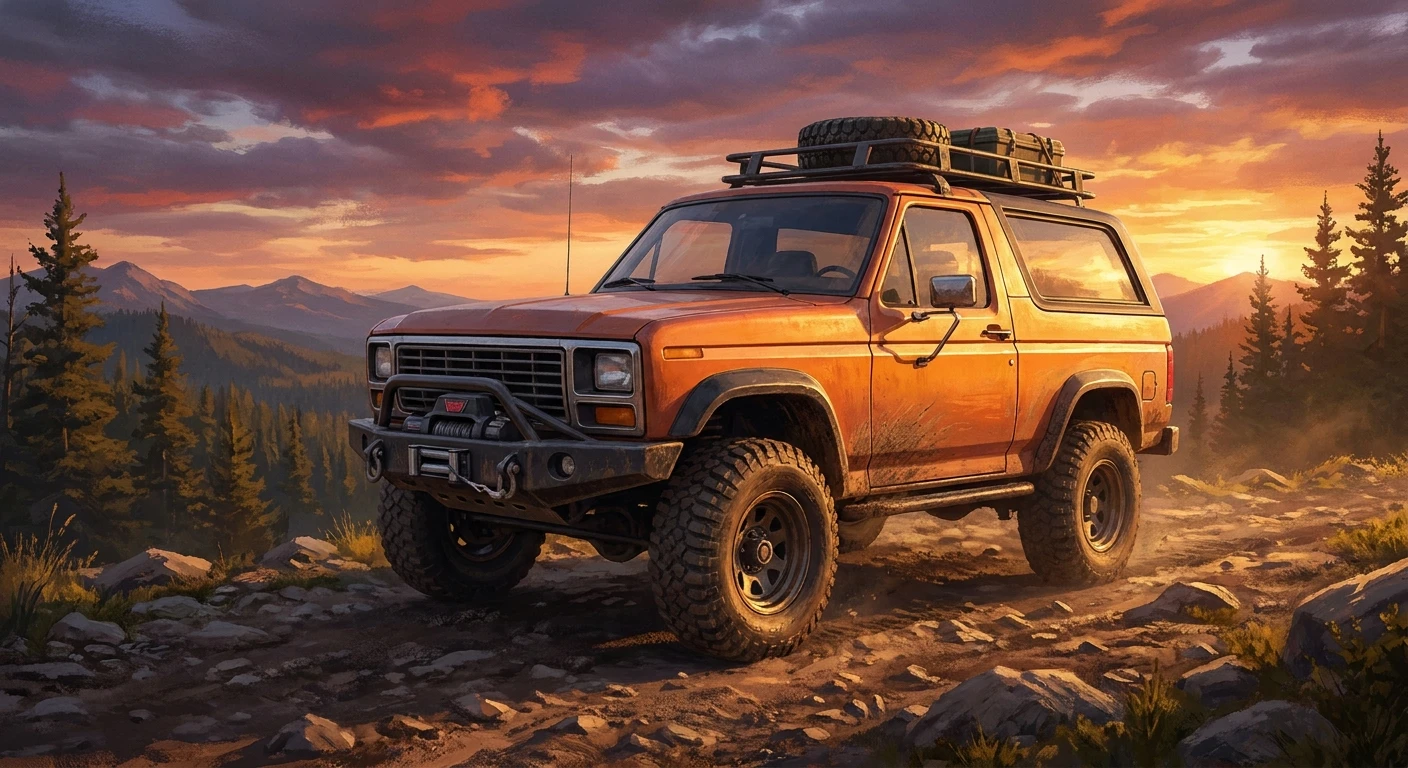
Why the 2024 Bronco Sport is a Dominant Compact SUV
If you are looking for a vehicle that perfectly balances daily highway commutes with aggressive weekend trail riding, the 2024 Bronco Sport demands your attention right now. You want an SUV that looks rugged but drives smoothly on pavement, and Ford delivered exactly that. Instead of forcing you to compromise between utility and comfort, this compact off-roader acts as a bridge between wild outdoor ambitions and practical urban living. The thesis is simple: you do not need a massive, gas-guzzling truck to conquer muddy trails, snow-covered backroads, or weekend camping trips.
Automakers frequently promise a “go-anywhere” attitude, but most compact crossovers fail the moment their tires hit loose gravel. This vehicle operates differently. Built entirely around the philosophy of accessible adventure, it provides sophisticated four-wheel-drive capability right off the dealership lot. You get the iconic boxy design that maximizes interior headroom, standard all-wheel drive across every single trim level, and an array of smart cargo solutions designed specifically for active lifestyles. Whether you pack mountain bikes, fishing gear, or just a week’s worth of groceries, the clever utilization of space makes everyday logistics incredibly simple. By stripping away the unnecessary bulk of a full-size off-roader, Ford created an agile, highly capable machine that fits perfectly into standard parking spots while retaining the mechanical guts needed for genuine exploration.
Read also: Jeep Compass 2024: Complete Review & Guide; 2025 Jeep Compass: Complete Buyer's Guide & Specs.
Trims, Performance, and Unmatched Capabilities
Understanding the value proposition of this vehicle requires a close look at its trim hierarchy. You are not just picking a color; you are selecting a specific tier of mechanical capability. Ford structured the lineup so that even the entry-level options provide serious value, while the top-tier trims rival specialized rock crawlers. You get a combination of robust suspension hardware, intuitive software that manages traction, and functional interior materials that withstand heavy abuse.
| Trim Level | Standard Engine | Standout Feature |
|---|---|---|
| Big Bend | 1.5L EcoBoost 3-Cylinder | Carbonized Gray grille and easy-to-clean cloth interior |
| Outer Banks | 1.5L EcoBoost 3-Cylinder | Premium leather-trimmed seats and 18-inch machined wheels |
| Badlands | 2.0L EcoBoost 4-Cylinder | Advanced 4×4 with twin-clutch rear drive unit and metal bash plates |
| Heritage Edition | 1.5L EcoBoost 3-Cylinder | Oxford White roof, vintage grille, and retro plaid seating |
The core benefit of choosing this model over its direct competitors comes down to functional design. For example, the safari-style roof is not just a stylistic choice; it provides class-leading headroom, allowing you to load two upright mountain bikes directly into the cargo area with the optional interior bike rack. Another perfect example of practical design is the flip-up rear glass, which allows you to grab gear from the trunk without opening the entire liftgate—a lifesaver when parallel parked on a tight street or backing up against a garage wall.
Here are three absolute reasons this SUV dominates its segment:
- Standard All-Wheel Drive: Unlike competitors that charge extra for AWD, every single model sends power to all four wheels, ensuring you never have to second-guess your traction in rain or snow.
- The G.O.A.T. Modes System: Goes Over Any Type of Terrain (G.O.A.T.) is standard software that recalibrates the engine, transmission, and braking system on the fly to handle sand, slippery roads, or deep mud.
- Built-In Utility Hacks: Features like the MOLLE strap system on the front seatbacks, under-seat storage bins, and a built-in bottle opener in the liftgate showcase a deep understanding of camping and tailgating culture.
Origins of the Bronco Nameplate
To truly appreciate the engineering behind the current model, you have to look back at the original 1966 Ford Bronco. That classic vehicle was designed to be a rugged, versatile, and highly capable off-roader that could handle farm work during the week and hunting trips on the weekend. It established a legendary reputation for durability and simple, boxy styling. The nameplate became synonymous with American outdoor recreation, cultivating a massive enthusiast following that lasted long after the original production run ended in the late 1990s. The DNA of that iconic 4×4 serves as the spiritual blueprint for everything bearing the badge today.
Evolution into the Sport Platform
When Ford decided to resurrect the legendary badge, they recognized a massive shift in consumer behavior. Not everyone wanted a massive, body-on-frame truck. Drivers demanded off-road aesthetic and capability but required the smoother ride quality and superior fuel efficiency of a unibody crossover. Engineers took the underlying C2 platform—shared with the Escape—and radically modified it. They shortened the wheelbase for better breakover angles, beefed up the suspension components, and completely redesigned the exterior to reflect the vintage boxy shape. The result was a “baby Bronco” that possessed its own unique identity, offering a distinctly different, far more aggressive driving dynamic than a standard crossover.
Modern State of the 2024 Lineup
For the 2024 model year, the lineup matured perfectly. Ford dropped the entry-level Base trim, making the Big Bend the new standard entry point, which instantly elevated the minimum equipment level across the board. Furthermore, the introduction of the visually striking Free Wheeling edition brought vibrant, retro sunset stripes from the 1970s back to the showroom floor. The brand also continued to refine the Heritage models, leaning heavily into nostalgia with pastel paint colors and white-painted wheels. The current iteration stands as a highly polished, fully realized product that knows exactly who its target audience is and delivers on every promise.
Decoding the EcoBoost Powertrains
The mechanical heartbeat of this SUV relies on Ford’s highly proven EcoBoost engine technology. The standard 1.5-liter turbocharged three-cylinder engine produces a highly respectable 181 horsepower and 190 lb-ft of torque. It uses direct fuel injection and turbocharging to deliver snappy acceleration around town while maintaining solid fuel economy. For those who demand serious climbing power, the Badlands trim upgrades to a 2.0-liter turbocharged four-cylinder engine generating a muscular 250 horsepower and 277 lb-ft of torque. Both engines are paired with an eight-speed automatic transmission, though the 2.0L version includes a customized oil cooler and manual paddle shifters for precise gear control on steep inclines.
Advanced 4×4 and HOSS Architecture
What truly separates this vehicle from a standard grocery-getter is the High-Performance Off-Road Stability Suspension (HOSS) system. This setup features uniquely tuned front struts with hydraulic rebound stops to provide a quieter, less jarring ride over harsh terrain. The Badlands trim pushes the engineering further by utilizing a twin-clutch rear drive unit. This advanced system functions similarly to a traditional mechanical locker, capable of sending nearly all rear axle torque to a single wheel if the other is suspended in the air.
- Water Fording: The Badlands trim safely traverses up to 23.6 inches of water, thanks to elevated air intakes and sealed electrical components.
- Approach and Departure Angles: Optimized bumper designs allow for a 30.4-degree approach angle and a 33.1-degree departure angle on the top trim.
- Trail Control: This low-speed, off-road cruise control manages throttle and braking automatically, allowing the driver to focus purely on steering through complex obstacles.
- Vectoring Technology: The advanced 4×4 system actively vectors torque side-to-side, maximizing grip on uneven, rocky, or slippery surfaces.
Step 1: Assess Your Off-Road Needs
Before purchasing, clearly define how you plan to use the vehicle. If your weekends consist of light gravel roads, state park camping, and general highway driving, the lower trims offer more than enough capability. If you actively seek out challenging rock crawls, deep mud bogs, or rutted out trails, you strictly need the advanced hardware found on the Badlands model.
Step 2: Choose Between 1.5L and 2.0L Engines
Your engine choice dictates your driving experience. The 1.5L three-cylinder provides great fuel efficiency and smooth daily driving mechanics, making it perfect for city dwellers who occasionally escape to the woods. The 2.0L four-cylinder is noticeably faster, packs significantly more punch for highway passing, and delivers the low-end torque required for dragging the SUV up steep, uneven rock faces.
Step 3: Select the Right Trim Level
Match your aesthetic preferences and budget to the trim hierarchy. The Big Bend is the utilitarian workhorse. The Outer Banks adds luxury with leather seating, ambient lighting, and larger wheels for a premium urban look. The Heritage and Free Wheeling editions are purely for those who love vintage styling and want to stand out in traffic, while the Badlands is the uncompromising performance machine.
Step 4: Add Necessary Towing Packages
If you plan to haul jet skis, small camper trailers, or heavy utility trailers, you must add the Class II Trailer Tow Package. With the 1.5L engine, you can tow up to 2,000 pounds. Stepping up to the 2.0L engine increases that capacity to 2,200 pounds. The package also includes Trailer Sway Control, which uses the vehicle’s braking system to keep your load perfectly stable at highway speeds.
Step 5: Master the SYNC 3 Infotainment System
Spend your first few days familiarizing yourself with the standard 8-inch touchscreen running SYNC 3. Connect your smartphone to utilize Apple CarPlay or Android Auto for seamless navigation and media control. Set up your custom driver profiles, explore the built-in voice command features, and pair your FordPass app to your phone so you can remote start the vehicle or check your fuel levels from anywhere.
Step 6: Plan Your First Trail Excursion
Do not let this capable machine sit on the pavement forever. Find a beginner-friendly off-road trail to test the G.O.A.T. modes. Engage the “Mud/Ruts” or “Sand” setting and feel how the steering weight changes and the transmission holds onto gears longer. Make sure to pack basic recovery gear, a first aid kit, and an air compressor to air down your tires for better traction before hitting the dirt.
Step 7: Follow the Maintenance Schedule
Off-roading accelerates wear and tear. Adhere strictly to the recommended maintenance intervals. Regularly check your air filter if you drive on dusty roads, inspect the undercarriage and bash plates for damage after trail rides, and follow the standard guidelines for oil changes, tire rotations, and brake pad inspections. Keeping the mechanics fresh guarantees years of reliable adventures.
Myth: It is just a reskinned Ford Escape.
Reality: While they share the same base C2 platform, the engineering diverges massively. The Bronco Sport features entirely different suspension geometry, standard all-wheel drive, increased ground clearance, unique off-road software, and heavily modified exterior dimensions to optimize approach and departure angles.
Myth: A unibody crossover cannot handle real off-roading.
Reality: Body-on-frame trucks are traditional, but modern unibody construction provides immense torsional rigidity. Combined with the Badlands’ twin-clutch rear drive unit, aggressive all-terrain tires, and bash plates, this vehicle routinely conquers trails that leave standard crossovers completely stranded.
Myth: The three-cylinder engine is too weak.
Reality: The 1.5L EcoBoost generates 190 lb-ft of torque, outperforming many naturally aspirated four-cylinder engines in its class. Thanks to turbocharging, that power is available low in the RPM range, making the vehicle feel incredibly punchy and responsive in stop-and-go traffic.
Myth: The interior is cramped and uncomfortable.
Reality: The signature safari-style roof creates a cavernous cabin. Rear passengers enjoy excellent headroom, and the tall, boxy cargo area accommodates bulky, awkwardly shaped gear much better than crossovers with heavily sloped rear rooflines.
Does the 2024 Bronco Sport have Apple CarPlay?
Yes, Apple CarPlay and Android Auto come entirely standard across all trim levels, functioning flawlessly through the 8-inch central touchscreen interface.
Can it tow a camper?
It can easily handle lightweight pop-up campers or teardrop trailers. Maximum towing capacity is 2,200 pounds when properly equipped with the 2.0L engine and Class II Tow Package.
Is the Badlands trim really worth the extra money?
If you genuinely plan to drive off-road over rocks, deep mud, or challenging inclines, the upgraded suspension, larger engine, and advanced 4×4 system make the Badlands absolutely essential.
What is the total ground clearance?
Base and mid-level trims offer 7.8 inches of ground clearance, while the Badlands trim pushes that measurement up to a highly capable 8.8 inches.
Does it come with a manual transmission?
No, every single model is exclusively equipped with an eight-speed automatic transmission. However, the 2.0L engine paired with the Badlands trim includes steering wheel-mounted paddle shifters.
Are the interior seats waterproof?
They are not fully waterproof, but trims like the Big Bend and Badlands feature highly durable, easy-to-clean cloth or rubberized materials designed specifically to handle mud, spills, and dirt.
How big is the rear cargo area?
You get up to 65.2 cubic feet of total cargo volume with the rear seats folded down on the 1.5L models, providing massive space for camping gear, dogs, or luggage.
Does it feature adaptive cruise control?
Yes, Ford Co-Pilot360 comes standard with basic safety features, but Adaptive Cruise Control with Stop-and-Go and Lane Centering is available through the optional Ford Co-Pilot360 Assist+ package.
Final Thoughts on Your Next Adventure
The 2024 Bronco Sport successfully redefines what a compact SUV can achieve on and off the pavement. It delivers the rugged styling you crave without forcing you into a heavy, difficult-to-park utility vehicle. From the clever cargo management systems to the highly sophisticated G.O.A.T. modes, every single detail exists to make your outdoor hobbies easier to pursue. If you want a daily driver that seamlessly transitions into a weekend warrior, do yourself a favor and schedule a test drive at your local dealership today. Start planning your next great adventure right now!


Leave a Reply