

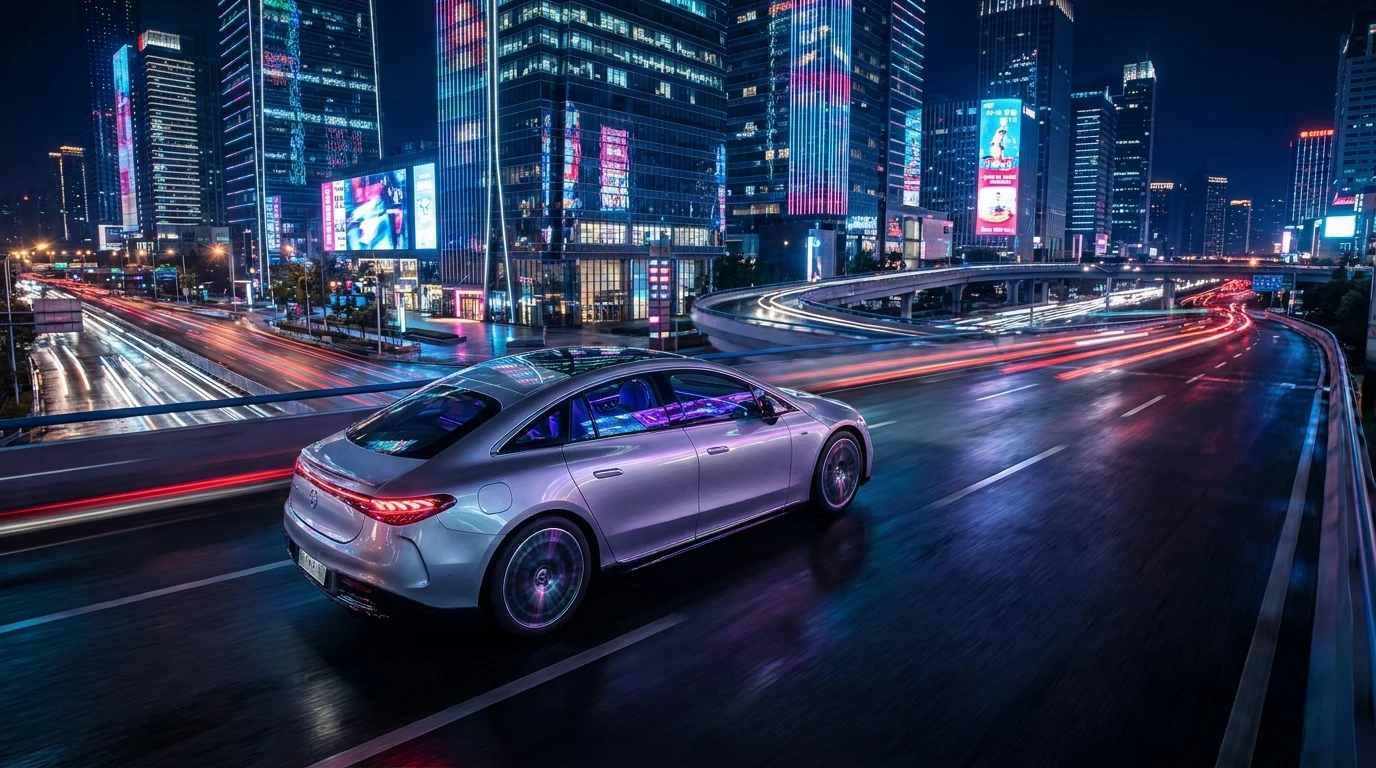
The Unmatched Elegance of the 2025 Mercedes-Benz C-Class
The 2025 Mercedes-Benz C-Class remains a towering achievement in the realm of compact luxury sedans, seamlessly blending high-tech electrification with the classic driving dynamics enthusiasts expect. Stepping into the cabin of this vehicle feels like crossing a threshold into automotive the future, heavily influenced by its larger sibling, the S-Class. The core philosophy driving the 2025 iteration is effortless progression, where technology anticipates driver needs before they even arise. From the sleek exterior styling characterized by an aggressive stance and sculpted hood bulges to the whisper-quiet interior acoustics, every centimeter of the vehicle serves a distinct purpose.
As the automotive industry shifts rapidly toward full electrification, the 2025 Mercedes-Benz C-Class bridges the gap flawlessly by utilizing a highly refined mild-hybrid architecture. This approach ensures drivers retain the visceral feel of a combustion engine while benefiting from the smooth torque delivery typical of electric vehicles. Whether navigating dense urban traffic or cruising on vast stretches of open highway, the chassis dynamics adapt in real time to deliver a serene yet responsive ride. The suspension setup strikes a delicate balance, absorbing road imperfections with grace while minimizing body roll during spirited cornering. The vehicle is not just a mode of transportation; it is an integrated digital ecosystem designed for modern demands.
Read also: Lexus ES 2026: Features, Specs, and Ultimate Buyer Guide; 2024 Toyota Highlander Limited: Specs, Features & Guide.
Defining the Core Strengths
Understanding the value proposition of the 2025 Mercedes-Benz C-Class requires looking at its holistic approach to luxury. It is built around a driver-centric experience that does not compromise passenger comfort. The vehicle utilizes a 2.0-liter turbocharged four-cylinder engine paired with a 48-volt mild-hybrid system. This combination is engineered to eliminate turbo lag entirely, offering instant responsiveness off the line. Furthermore, the integration of advanced aerodynamics reduces wind noise to a barely perceptible murmur, contributing to a tranquil cabin environment.
| Trim Level | Engine Specifications | Target Audience |
|---|---|---|
| C 300 Premium | 2.0L Turbo I-4 + 48V ISG (255 hp) | Luxury commuters seeking efficiency and comfort. |
| C 300 4MATIC Exclusive | 2.0L Turbo I-4 + 48V ISG (255 hp, AWD) | Drivers in varied climates needing superior traction. |
| AMG C 43 Pinnacle | 2.0L Handcrafted Turbo (402 hp) | Performance enthusiasts craving track-ready dynamics. |
The core value proposition lies in its dual nature: it operates as a frugal daily commuter and a capable sports sedan simultaneously. Consider two primary examples of this versatility. First, the 48-volt integrated starter-generator (ISG) allows the engine to shut off while coasting down highways, dramatically improving fuel economy without the driver even noticing the transition. Second, during aggressive acceleration, the same ISG provides a burst of torque, filling the power gap before the turbocharger fully spools. This results in a linear, predictable, and exhilarating acceleration curve.
Beyond performance, the interior is where this sedan truly shines. The design language is fluid and cohesive, prioritizing intuitive interaction. Here are the top three standout features of the cabin:
- The 11.9-Inch Portrait Touchscreen: Angled slightly toward the driver, this massive display controls everything from climate functions to navigation, drastically reducing the number of physical buttons and creating a clean, minimalist aesthetic.
- Augmented Reality Navigation: The MBUX system overlays directional arrows and street names directly onto a live video feed of the road ahead, ensuring drivers never miss a turn in complex city grids.
- Dynamic 64-Color Ambient Lighting: Woven throughout the dashboard, door panels, and air vents, the lighting system reacts to temperature changes and can be customized to suit any mood, elevating night drives to a cinematic experience.
Origins of the C-Class Bloodline
To fully appreciate the engineering marvel of the current generation, one must trace the lineage back to its roots. The story begins in the early 1980s with the introduction of the legendary 190E, affectionately known as the Baby Benz. This vehicle proved that compact dimensions did not require a sacrifice in build quality, safety, or prestige. It established a new market segment, paving the way for the official introduction of the C-Class nomenclature in the early 1990s with the W202 generation.
The Evolution of Compact Luxury
Through the 2000s and 2010s, the model underwent significant transformations. The W203 brought a sweeping, aerodynamic design language that departed from the boxy shapes of the past, while the W204 introduced sharper lines and an emphasis on driving dynamics, challenging its Bavarian rivals directly. By the time the W205 arrived, Mercedes-Benz had shifted the paradigm entirely, shrinking the design ethos of the flagship S-Class down to the compact segment. High-end materials like open-pore wood and genuine aluminum trim became standard expectations rather than optional luxuries. This era cemented the vehicle’s reputation as a true miniature limousine.
The Modern State of the C-Class
The transition into the W206 generation, which encompasses the 2025 model, marked a significant pivot toward digital dominance and electrification. The current architecture abandons large-displacement engines entirely in favor of highly optimized four-cylinder units bolstered by advanced electric assist systems. This bold move was initially met with skepticism but quickly validated by the resulting performance metrics. The modern iteration represents the apex of current combustion engine technology, wrapped in a digital interface that continually evolves through over-the-air software updates.
Mild-Hybrid Powertrain Dynamics
The beating heart of the powertrain is the 48-volt Integrated Starter-Generator (ISG). Unlike traditional alternators, the ISG sits directly between the engine and the nine-speed automatic transmission. This direct physical connection allows for instantaneous engine starts that are virtually imperceptible. When the vehicle is coasting, the ISG switches into regeneration mode, capturing kinetic energy and storing it in a compact lithium-ion battery. This energy is subsequently deployed to power the vehicle’s electrical systems and provide torque assist during acceleration. The thermal management system is equally advanced, utilizing electronically controlled water pumps and variable thermostats to ensure the engine operates at its optimal temperature range, maximizing combustion efficiency and minimizing emissions.
Advanced Aerodynamics and Chassis Rigidity
Engineering a quiet, stable ride requires meticulous attention to airflow and structural integrity. The exterior body panels are sculpted to achieve a remarkably low drag coefficient, slipping through the air with minimal resistance. This aerodynamic efficiency reduces wind noise and significantly improves highway fuel economy. Beneath the skin, the chassis employs a sophisticated mix of ultra-high-strength steel and lightweight aluminum alloys. This combination maximizes torsional rigidity, providing a solid foundation for the multi-link suspension system to do its work.
- Electric Exhaust Gas Turbocharger: Derived from Formula 1 technology, a small electric motor spins the compressor wheel before exhaust gases take over, eliminating lag completely.
- Active Damping System: The suspension continuously monitors wheel travel and steering input, adjusting the shock absorbers hundreds of times per second to optimize ride comfort and grip.
- Acoustic Glazing: Specialized laminates within the window glass block specific sound frequencies, isolating the cabin from tire roar and external traffic noise.
Step 1: Selecting the Ideal Powertrain
Choosing the right configuration sets the tone for your ownership experience. If your daily route involves heavy stop-and-go traffic, the standard rear-wheel-drive C 300 offers optimal balance and fuel efficiency. For those residing in areas prone to heavy rain or snow, the 4MATIC all-wheel-drive system is a necessity, providing intelligent torque distribution to whichever wheels have the most grip. Performance seekers should bypass the standard models entirely and look toward the AMG variants, which feature hand-built engines and aggressive suspension tuning.
Step 2: Configuring the Interior Options
Customizing the cabin is crucial for long-term satisfaction. Begin by selecting the seating materials; while the standard MB-Tex is highly durable and easy to clean, upgrading to genuine Nappa leather offers a softer, more luxurious feel. Pay close attention to the trim options. The Natural Grain Walnut Wood provides a classic, warm aesthetic, whereas the Metal Weave or Carbon Fiber trims lean heavily into a modern, sporty vibe. Ensure you opt for the ventilated seats if you live in a warmer climate.
Step 3: Mastering the MBUX Interface
The Mercedes-Benz User Experience (MBUX) is vast and initially intimidating. Dedicate your first week of ownership to learning the voice command system. By simply saying Hey Mercedes, you can adjust the climate control, input navigation destinations, or even open the sunroof without taking your hands off the steering wheel. The natural language processing is advanced enough to understand conversational phrases like I am cold rather than requiring rigid command structures.
Step 4: Setting Up Personal Driver Profiles
If multiple people will be driving the vehicle, setting up individual profiles is a massive time-saver. The system utilizes a biometric fingerprint scanner located just below the central touchscreen. Once scanned, the vehicle instantly adjusts the seat position, steering wheel height, ambient lighting color, radio presets, and even recent navigation destinations to match the specific driver’s preferences.
Step 5: Utilizing Advanced Driver Assistance
Familiarize yourself with the active safety systems during off-peak driving hours. The adaptive cruise control with steering assist can practically drive the car on clearly marked highways, maintaining a safe distance from the vehicle ahead and keeping you centered in the lane. Learn how to engage the Active Parking Assist, which uses ultrasonic sensors and 360-degree cameras to autonomously steer the vehicle into parallel or perpendicular parking spaces.
Step 6: Maintaining the Mild-Hybrid System
While the 48-volt system is largely maintenance-free, adhering to the scheduled service intervals is critical. Ensure that only certified technicians handle fluid changes, as the thermal management systems for the battery and ISG are highly complex. Keeping the software up to date via the over-the-air update system is also essential, as Mercedes-Benz frequently releases patches that optimize battery charging algorithms and hybrid power delivery.
Step 7: Maximizing Resale Value
To protect your investment, maintain meticulous service records through the official companion app. Avoid aggressive chemical cleaners on the interior screens and open-pore wood trims, opting instead for a dry microfiber cloth. Regularly wash the undercarriage during winter months to prevent salt accumulation, and keep the exterior paint protected with a high-quality ceramic coating or paint protection film applied shortly after purchase.
Myths & Reality
Myth: The shift to exclusively four-cylinder engines means the vehicle lacks the power and refinement of previous generations.
Reality: The integration of Formula 1-derived electric turbocharger technology and the 48-volt mild-hybrid system actually provides faster, more linear acceleration than older, naturally aspirated V6 engines, all while delivering superior fuel economy.
Myth: The massive central touchscreen is a dangerous distraction while driving.
Reality: The intuitive voice command system, coupled with tactile controls on the steering wheel, means you rarely have to look at or touch the screen while in motion. The system is designed to keep your eyes on the road.
Myth: Maintenance on German luxury cars is always prohibitively expensive and complicated.
Reality: Modern diagnostics allow the vehicle to alert the dealership before a component fails. Standard warranties and prepaid maintenance packages make routine upkeep highly predictable and manageable.
Myth: It is just a smaller S-Class without the actual luxury features.
Reality: It inherits genuine S-Class technology, from the augmented reality navigation to the biometric security scanners, offering flagship-level luxury in a more agile, parking-friendly footprint.
Is the 2025 Mercedes-Benz C-Class fully electric?
No, it utilizes a sophisticated mild-hybrid powertrain that combines a traditional combustion engine with a 48-volt electrical system to improve efficiency and performance without requiring plug-in charging.
Does the vehicle require premium unleaded fuel?
Yes, to ensure the turbocharged engine operates at its peak efficiency and to prevent knocking, high-octane premium unleaded gasoline is strongly recommended by the manufacturer.
What is the standard warranty coverage provided?
The vehicle typically comes with a 4-year or 50,000-mile limited warranty, which covers powertrain components and basic bumper-to-bumper defects, though exact terms can vary slightly by region.
How does the 4MATIC all-wheel-drive system work?
The 4MATIC system continuously monitors wheel slip, steering angle, and vehicle speed, instantaneously routing torque to the wheels with the best traction to ensure stability in adverse weather conditions.
Are the rear seats spacious enough for adult passengers?
Yes, the W206 generation increased the wheelbase slightly compared to older models, providing improved rear legroom and headroom, making it perfectly comfortable for adults on longer journeys.
Can the MBUX infotainment system receive over-the-air updates?
Absolutely. The vehicle is equipped with an integrated cellular connection that allows it to download software patches, map updates, and new features seamlessly in the background.
Does the system feature wireless Apple CarPlay and Android Auto?
Yes, both smartphone integration platforms are supported wirelessly as standard, allowing you to access your favorite navigation and music apps without cluttering the center console with cables.
Is the Burmester premium audio system worth the upgrade?
For audiophiles, it is highly recommended. The Burmester 3D surround sound system features custom-machined metal speaker grilles and provides exceptional acoustic clarity and deep, distortion-free bass.
Conclusion
The 2025 Mercedes-Benz C-Class stands as a testament to automotive evolution, proving that digital innovation and traditional driving pleasure can coexist beautifully. Its mild-hybrid architecture, luxurious interior, and advanced safety features make it a formidable presence on the road. If you are seeking a sedan that anticipates your needs while delivering an exhilarating drive, it is time to experience this masterpiece firsthand. Visit your local dealership to schedule a comprehensive test drive and discover the perfect configuration for your lifestyle today.





Leave a Reply