

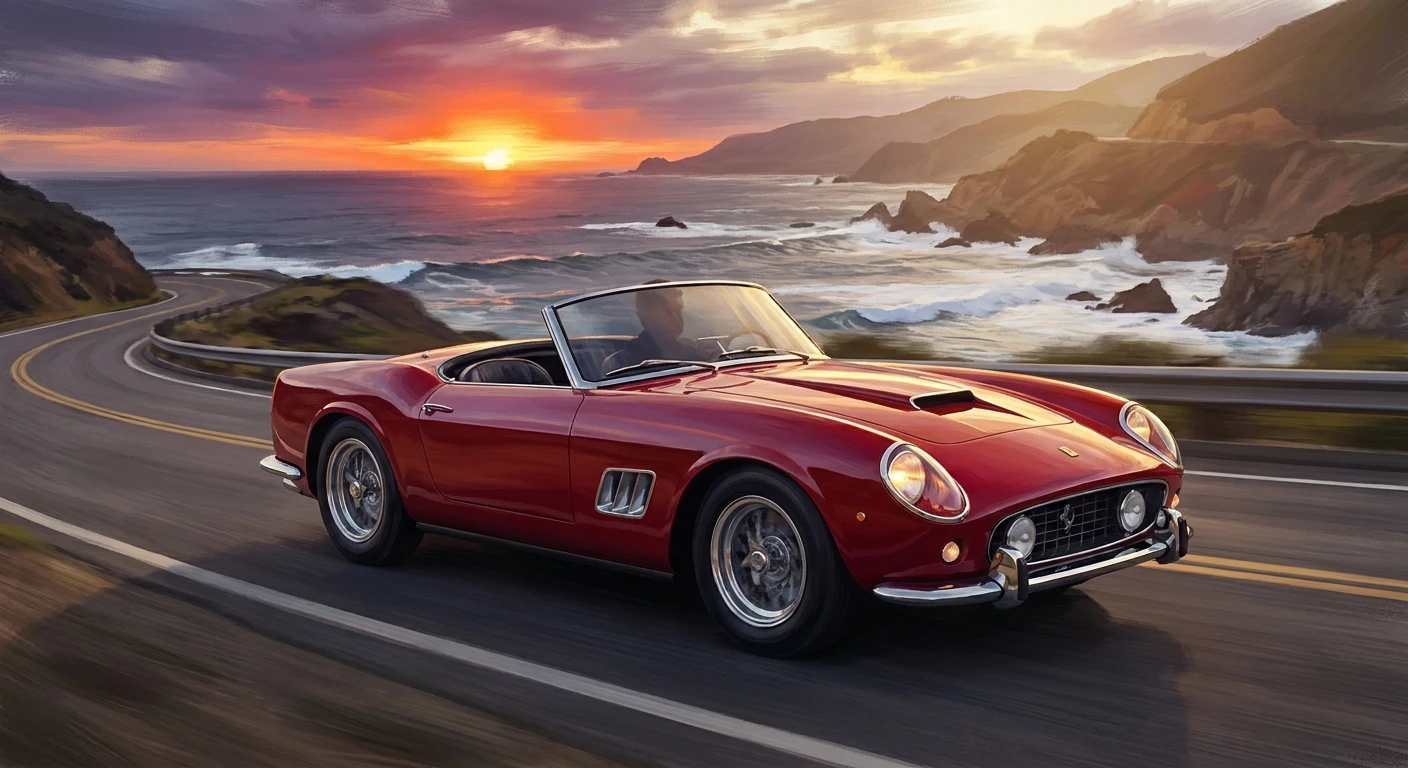
What Makes the Fiat 124 Spider a True Automotive Icon
The Fiat 124 Spider stands as one of the most recognizable and beloved open-top sports cars ever to grace the tarmac. For decades, this compact, front-engine, rear-wheel-drive machine has captured the hearts of motoring enthusiasts who crave the pure, unfiltered joy of the open road. Whether you are looking at the vintage models that brought European flair to the global market or the sophisticated modern revival that blended Italian design with Japanese engineering, the appeal remains constant. You get an undeniable mix of gorgeous proportions, spirited performance, and an accessible entry point into the world of genuine sports cars.
Understanding the allure of this vehicle requires looking beyond simple horsepower figures or top-speed metrics. The magic lies in the tactile feedback of the steering wheel, the raspy exhaust note echoing off canyon walls, and the sheer elegance of its exterior lines. Early generations introduced advanced engineering concepts to everyday drivers, while the newer iterations proved that lightweight, engaging roadsters still have a crucial place in an era dominated by heavy SUVs. The essence of the vehicle is about delivering smiles per gallon, prioritizing the driver’s connection to the machine and the environment above all else.
Read also: 2021 Toyota Corolla: Specs, Features & Reliability Review; Lexus ES 2026: Features, Specs, and Ultimate Buyer Guide.
The Core Appeal and Everyday Benefits
Evaluating the true value of the vehicle requires examining exactly what owners gain when they hand over the keys. The value proposition of this roadster centers on delivering an exotic feel without the exorbitant price tag usually associated with Italian sports cars. For instance, you get the dramatic styling and throaty engine characteristics reminiscent of far more expensive marques, yet you benefit from parts availability and maintenance costs that remain highly reasonable. Another prime example is the car’s dual nature: it operates beautifully as a weekend canyon carver, yet its suspension and seating are compliant enough for daily commuting or grand touring.
The landscape of the model’s lineage can be broken down into distinct eras, each offering unique driving dynamics and technical features that appeal to different types of drivers. Below is a breakdown of how the different generations compare.
| Model Generation | Key Defining Feature | Driving Dynamics |
|---|---|---|
| Original Series (1966-1985) | Lampredi Twin-Cam Engine | Mechanical, analog, highly communicative steering with a soft, comfortable ride. |
| Modern Lusso/Classica (2017-2020) | 1.4L MultiAir Turbo | Refined touring comfort, punchy low-end torque, exceptionally quiet cabin. |
| Modern Abarth (2017-2020) | Sport Exhaust & Bilstein Dampers | Aggressive, sharp turn-in, louder exhaust note, track-focused rigidity. |
Why do enthusiasts continue to flock to this specific nameplate over other available roadsters? The reasons are clear and compelling:
- Heritage-Driven Design: The exterior styling effortlessly incorporates retro cues—like the hexagonal grille and dual hood domes—without looking like a mere caricature of the past.
- Turbocharged Power Delivery: Unlike its naturally aspirated rivals, the modern iteration utilizes a turbocharged powerplant that provides significant mid-range torque, making overtaking on the highway effortless.
- Exceptional Grand Touring Comfort: The suspension geometry and spring rates are tuned to absorb road imperfections, allowing drivers and passengers to cover long distances without the fatigue normally associated with small sports cars.
The Classic Origins of the 1966 Original
The story begins at the 1966 Turin Auto Show, where the original model was unveiled to widespread acclaim. Designed by the legendary Tom Tjaarda at the Pininfarina styling house, the car was an instant masterpiece of proportion and restraint. It was built on a shortened floorpan of the standard 124 sedan but shared almost nothing else with its pragmatic sibling. Underneath the beautifully sculpted hood sat a jewel of an engine designed by Aurelio Lampredi, a former Ferrari engineer. This twin-cam, four-cylinder engine was incredibly advanced for its time, featuring an aluminum crossflow cylinder head and a toothed timing belt—innovations that set a new standard for affordable sports cars.
Evolution Through the Decades
As the 1970s progressed, the car underwent numerous updates to comply with evolving safety and emissions regulations, particularly in the vital North American market. Engine displacement grew from the original 1.4 liters to 1.6, then 1.8, and finally 2.0 liters by the end of the decade. Massive impact bumpers were added to meet federal crash standards, altering the delicate lines of the early cars but ensuring the model could still be sold. In the early 1980s, Fiat withdrew from the US market, but the demand for the roadster was so strong that Pininfarina took over production entirely, selling the car as the Pininfarina Spider Azzurra until 1985. Over its classic lifespan, nearly 200,000 units were produced, cementing its legacy.
The Modern State of the Italian Roadster
Fast forward to the 2015 Los Angeles Auto Show, and the automotive world witnessed the resurrection of the nameplate. Through a strategic partnership with Mazda, the new Fiat 124 Spider was built alongside the fourth-generation MX-5 Miata in Hiroshima, Japan. However, the Italian manufacturer ensured the car retained its distinct identity. Every exterior panel was unique, resulting in a car that was slightly longer and more substantial. More importantly, the powertrain was entirely Italian—the engine was shipped from Italy to Japan for assembly. This cross-cultural collaboration created a vehicle with Japanese build quality and reliability, infused with the undeniable romance and torque-rich character of a European tourer.
Under the Hood: Powertrain and Performance
The modern roadster deviates significantly from traditional lightweight sports car formulas by utilizing forced induction. The heart of the vehicle is the 1.4-liter MultiAir turbocharged inline-four engine. The MultiAir system is a marvel of modern engineering, doing away with the traditional intake camshaft. Instead, it uses electro-hydraulic actuators to control intake valve lift and timing with incredible precision. This allows for optimized airflow at any engine speed, resulting in better fuel efficiency, lower emissions, and a broad torque curve. When you press the accelerator, you do not need to rev the engine to the redline to feel the push; the torque is available right in the middle of the rev range, making everyday driving incredibly satisfying.
Chassis and Suspension Tuning
Handling is dictated by a state-of-the-art chassis that perfectly balances rigidity and weight savings. The suspension utilizes a double-wishbone setup at the front and a multi-link configuration at the rear. While it shares this fundamental architecture with its Japanese platform-mate, the dampers, springs, and anti-roll bars were specifically calibrated by Italian engineers to deliver a distinct driving feel. The result is a ride that leans slightly more in corners, providing the driver with clear, progressive feedback about grip limits before the tires break traction. This predictable handling inspires confidence, making it an excellent vehicle for both novice sports car buyers and seasoned track veterans.
- Curb Weight: Approximately 2,436 lbs (making it one of the lightest modern cars available).
- Horsepower: 160 hp in Classica/Lusso trims, 164 hp in the Abarth edition.
- Torque: 184 lb-ft at 2,500 RPM, giving it superior low-end pulling power.
- Weight Distribution: Nearly perfect 50/50 balance for neutral handling characteristics.
- Transmission Options: A precise 6-speed manual or a smooth-shifting 6-speed Aisin automatic.
Step 1: Define Your Goal (Classic vs. Modern)
The first action to take when planning your purchase is deciding which era fits your lifestyle. A vintage model offers the purest, analog driving experience, complete with the smell of gasoline and mechanical steering feedback, but requires regular mechanical sympathy and maintenance. The modern version provides air conditioning, Bluetooth connectivity, safety airbags, and turn-key reliability. Assess your mechanical skills, your intended usage, and your garage space before making this critical choice.
Step 2: Set a Realistic Budget
Pricing varies wildly based on condition and generation. Project-grade classic models can be found for a few thousand dollars, but restoring them can easily cost tens of thousands. Immaculate, concours-quality vintage examples command premium prices. Modern used examples offer an excellent middle ground, often priced very competitively against equivalent hatchbacks or sedans. Always budget an extra 10% to 20% of the purchase price for immediate maintenance needs, taxes, and registration fees.
Step 3: Inspect the Body for Rust or Paint Issues
If you are pursuing a vintage model, rust is the absolute biggest enemy. Check the shock towers, the floor pans, the rocker panels, and the areas around the windshield frame meticulously. Classic Italian steel from the 1970s was notoriously prone to corrosion. If you are buying a modern iteration, look for panel gap inconsistencies or mismatched paint, which could indicate poorly repaired collision damage. Ensure the clear coat is intact, especially on cars that have lived in sunny climates.
Step 4: Test the Engine Health and Turbocharger
For the modern 1.4L MultiAir engine, proper oil maintenance is critical because the hydraulic valve actuation relies entirely on clean, high-quality oil to function correctly. Check the service records to ensure oil changes were performed on schedule. Listen for any whining noises from the turbocharger under acceleration, and ensure the power delivery is smooth and uninterrupted. On vintage models, ensure the twin-cam engine idles smoothly and check for blue smoke from the exhaust, which indicates worn piston rings or valve seals.
Step 5: Evaluate the Convertible Top Mechanism
The roof of the modern car is a masterpiece of manual operation; you can unlatch and throw it back with one hand while seated in the driver’s position in under three seconds. Verify that the latch mechanism is secure, the canvas is free of tears or deep creases, and the rear glass window is intact. For vintage models, check the condition of the vinyl or canvas, ensure the plastic rear window is not hopelessly yellowed or cracked, and test that the frame folds smoothly without binding.
Step 6: Perform a Professional Pre-Purchase Inspection
Never rely solely on your own eyes, especially when buying a specialized sports car. Hire an independent mechanic who understands the quirks of the platform. They can put the vehicle on a lift to inspect the suspension bushings, check the subframes, look for hidden oil leaks, and scan the engine control unit for any stored fault codes. This step costs a small fee but can save you thousands in unexpected repairs down the road.
Step 7: Establish a Routine Maintenance Schedule
Once you secure the keys, preventative maintenance is your best friend. For the modern engine, spark plugs need replacing more frequently than on standard commuter cars—often every 30,000 miles. Keep the convertible top clean and apply a specialized fabric protectant twice a year to repel water and UV rays. Regularly flush the brake fluid and inspect the brake pads, as enthusiastic driving will consume them faster. Treat the car well, and it will reward you with years of flawless driving joy.
Myths and Realities
Myth: The modern version is exactly the same car as the Mazda Miata, just with a different badge slapped on the front.
Reality: While they share the underlying chassis and interior layout, the engine, transmission housing, exterior body panels, suspension tuning, and steering calibration are entirely unique to the Italian brand. The driving character is distinctly different, favoring torquey touring over high-revving track work.
Myth: Being an Italian car, it will constantly break down and cost a fortune to repair.
Reality: The modern generation benefits from being assembled in Japan utilizing highly disciplined manufacturing processes, making it incredibly reliable. Even the classic versions, when properly maintained and updated with modern electrical components, prove to be robust and surprisingly easy to work on for the home mechanic.
Myth: You cannot comfortably drive this vehicle on a long cross-country road trip.
Reality: Grand touring has always been central to the car’s DNA. The suspension is specifically tuned to be more compliant than its competitors, absorbing highway expansion joints with ease. Furthermore, the modern cabin features extra sound deadening, making it significantly quieter at highway speeds than other open-top cars in its class.
Frequently Asked Questions
What engine powers the modern Fiat 124 Spider?
It is powered by a 1.4-liter MultiAir turbocharged inline-four engine, producing up to 164 horsepower and 184 lb-ft of torque depending on the specific trim level.
Is the classic model expensive to repair?
Parts are surprisingly affordable and widely available through dedicated classic European car specialists. Labor costs can vary, but the mechanical simplicity makes it a great DIY project.
Does it come with an automatic transmission?
Yes, the modern generation was offered with both a 6-speed manual transmission and a highly responsive 6-speed automatic transmission with manual shift modes.
How fast is the Abarth version?
The Abarth model can accelerate from 0 to 60 mph in roughly 6.3 seconds, offering a sportier exhaust system, a limited-slip differential, and upgraded suspension components for superior handling.
Did Pininfarina design the original?
Yes, the original 1966 model was famously designed by Tom Tjaarda while working at Carrozzeria Pininfarina, resulting in its timeless, elegant proportions.
Can tall drivers fit comfortably inside?
Space is somewhat limited, as is typical for two-seat roadsters. Generally, drivers up to 6 feet 2 inches can find a comfortable driving position, though those with longer torsos may find headroom tight when the roof is closed.
Has production ended for the modern generation?
Yes, global production for the modern iteration officially ended in 2020, making well-maintained used examples increasingly sought after by driving enthusiasts.
What fuel type is recommended?
To achieve the maximum advertised horsepower and ensure the longevity of the turbocharged engine, premium unleaded fuel is highly recommended by the manufacturer.
Does the car have a spacious trunk?
The trunk offers 4.9 cubic feet of cargo space. While it will not fit large suitcases, it is perfectly adequate for a weekend’s worth of soft duffel bags and groceries.
Final Thoughts
The Fiat 124 Spider represents an emotional approach to driving that is increasingly rare today. Whether you are turning wrenches on a vintage classic in your garage or navigating coastal highways in the sophisticated modern turbo version, the car delivers an undeniable sense of occasion. It proves that you do not need a massive V8 or a six-figure price tag to capture the pure romance of motoring. If you are searching for a vehicle that turns every mundane commute into an event, it is time to start searching the classifieds and get behind the wheel of this remarkable Italian roadster.





Leave a Reply