

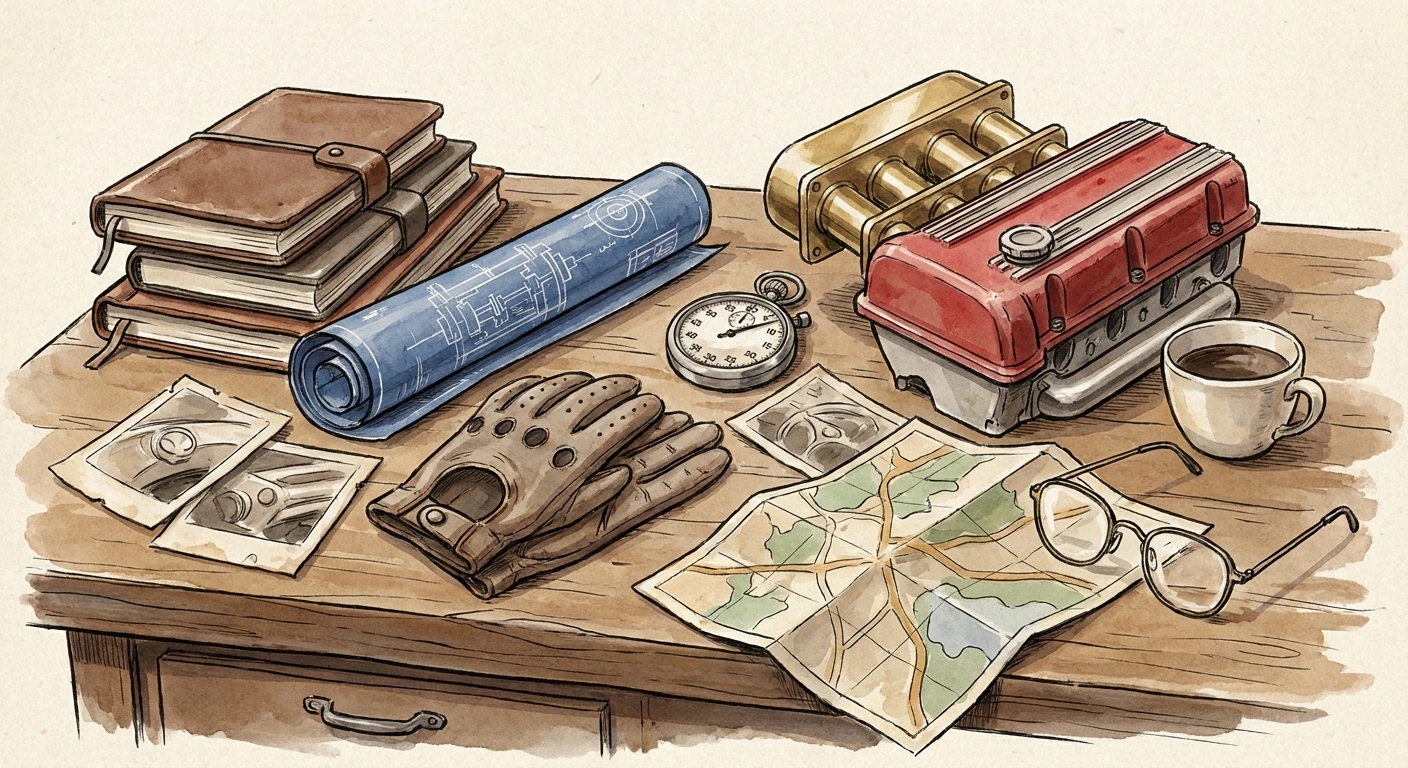
The Lasting Legacy of the Ferrari Testarossa
The Ferrari Testarossa is universally recognized as the definitive supercar of the 1980s, instantly evoking memories of neon lights, synth-pop, and pure analog driving mechanics. When it officially debuted, it completely shattered the public’s expectations of what an Italian grand tourer could look like. The aggressive wedge shape, characterized by an incredibly wide rear track and those distinct, heavily slotted side strakes, defined an entire era of automotive excess and boundary-pushing design. Legendary coachbuilder Pininfarina penned this masterpiece initially to solve practical engineering problems that plagued its predecessor, the Berlinetta Boxer. However, in the process of fixing thermal dynamics and cabin comfort, they inadvertently created an eternal cultural icon.
You simply cannot discuss automotive history without visualizing this wide, low-slung, flat-12 powered machine roaring down coastal highways. Owning one today bridges the ultimate gap between raw, unfiltered driving mechanics and sheer artistic sculpture. It commands attention not just because of the prancing horse badge, but because it represents a time when engineers and designers took massive stylistic risks. We are going to meticulously break down exactly what makes this machine tick mechanically, why the maintenance bills are legendary among collectors, and how its dramatic engineering continues to command immense respect decades after it first rolled out of the historic factory in Maranello. This is far more than just a vintage car; it is a mechanical phenomenon that fundamentally reshaped supercar history.
Read also: Fiat 124 Spider: The Ultimate Guide to the Classic Roadster; Dodge Hellcat 0-60: Acceleration Limits and Specs.
There is a specific feeling you get when sliding into the low driver’s seat. It is an unapologetic sensory overload that demands your full attention, rewarding skilled drivers while severely punishing those who underestimate its heavy controls and massive physical footprint.
Understanding the Core Appeal of the Classic Flat-12
Let us talk directly about what makes the Ferrari Testarossa so special—and what you absolutely must know if you ever intend to park one in your own garage. The primary appeal lies in its completely analog, unfiltered driving experience. Modern supercars do everything for you, but this machine requires muscle and finesse. You are dealing with a heavy, unassisted steering rack, a gated five-speed manual transmission that makes a deeply satisfying metallic clack with every single gear change, and a massive naturally aspirated engine that sings a glorious mechanical symphony right behind your head. However, the exact things that make it charming also make it a handful. Maintenance on a vintage Italian exotic is famously brutal, and parts availability can test your patience.
Here is a detailed look at how the model evolved over its lifespan, clearly showing the value proposition and performance leaps of the different factory iterations:
| Model Iteration | Production Years | Horsepower Output |
|---|---|---|
| Ferrari Testarossa (Original) | 1984 – 1991 | 390 hp (Euro) / 380 hp (US) |
| Ferrari 512 TR | 1991 – 1994 | 428 hp |
| Ferrari F512 M | 1994 – 1996 | 440 hp |
Why are modern collectors so intensely obsessed with hunting down pristine, low-mileage examples of this specific car? Here are the primary reasons driving the current vintage market:
- The Pure Analog Connection: There is zero traction control, absolutely no power steering, and no computer-controlled paddle shifters to save you from a mistake. It forces you to actually drive the car, actively engaging with the road surface at all times.
- The Iconic Gated Shifter: The classic metal transmission gate is a tactile masterpiece. Navigating the dog-leg first gear and slotting the heavy lever into second provides a mechanical satisfaction that modern dual-clutch transmissions simply cannot replicate.
- The Unmatched Visual Impact: The sheer width of the rear end combined with those dramatic side strakes creates a physical presence on the road that commands attention and turns heads significantly faster than the vast majority of modern, aerodynamic hypercars.
The value proposition is clear: you are buying a piece of functional, drivable art that represents the pinnacle of 1980s optimism. The 512 TR offers better drivability and a lower engine placement, while the extremely rare F512 M offers peak performance, albeit controversially losing the beloved pop-up headlights.
Origins of the Famous Name
The name translates directly to “red head” in Italian. This was not a random marketing decision, but rather a direct and deeply respectful homage to the highly successful, World Sportscar Championship winning 1957 250 Testa Rossa racing car. The name refers quite literally to the brightly red-painted cam covers bolted to the top of the massive flat-12 engine. When the brand officially introduced the car to the global press at the 1984 Paris Auto Show, it carried this historic moniker with immense pride, instantly bridging the gap between their rich, dominant racing heritage and their incredibly bold new futuristic design direction. Enzo Ferrari himself approved the nomenclature, ensuring the legacy lived on.
Evolution Through the 1980s
Throughout the mid-to-late 1980s, the Ferrari Testarossa firmly established itself as a definitive global symbol of immense wealth, excess, and status. The earliest production models featured a bizarre but highly sought-after single high-mounted side mirror—affectionately called the Monospecchio by purists. This odd design was heavily criticized for terrible visibility and was soon replaced by a much more conventional dual-mirror setup to appease buyers. Center-lock single-nut wheels were also swapped out for standard five-lug nuts as production continued into the late 80s to make tire changes easier for owners. Despite these running changes, the car kept the core extreme aesthetic that initially made it a television and cinematic star.
Modern State of the Market
Today, the global market for the Ferrari Testarossa is incredibly active and highly competitive. After a brief period in the early 2000s where they were relatively affordable compared to other exotics, auction values have aggressively skyrocketed. Dedicated collectors recognize that the automotive industry will never again see another era of unregulated, pure-combustion, analog grand tourers quite like this. Finding a well-documented model with fresh timing belts, immaculate interior leather, and a verified, stamp-filled service history is the absolute holy grail for modern enthusiasts looking to genuinely relive the golden era of supercars.
The Flat-12 Engine Architecture
At the absolute heart of the car sits a longitudinally mid-mounted 4.9-liter flat-12 engine. While often casually referred to as a boxer engine by enthusiasts, it is technically and mathematically a 180-degree V12 because of its specific crankpin configuration. In a true boxer, opposing pistons move in and out simultaneously, whereas in this 180-degree V12, opposing pistons share a crankpin and move in the same direction. This wide, flat layout keeps the vehicle’s center of gravity incredibly low to the tarmac, which is absolutely vital for high-speed stability and cornering confidence. The massive block utilizes four valves per cylinder and relies on a highly complex, mechanical Bosch K-Jetronic fuel injection system to deliver precise fueling. Because the engine is so remarkably wide, it ultimately dictates the entire wide-hipped rear stance of the vehicle.
Aerodynamics and the Cheese Grater Strakes
The iconic side strakes—often jokingly referred to as cheese graters—were not just a wild stylistic choice made for vanity; they were actually a brilliant engineering solution to a major mechanical problem. The older Berlinetta Boxer featured a front-mounted radiator system that notoriously caused the cabin to get unbearably hot because the boiling coolant plumbing ran directly under the passenger compartment. Pininfarina engineers ingeniously moved the twin radiators to the extreme rear sides of the car.
Here are the scientific and technical facts behind this legendary engineering decision:
- The long side strakes ensure highly turbulent dirty air is cleanly smoothed out before it forcefully enters the side-mounted radiators, drastically maximizing cooling efficiency at high speeds.
- Moving the massive radiators to the rear completely eliminated the notorious “hot cabin” issue and finally allowed for actual, usable luggage space in the front trunk compartment.
- The dramatic wedge shape and rear design ensure the car produces virtually zero aerodynamic lift at its top speed of 180 mph, achieving high-speed stability without ever needing an ugly rear wing.
- The extremely wide rear track measures 77.6 inches, which provides massive mechanical grip and traction for the rear-wheel-drive platform under heavy acceleration.
The strakes also smartly served a strict regulatory purpose, as several countries legally banned large open air intakes that could easily ingest road debris or harm pedestrians. The slotted graters brilliantly solved aerodynamic, thermal, and legal challenges simultaneously.
Step 1: Determine Your True Acquisition Budget
Buying a classic Ferrari Testarossa is strictly only the first financial hurdle you will face. You must meticulously set aside a significant, liquid reserve fund specifically for unexpected maintenance. A highly prudent purchase budget should always include an extra 20% on top of the purchase price dedicated purely to immediate post-sale servicing, fixing old seals, and replacing aging rubber components.
Step 2: Source a Highly Specialized Mechanic
Before you even dare to look at a car in person, actively find a local independent mechanic who specializes specifically in vintage Italian exotics. You need someone who explicitly knows how to safely perform an engine-out belt service on a flat-12 engine, as taking it to a standard modern dealership will often result in exorbitant bills and mechanics who are unfamiliar with the analog Bosch systems.
Step 3: Hunt for the Right Specific Model Year
You must firmly decide if you want the highly collectible but ergonomically flawed early Monospecchio (single mirror) versions with center-lock wheels, or a later, slightly more refined version with dual mirrors and standard five-lug wheels. The later models are generally much easier to live with and find wheels for, but the earlier models command a distinct premium at high-end auctions.
Step 4: Demand the Complete Service Records
A classic Italian exotic without comprehensive service records is a massive, incredibly risky gamble. Ensure there is solid documented proof of regular timing belt replacements every three to five years. A suddenly snapped timing belt on this interference engine will completely destroy the internal valves, leading to a catastrophic rebuild costing tens of thousands of dollars.
Step 5: Perform a Comprehensive Pre-Purchase Inspection
Never skip the PPI. Hire a dedicated expert to meticulously check the steel subframe for hidden rust, test the incredibly fragile 1980s electrical system, and ensure the ridiculously expensive Michelin TRX metric tires (if fitted to early models) are in perfectly safe condition. Crucially, look for expensive oil leaks around the complex cam seals and valve covers.
Step 6: Prepare Mentally for the Engine-Out Service
Every three to five years, the entire engine and transaxle assembly must be completely removed from the bottom of the chassis simply to replace the timing belts and water pump. Be completely prepared for this harsh reality; it is a major, highly costly, and time-consuming procedure that defines the ownership experience.
Step 7: Drive It Regularly and Vigorously
These intricate mechanical masterpieces genuinely hate sitting idle in climate-controlled garages. Rubber seals dry out, fuel systems degrade and clog, and brakes seize. The absolute best thing you can possibly do for a classic flat-12 is to take it out on the open road frequently, pushing the revs, and letting the vital fluids get fully up to their proper operating temperatures.
Separating Testarossa Myths from Reality
Myth: The Ferrari Testarossa is powered by a traditional V12 engine.
Reality: It actually utilizes a 180-degree flat-12 engine. While it indeed has 12 cylinders, they lie horizontally opposed to one another, which operates very differently from a traditional upright V-shaped block.
Myth: The iconic side strakes were purely a wild aesthetic styling exercise meant to look futuristic.
Reality: The prominent strakes were absolutely mechanically necessary to smoothly channel air into the rear-mounted radiators while strictly complying with international safety regulations that prohibited large, completely open air intakes.
Myth: The car is highly agile and perfectly suited for tight, winding mountain roads.
Reality: It is a notably heavy, exceptionally wide grand tourer designed specifically for high-speed cruising on wide, sweeping highways. Its massive width and heavy, unassisted steering make it incredibly cumbersome in tight switchbacks.
Myth: It was custom-designed explicitly for a famous 1980s television police show.
Reality: The car was fully designed, engineered, and released to the public well before the television show’s producers eventually chose to feature a painted white version of it on screen.
What is the absolute top speed of the Ferrari Testarossa?
When properly maintained, it can reach an incredibly impressive top speed of approximately 180 mph (290 km/h), making it unequivocally one of the fastest and most capable production cars of its specific era.
Exactly how many units were officially produced?
Ferrari officially produced nearly 7,177 units of the original model variant throughout its run, which remarkably made it one of their most mass-produced and commercially successful 12-cylinder models at the time.
Why does it feature a single high-mounted side mirror on early models?
The bizarre high-mounted single mirror, famously known as the Monospecchio, was initially installed by the factory specifically to strictly comply with confusing European visibility regulations regarding the car’s massive, sight-blocking rear width.
Does the engine really need to be completely removed for basic belt service?
Yes, unfortunately, performing a standard timing belt replacement requires dropping the entire massive engine and transaxle assembly out of the bottom of the car, which drives up maintenance costs significantly.
Is the car physically difficult to drive?
At low parking lot speeds, the heavy clutch pedal and complete lack of power steering make it a severe physical workout, but it becomes incredibly smooth, responsive, and planted once you reach highway cruising speeds.
What are the highly specific original tire sizes?
Early production models used completely unique Michelin TRX metric-sized tires. These specific metric tires are now exceptionally expensive and quite difficult to source, leading many owners to swap to aftermarket wheels.
How much horsepower does the original engine actually produce?
The original European specification models produced a highly respectable 390 horsepower, while the strictly regulated US models had slightly less power at 380 horsepower due to restrictive catalytic converters and emissions equipment.
Are the fuse boxes known to be a common failure point?
Yes, the original factory fuse box design is highly notorious for melting under the intense electrical load of the cooling fans, prompting many modern owners to upgrade to aftermarket solid-state fuse boards.
What specific model eventually replaced this legendary car?
The platform heavily evolved into the vastly improved 512 TR and later the ultra-rare F512 M, before being completely and permanently replaced by the front-engine, V12-powered 550 Maranello in the late 1990s.
In conclusion, preserving the incredible mechanical legacy of this iconic Italian grand tourer is a serious labor of love for true automotive enthusiasts. It perfectly represents an unapologetic, golden era of automotive design, engineering excess, and mechanical purity that we will simply never see again. If you are financially and mentally ready to embrace the demanding but rewarding world of vintage supercars, start actively hunting for your perfect flat-12 legend today and experience the magic for yourself!





Leave a Reply