

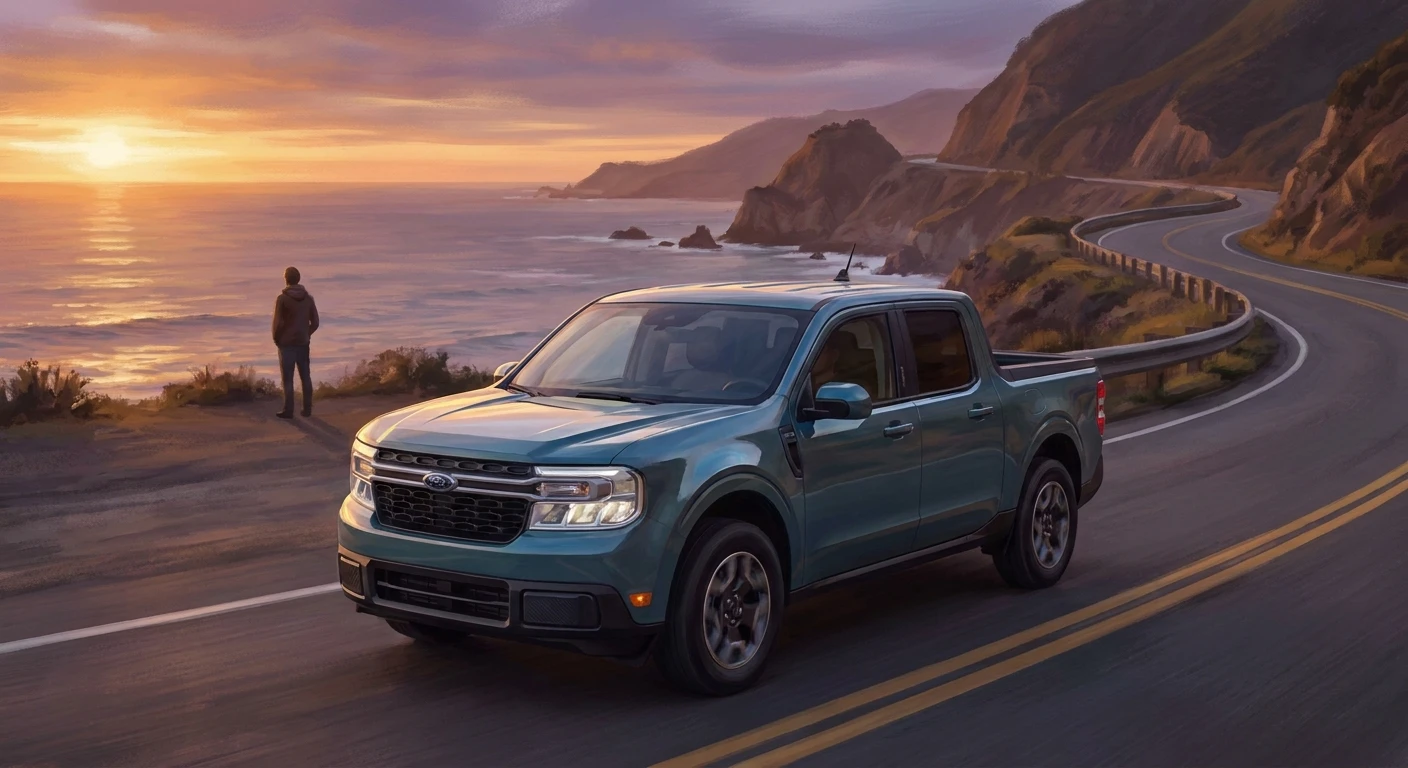
What Makes the 2025 Ford Maverick Stand Out?
Ever wondered why the 2025 Ford Maverick has taken the compact truck market by absolute storm? If you need a vehicle that flawlessly bridges the gap between a daily commuter car and a weekend workhorse, you are looking at the right machine. The demand for compact, efficient, yet highly capable pickups skyrocketed over the last few years, and Ford answered the call perfectly with this specific model. This thesis drives everything we discuss here: the 2025 edition solidifies the unibody truck as a permanent, dominant force in automotive design. Forget massive gas-guzzlers that you can barely fit into a standard parking spot at the local grocery store. This pickup delivers impressive payload capacity, spectacular fuel economy, and absolute city maneuverability. You get all the robust utility of a standard open bed without the immense, cumbersome footprint of heavy-duty alternatives.
By combining a highly practical layout with advanced hybrid technology options, the vehicle offers exceptional versatility for urban dwellers, contractors, and outdoor enthusiasts alike. We are going to unpack exactly how this truck redefines practicality, efficiency, and overall value in an incredibly crowded automotive market. Since we are now in 2026, looking back at a full year of real-world performance metrics, the data confirms this pickup actually lives up to the heavy hype surrounding its launch. The days of compromising between fuel efficiency and cargo capability are officially over. Let’s get straight to the facts and engineering breakdowns.
Read also: Why The landcruiser 2025 Dominates The Trails; Why the ford escape 2024 Is Your Best SUV Option.
Understanding the Core Utility and Value Proposition
The core appeal of this truck lies in its exceptional balance of cargo utility and everyday driving comfort. You simply do not have to sacrifice ride quality for hauling capability. A major value proposition is its upfront affordability combined with remarkably low running costs, especially if you opt for the standard hybrid powertrain configuration. Let’s look at two specific, practical examples of how this translates to everyday life. First, a small business owner handling light electrical or plumbing jobs can easily fit all necessary tools and supplies in the modular FLEXBED system, completely avoiding the high purchase and fuel costs associated with running a full-size F-150. Second, an active couple going kayaking or mountain biking on the weekends gets enough open bed space for muddy, wet gear while enjoying smooth, sedan-like fuel efficiency during their daily weekday commute.
| Trim Level | Engine Options | Standout Key Feature |
|---|---|---|
| XL (Base) | 2.0L EcoBoost / 2.5L Hybrid | Standard 8-inch Digital Touchscreen |
| XLT (Mid) | 2.0L EcoBoost / 2.5L Hybrid | Integrated Cubby Storage in Bed |
| Lariat (High) | 2.0L EcoBoost / 2.5L Hybrid | Upgraded SYNC 4 with 13.2-inch Display |
| Tremor (Off-Road) | 2.0L EcoBoost AWD Only | Off-Road Tuned Suspension & Skid Plates |
To fully utilize the truck, here are the main benefits you experience immediately after driving it off the lot:
- Superior Urban Maneuverability: The tight turning radius makes parallel parking in dense urban environments incredibly easy compared to traditional body-on-frame pickups.
- Flexible Storage Solutions: The heavily engineered modular bed allows you to create custom bike racks, dividers, and cargo tie-downs using standard cut lumber from any hardware store.
- Exceptional Fuel Economy: The standard engine choices keep you away from the gas pump significantly longer, saving thousands of dollars over the vehicle’s total lifespan.
The tailgate itself acts as a massive feature. It can be locked mechanically in a mid-position, allowing you to lay flat 4×8 sheets of plywood securely over the wheel wells. This is brilliant, user-focused engineering for weekend DIY home projects. The unibody construction means the main cabin and the cargo bed are integrated together, reducing overall curb weight and drastically improving structural rigidity. This translates directly to a smoother, much quieter ride on the highway compared to older small trucks.
The Deep Roots and History of the Platform
Origins of the Nameplate
The Maverick name goes way back deep into Ford’s historical archives, originally appearing on a compact two-door and four-door car back in the 1970s. Back then, it was heavily marketed as an affordable, highly fuel-efficient response to the massive global fuel crises of that specific era. Decades later, Ford revived the exact nameplate for a completely different automotive segment, but they kept the exact same driving philosophy: unmatched affordability and fuel efficiency. When the brand announced they were bringing back genuinely small trucks to the market, industry skeptics loudly claimed American buyers only wanted massive, oversized vehicles. The overwhelming pre-order numbers proved those critics entirely wrong.
Evolution of the Compact Truck
Historically, small pickups like the original 1990s Ranger dominated suburban driveways. Over time, however, those trucks suffered from severe “segment bloat,” growing larger and heavier until they became essentially mid-size trucks. This steady growth left a massive vacuum in the market for a truly small, entry-level pickup capable of light-duty work. By aggressively shifting away from traditional body-on-frame truck construction to a car-like unibody platform—which heavily shares architecture with the Escape and Bronco Sport crossovers—engineers successfully created a vehicle that drove exactly like a smooth crossover but hauled dirt and gravel like a rugged truck. This specific evolution proved that not every single pickup needs to tow 10,000 pounds to be immensely useful to the average consumer.
Modern State and Market Dominance
Now, analyzing the automotive landscape from our current vantage point in 2026, the company’s aggressive strategy worked flawlessly. The vehicle effectively created its own highly profitable micro-segment, forcing rival manufacturers to scramble desperately to develop competing models. It captured an entirely new demographic: people who never previously considered buying a pickup truck in their lives. From urban food delivery drivers to weekend backcountry campers, the demographic shift is absolutely staggering. The truck remains one of the absolute fastest-selling vehicles in North America, with factory production lines constantly running at maximum capacity just to meet relentless consumer demand. The sheer practicality of offering standard front-wheel drive alongside available all-wheel drive meant buyers in snowy, harsh climates could finally get the winter traction they needed without paying for the heavy, fuel-sapping hardware of a dedicated four-wheel-drive transfer case.
Scientific and Technical Deep Dive
Unibody Chassis Architecture Explained
Unlike heavy, traditional trucks that bolt a separate passenger cab and cargo bed onto a thick steel ladder frame, this specific pickup utilizes a highly advanced unibody structure. In a modern unibody design, the floor pan, side body panels, and roof structures all act together as a single, cohesive load-bearing element. This engineering choice significantly lowers the vehicle’s center of gravity, which drastically reduces side-to-side body roll when taking sharp corners at speed. You do not experience that bouncy, harsh, unstable feeling often associated with empty cargo beds bouncing on heavy-duty leaf-spring suspensions. Furthermore, the structural rigidity immensely improves crash safety ratings by evenly distributing kinetic impact forces throughout the entire steel shell of the vehicle, rather than concentrating them entirely on a rigid lower frame.
Advanced Powertrain Engineering
The mechanical engineering underneath the hood focuses heavily on maximizing thermal efficiency. The available hybrid system seamlessly blends electric motor torque with internal combustion engine power using a highly durable electronic continuously variable transmission (eCVT). Instead of utilizing traditional physical gears, the eCVT uses two heavy-duty electric motors and a robust planetary gearset to adjust drive ratios instantly, keeping the gas engine strictly in its optimal, most efficient power band at all times.
- Atkinson-Cycle Efficiency: The 2.5-liter gas engine holds the intake valve open slightly longer during the compression stroke, reducing internal pumping losses and maximizing fuel energy conversion.
- Electro-Mechanical Traction: The optional AWD system utilizes advanced electro-mechanical clutch packs to proactively route torque to the rear wheels milliseconds before front wheel slip actually occurs on ice or mud.
- Regenerative Braking Physics: The hybrid variant mechanically captures kinetic energy during deceleration, converting it rapidly into electricity to recharge the high-voltage lithium-ion battery pack without ever needing to plug into a wall outlet.
- Aerodynamic Drag Reduction: Advanced aerodynamic styling, active grille shutters, and flat underbody shielding severely reduce high-speed air resistance, heavily contributing to stellar highway fuel numbers.
The suspension system utilizes independent MacPherson struts up front and a specialized twist-beam or fully multi-link setup in the rear depending on which drivetrain you purchase. This exact geometry ensures optimal tire contact patch retention over broken, uneven pavement, maintaining strict grip and passenger comfort simultaneously.
7-Day Master Plan for New Truck Owners
Getting the keys to a brand-new vehicle is always exciting, and maximizing its deep potential requires a bit of organized, hands-on exploration. Here is your definitive, actionable seven-day guide to mastering your new compact pickup.
Day 1: Familiarize with the SYNC 4 Interface
Spend your very first afternoon sitting in the driveway pairing your smartphone via the wireless Apple CarPlay or Android Auto systems. Navigate through the brand-new, massive 13.2-inch digital touchscreen to set up your preferred audio presets, digital navigation preferences, and driver-assist safety alerts like lane-keeping assist and blind-spot monitoring.
Day 2: Customize the FLEXBED System
Head directly to the local hardware store. Buy a few cheap 2×4 and 2×6 wooden boards and slide them into the pre-stamped vertical and horizontal slots built into the truck bed walls. Use these to create highly customized cargo dividers. This instantly prevents smaller items like loose groceries or heavy toolboxes from sliding around while driving.
Day 3: Test the Selectable Drive Modes
Take the vehicle out on several different types of roads to thoroughly test the selectable drive modes. Toggle actively between Normal, Eco, Sport, Slippery, and Tow/Haul modes. Notice closely how the electronic throttle response and transmission mapping change dramatically, especially in Sport mode where the truck feels surprisingly quick.
Day 4: Optimize Hybrid Driving Habits
If you purchased the hybrid model, spend the day practicing smooth, early braking. Pay close attention to the digital dashboard screen that coaches you on maximizing regenerative braking efficiency. Gentle, prolonged stops return vastly more energy to the battery pack, dramatically improving your city fuel economy figures.
Day 5: Setup the FordPass Application
Download the official companion application to your smartphone. Connect it securely to your vehicle via the onboard modem to actively monitor tire pressure, check real-time fuel levels, and remotely start the engine to warm up or cool down the cabin well before your morning commute begins.
Day 6: Explore Hidden Under-Seat Storage
Flip up the rear passenger seats to discover the massive hidden storage bins located underneath. This deep, watertight space is absolutely perfect for storing heavy jumper cables, emergency first-aid kits, or muddy hiking boots that you simply do not want rolling around ruining the main cabin carpets.
Day 7: Plan Your First Payload Run
Put the truck to actual work. Drive to a landscaping center and load up bags of mulch, gardening supplies, or heavy rocks. Lock the tailgate cables in the halfway upward position to carry longer items securely, proving to yourself exactly why this specific vehicle is the ultimate practical daily driver.
Debunking Common Myths vs. Reality
There is a lot of stubborn misinformation surrounding modern unibody pickups. Let’s clear up the facts right now.
Myth: It is not a “real” truck because it does not sit on a heavy body-on-frame chassis.
Reality: It can easily tow up to 4,000 pounds and carry 1,500 pounds of physical payload in the bed. For 95% of average consumers, this matches or far exceeds their actual hauling needs, making it just as capable for real-world tasks as much larger, thirstier alternatives.
Myth: Hybrid engines are far too weak for carrying heavy cargo loads.
Reality: Electric motors naturally deliver instant peak torque at zero RPM. The hybrid powertrain actually feels significantly quicker off the starting line and manages heavy bed loads with exceptional ease and mechanical smoothness.
Myth: The 4.5-foot bed is simply too small to be practically useful.
Reality: Thanks to clever, thoughtful engineering like the multi-position tailgate and perfectly placed built-in tie-downs, you can securely transport large 4×8 sheets of building materials. It even fits full-size dirt bikes with the tailgate angled down, proving overall bed length isn’t everything when you utilize highly intelligent design.
Frequently Asked Questions & Conclusion
What is the exact towing capacity of the 2025 Ford Maverick?
It comfortably tows 2,000 lbs right out of the factory, but you can pull up to 4,000 lbs if you equip the highly recommended 4K Tow Package on the EcoBoost engine model.
Does it come with an all-wheel-drive system?
Yes, advanced AWD is readily available on the gas-only EcoBoost versions, and it has finally been made an available option for the highly sought-after Hybrid models as well.
What is the actual fuel economy like in city traffic?
The front-wheel-drive hybrid variant achieves upward of 40 mpg in heavy stop-and-go city traffic, fundamentally changing the cost of daily commuting.
Can you safely fit a child car seat in the back row?
Absolutely. There are standard, easily accessible LATCH system anchors designed securely for up to two large child car seats in the rear passenger row.
Is the open cargo bed completely rust-proof?
The bed is stamped from high-strength steel and heavily treated at the factory, but opting for a factory or aftermarket spray-in bedliner is highly recommended to prevent deep scratches and future corrosion.
Does the new interior support wireless smartphone charging?
Yes, the higher XLT and Lariat trims feature extremely convenient standard wireless charging pads located right at the base of the center console.
What kind of factory warranty comes with the vehicle?
Buyers receive a standard 3-year/36,000-mile comprehensive bumper-to-bumper warranty and a robust 5-year/60,000-mile powertrain warranty covering the engine and transmission.
Wrapping things up perfectly, this compact vehicle remains the absolute undisputed champion of the modern small pickup class, delivering unparalleled everyday versatility, incredible ride comfort, and shocking fuel efficiency. If you are entirely tired of driving massive, thirsty behemoths that drain your wallet at the gas pump, it is definitely time to make a smart switch. Call your local dealer to book a test drive today and experience the hyper-efficient future of sensible driving for yourself!





Leave a Reply