

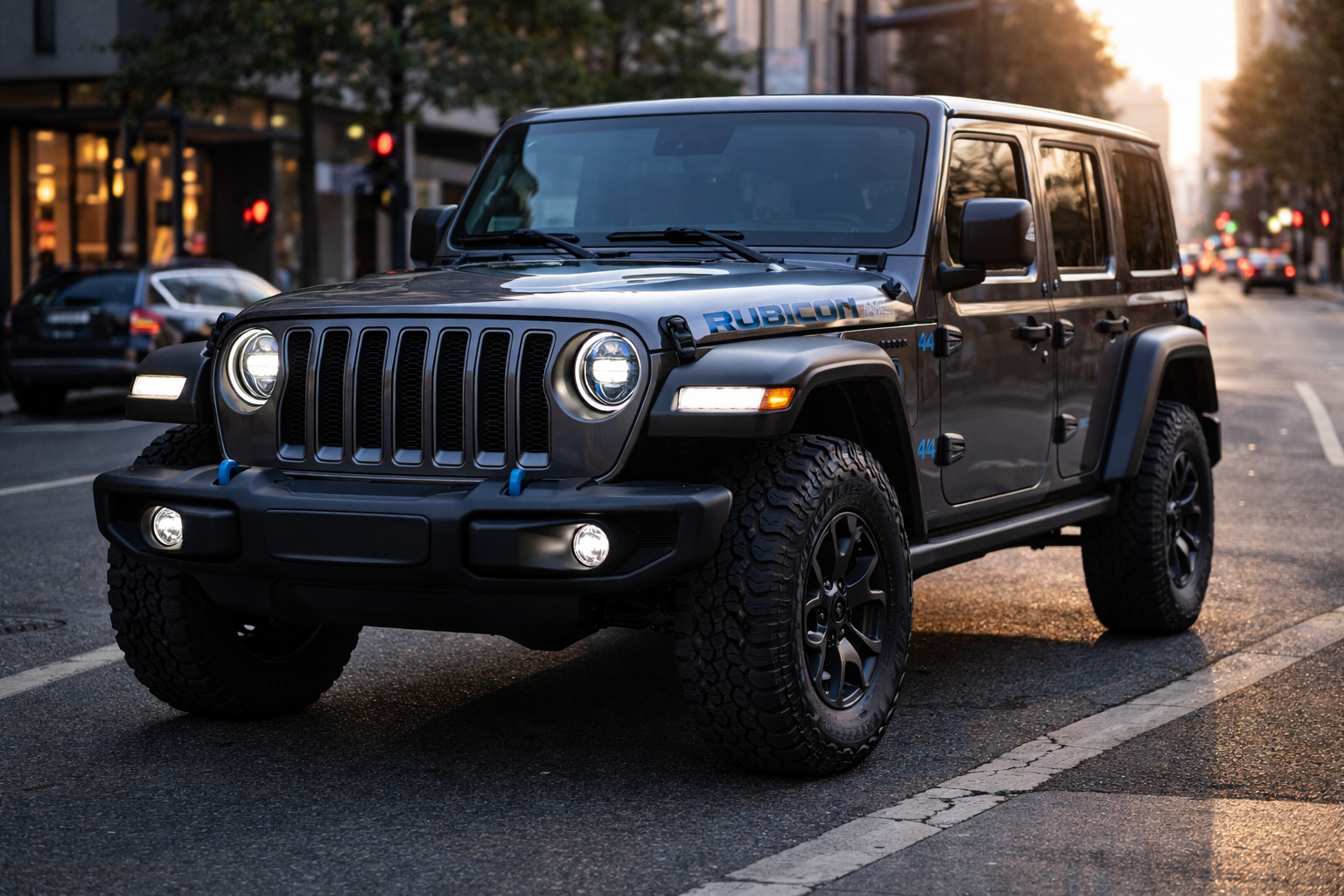
If you own a Jeep 4xe and typed “Jeep 4xe recall” into a search bar, chances are you are not casually browsing. You probably got a letter, saw a warning online, heard the words “park outside,” or realized your Wrangler 4xe or Grand Cherokee 4xe might be caught up in something bigger than a routine service campaign. And honestly, that reaction makes sense. Once a recall involves fire risk, people stop thinking in technical language and start thinking in driveway language. Can I charge this thing tonight? Can I park it in my garage? Can I still drive it? Did my old recall repair already fix this, or not really?
That is exactly why this topic gets messy. The Jeep 4xe recall story is not one neat, single-event issue. It has layers. There was a major 2024 recall. Then there was a broader 2025 expansion. Some owners had already had recall work done and then found out they were still affected later. So the real problem for drivers is not only “Is there a recall?” It is “Which recall am I in, what does it mean for my vehicle today, and what am I supposed to do right now?”
That’s what this guide is for. Not the panic version. Not the rumor-thread version. The useful version.
The short version is this: if your Jeep 4xe is under the active battery fire-risk recall, treat it like a real safety issue. Do not assume an earlier repair means you are automatically in the clear. Do not assume your specific model year is safe just because someone in a forum said theirs wasn’t affected. And do not treat “park outside and don’t charge it” like optional corporate overkill. If that instruction applies to your VIN, it applies for a reason.
So here’s what happened, what owners need to know, why the recall grew bigger, and how to think through the next step without turning a serious issue into either total panic or total denial.
What the Jeep 4xe recall is actually about
At its core, this recall is about high-voltage battery fire risk in certain Jeep plug-in hybrid models. That means the concern is not some minor software annoyance or a dashboard message you can file under “I’ll deal with it next oil change.” The issue centers on the battery pack potentially failing internally in a way that can lead to fire, including while the vehicle is parked.
That last part is why the recall hit people differently from more ordinary safety campaigns. A lot of recalls are inconvenient. This one changes how people use their vehicle when they’re not even in it. Garage parking becomes a question. Charging becomes a question. Overnight storage becomes a question. And because these are plug-in hybrids, the whole convenience pitch of the vehicle gets interrupted by the very thing owners were told would be normal — charging it and parking it at home.
That’s why the owner instructions matter so much. When a recall is tied to parked-vehicle fire risk, “just watch for symptoms” is not enough guidance. The car can be sitting there. That changes the whole emotional tone.
- The issue involves the high-voltage battery pack
- The risk is not only while driving, but also while parked
- Charging matters because risk is higher when the battery is charged
- The recall advice affects daily routines, not just service timing
That’s the baseline. Everything else builds from there.
Why owners got confused: this was not just one recall wave
A big reason the Jeep 4xe recall keeps confusing owners is that the situation did not stay frozen in one place. The earlier major recall in 2024 covered certain 2020–2024 Wrangler 4xe and 2022–2024 Grand Cherokee 4xe models. Dealers were told to update the battery pack control module software, then inspect the battery and replace it if needed. For a lot of owners, that sounded like the issue had a contained fix. Get the software, get the check, move on.
But then the recall picture widened again in late 2025. Chrysler issued an expanded recall covering more model years and more vehicles, including some that had already received the earlier software remedy. That is the detail that changed the mood. Once owners realized a previous recall visit did not always mean permanent closure, trust got shakier and the whole story felt more unsettled.
And to be fair, that reaction is understandable. When a company first says there is a fix, and later says the previous fix did not fully solve the problem in all cases, people stop hearing this as a tidy service bulletin and start hearing it as a moving target.
| Recall phase | What owners were told | Why it mattered |
|---|---|---|
| 2024 recall wave | Park outside, do not charge until repaired, get software update and battery inspection | Introduced the main battery fire-risk issue |
| 2025 expanded recall | Park outside again, do not charge unrepaired vehicles, check VIN even if prior recall work was done | Showed the earlier remedy was not enough in all cases |
That table is really the whole ownership experience in miniature. First: serious recall. Then: broader recall. That’s why people keep re-checking.
Which Jeep 4xe models are the ones people keep asking about?
In plain English, the recall conversation keeps coming back to two families of vehicles: the Jeep Wrangler 4xe and the Jeep Grand Cherokee 4xe. Those are the 4xe models most people are talking about when they say “Jeep 4xe recall.” If you own one of those plug-in hybrid Jeeps from the affected years, you should assume nothing and check your VIN directly.
That VIN point matters more than broad model-year talk, because not every vehicle in a general year range may be affected in the exact same way, and recall status can change depending on whether a repair was done, whether a new campaign was added, and whether your specific vehicle is included in a later expansion.
So yes, the recall headlines matter. But your VIN matters more.
This is the owner checklist that makes the most sense right now:
- Check your VIN in the official recall system, not just by model year
- Do not assume an earlier dealer visit means your Jeep is fully cleared
- Read the exact instructions tied to your active recall, not screenshots from other owners
- Call your dealer if your VIN shows an active recall and you have not received clear next-step guidance
That is the difference between being informed and just being exposed to recall chatter.
The “park outside” part is not background noise
This is worth saying in a separate section because people get numb to repeated warning language. “Park outside” sounds like something corporate lawyers say to cover every possibility. But in this case, it was central to the recall guidance. Owners of affected, unrepaired vehicles were told to park outside and away from structures and other vehicles. They were also told not to charge the battery until the issue was remedied.
Why such strong wording? Because the reported risk here was not just a drivability problem. It was potential battery fire. And since a charged battery raised concern more than a depleted one, charging behavior became part of the safety advice.
That changes normal ownership in a very practical way. It means the vehicle may still be drivable in some cases, but not usable in the way most plug-in hybrid owners expect. It may mean no home charging. It may mean no indoor overnight parking. It may mean a driveway routine that suddenly gets more complicated than the purchase brochure ever hinted.
And yes, that is frustrating. Especially for owners in cold climates, city parking situations, apartment complexes, condo garages, or any home where “just park it away from structures” is easier said than done. That frustration is real. But it does not make the instruction optional.
What if your Jeep already had the earlier recall repair?
This is one of the biggest questions owners ask, and for good reason. A lot of people did what they were told the first time. They brought the vehicle in. They had the software update done. They followed the rules. Then the expanded recall language landed, and suddenly the old repair didn’t feel like closure anymore.
If your Jeep previously had recall work tied to the battery fire issue, the safe assumption is this: you still need to check whether your VIN is now included in the newer recall campaign. Do not rely on memory. Do not rely on “the dealer said I was done last year.” Recall status is something you verify, not something you inherit forever from an old service visit.
This is exactly why the expanded recall hit so hard. It told owners that prior remedy software did not reliably catch every battery abnormality that could lead to fire. In other words, the story changed. Once that happens, the only sane move is to re-check.
What owners should do right now
When a recall story gets technical, people often want one plain-language section they can follow without rereading twenty paragraphs. So here it is.
If you own a Jeep Wrangler 4xe or Jeep Grand Cherokee 4xe and are worried about the recall, do this:
- Look up your VIN in the official recall system
- If your vehicle is under the active battery recall, follow the current owner instructions exactly
- If the guidance says not to charge it, don’t charge it
- If the guidance says park outside and away from structures, take that literally
- Call your dealer and ask what the current remedy status is for your specific VIN
- Keep records of dealer calls, appointments, letters, and status updates
That last point matters more than people think. Once a recall turns into multiple campaigns or delayed remedy timing, paperwork becomes part of basic self-defense. Not dramatic. Just useful.
Why this recall feels bigger than a normal dealer fix
There are recalls you barely remember six months later. This one is not really built like that. The Jeep 4xe recall feels bigger because it affects trust, routine, and the whole point of owning a plug-in hybrid in the first place.
People bought these vehicles for a mix of reasons: fuel savings, electric-only driving for short trips, tax-credit era appeal, Jeep identity with modern drivetrain tech, maybe a little curiosity. A battery recall that tells you not to charge and not to park indoors cuts straight through that value story. It turns a convenience feature into a question mark.
That’s why owners are not just annoyed. They’re unsettled. A recall involving airbags or seat belts is serious, but it doesn’t usually change how you store your vehicle at night. A recall like this does. And that makes it feel more personal and more disruptive.
It also creates the kind of owner anxiety that doesn’t shut off when the engine does. People are not only wondering whether the Jeep will behave normally on the road. They’re wondering about it in the driveway at midnight.
| Owner concern | Why it keeps coming up |
|---|---|
| Can I still drive it? | Some recall instructions focus more on parking and charging than a stop-drive order |
| Can I charge it at home? | Charging is a key issue because risk guidance specifically warns against it |
| Can I park it in my garage? | Owners were told to park outside and away from structures |
| Didn’t Jeep already fix this? | The later recall expanded the issue beyond the earlier remedy |
| How do I know whether I’m affected? | VIN status is the only reliable answer |
What not to do
When people get nervous about recalls, they sometimes grab onto the wrong shortcuts. They assume a model-year rumor is enough. They wait for a letter that may already have crossed in the mail with an online status change. They keep charging because “nothing has happened so far.” Or they decide the whole thing is overblown because the Jeep still drives fine.
That mindset is understandable. It is also not smart.
Here’s what does not help:
- Ignoring the recall because the vehicle seems normal
- Assuming no news means no active risk
- Believing an older repair automatically clears a newer campaign
- Using social media screenshots instead of VIN-specific recall status
- Charging the vehicle anyway because it is more convenient
Recalls like this are exactly where convenience starts making expensive decisions for people.
How to talk to the dealer without wasting time
Dealer conversations go better when you show up with the right questions instead of general recall panic. That does not mean you need to become your own service manager. It just means clarity helps.
Good questions include:
- Is my VIN under the current active battery recall?
- Does my Jeep have any prior recall remedy on record for this issue?
- What is the current remedy status for my VIN right now?
- Am I still under a park-outside and do-not-charge instruction?
- Do you have parts, software, or only an open campaign with no completed fix yet?
- Can you print my recall status and service history related to this issue?
That last question is underrated. Printed clarity beats phone-memory clarity every time.
FAQ
What is the Jeep 4xe recall about?
The main current recall story centers on high-voltage battery fire risk in certain Jeep Wrangler 4xe and Jeep Grand Cherokee 4xe plug-in hybrid vehicles.
Which Jeep 4xe models are usually part of this recall discussion?
The recall conversation mainly involves certain Jeep Wrangler 4xe and Jeep Grand Cherokee 4xe model years. The only reliable way to know whether yours is affected is to check the VIN.
Why were owners told to park outside?
Because the recall involved a risk of battery fire, including while the vehicle was parked, so owners of affected vehicles were told to park outside and away from structures and other vehicles.
Can I still charge my Jeep 4xe if it has the active battery recall?
If your recall instructions say not to charge the vehicle, follow that. The official guidance tied the risk more strongly to a charged battery than a depleted one.
What if my Jeep already had recall work done before?
You should still check your VIN again. The later expanded recall included some vehicles that had already received the earlier remedy.
How do I know if my exact Jeep is affected?
Check the vehicle identification number in the official recall system and confirm the result with your dealer if needed.
Is the Jeep 4xe recall just a software problem?
No. Earlier recall actions involved software and battery inspection, but the broader issue is the high-voltage battery fire risk itself, which is why owner instructions were so strict.
Conclusion
The Jeep 4xe recall matters because it reaches into ordinary life in a way most recalls do not. It is not just about a light on the dash or a part you replace at the next service visit. It is about where you park, whether you charge, and whether an earlier “fix” really finished the story for your specific vehicle.
That’s why the right response is not panic, but precision. Check the VIN. Follow the current instructions exactly. Do not assume old recall work means permanent closure. And do not shrink a battery fire-risk recall down to a routine inconvenience just because the Jeep still feels normal today.
Honestly, that is the whole lesson here. Recalls like this are not about vibes. They are about status, instructions, and action. Your Jeep might be fine. Your Jeep might not be under the active campaign at all. But the only useful way to know is to verify it, not guess it.
And if your VIN is in the active recall, treat that as real. Because with a recall like this, the boring advice is usually the advice that keeps people safest.





Leave a Reply