

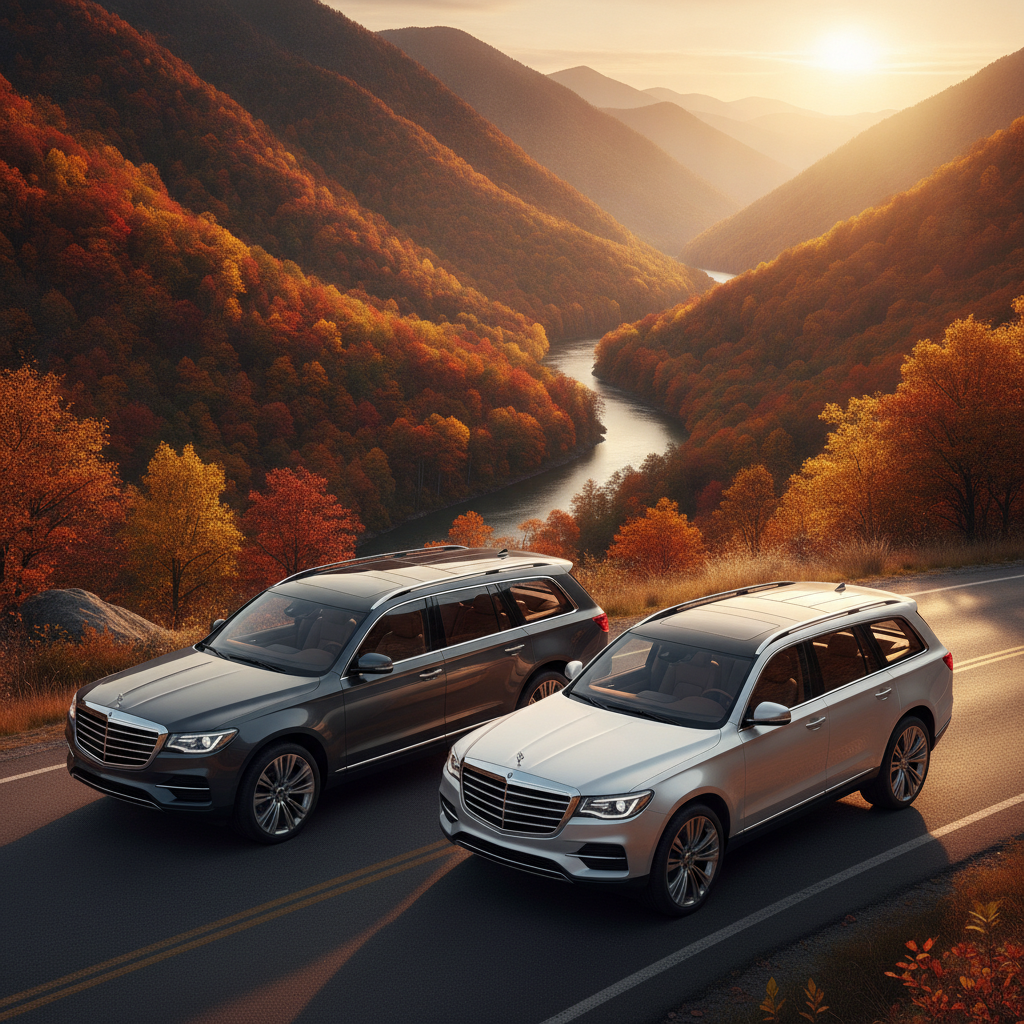
highlander vs grand highlander: Making the Right Choice for Your Family
If you are tearing your hair out over the highlander vs grand highlander debate, you are definitely not alone. I see folks struggling with this exact choice every single week. Both of these Toyota giants offer incredible reliability, rock-solid safety features, and serious comfort, but picking the right one depends entirely on how much space you actually need for your daily chaos. Just last month, my buddy Oleksandr down in Kyiv was trying to squeeze his three growing kids, a massive golden retriever, and heavy gear for a winter weekend trip to the Carpathian Mountains into his standard midsize crossover. He finally snapped. The sheer frustration of packing that car threw him right into this specific dealership dilemma. He wanted the trusted badge but desperately needed room to breathe. That is the core of this conversation. Do you stick with the classic footprint that has dominated suburban driveways for decades, or do you upgrade to the stretched-out sibling that promises true adult-sized comfort in the very back? This guide will break down every single angle so you can make a purchase you will not regret a week later.
The Core Differences: Space, Price, and Practicality
When you really look at these two vehicles side-by-side on a dealer lot, the visual differences might seem subtle at first glance, but the functional differences are massive. The standard version is a fantastic all-rounder. It is nimble enough to parallel park in tight city spaces and efficient enough for long highway runs. But the Grand version is essentially a living room on wheels. It solves the biggest complaint people have had for years: that tiny, cramped third row.
Let me give you a couple of real-world examples of where the value propositions completely separate. Example 1: Long Road Trips. If you frequently drive six or seven passengers across the country, the larger sibling offers actual cargo space behind the third row, meaning you do not need a roof box just to carry overnight bags. Example 2: Urban Maneuverability. If you mostly commute alone or with just two kids and have a tiny, older garage, the standard model’s shorter wheelbase will save you from daily parking anxiety.
| Feature Comparison | Standard Highlander | Grand Highlander |
|---|---|---|
| Third-Row Legroom | 28.0 inches (Best for small kids) | 33.5 inches (Comfortable for adults) |
| Max Cargo Capacity | 84.3 cubic feet | 97.5 cubic feet |
| Powertrain Options | Gas & Traditional Hybrid | Gas, Hybrid, & Hybrid MAX |
| Starting Price Profile | More budget-friendly | Premium pricing tier |
Before you even ask for the keys to test drive either one, you need to weigh a few specific personal factors. Here is what you should evaluate immediately:
- Your Garage Dimensions: Grab a tape measure. The larger model is significantly longer and slightly taller. Make sure the tailgate will not smash your garage door when it opens.
- Passenger Height: If your teenagers are already topping six feet tall, putting them in the standard third row is practically a form of medieval torture. They need the extra legroom.
- Budget Flexibility: The price gap isn’t just in the MSRP. You have to factor in slightly higher insurance premiums and potentially different fuel costs if you opt for the high-performance engines.
Origins of the Toyota Family Hauler
To really understand what we are dealing with, we have to look back at how this lineup started. Back in the early 2000s, the automotive market was flooded with heavy, truck-based SUVs that drove like absolute tractors. Toyota realized families wanted the tall seating position of an SUV but the smooth, compliant ride of a Camry. Thus, the original midsize family hauler was born. It utilized a unibody construction, drastically improving fuel economy and safety while providing enough room for typical grocery runs and school drop-offs. It was an instant, massive hit that spawned an entire segment.
Evolution into the Three-Row Standard
As the years ticked by, families demanded more utility. Toyota responded by wedging a third row into the back. For a long time, this was perfectly fine. It was an “in case of emergency” row. If your kid suddenly needed to bring two extra friends home from soccer practice, you had seatbelts for them. But consumer expectations shifted. People wanted to take full family vacations without renting a minivan. The standard dimensions were suddenly feeling a bit tight compared to massive American competitors, leading Toyota engineers back to the drawing board.
The Modern State of Toyota SUVs
Now that we are solidly in 2026, the landscape has completely changed. Toyota refused to abandon the classic size because millions of people still love its garage-friendly footprint. Instead, they built an entirely separate, elongated version to capture the market that needed minivan space without minivan styling. Today, both vehicles sit proudly on dealership lots, dominating their respective sub-segments and offering buyers the ultimate choice in tailored family transport.
Understanding Platform Architecture (TNGA-K)
Let us talk about the engineering happening underneath the sheet metal. Both vehicles are built on the TNGA-K platform (Toyota New Global Architecture). Think of this platform as a highly adaptable, ultra-rigid skeleton. By using high-tensile steel and advanced welding techniques, engineers created a base that prevents the body from flexing when you hit a pothole. This is exactly why both SUVs feel incredibly quiet and stable at highway speeds. However, for the larger model, they stretched the wheelbase. A longer wheelbase naturally absorbs bumps better, which translates to a slightly more premium, boat-like ride on rough pavement.
Hybrid Powertrain Mechanics Explained
The powertrain technology is where things get genuinely fascinating. While both offer highly efficient traditional hybrid systems (pairing a naturally aspirated engine with electric motors for maximum MPG), the larger SUV introduced the Hybrid MAX system. This setup uses a turbocharged engine combined with powerful electric motors specifically tuned for torque, not just fuel savings. It gives you the immediate, forceful acceleration you need when merging onto a busy highway with a cabin full of heavy passengers and luggage.
- Platform Flexibility: The TNGA-K chassis supports both front-wheel drive and sophisticated torque-vectoring all-wheel-drive systems.
- Thermal Efficiency: The 2.4-liter turbo engines utilize advanced cooling and direct injection to maintain high thermal efficiency under heavy loads.
- Acoustic Dampening: Both models use specialized sound-absorbing materials in the firewall and floor pans, but the Grand includes extra acoustic glass for a quieter cabin.
- Regenerative Braking: The hybrid variants capture kinetic energy during deceleration, seamlessly converting it into battery charge without feeling jerky to the driver.
Day 1: Measure Your Real-World Needs
Stop guessing about your lifestyle. Sit down and calculate exactly how many days a year you actually put humans in the third row. If it is fewer than ten days a year, you might not need the extra bulk. If it is every single weekend for sports tournaments, the bigger vehicle is practically mandatory.
Day 2: The Garage and Driveway Test
Do not skip this. I have seen buyers bring home a massive new SUV only to realize they cannot walk around it once it is parked inside. Get the exact dimensions online, mark them on your garage floor with masking tape, and see how much clearance you actually have.
Day 3: Analyze Your Daily Commute
Drive your usual route mentally. Do you have to navigate incredibly narrow downtown parking garages with tight spiral ramps? A shorter wheelbase makes a massive difference in high-stress urban environments.
Day 4: Book Back-to-Back Test Drives
Call your local dealer and insist on driving both models on the exact same day, back-to-back. Human memory for driving dynamics fades fast. You need to feel the difference in body roll, acceleration, and braking while the sensations are fresh.
Day 5: The Third-Row Adult Challenge
When you are at the dealership, force the salesperson to sit in the front, and you get in the very back. Close the door. Adjust the middle row to a normal position. If your knees are pinned to your chest, you have your answer on comfort.
Day 6: Crunch the Fuel Economy Numbers
Look at the sticker MPG, but adjust for your reality. If you do 90% highway driving, a standard gas engine might be close enough to the hybrid to skip the hybrid price premium. If you drive in stop-and-go traffic, the hybrid is an absolute necessity.
Day 7: Negotiate and Finalize Your Build
Once you know exactly which model fits your life, lock in your trim level. Do not pay for a panoramic sunroof if you live in a scorching climate and will keep the shade closed. Focus on the features that actually improve your daily routine.
Separating Myths from Reality
Myth: The Grand version is just a stretched older model.
Reality: It is an entirely unique vehicle with bespoke exterior styling, a distinctly different interior dashboard layout, and entirely different seating configurations meant specifically for its size.
Myth: Both get the exact same fuel economy.
Reality: Physics still apply. The heavier weight and different aerodynamic profile of the larger model mean it consumes slightly more fuel, especially if you opt for the high-output Hybrid MAX engine.
Myth: You cannot park the bigger one in the city.
Reality: Thanks to high-definition 360-degree surround-view cameras and automated parking sensors, placing the larger SUV in a tight spot is surprisingly stress-free.
Myth: The standard version has useless back seats.
Reality: They are perfectly fine for younger children in booster seats or for short trips across town; they are just not designed for a six-foot adult on a twelve-hour drive.
Which has better cargo space?
The Grand model absolutely dominates here. Even with all seats up, you can fit multiple suitcases behind the third row, whereas the standard model struggles with more than a few grocery bags.
Is the Hybrid MAX worth it?
If you value strong passing power and frequently carry a full load of passengers, yes. It completely eliminates the sluggish feeling often associated with large family haulers.
Do both have Captain’s chairs?
Yes, both models offer second-row Captain’s chairs on higher trim levels, which makes third-row access much easier for kids.
Which is faster?
Equipped with the Hybrid MAX powertrain, the larger model is surprisingly faster off the line than the standard naturally aspirated or traditional hybrid engines.
Are the safety features identical?
Essentially, yes. Both come standard with Toyota Safety Sense, including pre-collision systems, adaptive cruise control, and lane-keeping assist.
Can both tow 5,000 lbs?
Yes, when properly equipped with the right gas or high-output hybrid engines, both can tow up to 5,000 pounds for your boats or campers.
Which one holds its value better?
Historically, the standard model has legendary resale value, but the larger model is seeing massive demand, keeping its depreciation curve incredibly flat.
Ultimately, choosing between these two fantastic machines comes down to a simple question of spatial math and daily routine. Both will run forever and keep your family safe. Figure out your true cargo needs, measure your garage, and then head to your local dealer to book a test drive today!



Leave a Reply