

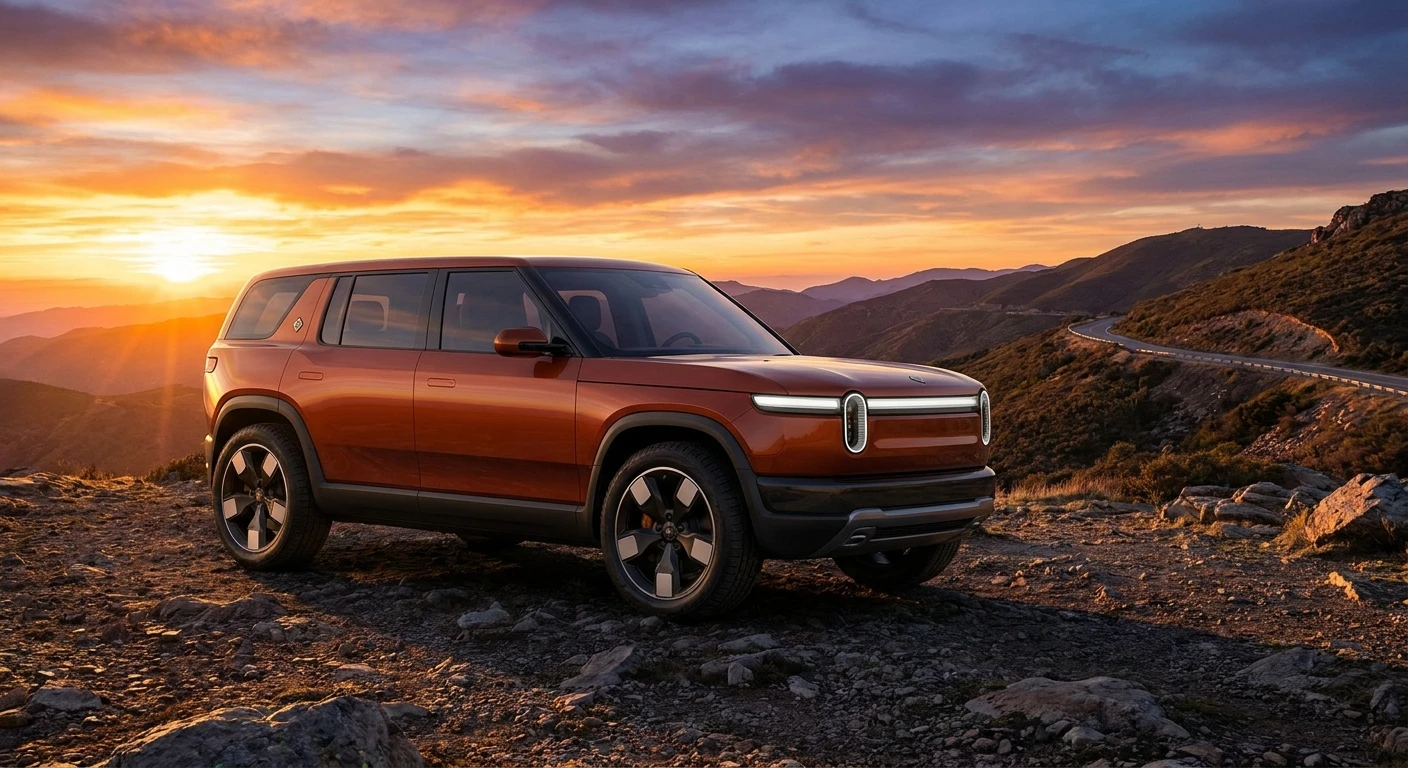
The Complete Guide to the Toyota RAV 4 2024
When you need a dependable, versatile, and highly capable SUV, the Toyota RAV 4 2024 instantly comes to mind as the absolute top contender. Choosing the right vehicle often feels like a massive headache, but finding a machine that perfectly balances daily commuting comfort with weekend adventure capability simplifies the process entirely. The Toyota RAV 4 2024 stands out as a prime example of engineering that listens to driver demands. It redefines what you should expect from a compact SUV by delivering outstanding fuel efficiency, rugged exterior styling, and immense everyday practicality without compromising on safety or tech features. Listen, you want a vehicle that starts up without a fuss, handles unpredictable weather, and carries all your gear seamlessly. This specific model year cemented its reputation by offering an array of distinct trims tailored precisely to different lifestyles, from budget-focused families to serious off-road enthusiasts. Instead of forcing you into a one-size-fits-all box, the lineup empowers you to pick the exact configuration that matches your driving habits. The core philosophy here is uncompromised reliability paired with intuitive functionality, ensuring every trip, whether it is a quick grocery run or a cross-country expedition, feels effortless and secure.
Core Features and Undeniable Benefits
The sheer value proposition of the Toyota RAV 4 2024 cannot be overstated. When you look at the mechanics, the cabin materials, and the standard technology, you are getting an incredibly robust package. For example, the hybrid variant offers an exceptional value proposition by drastically reducing fuel consumption during stop-and-go city traffic, saving you serious cash at the pump over the vehicle’s lifespan. Another prime example is the TRD Off-Road model, which brings a specialized suspension setup and aggressive all-terrain tires straight from the factory, saving outdoor enthusiasts the hassle of aftermarket modifications. Let us break down the core trim options to see exactly where the value lies.
Read also: Top 2024 toyota rav4 hybrid Review; The Ultimate 2024 toyota sienna Guide.
| Trim Level | Engine Type | Target Audience & Best Feature |
|---|---|---|
| LE (Base Model) | 2.5L 4-Cylinder Gas | Budget-conscious buyers seeking Toyota safety standards. |
| Hybrid XSE | 2.5L Hybrid Powertrain | Eco-friendly drivers wanting a sport-tuned suspension and high MPG. |
| TRD Off-Road | 2.5L 4-Cylinder Gas | Adventure enthusiasts needing enhanced ground clearance and skid plates. |
To truly understand why this vehicle dominates the sales charts, you just need to look at its primary benefits. Here are the top reasons why drivers consistently choose this SUV:
- Exceptional Fuel Economy: Both the standard gas engines and the hybrid systems are highly optimized, drastically lowering your long-term running costs compared to heavier, less aerodynamic competitors.
- Advanced Safety Features: Standard active safety systems, including pre-collision braking and adaptive cruise control, monitor the road to protect you and your passengers continuously.
- High Resale Value: The brand’s legendary durability ensures that the vehicle retains a massive percentage of its original value, making it a brilliant financial decision long-term.
- Versatile Cargo Capacity: The rear seats fold flat to create a cavernous space capable of holding bicycles, camping gear, or large furniture boxes with absolute ease.
The Origins of the Compact SUV
To appreciate the brilliant engineering of today, you have to look back at the original concept. The whole idea of a Recreational Active Vehicle with 4-wheel drive began in the mid-1990s. Before this, SUVs were essentially heavy, cumbersome trucks with a closed cab. They rode harshly, consumed vast amounts of fuel, and were difficult to park in urban environments. The radical idea was to take the robust high ground clearance of an SUV and fuse it with the nimble, unibody chassis of a standard passenger car. This created a completely new automotive segment. People suddenly realized they could have the elevated seating position and cargo space of a truck without sacrificing ride comfort or fuel economy. This pioneering spirit set a benchmark that competitors scrambled to copy.
Evolution Through the Decades
Over the subsequent decades, the vehicle grew up. The first generation was tiny, almost toy-like, featuring a quirky spare tire mounted on the rear door. As families adopted the vehicle, the second and third generations became longer, wider, and significantly more refined. Engineers focused on softening the suspension for highway cruising while upgrading the interior materials. By the time the fourth generation rolled out, the bulky rear-mounted spare tire was gone, replaced by a sleek, modern liftgate. This era also introduced the very first hybrid variants, proving that you didn’t need to sacrifice utility to achieve phenomenal gas mileage. Each iteration reflected the changing tastes of drivers, moving from a niche beach-cruiser to a staple of suburban family life.
The Modern State of the RAV4
Fast forward to the present day. Now that we are in 2026, looking back at the Toyota RAV 4 2024, we see a masterclass in automotive refinement. The 2024 model represents the pinnacle of the fifth generation. It features a bold, chiseled exterior that completely sheds the soft, rounded aesthetics of older models. Inside, it boasts large, intuitive touchscreen displays, wireless smartphone integration, and premium synthetic leather materials that withstand heavy abuse. The modern state of this vehicle proves that a daily driver can be aggressive, incredibly comfortable, and highly intelligent all at once. It remains a dominant force on the road because it perfectly anticipated the need for rugged aesthetics paired with eco-conscious powertrains.
Hybrid Powertrain Technology Explained
The mechanics powering this machine are a marvel of modern engineering. Rather than simply bolting an electric motor to a standard engine, the hybrid system uses a highly sophisticated synergy drive. It pairs a naturally aspirated 2.5-liter four-cylinder engine utilizing the Atkinson cycle with two electric motors. The Atkinson cycle intentionally delays the closing of the intake valve, which reduces pumping losses and extracts the maximum amount of energy from every drop of fuel. The planetary gearset smoothly blends the power from the gas engine and the electric motors without the jerky shifts of a traditional transmission. This creates a seamless wave of torque that pushes you forward efficiently, capturing kinetic energy during braking to recharge the battery pack automatically.
Aerodynamics and Structural Rigidity
Beyond the engine, the physical architecture of the vehicle contributes heavily to its performance. Built on the TNGA-K platform, the chassis utilizes high-tensile steel to maximize torsional rigidity while keeping the overall weight low. A stiffer chassis allows the suspension to do its job more effectively, isolating you from potholes and rough pavement. Furthermore, the exterior panels are meticulously sculpted in wind tunnels. The sharp angles aren’t just for show; they deliberately channel air around the tires and over the roof to minimize drag. Here are a few technical facts that highlight its engineering:
- The internal combustion engine achieves a thermal efficiency of over 40%, a number previously reserved for high-end race cars.
- Underbody panels are completely flat, reducing aerodynamic drag and simultaneously protecting vital components from off-road debris.
- The high-voltage nickel-metal hydride or lithium-ion battery packs are positioned perfectly under the rear seats to lower the center of gravity without eating into cargo space.
- The electronic on-demand all-wheel-drive system uses a dedicated electric motor on the rear axle, completely eliminating the need for a heavy, mechanical driveshaft running down the center of the car.
Day 1: Assess Your Driving Needs
Buying a car requires a solid strategy. Begin your journey by sitting down and honestly evaluating your daily routine. Do you commute 50 miles a day in heavy traffic? You definitely need the hybrid. Do you spend your weekends driving up unpaved mountain roads? The TRD Off-Road is calling your name. Map out your passenger requirements, your cargo needs, and your driving environment. Writing this down prevents you from being swayed by flashy features you will never actually use.
Day 2: Compare Trims and Options
Once you know your needs, match them to the specific trim levels. The LE is great for basics, but the XLE adds key comforts like dual-zone climate control and a power driver’s seat. If you want luxury, look at the Limited trim with its premium audio system and ventilated seats. Create a side-by-side comparison chart of the features that matter most to you, crossing off the trims that lack your non-negotiables or exceed your budget unnecessarily.
Day 3: Financial Planning and Budgeting
Never walk into a dealership without a hard financial limit. Calculate exactly how much you can put down as a deposit and determine your maximum monthly payment. Research current interest rates for auto loans and check with your local bank or credit union for pre-approval. Knowing exactly what you can afford, including insurance premiums and routine maintenance costs, gives you massive leverage.
Day 4: Scheduling the Test Drive
Call the dealership and schedule a specific time for a test drive. Do not just drive it around the block. Take it on the highway to check the acceleration and wind noise. Drive it over speed bumps to feel the suspension damping. Practice parking it in a tight space to test the backup camera and turning radius. Make sure the seats support your back properly for long journeys.
Day 5: The Dealership Experience
When discussing the purchase, remain calm and objective. Focus on the total out-the-door price rather than just the monthly payment. Be prepared to decline expensive dealership add-ons like nitrogen-filled tires or unnecessary paint protection films. Having your pre-approved loan in your back pocket means you can simply negotiate the price of the metal, not the financing terms.
Day 6: Finalizing the Paperwork
The finance office is where the actual transaction happens. Read every single line of the contract before signing. Verify that the agreed-upon price matches the paperwork exactly. Confirm the details of the factory warranty and decide if an extended warranty makes sense for your long-term ownership plan. Update your auto insurance policy with the new VIN number before you drive off the lot.
Day 7: Taking Delivery and Initial Setup
The final step is taking the keys. Before leaving, have the salesperson walk you through the infotainment system. Pair your smartphone to the Bluetooth, set up Apple CarPlay or Android Auto, and program your favorite radio stations. Adjust your memory seating, set your custom safety alert preferences, and familiarize yourself with the radar cruise control buttons. Your comprehensive 7-day plan guarantees a stress-free transition into your new vehicle.
Myths and Realities
Myth: The hybrid battery will fail after a few years and cost thousands to replace.
Reality: Toyota hybrid batteries are engineered to last the lifetime of the vehicle and come with an exceptionally long factory warranty, often exceeding 100,000 miles. Battery failure is incredibly rare.
Myth: Compact SUVs are terrible for actual off-roading.
Reality: While not a rock-crawler, the TRD Off-Road trim features multi-terrain select, dynamic torque vectoring, and sufficient ground clearance to easily conquer muddy trails, deep snow, and steep gravel inclines.
Myth: Continuously Variable Transmissions (CVTs) are loud and prone to breaking.
Reality: The electronic CVT (eCVT) used in the hybrid models is actually one of the most reliable transmission designs on the planet, utilizing physical gears to blend power smoothly without traditional belts that wear out.
Myth: Maintenance is significantly more expensive than older models.
Reality: Thanks to synthetic fluids, highly durable timing chains, and regenerative braking that saves the brake pads, routine maintenance costs are actually remarkably low.
Frequently Asked Questions
Is it fuel-efficient?
Absolutely. The gas models offer highly competitive highway mileage, while the hybrid versions deliver stellar combined ratings that rival small economy cars.
Does it have Apple CarPlay and Android Auto?
Yes, wireless Apple CarPlay and Android Auto are standard features, allowing seamless integration of your maps, music, and messages directly onto the center touchscreen.
Is the cargo space adequate?
It features one of the most spacious cargo holds in its class, offering plenty of room for bulky items, suitcases, and large groceries behind the rear seats.
What is the warranty coverage?
It comes with a comprehensive basic warranty, a longer powertrain warranty, and specific extended coverage specifically for the hybrid battery components.
Can it tow a trailer?
Yes. Depending on the trim and engine configuration, towing capacity ranges from a standard amount suitable for small utility trailers up to a much higher limit on the Adventure and TRD models.
Are there blind-spot sensors?
Yes, blind-spot monitoring with rear cross-traffic alert is available and comes standard on the vast majority of the trim levels for added highway safety.
How does it perform in snow?
Exceptionally well. The available all-wheel-drive systems continuously monitor traction and instantly send power to the wheels with the most grip, making winter driving highly secure.
Ultimately, making the decision to purchase the Toyota RAV 4 2024 guarantees you a brilliantly engineered, reliable, and comfortable daily driver. It perfectly bridges the gap between rugged utility and modern efficiency. If you are ready to upgrade your commute and secure a vehicle that will serve you faithfully for years, contact your local dealership today and schedule a comprehensive test drive to feel the difference yourself.





Leave a Reply