

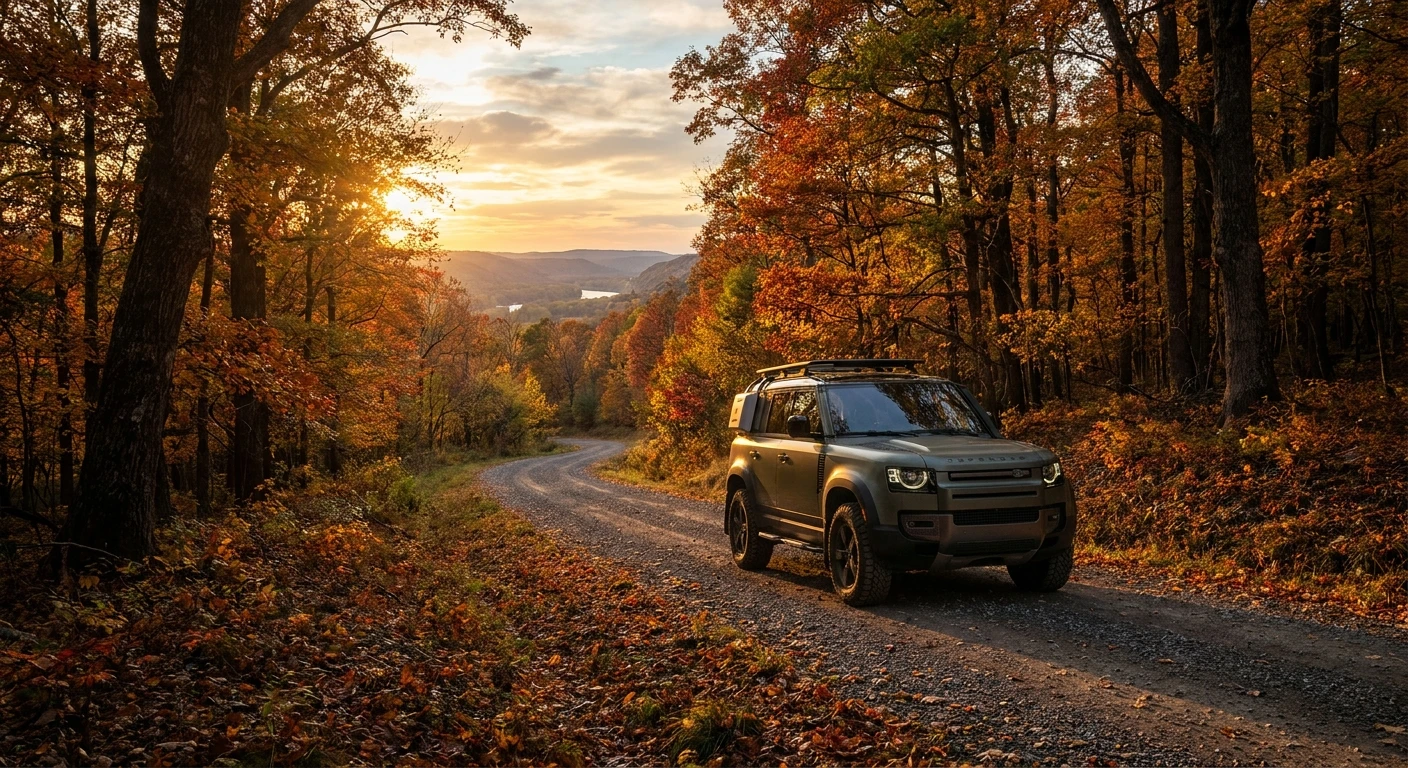
Everything You Need to Know About the Honda Passport 2026
The highly anticipated Honda Passport 2026 officially redefines what drivers expect from a versatile midsize SUV, bringing an aggressive redesign and enhanced off-road capabilities straight to the forefront of the market. If you are looking for a vehicle that flawlessly bridges the gap between a comfortable daily family hauler and a rugged weekend overlanding champion, this new iteration delivers on all fronts. Gone are the days when buying a midsize crossover meant sacrificing genuine trail capability for highway comfort. The updated architecture provides a stiffer chassis, a broader stance, and an unyielding commitment to adventure-ready engineering.
As the automotive landscape shifts heavily toward boxier, more capable off-road aesthetics, the latest Passport stands out by backing up its tough looks with serious mechanical hardware. From advanced all-wheel-drive torque vectoring to upgraded suspension damping, the engineering team prioritized functionality alongside modern digital integration. You are not just getting an updated exterior fascia; you are getting a comprehensive overhaul designed to handle rocky paths, heavy snowfall, and long interstate road trips with equal poise. The balance achieved here represents a significant milestone for crossover utility vehicles. Let us break down exactly what makes this specific model year a compelling choice for outdoor enthusiasts and busy suburbanites alike.
Read also: Lexus ES 2026: Features, Specs, and Ultimate Buyer Guide; 2024 GMC Terrain: Complete Guide to Trims & Specs.
Core Features and Everyday Benefits
Understanding the actual value proposition of the Honda Passport 2026 requires looking past the marketing brochures and focusing on daily usability and mechanical capability. The core benefit of this SUV lies in its masterclass approach to spatial efficiency and traction management. You get the passenger volume typically reserved for three-row behemoths, but condensed into a manageable, easy-to-park two-row footprint. This translates to massive second-row legroom and a cavernous cargo area that easily swallows camping gear, mountain bikes, or a week’s worth of family luggage without breaking a sweat.
Consider two prime examples of this value proposition in action. First, the TrailSport trim level offers tangible off-road benefits—such as steel skid plates protecting the oil pan and gas tank, paired with all-terrain tires that drastically improve grip on loose gravel without creating unbearable road noise on the pavement. Second, the seamless integration of the latest infotainment suite means that navigating remote trails using satellite-guided mapping is just as intuitive as queuing up your favorite streaming playlist during a morning commute.
| Trim Level | Target Audience | Key Differentiating Feature |
|---|---|---|
| EX-L | Daily Commuters & Families | Leather-trimmed seats and power tailgate |
| TrailSport | Outdoor Enthusiasts | Off-road tuned suspension and skid plates |
| Elite (or Black Edition) | Luxury & Tech Seekers | Ventilated front seats and premium audio |
To maximize your experience with the vehicle, keep these three operational priorities in mind:
- Utilize the under-floor storage: The cargo area features hidden, washable bins perfect for storing muddy hiking boots or wet tow straps, keeping the main cabin completely pristine.
- Leverage the i-VTM4 system: Do not hesitate to use the distinct driving modes (Snow, Sand, Mud) which actively recalibrate throttle response and torque distribution to prevent getting stuck.
- Customize the digital cluster: Take the time to arrange the driver information interface to prioritize the data you actually need, whether that is turn-by-turn navigation, pitch and roll angles, or audio information.
The Heritage of a Crossover Icon
Origins of the Passport Nameplate
To truly appreciate the current model, you have to look back at the origins of the moniker. The original version debuted in the early 1990s as a product of a unique partnership. It was essentially a rebadged Isuzu Rodeo, allowing the brand to quickly enter the rapidly expanding SUV market without spending years developing an entirely new platform from scratch. That body-on-frame truck was rugged, simple, and highly effective for its era, cementing the nameplate as a legitimate option for consumers wanting four-wheel-drive utility mixed with Japanese brand reliability.
Evolution into a Crossover Benchmark
After a long hiatus following its discontinuation in 2002, the nameplate was resurrected in 2019. However, the philosophy had completely changed. Instead of a rudimentary body-on-frame truck, it returned as a sophisticated, unibody midsize crossover. It was fundamentally a shortened, two-row version of the popular Pilot. This evolution proved brilliant, capturing buyers who wanted robust V6 power and substantial towing capacity but had absolutely no need for a cumbersome third row of seating. It immediately set a benchmark for on-road refinement combined with above-average light-trail capability.
The Modern State of Off-Road SUVs
Today, the landscape of midsize SUVs is highly competitive, driven by consumers demanding vehicles that look ready for an overland expedition straight from the factory. The contemporary iteration responds to this cultural shift aggressively. Instead of simply lifting the suspension and adding plastic cladding, the engineering focus has shifted to authentic mechanical upgrades. The modern state of this vehicle reflects a market that values dual-purpose engineering—a quiet, technologically advanced cabin wrapped in a shell that can genuinely handle rutted forest service roads and severe weather events without flinching.
Scientific and Technical Deep Dive
Powertrain and Chassis Dynamics
Beneath the aggressive exterior lies a sophisticated symphony of mechanical engineering. The foundation of its capability is the Intelligent Variable Torque Management (i-VTM4) all-wheel-drive system. Unlike basic slip-and-grip systems that wait for a wheel to lose traction before sending power to the rear, the i-VTM4 system proactively routes torque based on acceleration, steering angle, and yaw rate. The rear axle features twin electro-hydraulic clutch packs that can distribute up to 100 percent of rear torque to either the left or right wheel. This torque vectoring effect actively pushes the vehicle through corners on dry pavement and drastically improves traction when navigating deep mud or articulated rocky inclines where one wheel might be entirely off the ground.
Aerodynamics and Structural Rigidity
Crossovers with boxy profiles often suffer from excessive wind noise and poor fuel efficiency. To combat this, aerodynamicists spent hundreds of hours in the wind tunnel refining the front fascia, utilizing air curtains around the front bumper to smoothly route turbulent air past the front wheels. Furthermore, the chassis utilizes an extensive amount of ultra-high-strength steel. This rigid backbone not only improves crash safety metrics but also minimizes chassis flex when the vehicle is subjected to torsional loads off-road, allowing the upgraded dampers to control wheel movement precisely rather than compensating for a bending frame.
- Ground Clearance: Increased ride height provides superior approach and departure angles, reducing the risk of scraping the bumpers on steep inclines.
- Acoustic Treatment: Active noise cancellation and acoustic laminated glass keep the cabin decibel levels remarkably low at highway speeds.
- Damping Technology: Unique valve tuning in the shock absorbers allows for quick compression over sharp bumps (like rocks or potholes) while maintaining firm rebound control for highway stability.
- Thermal Management: Heavy-duty transmission coolers ensure that prolonged low-speed off-roading or heavy towing does not overheat the driveline fluids.
7-Step Guide to Buying and Customizing Your Vehicle
Step 1: Assess Your Off-Road Needs
Before heading to the dealership, critically evaluate how you will actually use the vehicle. If your driving consists purely of highway commutes and school drop-offs, prioritizing luxury features makes sense. However, if you frequently visit trailheads, go camping, or live in an area with harsh winters, you need to focus your attention on the trims explicitly designed with off-road hardware and enhanced traction modes.
Step 2: Choose the Right Trim Level
Selecting the correct trim is paramount. The base EX-L provides exceptional value with leather seating and essential safety tech. The TrailSport is the undisputed choice for outdoor adventurers due to its all-terrain tires, specific suspension tuning, and robust underbody protection. Meanwhile, the top-tier Elite or Black Edition caters to those who demand ventilated seats, premium audio systems, and the highest level of interior refinement.
Step 3: Select Essential Factory Accessories
Maximizing utility often comes down to factory accessories. You should heavily consider adding OEM roof rails and crossbars if you plan on carrying kayaks, mountain bikes, or a rooftop cargo box. Additionally, the optional towing package is crucial if you intend to pull a small boat or camper, as it ensures you have the correct wiring harness and hitch receiver installed straight from the factory.
Step 4: Plan Your Financing or Lease Strategy
Take the time to evaluate current promotional rates. Leasing often makes sense for drivers who want to upgrade their technology every few years and do not drive excessive miles. Financing is generally the better route for those who plan to heavily modify their vehicle with aftermarket off-road parts or intend to keep the crossover for a decade of family road trips.
Step 5: Schedule a Comprehensive Test Drive
A standard block-around-the-dealership test drive is insufficient. Request a longer route that includes a stretch of highway to evaluate wind noise and passing power, as well as some rough pavement or a dirt road to genuinely feel how the revised suspension absorbs impacts. Pay close attention to the outward visibility and the ergonomics of the infotainment screen.
Step 6: Evaluate Aftermarket Customization Options
Once you secure the vehicle, you might want to personalize it further. The aftermarket community for this platform is robust. Popular initial modifications include all-weather floor mats, custom cargo organizers, slightly more aggressive all-terrain tires, and auxiliary LED lighting for those who frequently navigate rural roads at night.
Step 7: Master the Terrain Management System
The final step is education. Read the manual specifically regarding the terrain management system. Understand exactly what the Snow, Mud, and Sand modes do mechanically. Knowing how to quickly engage these modes before you lose traction—rather than after you are already stuck—will ensure you get the absolute most out of the vehicle’s highly capable all-wheel-drive system.
Myths and Reality
Myth: It is literally just a shorter Pilot with different badges.
Reality: While they share a platform, the Passport has unique suspension tuning, a slightly wider track for better stability, different approach angles, and a distinct driving dynamic tuned specifically for a sportier, more responsive feel.
Myth: V6 engines are dead, and everything is a turbocharged four-cylinder now.
Reality: While the industry is downsizing, this specific model retains a robust, naturally aspirated V6 (or a powerful hybrid equivalent depending on the exact trim spec), providing the smooth, linear power delivery and towing confidence that small turbo engines often struggle to replicate under heavy loads.
Myth: The TrailSport trim is purely a cosmetic appearance package.
Reality: The TrailSport features genuine mechanical upgrades including actual steel underbody skid plates, re-valved shock absorbers for off-road articulation, and a different anti-roll bar setup to improve wheel travel on uneven terrain.
Myth: You cannot do serious off-roading in a unibody crossover.
Reality: With its advanced torque-vectoring all-wheel drive, excellent ground clearance, and modern traction control software, it can easily conquer 90 percent of the trails most drivers will ever encounter, vastly outperforming old-school trucks in mud and snow.
Frequently Asked Questions & Conclusion
What is the towing capacity of the new model?
When properly equipped with the factory towing package and all-wheel drive, the vehicle is rated to tow up to 5,000 pounds, making it perfectly suited for pulling midsize boats, utility trailers, or pop-up campers.
Does it feature wireless Apple CarPlay and Android Auto?
Yes, the updated infotainment system includes seamless wireless integration for both Apple CarPlay and Android Auto, along with a wireless charging pad to keep your devices powered up without cable clutter.
Is the TrailSport trim worth the extra cost?
If you regularly drive on unpaved roads, deal with heavy winter weather, or enjoy outdoor activities like camping and hiking, the mechanical upgrades and durable interior materials make the TrailSport easily worth the premium.
How is the fuel economy compared to previous years?
Thanks to aerodynamic refinements and an updated transmission calibration, the highway cruising efficiency has seen marginal improvements, keeping it highly competitive within the midsize V6 crossover segment.
What are the primary safety features included?
Every trim comes standard with a comprehensive suite of active safety technologies, including adaptive cruise control, lane-keeping assist, collision mitigation braking, and blind-spot monitoring.
Can you fit a standard rooftop tent?
Yes, the reinforced roof rails are designed to handle significant dynamic and static weight limits, making it an excellent platform for mounting a hardshell or softshell rooftop tent for overlanding.
How long is the standard warranty?
It comes with a competitive warranty package, typically including a 3-year/36,000-mile limited vehicle warranty and a 5-year/60,000-mile powertrain limited warranty, ensuring long-term peace of mind.
The Honda Passport 2026 confidently claims its spot as one of the most versatile, capable, and well-rounded midsize SUVs on the market today. By blending premium interior comfort with legitimate trail-ready hardware, it ensures that your daily commute is just as enjoyable as your weekend escapes into the wilderness. Do not just take our word for it—head to your local dealership today to schedule a test drive, configure your ideal trim level, and take the first step toward your next great adventure!




Leave a Reply