

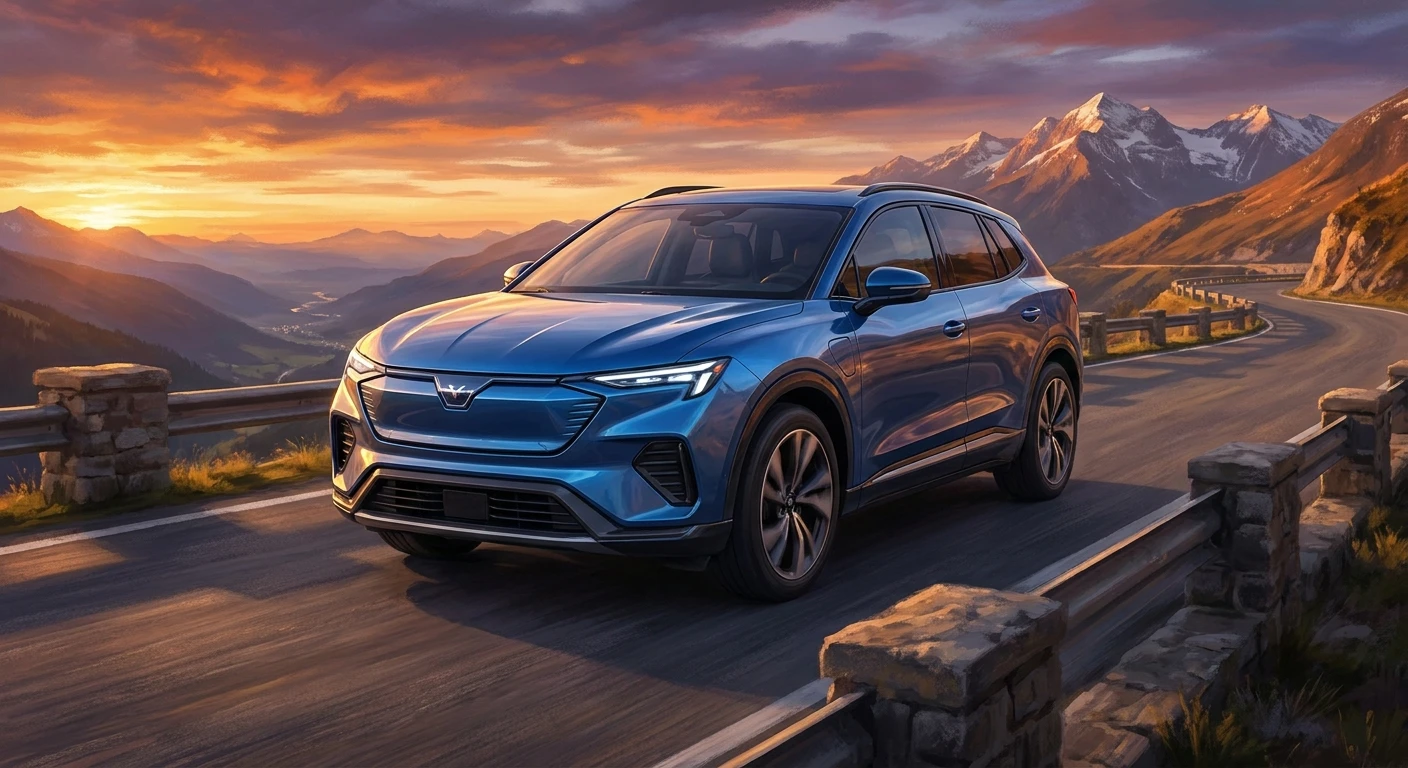
The Complete Guide to the 2024 GMC Terrain
You know the feeling when you are searching for a vehicle that perfectly balances daily practicality with weekend readiness? That is exactly where the 2024 GMC Terrain comes into play. Listen, navigating the compact SUV market often feels completely overwhelming with countless options shouting for your attention. The truth is, finding a crossover that does not compromise on bold styling while remaining incredibly easy to park and maneuver is a tall order. The 2024 GMC Terrain steps up as a highly capable, well-rounded machine engineered to handle the demands of modern driving. We are breaking down the absolute facts about this vehicle, skipping the fluff and getting straight into what makes it tick. When you evaluate the broader lineup of GMC vehicles, you quickly notice that this specific model holds a unique position. It captures the rugged, muscular design language of its massive truck siblings but shrinks it down into an agile, remarkably efficient package. Whether you are hauling groceries across town or packing up gear for a distant campsite, understanding the precise capabilities, interior technology, and mechanical engineering of this crossover is crucial. We will walk through the exact specifications, trim differences, and hidden features that make this model a standout choice for thousands of drivers. If you want a no-nonsense look at what this SUV brings to your driveway, you are in the right place.
Core Advantages and Real-World Functionality
Understanding the actual value of a crossover means looking past the sleek exterior and focusing on how it makes your daily routine easier. The primary advantage of this SUV is its exceptional spatial efficiency combined with advanced digital integration. The engineers prioritized cabin flexibility over almost everything else. For instance, the standard fold-flat front passenger seat is a game-changer. Imagine needing to transport an eight-foot ladder, a surfboard, or a stack of long lumber. Instead of renting a truck, you simply fold the rear seats and the front passenger seat completely flat, opening up a massive corridor of cargo space from the dashboard to the tailgate. Another clear example of its practical value is the standard GMC Pro Safety suite. You are getting automatic emergency braking, lane-keeping assist, and forward collision alerts right out of the box, without needing to upgrade to the highest price point. These are not just gimmicks; they are active systems constantly monitoring your surroundings to prevent accidents before they happen.
Read also: 2024 cadillac xt4 Review and Complete Guide; Review of the Kia K4 2025: A Bold Sedan.
| Trim Level | Defining Feature Focus | Ideal Driver Profile |
|---|---|---|
| SLE / SLT | Everyday Value & Essential Connectivity | Daily Commuters and Small Families |
| AT4 | Enhanced Traction & Rugged Styling | Weekend Adventurers and Outdoor Enthusiasts |
| Denali | Premium Materials & Refined Acoustics | Luxury Seekers and Executive Travelers |
To really grasp what you get, look at the three most impactful benefits you experience behind the wheel:
- Seamless Smartphone Integration: Wireless Apple CarPlay and Android Auto come standard, meaning your navigation, podcasts, and calls sync the moment you start the engine, eliminating the clutter of USB cables draped across the center console.
- Acoustically Refined Cabin: The strategic use of sound-deadening materials and active noise cancellation ensures that highway wind noise and tire drone are heavily suppressed, allowing for quiet conversations even at high speeds.
- Optimized Fuel Efficiency: Thanks to intelligent transmission tuning and a lightweight engine block, you get plenty of passing power without the constant pain of frequent, expensive stops at the gas pump.
Origins of the Compact Crossover Shift
To truly appreciate the current model, we need to trace the roots of how this brand shifted its focus. Historically, the automaker was famous solely for manufacturing massive, heavy-duty commercial trucks and full-size utility vehicles. They were the undisputed kings of the construction site and the towing industry. However, in the late 2000s, consumer behavior began shifting radically. People still wanted the commanding driving position and the rugged aesthetic of a truck, but they demanded better fuel economy and the ability to easily parallel park in crowded urban centers. The initial launch of this compact nameplate was a bold strategy to capture that emerging market, proving that commercial-grade toughness could exist in a smaller, garage-friendly footprint.
The Evolution of Design and Capability
Over the years, the vehicle went through aggressive redesigns. The first generation carried a very boxy, squared-off look that heavily mimicked traditional trucks. While visually striking, that shape was not aerodynamically ideal. The transition into the second generation brought a sleeker, more sculpted exterior. This wasn’t just about looking modern; smoothing out the roofline and angling the windshield significantly reduced aerodynamic drag, which directly improved highway fuel economy. Engine configurations evolved as well. Early models offered thirsty V6 engines, but stringent emissions regulations and advances in engineering led to the adoption of small-displacement, high-output turbocharged four-cylinder engines. The marketing strategies adapted alongside the engineering, with campaigns heavily promoted on platforms like the official GMC Instagram, showcasing the vehicle bridging the gap between city luxury and dirt-road capability.
The Modern State of the 2024 Edition
Today, the 2024 iteration stands as a highly refined product of years of iterative testing and consumer feedback. The front fascia features a dominant, aggressive grille flanked by signature C-shaped LED lighting that makes it instantly recognizable at night. Inside, the focus has shifted entirely to premium tactility. Soft-touch materials dominate the dashboard, and the electronic precision shift system replaces the traditional bulky gear lever with a row of intuitive push-buttons and pull-switches, freeing up valuable storage space in the center console. It is a mature, highly sophisticated crossover that knows exactly what its drivers need.
Turbocharged Powertrain Mechanics
Let’s look under the hood and talk about the actual mechanical hardware pushing this vehicle down the road. The standard setup is a 1.5-liter turbocharged four-cylinder engine. If you are used to older, naturally aspirated V6 engines, a 1.5-liter might sound tiny. But here is the technical reality of how modern forced induction works. A turbocharger uses the engine’s hot exhaust gases to spin a turbine, which then compresses fresh air and forces it into the combustion chamber. More air means the engine can inject more fuel efficiently, creating a powerful explosion that generates high torque at very low RPMs. You get the immediate acceleration and pulling power of a much larger engine, but when you are cruising steadily on the highway, the engine acts like a small, fuel-sipping four-cylinder. It is bolted to a highly calibrated nine-speed automatic transmission. Having nine gears means the computer can always find the absolute perfect ratio for your current speed, keeping the engine operating in its most efficient power band while smoothing out the shifting experience.
Chassis Dynamics and All-Wheel Drive Systems
Ride quality and cornering stability are dictated by the chassis architecture and the drivetrain management systems. The available All-Wheel-Drive (AWD) is heavily computerized and remarkably efficient. Older permanent AWD systems sent power to all four wheels constantly, which wasted massive amounts of fuel. This modern system utilizes a disconnectable rear axle. When you are driving on dry pavement, the vehicle physically disconnects the rear wheels from the powertrain, operating entirely as a Front-Wheel-Drive vehicle to save gas. The moment the sensors detect rain, snow, or wheel slip, it instantly re-engages the rear axle to push you forward safely.
- Traction Select System: A physical dial in the cabin allows the driver to manually switch between FWD and AWD modes, giving you total control over how the vehicle behaves in changing weather conditions.
- MacPherson Strut Front Suspension: This setup utilizes specialized hydraulic shock absorbers and finely tuned coil springs to soak up deep potholes while keeping the front tires planted firmly on the asphalt for sharp steering response.
- StabiliTrak Technology: A network of wheel-speed sensors monitors for any loss of lateral traction. If you take a corner too fast, the system automatically pulses the brakes on individual wheels to correct your trajectory faster than human reflexes can react.
- Acoustic Laminated Glass: The windshield is engineered with a specialized sound-dampening vinyl layer sandwiched between the glass, acting as a barrier that physically blocks high-frequency wind and traffic noise from entering the cabin.
7-Step Blueprint for Buying and Owning Your Crossover
Purchasing and setting up a new vehicle is a significant process. If you want to maximize your investment and ensure you get exactly what you need, follow this structured seven-step blueprint.
Step 1: Analyze Your Daily Commute and Climate Needs
Before looking at colors or wheels, assess your environment. If you live in a state with harsh winters or frequently drive on unpaved roads, upgrading to the AWD model is non-negotiable for safety. If you live in a dry, flat urban area, the FWD configuration will save you money on the purchase price and long-term fuel costs.
Step 2: Select the Ideal Trim Level for Your Budget
Don’t just default to the cheapest or most expensive option. The SLE offers incredible standard value. The SLT adds leather and heated seats for cold mornings. The AT4 brings rugged tires and underbody protection, while the Denali delivers top-tier luxury, premium audio, and exclusive suspension tuning. Pick the one that matches your lifestyle.
Step 3: Conduct a Comprehensive Test Drive
When you get behind the wheel, do not just drive around the block. Take it on the highway to test the turbocharged acceleration. Merge into fast-moving traffic. Drive it over speed bumps to feel the suspension damping. Check your blind spots to ensure the outward visibility suits your seating position.
Step 4: Evaluate the Infotainment and Digital Integration
Sit in the dealership lot and pair your smartphone. Test the responsiveness of the touchscreen. Use voice commands to set a navigation destination. Ensure the wireless Apple CarPlay or Android Auto connects flawlessly, as this will be your primary interface for years to come.
Step 5: Review and Understand the Pro Safety Plus Package
Ask the salesperson to demonstrate the active safety features. Understand exactly how the lane-keeping assist feels when it gently nudges the steering wheel. Learn how to adjust the following distance for the forward collision alert so it matches your driving style.
Step 6: Explore Cargo Configurations and Utility
Physically interact with the interior. Fold the rear seats down to see how flat the floor gets. Fold down the front passenger seat. Open the hidden under-floor storage compartment in the trunk. Make sure your everyday gear, whether it’s a stroller, golf clubs, or camping equipment, fits easily.
Step 7: Finalize Maintenance Plans for Turbo Health
Turbocharged engines require diligent maintenance. Secure a service agreement and commit to regular, high-quality synthetic oil changes. Fresh oil is critical for lubricating the high-speed turbine bearings in the turbocharger, ensuring the engine delivers peak performance well past the 100,000-mile mark.
Separating Myths from Reality
There are several misconceptions floating around about compact crossovers. Let’s clear up the facts.
Myth: Compact SUVs are completely useless off-road and belong only in mall parking lots.
Reality: While you won’t be climbing vertical rock faces, the AT4 trim features a reinforced front steel skid plate, specialized off-road drive modes, and rugged tires that easily conquer muddy trails, deep snow, and steep dirt inclines. You can frequently see its surprising trail capabilities highlighted by owners on platforms like GMC Twitter.
Myth: A 1.5L engine is dangerously underpowered for merging on the highway.
Reality: The addition of advanced turbocharging produces 203 lb-ft of torque at low RPMs. This means the vehicle accelerates briskly from a dead stop and has plenty of passing power without the engine struggling or screaming at high revs.
Myth: You have to buy a massive, three-row SUV to get genuine luxury features.
Reality: The Denali trim packages high-end perforated leather, authentic aluminum trim, a premium Bose sound system, and advanced driver-assistance features into a highly maneuverable footprint. You get the executive treatment without the nightmare of parking a behemoth vehicle.
Frequently Asked Questions
What is the real-world fuel economy like?
Drivers typically see around 24 mpg in stop-and-go city traffic and up to 29 mpg on the open highway when driving the front-wheel-drive configuration.
Can I fit a third row of seats in this vehicle?
No, this model is strictly designed as a two-row, five-passenger SUV to maximize legroom and rear cargo space rather than cramming in tiny, unusable rear seats.
Is this vehicle capable of towing a trailer?
Yes, when properly equipped with the factory trailering package, it has a maximum towing capacity of up to 1,500 pounds, which is perfect for a small utility trailer or jet skis.
Do I need to pay extra for Apple CarPlay?
Absolutely not. Both wireless Apple CarPlay and wireless Android Auto are standard equipment across every single trim level, keeping you connected effortlessly.
What kind of factory warranty does it come with?
It includes a comprehensive 3-year/36,000-mile bumper-to-bumper limited warranty, plus a 5-year/60,000-mile powertrain warranty covering the engine and transmission.
Are heated seats available for winter driving?
Yes, heated front seats are standard equipment on the SLT, AT4, and Denali models, and they can be added as an option on the base SLE trim.
Does the vehicle offer adaptive cruise control?
Yes, advanced adaptive cruise control, which uses radar to maintain a safe gap between you and the car ahead, is available as part of the advanced safety packages on higher trims.
Final Thoughts on Your Next SUV
The 2024 GMC Terrain stands as a brilliant example of what a modern compact crossover should be. It perfectly balances aggressive, truck-inspired styling with highly efficient daily practicality. You get the benefits of advanced active safety systems, a remarkably quiet cabin, and the flexibility to haul awkward cargo at a moment’s notice. Whether you are navigating dense urban streets, managing school drop-offs, or taking a weekend trip out to a remote cabin, this vehicle is engineered to handle your demands with absolute confidence and comfort. Ready to experience this versatile capability for yourself? Contact your local dealership right now to schedule a comprehensive test drive and discover which trim perfectly aligns with your lifestyle!




Leave a Reply