

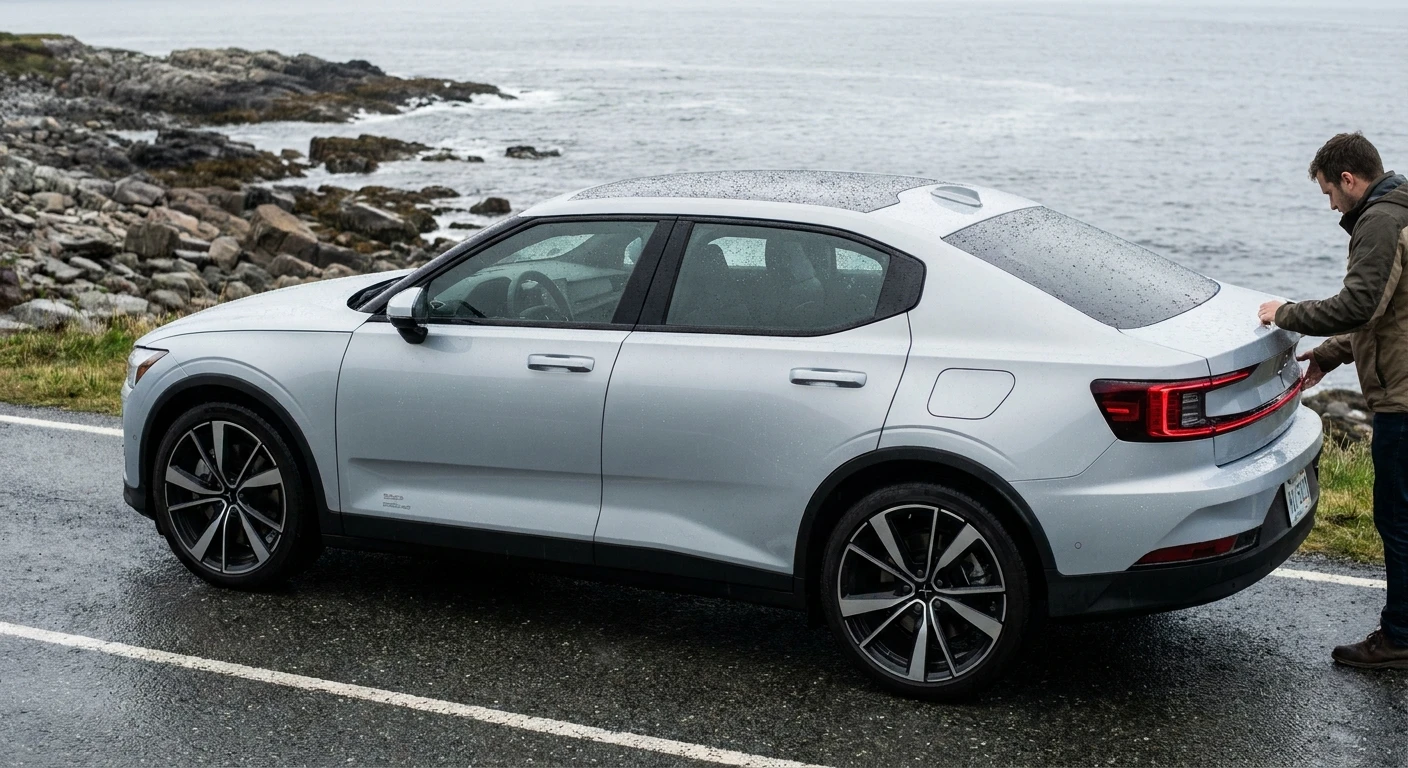
Exploring the Impact of the 2022 Polestar 2
When you look closely at the rapidly shifting landscape of modern electric vehicles, the 2022 Polestar 2 stands out as a seriously compelling contender that directly challenges the traditional dominance of its most established rivals. You are probably wondering if this uniquely designed electric fastback has what it takes to replace your current internal combustion daily driver. The automotive industry has completely shifted gears over the last decade, and the transition toward full electrification is no longer just a distant possibility for the future; it is the present reality. With its distinctive Scandinavian design ethos, industry-first Android Automotive OS integration, and robust electric powertrain, this specific model year brought crucial updates that widened its appeal across the market.
The introduction of a single-motor front-wheel-drive variant joined the incredibly fast dual-motor all-wheel-drive setup, giving drivers more range flexibility and a lower entry price point. Our primary focus here is to break down exactly what makes this specific electric vehicle tick, analyzing its underlying engineering, daily usability, and long-term viability as a daily commuter. We will evaluate the complex battery architecture, the sustainability of the interior materials, and the real-world driving dynamics that make it feel so planted on the road. This is not just about achieving zero tailpipe emissions; it is about finding a car that seamlessly integrates into your daily routine without ever compromising on spirited performance, passenger comfort, or aesthetic appeal.
Read also: 2021 Toyota Corolla: Specs, Features & Reliability Review; Lexus ES 2026: Features, Specs, and Ultimate Buyer Guide.
The 2022 Polestar 2 is masterfully built on the Compact Modular Architecture (CMA) platform, a highly versatile foundation shared with Volvo, which gives the vehicle a remarkably solid and planted feel on the highway. The value proposition of this vehicle rests heavily on its unique combination of minimalist luxury and highly practical technology. For example, instead of relying on a clunky, proprietary infotainment system that feels outdated the moment you drive the car off the dealership lot, it utilizes a native Google Android system that responds just like your smartphone. Another strong example of its outstanding value is the vegan-friendly WeaveTech interior material. This innovative fabric reduces the vehicle’s overall environmental carbon footprint while maintaining a premium, durable, and easily washable tactile feel that rivals traditional leather.
Let us take a detailed look at how the different mechanical configurations stack up against each other.
| Configuration Type | Estimated Range (EPA) | Horsepower Output |
|---|---|---|
| Single Motor Front-Wheel Drive | Up to 270 miles per charge | 231 horsepower |
| Dual Motor All-Wheel Drive | Up to 249 miles per charge | 408 horsepower |
| Dual Motor AWD (Performance Pack) | Up to 249 miles per charge | 408 hp with Brembo brakes & Öhlins dampers |
When evaluating the daily functionality of this electric fastback, you should consider a few core benefits that set it apart from the competition:
- Seamless Technology Integration: The built-in Google Assistant, Google Maps, and Google Play Store make navigation and media consumption incredibly intuitive. You simply log in to your personal Google account, and your preferences, home address, and playlists are instantly synced to the car.
- Fast Charging Capability: Capable of accepting up to 150 kW of electricity at a compatible DC fast charging station, the high-voltage battery can replenish its energy from 10% to 80% in roughly 33 minutes. This rapid speed makes long interstate highway road trips entirely feasible and stress-free.
- Exceptional Safety Standards: Drawing heavily from its renowned Volvo heritage, the vehicle includes a highly comprehensive suite of advanced driver-assistance systems. These include adaptive cruise control, lane-keeping assistance, cross-traffic alert, and advanced collision avoidance technology that can automatically apply the brakes if an obstacle is detected.
Origins of the Polestar Brand
To truly understand the rigorous engineering philosophy behind the 2022 Polestar 2, you have to trace the brand’s competitive roots back to the late 1990s. Originally, the name belonged to an independent Swedish motor racing team known as Flash Engineering, which later evolved into Polestar Racing. They specialized in heavily modifying Volvo vehicles for the highly competitive Swedish Touring Car Championship. Seeing the immense potential in their engineering prowess, Volvo eventually bought the performance division outright in 2015, turning it into their dedicated in-house performance tuning brand. However, a major corporate strategic pivot occurred in 2017 when the brand was entirely repositioned as a standalone, electrified performance car manufacturer, jointly owned by Volvo Cars and the automotive conglomerate Geely Holding.
Evolution of the Electric Fastback
The brand’s very first car, appropriately named the Polestar 1, was an ultra-exclusive, low-production plug-in hybrid grand tourer meant to serve as a stunning halo car. It was the expensive precursor to mass-market electrification. The true test of their standalone commercial viability came with their second model. The striking exterior design was originally conceived as the Volvo Concept 40.2 back in 2016, presenting a bold vision for what a high-riding, compact electric sedan could look like. This concept was eventually refined, adapted for pure battery power, and brought to full production under the new badge. While the 2021 model year introduced the heavy-hitting dual-motor version to early adopters, it was the 2022 update that significantly broadened the car’s mass-market appeal by introducing a somewhat more affordable, longer-range single-motor variant.
The Modern State of the Fleet
Today, the 2022 Polestar 2 continues to serve as the foundational bedrock of the company’s expanding vehicle lineup, having successfully established a strong global sales footprint in North America, Europe, and the Asia-Pacific region. It has essentially paved the financial and technological way for subsequent luxury models like the Polestar 3 aerodynamic SUV and the Polestar 4 crossover. Furthermore, the incredibly useful over-the-air (OTA) software update capability ensures that even older vehicles produced during the 2022 production run continue to receive essential performance optimizations, bug fixes, and entirely new infotainment features, keeping the car highly relevant and technologically fresh in a rapidly changing digital landscape.
Battery Architecture and Thermal Management
The complex, beating heart of the 2022 Polestar 2 is its highly advanced lithium-ion battery pack. The vehicle utilizes a high-capacity 78 kWh battery (specifically for the Long Range variants), which meticulously organizes 27 individual battery modules enclosed within a rigid aluminum casing. This protective casing is structurally integrated directly into the vehicle’s floorpan chassis, which not only lowers the center of gravity for improved handling but also significantly increases the overall torsional rigidity of the vehicle.
To maintain optimal electrical efficiency, the battery relies on a sophisticated liquid cooling and heating management system. Lithium-ion chemistry operates best within a very specific temperature window. If the cells get too cold, internal electrical resistance spikes and the driving range drops dramatically; if they get too hot, chemical degradation accelerates. The vehicle’s thermal management system actively circulates specialized coolant to keep the cells within this perfect Goldilocks zone, which is exactly why the vehicle can reliably deliver consistent, predictable performance whether you are driving in freezing winter blizzards or scorching summer heatwaves.
Powertrain and Regenerative Braking Physics
The electric propulsion system uses state-of-the-art permanent magnet synchronous electric motors. These specific types of motors are incredibly efficient at converting stored electrical energy into instant mechanical rotational force. Interestingly, when you lift your foot off the accelerator pedal, the complex inverter system completely reverses the process through a mechanism called regenerative braking. The kinetic energy of the heavy moving vehicle turns the electric traction motor into a powerful generator, pushing vital electricity back into the battery pack and physically slowing the car down without ever needing to engage the traditional hydraulic brake pads.
Here are some highly specific technical specifications regarding the vehicle’s underlying engineering:
- The single-motor variant strategically places the electric motor on the front axle, utilizing a front-wheel-drive architecture that optimizes traction during wet weather.
- The dual-motor setup utilizes a dedicated 150 kW electric motor on both the front and rear axles, delivering a combined 660 Nm of torque instantaneously to all four wheels.
- An optional, highly efficient mechanical heat pump (available when selecting the Plus Pack) actively captures ambient thermal energy and drivetrain waste heat to warm the passenger cabin, drastically reducing the heating load on the main battery and extending winter driving range by up to 10 percent.
- The exterior aerodynamic drag coefficient is meticulously optimized to 0.278 Cd, helping the heavy vehicle effortlessly slice through the oncoming air and maximize crucial highway energy efficiency.
Taking ownership of a completely modern electric vehicle requires a slight, but entirely manageable, shift in your daily driving and fueling habits. Here is a comprehensive 7-day orientation plan designed specifically for maximizing your daily experience with the 2022 Polestar 2.
Day 1: Setting Up the Digital Ecosystem
Begin your ownership journey by downloading the official companion application onto your smartphone. Carefully pair your mobile device directly to the car to successfully enable the Digital Key feature, a system allowing your phone’s Bluetooth signal to securely unlock and start the vehicle without a physical key. Then, log into your personal Google account on the massive 11.2-inch center touchscreen to immediately sync your digital maps, saved contacts, and favorite Spotify playlists.
Day 2: Mastering the One-Pedal Drive System
Navigate safely to the driving settings menu on the main infotainment screen and confidently set the regenerative braking feature to Standard. Practice driving around your quiet local neighborhood using absolutely nothing but the main accelerator pedal. You will surprisingly quickly learn exactly how to gauge stopping distances and gently come to a complete, smooth stop at intersections without ever needing to touch the physical brake pedal.
Day 3: Mapping Local High-Speed Fast Chargers
Use the highly responsive native Google Maps interface to physically search for high-voltage DC fast charging stations strategically located in your immediate area. Specifically look for major networks like Electrify America or ChargePoint that routinely offer at least 150 kW charging speeds. Take time to familiarize yourself with how the navigation system intelligently and automatically pre-conditions the battery temperature when you actively route the vehicle to a fast charger.
Day 4: Optimizing Home Charging Routines
Set up your automated daily charging schedule. If you possess a dedicated Level 2 home wall box charger in your garage, explicitly program the vehicle software to only accept charge during off-peak overnight hours when local electricity grid rates are generally at their absolute lowest. Deliberately set the maximum battery charge limit to 80% or 90% for your routine daily driving to successfully preserve the long-term chemical health of the individual battery cells.
Day 5: Exploring Voice Command Functionality
Test out the seamless Google Assistant voice integration. While actively driving, simply use the verbal Hey Google prompt to smoothly adjust the automatic climate control temperature, change the satellite radio station, or ask for driving directions to the nearest local coffee shop. The advanced voice recognition is remarkably accurate and safely keeps your hands planted firmly on the steering wheel.
Day 6: Testing the Advanced Driver Assistance
Carefully take the vehicle onto a well-marked, clearly painted stretch of highway and tentatively engage the adaptive cruise control alongside the Pilot Assist feature. Pay very close attention to how the vehicle’s computer seamlessly maintains its lane position and smoothly adjusts its cruising speed relative to the slower traffic directly ahead. Always remember to keep your hands resting lightly on the wheel, as this is strictly a driver assistance system, not fully autonomous driving.
Day 7: Customizing the Steering Weight and Feel
Spend your final orientation day experimenting with the customizable electronic steering effort settings. You can freely choose between Light, Standard, and Firm mechanical feedback modes. Switch dynamically between these specific modes on entirely different types of roads; intentionally use the Light setting for navigating tight, cramped city parking garages and confidently engage the Firm setting for highly spirited driving on winding, twisty country backroads.
There is undoubtedly a massive amount of blatant misinformation currently circulating online regarding the realities of modern electric vehicles. Let us definitively clear up some of the most common myths and misconceptions specifically regarding the 2022 Polestar 2.
Myth: Electric cars simply cannot handle severe cold weather driving.
Reality: The 2022 Polestar 2 features an incredibly advanced, liquid-based thermal management system. If optionally equipped with the mechanical heat pump, the vehicle highly efficiently warms both the passenger cabin and the sensitive battery pack, significantly minimizing potential range loss even in brutal sub-zero winter temperatures.
Myth: You will inevitably need to replace the wildly expensive battery every few years.
Reality: The robust lithium-ion battery pack is meticulously engineered to completely outlast the vehicle’s typical structural lifespan. Comprehensive factory warranties fully cover the main high-voltage battery for eight long years or 100,000 miles, heavily guaranteeing it will permanently retain a very high percentage of its original energy capacity.
Myth: It is honestly just a slightly rebranded and overpriced Volvo.
Reality: While it strategically shares the underlying CMA platform architecture with the Volvo XC40 Recharge, the bespoke chassis tuning, totally unique software interface, and distinctly aggressive exterior fastback styling give it an entirely different, vastly sportier driving dynamic.
Does the 2022 Polestar 2 have Apple CarPlay capability?
Yes, a major over-the-air software update successfully delivered fully functional wired Apple CarPlay connectivity to all vehicles, brilliantly complementing the native Android Automotive operating system.
What is the official 0-60 mph acceleration time?
The exceptionally powerful dual-motor AWD variant aggressively sprints from 0 to 60 mph in a blistering 4.5 seconds.
Is there a front trunk (commonly called a frunk)?
Yes, there is a relatively small, highly practical water-resistant storage compartment cleverly located under the front hood, which is absolutely perfect for securely storing dirty charging cables.
Can I safely tow a trailer with it?
Absolutely. When properly and safely equipped with a factory-installed tow hitch, the electric vehicle can confidently tow up to 2,000 pounds of weight.
Does the car feature a panoramic glass roof?
The highly desirable Plus Pack configuration includes a truly massive, UV-tinted panoramic glass roof that beautifully stretches across the entire length of the cabin.
How do remote software updates actually work?
Vital software updates are securely downloaded via the car’s dedicated, built-in 4G LTE cellular connection and are conveniently installed overnight, working exactly like a standard smartphone update.
What kind of routine maintenance is strictly required?
Traditional mechanical maintenance is drastically minimal, mostly involving simple tire rotations, standard windshield wiper blade replacements, and vital brake fluid flushes occurring every two years.
Conclusion
The 2022 Polestar 2 represents an absolutely brilliant engineering intersection of pure performance, stunning minimalist design, and highly practical daily technology. Whether you heavily prioritize straight-line acceleration or deeply value eco-conscious daily commuting, this unique electric fastback consistently delivers an incredibly comprehensive automotive package. If you are entirely ready to elevate your personal driving experience to the next digital level, consider exploring local inventory and take a thrilling test drive today to feel the ongoing electric revolution firsthand!





Leave a Reply