

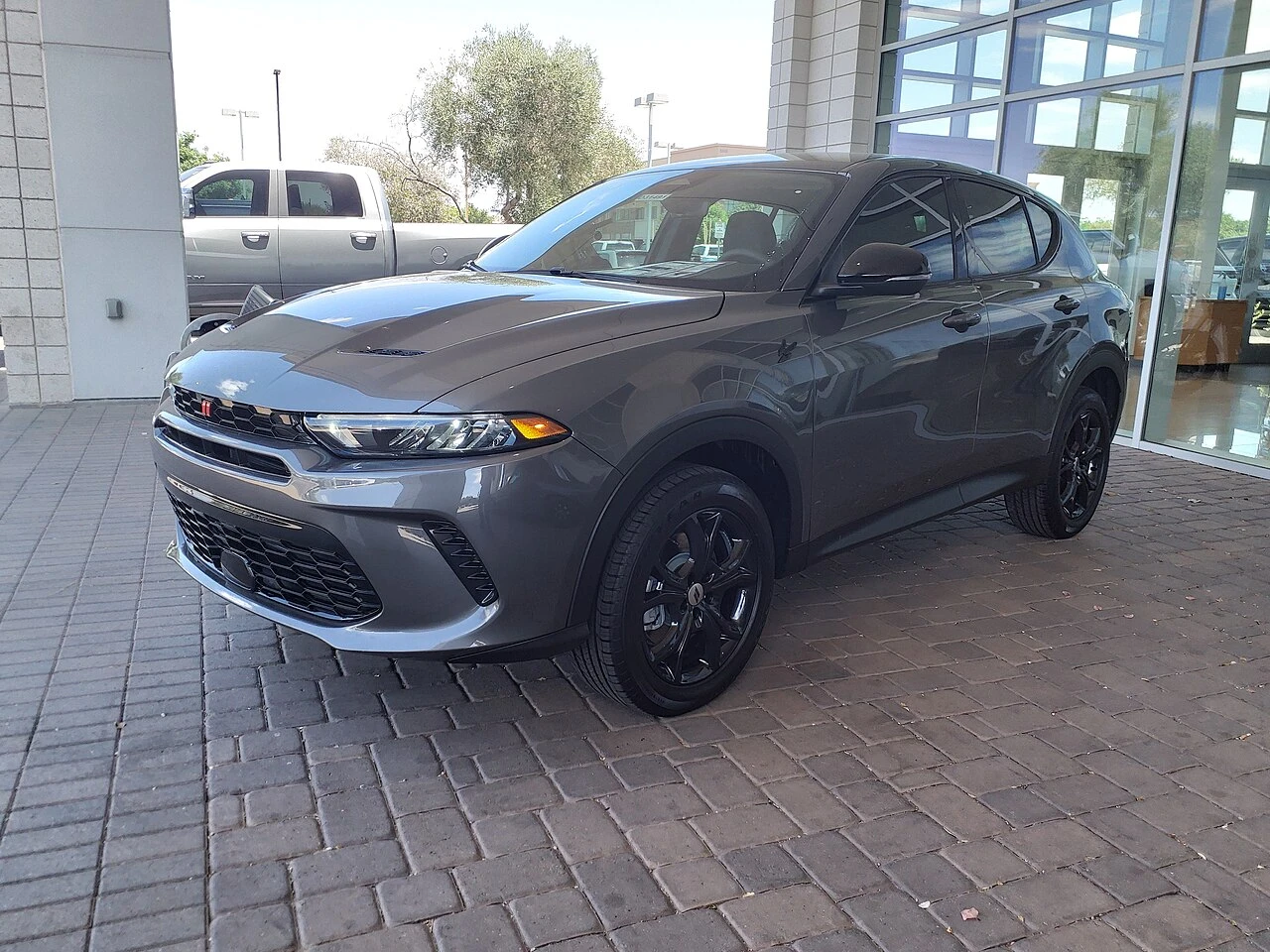
Dodge Hornet: The Compact Utility Vehicle With Muscle
The Dodge Hornet brings a massive dose of muscle-car attitude into the wildly competitive compact utility vehicle segment. If you are tired of driving vanilla grocery-getters and want a crossover that actually pushes you back into your seat, this vehicle demands your attention. Dodge built its modern reputation on high-horsepower V8 engines and tire-smoking rear-wheel-drive sedans, but the automotive landscape is shifting toward efficiency and practicality. Instead of abandoning their aggressive brand DNA, Dodge engineered a solution that blends utility with raw acceleration. The Dodge Hornet redefines the entry-level crossover market by offering traditional turbocharged power alongside a highly sophisticated plug-in hybrid electric powertrain, proving that you do not have to sacrifice driving dynamics when you need room for five passengers and their cargo.
This vehicle acts as a vital bridge for performance enthusiasts transitioning into the modern era of electrification. It proves that a daily commuter can still feature hood extractors, aggressive styling, and a driver-centric cockpit. Whether you are navigating tight city streets or cruising on the highway, the Dodge Hornet delivers a highly engaging driving experience that feels distinctly different from its conservative rivals. We are going to break down everything that makes this aggressive crossover tick, from its suspension architecture to its daily usability.
Read also: 2022 Polestar 2 Review: The Ultimate Electric Vehicle; Mazda CX 70: Specs, Features, and Performance.
Why the Dodge Hornet Disrupts the Crossover Market
The core appeal of the Dodge Hornet lies in its unapologetic value proposition: delivering class-leading horsepower right off the dealership floor. Most compact crossovers treat performance as an afterthought, prioritizing fuel economy above all else. Dodge flipped that script. They designed a vehicle where the base model outperforms the top-tier trims of many competitors. This strategy gives buyers two highly distinct but equally thrilling choices. You have the GT model for those who love the relentless pull of a traditional turbocharged engine, and the R/T plug-in hybrid for drivers who want instant electric torque combined with the flexibility of a gasoline engine.
Consider what you get across the lineup:
| Trim Level | Powertrain Setup | Power Output |
|---|---|---|
| GT | 2.0L Turbocharged Inline-4 | 268 hp / 295 lb-ft |
| R/T (PHEV) | 1.3L Turbo I-4 + Electric Motor | 288 hp / 383 lb-ft |
| R/T Plus | 1.3L Turbo I-4 + Premium Audio/Leather | 288 hp / 383 lb-ft |
Buyers gravitate toward the Dodge Hornet for several specific reasons that set it apart from the rest of the pack. Here is exactly what is driving the excitement:
- Unmatched Standard Horsepower: The GT trim delivers 268 horsepower, making it the most powerful gas engine in its starting price bracket. You never feel a lack of passing power on the highway.
- Distinctive Aggressive Styling: With integrated hood extractors, a mail-slot grille, and a wide stance, it looks like a muscle car that went to the gym and put on a backpack. It refuses to blend into the parking lot.
- Advanced Performance Technology: Features like the Dodge Performance Pages allow drivers to track G-forces, 0-60 times, and engine output right from the infotainment screen, a feature normally reserved for track-focused sports cars.
This combination of utility and pure aggression means you can drop the kids off at school, pick up lumber from the hardware store, and still have a genuinely thrilling time carving through backroads on the way home.
The Original Concept and Inspiration
To understand the current vehicle, you have to look at the historical weight of the nameplate. The name first gained automotive fame with the Hudson Hornet in the early 1950s. That classic car dominated early stock car racing thanks to its low center of gravity and innovative “step-down” chassis design. The name eventually passed through American Motors Corporation (AMC) and landed in Chrysler’s hands. Dodge first attempted to revive the badge back in 2006 with a radically styled concept car. That early 2006 concept was a boxy, rally-inspired hot hatch that generated massive excitement at auto shows. However, the global financial crisis forced the company to shelve the project, leaving fans wondering what could have been.
Evolution of the Nameplate
Fast forward to the Stellantis era, and Dodge found themselves in urgent need of a compact SUV. They had retired older models like the Journey and needed a fresh, competitive entry to capture younger buyers and smaller families. By leveraging the vast resources of the newly formed Stellantis conglomerate, Dodge engineers partnered closely with Alfa Romeo. They utilized a highly capable premium global platform as the foundation for their new vehicle. But Dodge did not just borrow a chassis; they heavily revised the steering mapping, suspension tuning, and styling to ensure the end product felt distinctly American and thoroughly aggressive.
Modern Market Placement
When the modern Dodge Hornet finally arrived on the streets in the 2020s, it represented a massive turning point for the brand. It acts as the vanguard for Dodge’s electrified future. By introducing a plug-in hybrid (PHEV) option alongside a potent turbocharged gas engine, Dodge proved to its traditional fan base that electric motors can be used to make cars faster, not just greener. It sits uniquely in the market as an “entry-level” vehicle that requires zero apologies when you put your foot down.
Plug-In Hybrid Architecture
The engineering inside the Dodge Hornet R/T is a masterclass in packaging and performance optimization. The plug-in hybrid system pairs a compact 1.3-liter turbocharged four-cylinder engine, which drives the front wheels, with a robust 90-kW electric motor mounted on the rear axle. This creates a highly responsive electrified all-wheel-drive (eAWD) system without the need for a heavy mechanical driveshaft running down the center of the car. The standout technical feature is the PowerShot function. By pulling both steering-wheel-mounted paddle shifters simultaneously and pressing the throttle, the system commands the battery to discharge a sudden burst of electrical energy, delivering an extra 30 horsepower for 15 seconds to help with aggressive passing maneuvers.
Suspension and Handling Dynamics
Power is useless without control, and the chassis dynamics of this compact utility vehicle are engineered to handle serious lateral loads. The vehicle utilizes fully independent suspension at all four corners, utilizing Koni frequency-selective damping shocks. These mechanical shocks passively adjust their stiffness based on the frequency of the road inputs, offering a compliant ride over potholes while stiffening up during hard cornering to reduce body roll. Furthermore, the active torque vectoring system distributes power seamlessly between the wheels to pull the nose of the car through tight apexes.
- Battery Capacity: A 15.5-kWh lithium-ion battery pack designed with high-output chemistry to support repeated rapid discharges during spirited driving.
- Thermal Management: Dedicated liquid cooling loops for the power inverter and battery pack to prevent heat soak and maintain peak performance during heavy throttle applications.
- Braking System: Available four-piston fixed front brake calipers manufactured by Brembo, ensuring consistent, fade-free stopping power under high thermal loads.
- Chassis Rigidity: Extensive integration of high-strength steel throughout the safety cage and subframes to minimize chassis flex, resulting in sharper steering response.
Selecting the Right Powertrain for Your Lifestyle
Choosing between the GT and the R/T comes down to how you actually use your vehicle on a daily basis. The GT model, featuring the 2.0-liter Hurricane-family engine, is physically lighter and offers a very traditional, linear power delivery via its nine-speed automatic transmission. It is ideal for drivers who do a lot of long-distance highway cruising and prefer a lower initial purchase price. The R/T plug-in hybrid, on the other hand, is perfect for drivers with shorter daily commutes. Because it offers over 30 miles of pure electric range, you can run daily errands without burning a single drop of gasoline, while still having maximum performance available when you push the throttle past the detent.
Maximizing Hybrid Efficiency and Performance
If you opt for the R/T, mastering the drive modes is essential. The vehicle allows you to select between Hybrid Mode (which automatically blends gas and electric power for maximum efficiency), Electric Mode (which locks out the gas engine entirely for silent driving), and E-Save Mode (which preserves the battery charge for later use or uses the gas engine to recharge the battery on the highway). To get the most out of the vehicle, you should install a Level 2 home charger. Plugging in overnight ensures you always wake up with a full battery, ready to utilize the electric torque or the PowerShot feature whenever the mood strikes.
Customizing the Exterior Look
Dodge understands that visual aggression is a massive part of the ownership experience. Buyers should carefully consider the available aesthetic packages. The Blacktop Package is highly popular, blacking out the exterior badging, window trim, and wheels for a stealthy, menacing appearance. For those who want to maximize the handling characteristics, the Track Pack is a must-have. It upgrades the rolling stock to massive 20-inch machine-faced wheels, adds the Brembo performance brakes, and replaces the standard interior with heavily bolstered Alcantara sport seats that keep you firmly planted during tight cornering.
Maintenance and Upkeep Considerations
High-performance forced-induction engines require strict adherence to maintenance schedules. For the GT model, changing the full synthetic oil on time is critical to preserving the life of the turbocharger bearings. Owners should also pay close attention to tire rotations. Because the GT produces nearly 300 lb-ft of torque and sends a significant portion of it through the front wheels under normal driving conditions, front tire wear can occur faster than on a standard, low-output crossover. For R/T owners, the hybrid system is largely maintenance-free, but keeping the battery conditioned by keeping it plugged in during extreme cold weather will help preserve the long-term health of the lithium-ion cells.
Myths and Reality
Myth: The Dodge Hornet is just a rebadged version of an Alfa Romeo crossover.
Reality: While it is true that they share the same underlying global platform and basic skeletal structure, Dodge engineers spent countless hours recalibrating the vehicle. The engine mapping, transmission logic, steering weight, and suspension tuning are completely unique to Dodge. It drives, sounds, and reacts like an American performance vehicle.
Myth: Plug-in hybrids are slow, heavy, and only built for fuel economy.
Reality: The R/T model completely shatters this assumption. It is actually the fastest and most powerful version of the vehicle available, utilizing the massive, instant torque of the electric motor to achieve a 0-60 mph sprint in just 5.6 seconds. The electrical system acts as a performance enhancer first and an efficiency tool second.
Myth: You cannot have a true muscle car experience without a V8 engine.
Reality: The automotive industry has evolved. Modern turbocharging paired with high-voltage electrification provides the violent low-end torque and straight-line acceleration that drivers traditionally associated with big-block V8s, but with significantly better weight distribution over the front axle for vastly superior handling.
Frequently Asked Questions
How much electric range does the Dodge Hornet R/T have?
The R/T model offers an estimated 32 miles of pure electric driving range on a full charge, which is more than enough to cover the average daily commute for most drivers.
Does the Dodge Hornet require premium fuel?
Yes, to achieve the advertised horsepower and torque figures, Dodge recommends using 91 octane premium unleaded fuel in both the GT and R/T models.
Can the Dodge Hornet tow a trailer?
When properly equipped, the vehicle has a maximum towing capacity of 2,000 pounds, making it capable of pulling small utility trailers, jet skis, or a couple of motorcycles.
What exactly is the PowerShot feature?
PowerShot is an exclusive feature on the R/T hybrid model that provides a 15-second burst of an additional 30 horsepower from the electric motor to assist with rapid acceleration and passing.
Does the Dodge Hornet offer all-wheel drive?
Yes, all-wheel drive is standard across the entire lineup. The GT uses a traditional mechanical AWD system, while the R/T utilizes an electrified AWD system with the rear wheels driven by the electric motor.
Are there physical buttons in the cabin or just touchscreens?
Unlike many modern competitors that force all controls into a screen, Dodge retained physical, tactile buttons and switches for the climate controls and critical driving functions for ease of use while driving.
What is the warranty on the hybrid battery?
The high-voltage lithium-ion battery in the R/T model is generally covered by an 8-year or 100,000-mile warranty, giving buyers long-term peace of mind regarding the electrification components.
A New Era of Utility Performance
The Dodge Hornet represents a brilliant pivot for a brand that is famous for burning rubber. By injecting genuine performance hardware, aggressive styling, and innovative plug-in hybrid technology into the compact utility segment, Dodge has created a vehicle that finally makes the daily commute exciting. It proves that growing up and needing cargo space does not mean you have to give up on horsepower. If you are ready to upgrade your daily drive and experience the future of electrified muscle, visit your local dealership to test drive the Dodge Hornet and feel the PowerShot for yourself.





Leave a Reply