

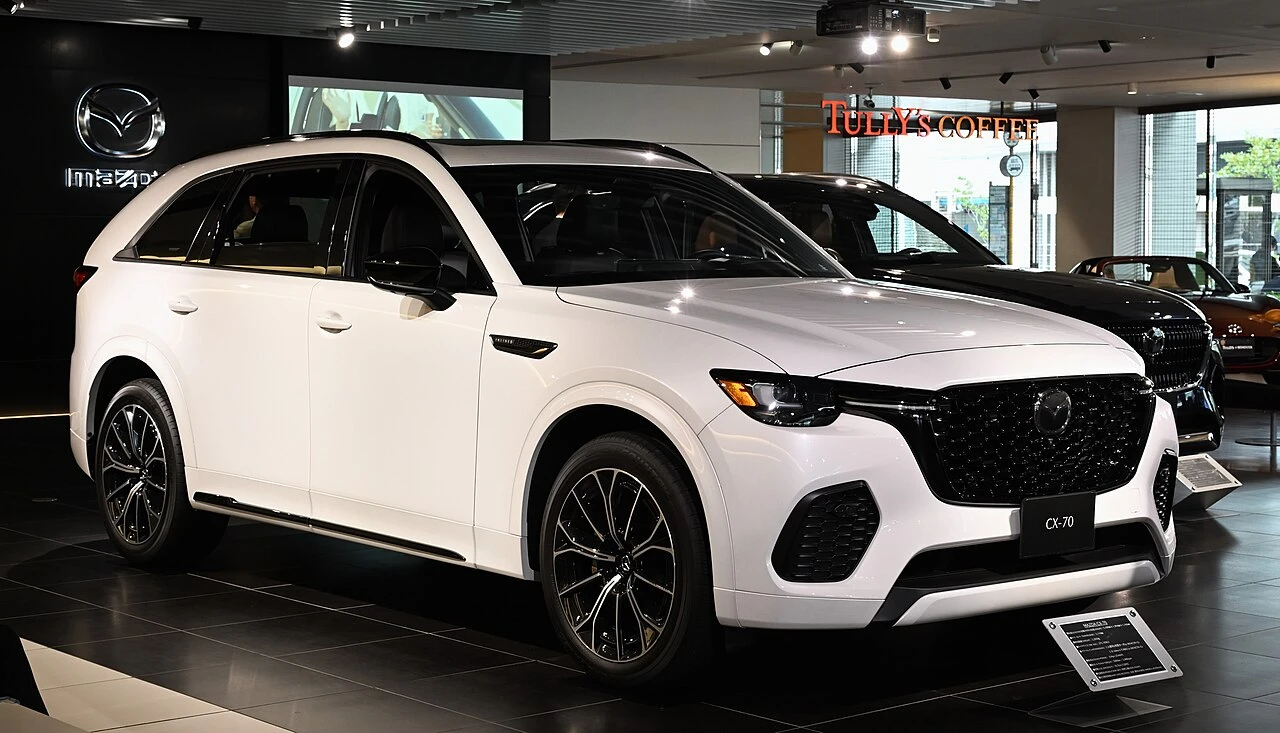
What Makes the Mazda CX 70 a True Game Changer?
If you are searching for a premium driving experience wrapped in a highly practical package, you absolutely need to look closely at the Mazda CX 70. We all know how frustrating it can be to shop for a new vehicle when every option on the lot feels exactly the same. You sit in one crossover, and it feels like a carbon copy of the last one you drove, completely devoid of personality or passion. The Mazda CX 70 completely shatters that mundane mold, offering a sophisticated, deeply engaging alternative for drivers who refuse to compromise on performance or utility. This mid-size, two-row SUV brings a distinctly athletic edge to a segment that is often dominated by sensible but utterly boring family haulers. Built on a brilliant rear-wheel-drive biased platform, it promises the kind of sharp, responsive handling you would typically expect from a low-slung sports sedan, rather than a spacious utility vehicle. We are talking about a machine that combines aggressive, sweeping exterior styling with an interior crafted so meticulously it rivals top-tier European luxury brands. Whether you are commuting through heavy urban traffic or carving up a winding mountain road on a weekend getaway, this vehicle delivers a sense of connection between car and driver that is incredibly rare. The engineering team clearly understood that a vehicle can be practical without forcing you to give up the sheer joy of driving.
Understanding the True Value Proposition
When you start comparing mid-size SUVs, the choice often comes down to balancing raw utility with everyday comfort. So, why exactly should you choose this specific two-row model over a larger three-row alternative or a smaller compact crossover? The value proposition of this vehicle centers on optimizing space for passengers and cargo without hauling around empty, useless third-row seats that you never actually deploy. Think about two distinct types of drivers who benefit immensely from this design. First, consider active empty-nesters who want a premium, luxurious cabin for cross-country road trips, but also need massive, flat cargo space in the back for golf clubs, antique finds, or camping gear. Second, think about young, active professionals who regularly hit the ski slopes or mountain bike trails on weekends. They need substantial towing capacity and all-weather capability, but they also want a vehicle that looks incredibly sharp pulling up to a high-end restaurant on a Friday night. To give you a clearer picture of the lineup, here is a breakdown of the typical trim structures you will encounter.
Read also: 2024 Toyota Highlander Limited: Specs, Features & Guide; 2024 GMC Terrain: Complete Guide to Trims & Specs.
| Trim Level Designation | Powertrain Configuration | Key Feature Highlights |
|---|---|---|
| Preferred | 3.3L Inline-6 Mild Hybrid | Leather-trimmed seats, massive central display, advanced safety suite |
| Premium Plus | 3.3L Inline-6 High Output | Nappa leather, head-up display, premium Bose audio system |
| PHEV Premium | 2.5L Four-Cylinder Plug-in Hybrid | Electric-only range, panoramic sunroof, digital instrument cluster |
Beyond the simple specifications, there are three massive benefits that make this model stand head and shoulders above its direct competitors.
- Unmatched Driving Dynamics: Thanks to a longitudinal engine layout and a rear-biased all-wheel-drive system, the vehicle corners with incredible flatness and pushes you out of tight turns with authoritative grip.
- Opulent Material Quality: The cabin features authentic materials, including genuine wood trim, real aluminum accents, and exceptionally soft Nappa leather with intricate stitching that reflects traditional craftsmanship.
- Intuitive Technology Integration: Instead of forcing you to use distracting touchscreens while driving, the infotainment system is controlled by a beautifully tactile rotary dial that falls perfectly to hand, allowing you to keep your eyes safely on the road.
Origins of the Large Product Group
To truly appreciate this vehicle, we have to look back at the strategic shift the manufacturer made several years ago. They boldly decided to push their brand into the premium space, going toe-to-toe with established luxury marques. This ambition required a completely new architectural foundation, known internally as the Large Product Group. Engineers spent years developing an all-new, rear-wheel-drive biased platform designed specifically to accommodate longitudinally mounted inline-six engines and advanced plug-in hybrid systems. This classic layout is the holy grail for automotive purists because it provides vastly superior weight distribution and driving dynamics compared to the front-wheel-drive platforms used by most mainstream competitors.
Evolution from the Three-Row Sibling
The journey to this specific two-row model began with the launch of its larger, three-row sibling. The manufacturer first targeted the lucrative family segment, introducing a massive flagship vehicle to showcase their new technology. Once the three-row version established the brand’s premium credentials, they turned their attention to the two-row market. They took that brilliant, dynamic chassis and optimized it for buyers who prioritize cargo capacity and sporty proportions over passenger count. They gave the two-row variant its own distinct styling cues, including a more aggressive front fascia, unique wheel designs, and a sportier, darker interior color palette to differentiate it from the family-focused aesthetic of the larger model.
Modern State of Mid-Size Premium SUVs
Fast forward to the current automotive landscape in 2026, and the mid-size SUV market is more competitive than ever. Buyers are demanding a seamless blend of electrification, luxury, and performance. Mainstream brands are trying to push their prices up with fancy trim names, while luxury brands are cutting corners on lower trims to hit lower price points. This vehicle perfectly exploits that gap in the market. It offers the authentic mechanical sophistication and high-end interior finishing of a German luxury SUV, but at a price point that makes it accessible to buyers stepping up from mainstream brands. It represents the perfect modern balance of sensible pricing and undeniable automotive passion.
Inline-6 Mild Hybrid Technology
Let us get into the mechanical heart of this machine. The crown jewel of the powertrain options is the brilliant 3.3-liter turbocharged inline-six engine. Automotive engineers love inline-six engines because they are inherently balanced, meaning they produce almost zero primary or secondary vibrations, resulting in a buttery smooth power delivery. But they did not stop there. They integrated a sophisticated 48-volt mild-hybrid system, cleverly placing an electric motor right between the engine and the eight-speed automatic transmission. This setup provides instantaneous torque off the line, perfectly masking any turbo lag, and handles the engine stop-start function so smoothly you barely notice it happening. The transmission itself is a marvel, using a wet clutch instead of a traditional torque converter for crisper, more direct gear changes.
PHEV Powertrain Dynamics
For those who want to blend performance with serious efficiency, the Plug-in Hybrid Electric Vehicle (PHEV) powertrain is an engineering masterpiece. It pairs a high-compression 2.5-liter naturally aspirated four-cylinder engine with a powerful electric motor and a substantial lithium-ion battery pack. This system allows you to complete your daily commute entirely on electric power, producing zero emissions, while still having the gasoline engine ready for long weekend road trips without any range anxiety. The transition between electric and hybrid driving modes is incredibly seamless, managed by complex software that optimizes power delivery based on your driving style and battery state of charge. Here are some of the cutting-edge scientific facts and technical specifications that make this platform so capable:
- Kinematic Posture Control (KPC): A software-based system derived from sports cars that applies subtle brake pressure to the inner rear wheel during high-g cornering, pulling the suspension down and virtually eliminating body roll.
- Thermal Efficiency: The 3.3-liter inline-six utilizes advanced combustion techniques to achieve exceptionally high thermal efficiency, extracting more mechanical energy from every drop of fuel.
- Friction Reduction: The engine features special cylinder wall coatings and variable displacement oil pumps to minimize internal mechanical friction, significantly boosting highway fuel economy.
- Brake-by-Wire Integration: The braking system electronically blends regenerative braking from the electric motors with the mechanical friction brakes, ensuring a firm, natural pedal feel under all conditions.
Step 1: Assess Your Cargo Needs
Before you even visit a dealership, you need to realistically assess what you carry on a daily basis. Grab a tape measure and check the dimensions of your bulkiest gear, whether that is a dog crate, camping equipment, or musical instruments. This two-row SUV offers a massive, cavernous cargo area with a completely flat load floor. It even features hidden under-floor storage compartments perfect for keeping valuable items out of sight or storing emergency roadside kits.
Step 2: Choose Between MHEV and PHEV
You need to sit down and calculate your average daily driving distance. If your daily commute is under 25 miles and you have a place to plug in at home or work, the PHEV is an absolute no-brainer. You will rarely buy gas for your daily routine. However, if you regularly drive long highway distances, frequently tow heavy trailers, or simply crave the incredibly smooth sound and feel of a turbocharged straight-six, the Mild Hybrid (MHEV) version is definitely the better fit for your lifestyle.
Step 3: Select Your Preferred Trim Level
Navigating the trim levels requires deciding which luxury features are absolute necessities for you. The base trims are exceptionally well-equipped, offering standard safety features and premium cloth or synthetic leather. But if you step up to the Premium trims, you unlock features like the 360-degree camera system, heated and ventilated front seats, and the spectacular panoramic sunroof that bathes the entire cabin in natural light. Make a list of your non-negotiables before you start shopping.
Step 4: Configure the Interior Materials
The interior configuration is where this vehicle truly shines. You are not just picking a color; you are choosing a mood. You can opt for aggressive, sporty aesthetics with dark leather and metallic accents, or you can choose a highly sophisticated look featuring tan Nappa leather, intricate Japanese stitching techniques, and genuine light wood trim that feels like a high-end architectural space. Take your time to experience these materials in person.
Step 5: Master the Infotainment System
When you take delivery, spend at least an hour parked in your driveway mastering the technology. Pair your smartphone via wireless Apple CarPlay or Android Auto immediately. Practice using the tactile rotary command knob on the center console to navigate the menus. You will quickly realize that clicking through your playlists or finding navigation destinations with a physical dial is vastly superior to pecking at a touchscreen while bouncing down a rough highway.
Step 6: Set Up Driver Assistance Features
Dive deep into the vehicle settings menu to configure the i-Activsense safety suite to your exact preferences. You can adjust the following distance for the radar cruise control, change the sensitivity of the lane-keep assist system, and customize the brightness and height of the windshield-projected Active Driving Display. Setting these parameters to match your driving style ensures the safety systems act as helpful co-pilots rather than annoying distractions.
Step 7: Plan Your First Long-Distance Drive
Do not just use this beautiful machine for grocery runs. Plan a proper weekend road trip to fully appreciate its Grand Touring capabilities. Map out a scenic route with plenty of winding roads to test the Kinematic Posture Control and rear-wheel-drive dynamics. If you bought the PHEV, research destination chargers at hotels or restaurants along your route so you can maximize your electric driving efficiency while enjoying the journey.
Separating Myths from Reality
When a highly anticipated vehicle hits the market, misinformation spreads quickly. Let us clear up some of the most common misunderstandings right now. Myth: It is literally just the exact same vehicle as the three-row version, they just unbolted the back seats. Reality: While they share a platform, this model features entirely unique exterior fascias, specific suspension tuning for a sportier ride, and optimized cargo management systems designed specifically for two-row usage. Myth: Plug-in hybrids are overly complicated and require massive maintenance bills. Reality: The hybrid system is heavily protected by long-term warranties, manages itself completely autonomously while you drive, and simply requires plugging into a standard outlet like a giant smartphone. Myth: A massive straight-six engine will completely drain your wallet at the gas pump. Reality: Thanks to the 48-volt mild-hybrid system and advanced friction reduction technology, the inline-six actually delivers highway fuel economy numbers that rival much smaller, less powerful four-cylinder engines.
Does it require premium fuel?
For the turbocharged inline-six, regular unleaded fuel is perfectly acceptable and will not damage the engine. However, to achieve the absolute maximum advertised horsepower and torque figures, using 93-octane premium fuel is highly recommended by the manufacturer.
What is the maximum towing capacity?
When properly equipped with the towing package and the high-output inline-six engine, the vehicle can confidently tow up to 5,000 pounds, making it perfectly capable of hauling small boats, jet skis, or teardrop campers.
How fast does the PHEV battery charge?
If you use a standard 120-volt household outlet, it will take overnight to fully charge the battery. If you install a Level 2 240-volt charger in your garage, you can easily replenish a completely empty battery in roughly two and a half hours.
Is all-wheel drive a standard feature?
Yes, the sophisticated rear-biased i-Activ all-wheel-drive system comes completely standard across all trim levels and all engine options, providing excellent traction in bad weather while maintaining a sporty driving feel.
Does it feature a panoramic sunroof?
A massive panoramic sunroof is available, coming standard on the mid-to-high level trims. It significantly opens up the cabin, providing a bright, airy feeling for both front and rear passengers.
What exactly is Kinematic Posture Control?
It is a highly advanced, software-driven suspension technology that gently applies brake force to the inner rear wheel during hard cornering. This action pulls the vehicle’s body down, minimizing lean and increasing passenger comfort.
How large is the central infotainment screen?
The dashboard is dominated by a beautifully crisp, high-resolution 12.3-inch display. It is positioned high up on the dash, perfectly within your line of sight so you do not have to look down while driving.
Does it have wireless smartphone charging?
Yes, a wireless charging pad is conveniently located in the center console, allowing you to keep your device powered up while seamlessly streaming music and navigation data via wireless Apple CarPlay or Android Auto.
Wrap Up and Next Steps
We have covered the brilliant engine options, the meticulously crafted interior, and the advanced driving dynamics that make the Mazda CX 70 an absolute standout in a crowded market. If you are tired of soulless SUVs and want a vehicle that genuinely rewards you every time you get behind the wheel, your next step is clear. Stop reading, head down to your local dealership, and demand a test drive so you can experience this phenomenal machine for yourself.





Leave a Reply