

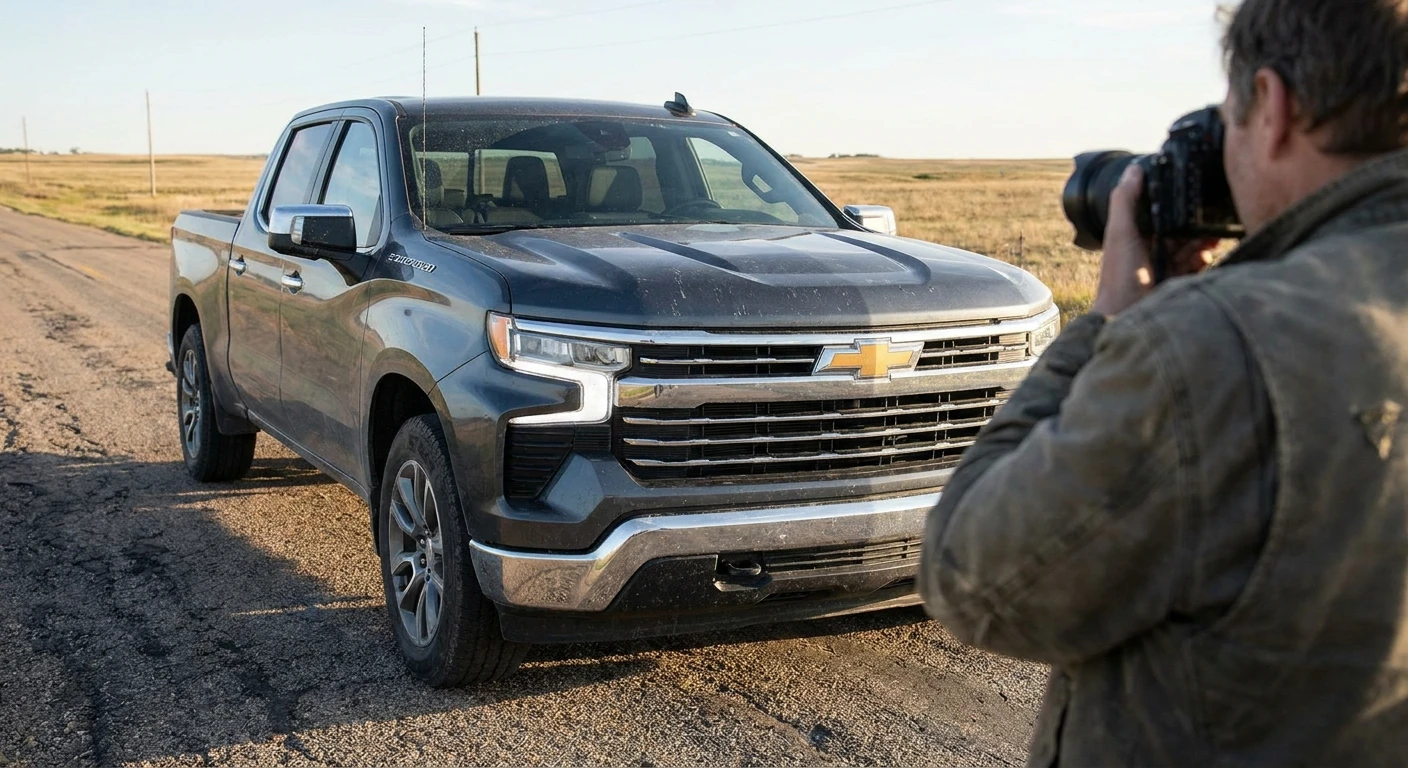
Why the 2027 Silverado Changes the Pickup Game
If you have been holding out for a major leap in truck capability, the 2027 Silverado delivers exactly what you are looking for. The automotive market moves fast, but Chevrolet’s newest iteration of its flagship pickup proves that they are not just keeping up with the competition—they are setting an entirely new standard. This upcoming model year bridges the gap between traditional heavy-duty internal combustion brawn and state-of-the-art intelligent vehicle architecture. You no longer have to choose between a rugged workhorse and a tech-heavy daily driver. GM engineered this iteration to handle brutal towing tasks on Friday and cruise effortlessly down the highway with hands-free technology on Saturday.
Whether you need a reliable fleet vehicle, an off-road beast to conquer trails, or a luxury cruiser with an expansive truck bed, the lineup is versatile enough to meet your exact specifications. The focus here is undeniable utility merged with a remarkably refined cabin experience. From the enhanced suspension tuning that smooths out rough terrain to the ultra-efficient powertrains that stretch your fuel dollar, every single component has been thoroughly optimized. We are going to look closely at the engineering, the history, and the specific configurations that make this truck a powerhouse, helping you figure out exactly which version fits your garage.
Read also: GMC Canyon 2024: Full Specs, Trims, and Off-Road Review; 2027 GMC Sierra 1500 Denali Specs and Features.
Core Benefits, Trims, and Real-World Utility
The true value of any pickup lies in how it performs when you push it to the limit. The latest generation brings a massive value proposition to the table, primarily through its highly integrated tech suite and reinforced structural integrity. For example, if you run a landscaping business, the enhanced payload ratings and onboard power outlets mean you can leave the generator at home and power your equipment directly from the truck bed. On the other hand, if your primary goal is weekend recreation, the aggressive suspension geometry on the ZR2 trim allows you to navigate rutted trails and steep inclines without breaking a sweat or damaging the undercarriage.
To give you a better sense of how the lineup is structured, here is a quick breakdown of the most popular configurations, their standard engines, and the key features that set them apart:
| Trim Level | Standard Powertrain | Key Interior & Tech Features |
|---|---|---|
| Work Truck (WT) | 2.7L TurboMax 4-Cylinder | Durable vinyl seating, wireless Apple CarPlay, essential trailering assist. |
| LTZ | 5.3L EcoTec3 V8 | Perforated leather, 13.4-inch diagonal infotainment display, advanced cameras. |
| High Country | 6.2L V8 or Ultium EV (Optional) | Premium open-pore wood trim, Super Cruise hands-free driving, Bose audio. |
Beyond the raw specs, Chevrolet has introduced several major quality-of-life improvements that directly impact how you interact with the vehicle every single day. The engineering team focused heavily on user experience, resulting in the following major upgrades:
- Advanced Trailering Integration: The truck now features an intuitive digital interface that accounts for trailer weight, length, and aerodynamics, automatically adjusting your braking calibration and transmission shift points.
- Enhanced Ergonomics and Storage: You get redesigned seats for long-haul comfort, massive center console storage bins, and hidden compartments behind the rear seatbacks for securing valuables.
- Next-Generation Super Cruise: The hands-free driving system now operates on over 400,000 miles of compatible roads and successfully manages lane changes even while you are pulling a heavy trailer.
The Origins of the Chevy Workhorse
To appreciate where this vehicle is going, you have to understand where it started. Long before the current naming convention took over, Chevrolet relied on the venerable C/K series to handle America’s hauling needs. These trucks were rugged, straightforward, and built almost entirely for utility rather than comfort. The transition began in 1999 when Chevrolet officially spun off the Silverado nameplate to represent its flagship full-size pickup. That original generation set the stage by introducing more aerodynamic styling, improved V8 engines, and a ride quality that finally made a pickup truck suitable for everyday family use.
Evolution Through the Generations
Over the next two decades, the truck evolved rapidly. The introduction of the heavy-duty Duramax diesel engines changed the landscape of consumer towing, allowing non-commercial drivers to pull massive fifth-wheel RVs and horse trailers. Later generations brought the implementation of high-strength steel frames, shedding unnecessary weight while increasing torsional rigidity. As competitors began pushing luxury truck variants, Chevrolet responded with the High Country trim, proving that a rugged utility vehicle could also feature premium leather, advanced acoustics, and top-tier ride comfort.
The Modern State of the Pickup Market
Today, the pickup landscape is fiercely competitive, driven by tightening emissions regulations and a massive surge in technological expectations. Buyers demand the towing capacity of a commercial rig mixed with the technology of a luxury sedan. Chevrolet’s dual strategy—maintaining highly efficient internal combustion engines while simultaneously rolling out fully electric variants based on the Ultium platform—ensures they cover the entire spectrum of consumer needs. The current market forces manufacturers to innovate relentlessly, which brings us to the highly advanced state of the newest iteration.
Ultium Battery Architecture and Thermal Management
For the electric configurations of the new lineup, the engineering relies entirely on GM’s scalable Ultium battery architecture. This modular approach allows the manufacturer to stack battery pouch cells vertically or horizontally within the pack, optimizing weight distribution and maximizing energy density. A critical aspect of this system is the active thermal management. High-demand tasks like towing generate immense heat within the battery cells. The truck uses a sophisticated liquid cooling system that routes temperature-controlled fluid through the battery pack, ensuring peak performance even when you are pulling a trailer up a steep grade in the middle of summer. This thermal regulation also plays a massive role in enabling ultra-fast DC public charging, dramatically reducing the time you spend plugged in during long road trips.
Advanced Aerodynamics and Structural Rigidity
Even for the traditional gas and diesel models, the scientific approach to structural design is fascinating. Trucks are inherently shaped like bricks, which creates massive aerodynamic drag at highway speeds. The engineering team combats this using fluid dynamics simulations to sculpt the front fascia, utilizing active aero shutters behind the grille that close automatically at high speeds to force air over the hood rather than into the engine bay. The skeleton of the truck utilizes mixed materials to balance strength and efficiency.
- High-Strength Roll-Formed Steel: Used in the cargo bed to resist punctures and dents better than traditional stamped steel or aluminum.
- Dynamic Fuel Management: A complex software and hardware system that calculates exact torque demands 80 times per second, seamlessly deactivating engine cylinders to conserve fuel when cruising.
- Multimatic DSSV Dampers: Found on the off-road trims, these spool-valve shock absorbers use precise fluid routing to provide massive suspension travel off-road without sacrificing on-road cornering stability.
- Torsional Rigidity Enhancements: Strategic reinforcements in the ladder frame minimize flex when navigating uneven terrain, keeping the cabin quiet and controlled.
Evaluating Your Powertrain Needs
When you sit down to build your ideal truck, the most crucial decision is what lives under the hood. If your daily routine involves short commutes and hauling lighter loads, the standard 2.7L TurboMax four-cylinder provides excellent low-end torque and impressive fuel economy. However, if you regularly tow heavy boats or campers, you should absolutely opt for the 3.0L Duramax Turbo-Diesel or the 6.2L V8. The diesel offers incredible highway efficiency and massive torque, while the massive V8 provides the traditional aggressive throttle response and high-horsepower performance that many truck purists demand.
Selecting the Ideal Cab and Bed Layout
Do not underestimate how much your cab and bed configuration affects daily usability. If you use your truck primarily as a family vehicle, the Crew Cab is mandatory; it provides class-leading rear legroom, allowing tall adults to ride comfortably in the back for hours. The trade-off is often a shorter 5-foot-8-inch bed. If you haul dirt bikes, lumber, or large construction materials, you need to look at the Double Cab paired with a standard bed, or configure a Crew Cab with the longer bed option—just keep in mind that a Crew Cab with a long bed significantly increases the vehicle’s turning radius, making tight parking lots a bit more challenging.
Understanding Off-Road Package Tiers
Chevrolet offers multiple tiers of off-road readiness, and you should match the package to your actual driving habits so you do not overspend on hardware you will never use. The Z71 package is perfect for snowy roads, muddy job sites, and mild dirt trails; it adds skid plates, all-terrain tires, and an automatic locking rear differential. If you plan on rock crawling or high-speed desert running, you need to step up to the ZR2. The ZR2 gives you front and rear electronic locking differentials, massive underbody protection, high-clearance bumpers, and those incredible spool-valve dampers that eat up rough terrain.
Planning Your Charging Setup
If you are making the jump to the EV variant, your preparation starts at home before the truck even arrives. Relying on a standard 120-volt wall outlet will only give you a few miles of range overnight, which is useless for a vehicle with such a massive battery pack. You need to hire a licensed electrician to install a Level 2 (240-volt) charging station in your garage or driveway. Additionally, investigate bi-directional charging equipment if you want the ability to use your truck as a backup power source for your house during grid outages.
Myths vs. Reality
The truck community is full of rumors and misconceptions, especially as new technology forces massive shifts in how vehicles are designed and operated. Let’s clear up some of the most common misunderstandings regarding this specific model.
Myth: The V8 engine is completely gone for 2027.
Reality: Despite heavy investment in electrification, Chevrolet knows their core demographic. Robust V8 internal combustion engines remain fully available across multiple trims for buyers who prefer traditional power delivery.
Myth: Electric variants cannot handle heavy trailering.
Reality: The EV architecture actually produces massive, instantaneous torque that makes pulling heavy loads incredibly smooth. While towing does reduce the overall battery range, the actual physical capacity to pull weight remains extraordinarily high.
Myth: The 2027 update is purely a cosmetic facelift.
Reality: This iteration introduces profound structural improvements, a totally overhauled infotainment software architecture, and advanced trailering systems that represent a massive technological leap over previous model years.
Myth: High-tech driver assistance features make the truck less reliable.
Reality: Systems like Super Cruise are rigorously tested and operate redundantly. They are designed to disengage safely if a sensor is obscured, leaving full mechanical control in the hands of the driver at all times.
When will the 2027 pickup be available?
Production schedules generally aim for a late 2026 rollout, with vehicles hitting dealership lots sequentially based on trim level, usually starting with the highest-volume configurations.
What is the expected starting price?
While exact figures fluctuate based on supply chains, base WT models are expected to remain competitively priced for fleet buyers, with fully loaded High Country and ZR2 trims pushing well into the premium luxury price brackets.
Does it offer a manual transmission?
No. To maximize efficiency, towing capability, and integrate seamlessly with active safety systems, all configurations utilize advanced automatic transmissions, typically highly refined 8-speed or 10-speed units depending on the engine.
Is Super Cruise standard on all trims?
Super Cruise is a premium feature. It is generally standard or available as an option on upper-tier luxury trims like the High Country, but it is not included on the base work trucks.
How does the Multi-Flex tailgate work?
The Multi-Flex tailgate uses a unique dual-hinge design that allows it to fold into six distinct positions. It can act as a standing workstation, a bed step, a load stop for long items, and a cutout to let you stand closer to the bed interior.
Will there be a regular cab option?
Regular cabs are increasingly rare in the modern consumer market, but they are typically retained purely for the WT (Work Truck) trim, catering specifically to fleet and commercial buyers who maximize bed length over passenger space.
Can I charge equipment directly from the truck?
Yes, many trims offer integrated 120-volt and even 240-volt outlets in the bed, powered either by an onboard inverter on gas models or directly from the massive battery pack on electric variants.
How does it compare to the F-150?
It remains a fierce rivalry. This truck distinguishes itself with a superior infotainment interface via Google Built-In, incredibly smooth ride quality on upper trims, and the unmatched off-road prowess of the ZR2’s Multimatic suspension.
What colors are available?
Expect a wide palette ranging from classic fleet white and metallic blacks to premium, highly pigmented reds and earth-toned metallic hues tailored for the off-road and luxury trims.
Is there a hybrid option available?
GM’s current strategy focuses heavily on efficient pure internal combustion and pure EV architectures, rather than traditional hybrid systems, though mild-hybrid tech occasionally assists internal combustion efficiency.
Conclusion
The 2027 Silverado proves that you do not have to compromise. Whether you are looking for an unstoppable off-road machine, a luxurious highway cruiser, or an absolute powerhouse for the job site, this truck provides a configuration designed specifically for your life. It merges raw, undeniable capability with the kind of refined technology and comfort that used to be reserved for premium sedans. If you are ready to upgrade your driving experience and tackle heavy jobs with absolute confidence, it is time to take action. Contact your local dealership today to discuss pre-order options, secure your place in line, and build the exact truck that fits your needs!




Leave a Reply