

The Ultimate Honda Motocompo Guide
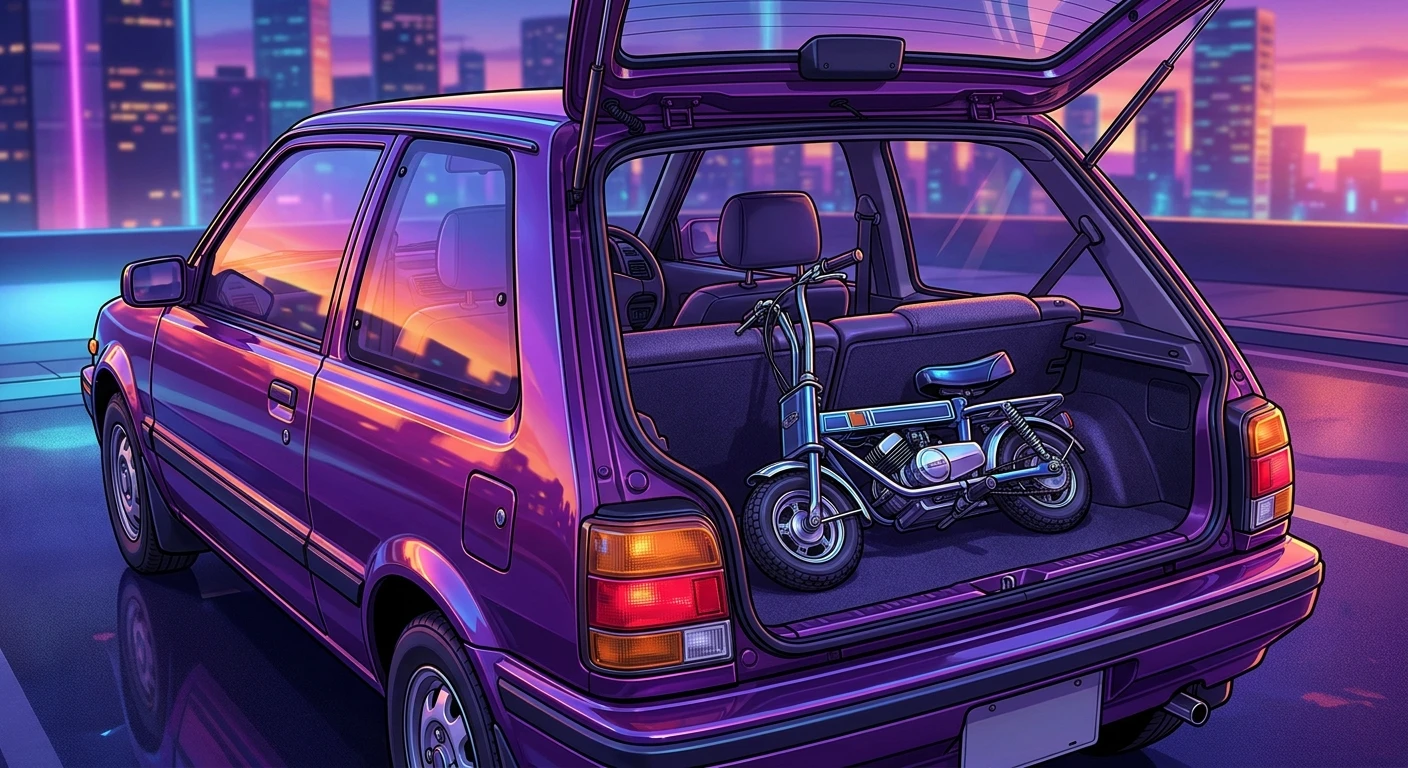
Welcome to the ultimate Honda Motocompo guide, your complete roadmap to understanding, buying, and restoring the most famous folding scooter of the 1980s. When you look at the landscape of vintage Japanese domestic market vehicles, few machines capture the imagination quite like the NCZ50. Originally designed as a trunk bike meant to fit perfectly into the cargo area of the subcompact Honda City, this tiny two-wheeler has transcended its original purpose to become a highly sought-after collector’s item worldwide.
If you are planning to add one of these iconic micro-machines to your garage, you need solid, factual information. The market for vintage scooters is notoriously tricky, with parts scarcity and imported models bringing unique challenges. Understanding the mechanics, the structural integrity of the folding components, and the maintenance requirements of the two-stroke engine will save you time, money, and frustration.
Read also: 2021 Toyota Corolla: Specs, Features & Reliability Review; Complete 2021 Honda Civic Guide.
This comprehensive breakdown covers everything from the initial release history to a step-by-step restoration plan. We will look at exact technical specifications, debunk common misconceptions about daily usability, and provide actionable advice for sourcing replacement parts. Grab your JIS screwdrivers and prepare to master the intricacies of the most fascinating micro-scooter ever produced.
Core Features and Practical Usability
Owning a Honda Motocompo offers a highly unique value proposition. First, it serves as the ultimate automotive accessory for vintage car collectors; displaying a pristine 1981 model next to a period-correct Japanese hatchback instantly elevates a show car display. Second, it remains a genuinely functional piece of urban mobility equipment. Navigating tight city blocks, picking up light groceries, or covering the last mile from a parking garage to an office building are all tasks this machine handles effortlessly.
The mechanical layout is surprisingly robust despite the miniature footprint. The scooter features a 49cc air-cooled engine, a single-speed automatic clutch, and a remarkably low center of gravity that makes it surprisingly stable at low speeds. When evaluating a potential purchase, a side-by-side look at original specifications versus modern maintenance realities helps set expectations.
| Component | Original Factory Specification | Modern Maintenance Reality |
|---|---|---|
| Engine Output | 2.5 Horsepower at 5,000 RPM | Requires premium fuel and high-quality 2-stroke oil to maintain power. |
| Electrical System | 6-Volt Battery System | Often upgraded to solid-state rectifiers for better reliability. |
| Tires | 2.50-8 Size (Front and Rear) | Replacement tires are still manufactured but require special order from specialty shops. |
Before committing to a purchase, follow this essential buying checklist:
- Verify the VIN and engine numbers match the importation paperwork completely.
- Inspect the plastic body panels for deep cracks, as original replacements are exceptionally rare and expensive.
- Check the fuel tank for internal rust, which is common after decades of improper storage.
- Test the folding locks on the handlebars to ensure the pins engage securely without excessive play.
Origins of the Trunk Bike Concept
The story begins in the late 1970s and early 1980s during a period of massive economic growth and technological optimism in Japan. Engineers wanted to solve the last mile transportation problem for urban commuters who faced congested city centers and limited parking. The solution was the NCZ50, developed specifically to fit inside the trunk of the newly designed subcompact car, the Honda City. The two vehicles were developed in tandem and heavily cross-promoted. The concept was revolutionary: drive your car to the edge of the city, park easily, unfold the scooter from the trunk, and ride directly to your destination.
Evolution of the JDM Icon
Production officially ran from 1981 to 1983. Initially, sales figures were lower than internal projections. Management expected to sell around 10,000 units monthly, but actual numbers hovered around 3,000. Despite this, they manufactured over 50,000 units during the short production run. The marketing campaign was highly memorable, featuring the British ska band Madness, which helped cement the scooter’s quirky, fun image. Over the following decades, the scooter achieved cult status, fueled by frequent appearances in pop culture, anime, and manga.
The Modern State of Motocompo Collecting
Today, the collector market is booming. The rise of vintage car shows celebrating 1980s and 1990s automotive culture has created massive demand. Importers frequently bring container loads of these scooters from Japan to North America and Europe. Prices have skyrocketed, transforming what was once a cheap, quirky accessory into a serious investment piece. Preserving these machines requires dedication, as the global supply of new-old-stock parts has largely dried up, pushing enthusiasts to utilize 3D printing and custom fabrication.
Engineering the Folding Mechanism
The engineering brilliance lies in its transformation sequence. To fit into a 1185mm by 240mm rectangular profile, every protruding element had to collapse perfectly into the body shell. The handlebars feature large plastic knobs that, when unscrewed, allow the bars to fold downward into slots alongside the engine. The seat sinks flush with the top bodywork, and the footpegs fold flat against the engine casing. Engineers incorporated a specialized spill-proof fuel and oil system to ensure no fluids leaked when the bike was laid on its side in a car trunk.
Powertrain and Two-Stroke Mechanics
Powering this micro-machine is the AB12E engine, an air-cooled, two-stroke, 49cc single-cylinder motor. It utilizes an automatic centrifugal clutch and a single-speed transmission, meaning there are no gears to shift. The two-stroke design was chosen for its high power-to-weight ratio and mechanical simplicity.
Here are the core technical facts that define the powertrain and chassis:
- Engine displacement: 49cc (two-stroke, air-cooled)
- Maximum power: 2.5 PS at 5,000 RPM
- Maximum torque: 0.38 kg-m at 4,500 RPM
- Dry weight: Approximately 42 kg (92 lbs), reaching 45 kg with fluids
- Fuel tank capacity: 2.2 liters (providing around 140 km of range under ideal test conditions)
- Oil system: Separate oil injection tank (no pre-mixing required by the rider)
- Starting mechanism: Manual kick-starter only
Actionable Restoration Plan
Step 1: Sourcing a Complete Unit
Your first step is finding a machine that is structurally sound. Prioritize completeness over cosmetic perfection. Missing body panels or specialized folding hardware can cost more than the engine to replace. Utilize trusted Japanese auction brokers or specialized vintage importers to find a candidate with intact plastics and a straight frame.
Step 2: Assessing Engine Health
Once you have the bike, perform a baseline compression test. A healthy AB12E engine should register strong compression. If compression is low, you will need to plan for a top-end rebuild, which involves replacing the piston rings, honing the cylinder, and replacing the head gasket. Ensure the kick-starter moves smoothly and the engine turns over without metallic grinding.
Step 3: Inspecting the Folding Linkages
The mechanical folding joints are prone to wear and stress fractures. Remove the top cover and carefully inspect the metal brackets holding the handlebar assembly. Tighten all locking knobs and check for lateral play. If the bars wobble significantly when locked, you must replace the rubber dampeners and potentially re-tap the locking threads to ensure safe riding.
Step 4: Reviving the Fuel System
Decades-old gasoline turns to varnish, completely clogging the tiny carburetor jets. Remove the fuel tank and soak it in a rust-removing solution if internal corrosion is present. Completely disassemble the carburetor, run it through an ultrasonic cleaner, and install new jets and gaskets. Do not forget to replace the inline fuel filter and check the vacuum petcock for proper operation.
Step 5: Locating Rare OEM Parts
Join online forums, Facebook groups, and specialty owner clubs. While engine parts can often be cross-referenced with other models like the QR50 or QA50, cosmetic items are unique. Many owners now rely on high-quality 3D printed reproductions for missing badges, rubber grommets, and top cover latches. Building relationships in the community is your best resource for parts.
Step 6: Performing the 2-Stroke Rebuild
If your engine needs work, pull the motor from the frame. Replace the main crankshaft seals to prevent vacuum leaks, which cause lean running conditions and engine overheating. Clean the exhaust port of carbon buildup, ensure the oil injection pump is calibrated correctly and bleeding properly, and reassemble with fresh synthetic two-stroke oil.
Step 7: Final Polish and Storage Preparation
With the mechanicals sorted, focus on cosmetics. Carefully polish the original plastic bodywork using specialized plastic restorers rather than aggressive automotive compounds. When storing the bike long-term, drain the carburetor bowl, top off the fuel tank with ethanol-free gas and a fuel stabilizer, and keep the battery on a 6-volt tender.
Myths and Reality of the Micro Scooter
Myth: The scooter is too slow for any practical real-world use.
Reality: While it will not win any drag races, it was designed specifically for dense urban navigation and easily cruises at 30 km/h (about 18 mph), which is perfectly adequate for neighborhood streets and tight city centers.
Myth: Parts are completely impossible to find today.
Reality: While original body plastics are incredibly rare and expensive, the engine shares many internal components with other popular 50cc models from the same era, making mechanical rebuilds very manageable.
Myth: You can fit one in absolutely any car trunk.
Reality: Weighing nearly 100 lbs (45 kg) and possessing specific rectangular dimensions, lifting and sliding the bike requires a decent amount of strength and a moderately sized hatchback or wagon to lay it flat securely.
Myth: You have to pre-mix the oil and gas yourself.
Reality: The bike features an automated oil injection system with a separate two-stroke oil tank, mixing the fluids automatically as you ride.
Frequently Asked Questions
How much does a Honda Motocompo weigh?
The dry weight is approximately 42 kilograms (92 pounds). When fully loaded with fuel, oil, and a battery, it weighs roughly 45 kilograms (99 pounds).
What is the top speed?
Under normal conditions with an average-sized adult rider, the top speed is approximately 30 to 40 kilometers per hour (18 to 25 mph).
Does the scooter leak oil when folded?
No. The fuel and oil systems were specifically engineered with specialized valves and breathers to prevent any fluid leaks when the scooter is laid horizontally in a car trunk.
Are they street legal in the US and Europe?
In most jurisdictions, they are considered 50cc mopeds or scooters. As long as they are properly imported, registered, and equipped with mirrors and lights, they are fully street legal.
What type of fuel does it use?
It runs on standard unleaded gasoline. However, using ethanol-free premium gasoline is highly recommended to prevent carburetor clogging during storage.
How long were they produced?
Production was relatively brief, running for just three years from 1981 through 1983.
Can an adult comfortably ride one?
Yes, within reason. The seat height and handlebar position were engineered to accommodate average adult heights, though taller riders may find their knees sitting quite high while maneuvering.
Start Your Project Today
Now that you have absorbed this definitive guide, you possess the knowledge required to hunt down, inspect, and revive a piece of golden-era Japanese engineering. Grab your tools, start scouring the auction sites, and get ready to experience the pure joy of the world’s greatest folding micro-scooter.




Leave a Reply