

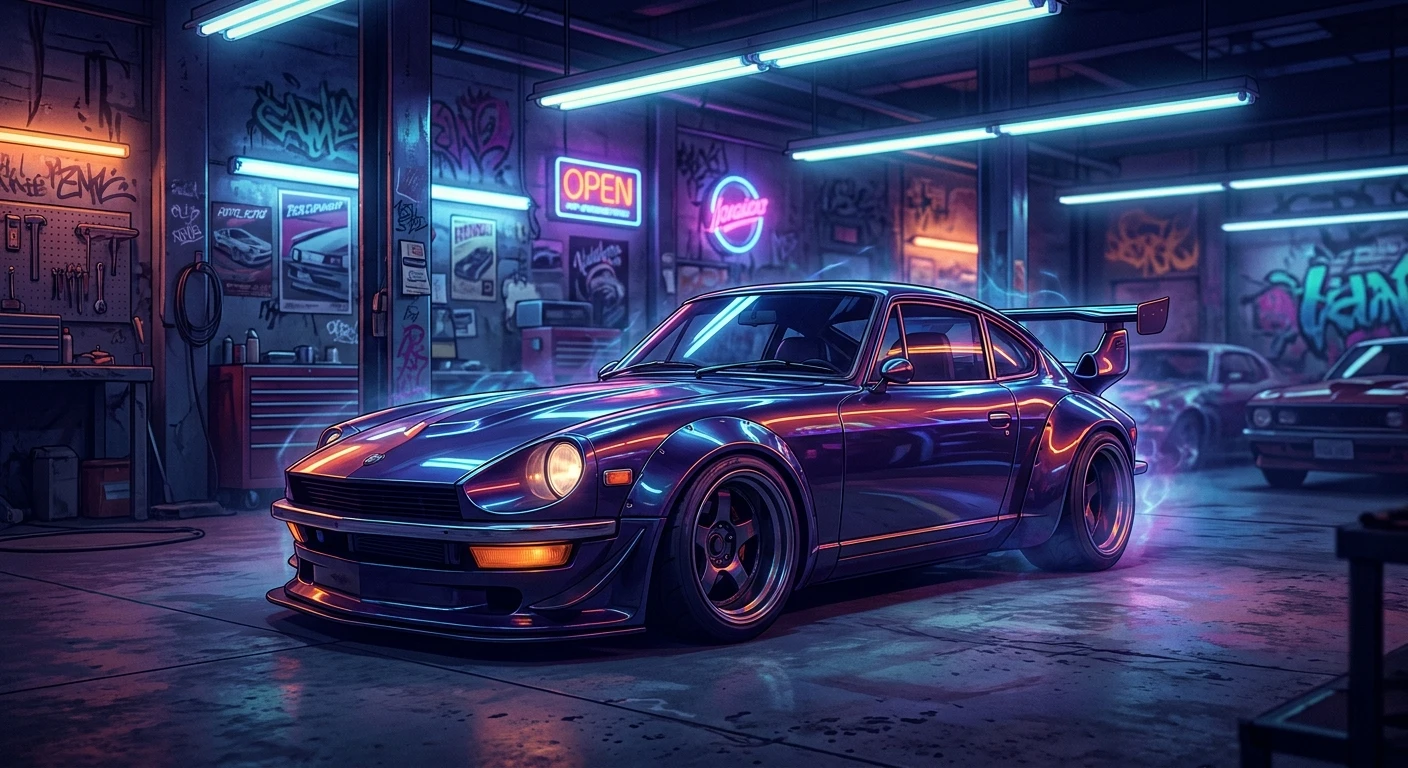
The Raw Appeal of an RWB Porsche 911 Build
Look, if you want to grasp the absolute bleeding edge of bespoke automotive subculture, you need to stare directly at a completed RWB Porsche 911. The letters RWB stand for RAUH-Welt Begriff, which roughly translates from German to ‘Rough World Concept.’ But this phenomenon is entirely Japanese in its execution. Created by the legendary Akira Nakai, this modification style takes classic, air-cooled German sports cars and radically mutates them into immensely wide, aggressive, and undeniably captivating machines. It is not just a body kit; it is a meticulously crafted physical manifestation of rebellious automotive enthusiasm.
You see these incredibly wide vehicles dominating social media feeds and stealing the spotlight at global car events. The sheer audacity required to take a reciprocating saw to the pristine metal fenders of a vintage classic is staggering. Yet, the end result is a masterpiece of aggressive aesthetics, blending chaotic street racing vibes with high-end gallery-level exclusivity. The RWB Porsche 911 commands attention through its massive rear wings, impossibly deep-dish wheels, and a stance that barely clears a cigarette pack. Beyond the visual shock, these cars embody a raw, unfiltered connection between the machine and the road, demanding respect from traditionalists and newcomers alike.
Read also: The Ultimate Cat Eye Truck Enthusiast Guide; Complete pagani utopia price Guide.
Understanding the RAUH-Welt Begriff Transformation
Why do owners willingly cut into a highly valuable, perfectly engineered classic chassis? The primary benefit lies in extreme personalization and mechanical presence. Owning an RWB means you possess a 1-of-1 piece of functional automotive art, completely distinct from any factory-spec model. The widened track heavily increases mechanical grip when paired with massive modern tires, providing a significantly different driving dynamic. Below is a breakdown of how a standard vintage model compares to the modified beast.
| Specification Area | Standard Vintage Chassis | RWB Modified Chassis |
|---|---|---|
| Overall Width | Relatively narrow, understated factory lines | Extensively widened via bolted fiberglass over-fenders |
| Aerodynamic Profile | Smooth, low-drag, minimal factory wing | High-downforce, aggressive canards, massive multi-tier rear wing |
| Wheel Fitment | Conservative offsets, standard width tires | Extreme negative offsets, massive multi-piece wheels, ultra-wide rubber |
To grasp the true value proposition, consider two prominent examples of the aesthetic’s application. First, there is the track-focused approach, where owners utilize the widened track to run slick tires, stripping the interior for endurance racing events like the Idlers Club races in Japan. Second, there is the street-presence build, focusing on dramatic paint, luxurious interior retrims, and pneumatic suspension systems to maximize visual impact at static events. Both avenues require a foundational understanding of the core transformation steps.
- The Irreversible Cut: The factory steel fenders are permanently severed to allow suspension travel for the new, massive wheels. This requires absolute precision to maintain structural integrity.
- Fender Fitment and Sealing: The handmade fiberglass over-fenders are aligned by eye and feel, then bolted into place. A specific industrial polyurethane sealant is then smoothly applied by hand to seal the gap between the body and the new fiberglass.
- Aerodynamic Calibration: Front splitters, canards, and the iconic towering rear wings are installed, radically shifting the aerodynamic balance and drastically increasing high-speed downforce at the expense of top speed.
From Street Racing to Global Icon
The Rough World Origins
To understand the current phenomenon, you have to look back at the winding mountain roads of Japan in the late 1980s and early 1990s. Akira Nakai was a prominent figure in a drifting crew known as Rough World. Back then, they were primarily sliding Toyota AE86s. The crew was notorious for their aggressive driving style and even more aggressive car setups, characterized by extreme negative camber, deeply offset wheels, and cars sitting incredibly close to the tarmac. This raw, rebellious street racing culture formed the absolute bedrock of what would later become a global design language.
The Evolution of Nakai-San’s Vision
The turning point happened when Nakai-san transitioned from Japanese compacts to European sports cars, specifically acquiring an air-cooled classic which he famously named Stella Artois. He applied the rugged, ground-hugging aesthetic of the Rough World drift cars to the elegant German silhouette. The resulting contrast was shocking. The Stella Artois build featured raw, exposed rivets, matte black paint, and proportions that seemed almost cartoonishly wide. It was a polarizing creation, but it captured the imagination of the underground tuning scene. This initial prototype proved that the classic rear-engine platform could successfully carry the menacing, wide-track look, birthing the entire RAUH-Welt Begriff philosophy.
Modern State of RAUH-Welt Begriff
Today, the brand operates as a sprawling, highly exclusive global family. The operation has moved far beyond a small garage in Chiba, Japan. The creator travels the world nearly year-round, flying from country to country to personally cut and build these cars for clients. Each vehicle is given a unique name and becomes part of an interconnected international registry. The brand has influenced video games, high-end diecast models, and luxury streetwear, proving that the original street-punk ethos successfully scaled into a luxury bespoke automotive experience.
The Engineering Behind the Extreme Stance
Suspension Geometry and Track Width
Pushing wheels that far out from the original hub dramatically alters the mechanical geometry of the vehicle. The scrub radius is significantly increased, which heavily changes steering feel and feedback. To counteract the immense leverage placed on the factory suspension components by the ultra-wide wheels, owners must invest heavily in upgraded coilovers with much stiffer spring rates. This ensures the tires do not crash into the fiberglass fenders during hard cornering. The modified track width ultimately provides immense lateral grip, making the car incredibly stable through high-speed sweeping corners when properly dialed in.
Aerodynamic Downforce vs Drag
Adding massive over-fenders and towering rear wings fundamentally changes how air flows over the chassis. While the factory shape is famous for its low drag coefficient, the modified body creates a massive amount of aerodynamic drag. However, this trade-off yields substantial downforce. The front splitters keep the notoriously light front end planted, while the rear wing pushes the rear engine tires firmly into the pavement. This is crucial for managing power delivery in older rear-wheel-drive platforms.
- Fiberglass Reinforced Plastics (FRP): The kits are molded from highly durable FRP, chosen for its flexibility and ability to withstand the vibrations of track driving without shattering easily.
- Sikaflex Bonding: The black caulking used to seal the fenders is an industrial-grade polyurethane sealant, providing structural adhesion and waterproofing while maintaining enough elasticity to prevent cracking under chassis flex.
- Wheel Offsets: The multi-piece wheels often require extreme negative offsets (sometimes exceeding -100) to fill the cavernous wheel wells, necessitating forged aluminum centers for absolute structural rigidity.
Step-by-Step Guide to Commissioning Your Own Build
Step 1: Sourcing the Proper Donor Chassis
You cannot simply order a kit for any car. You must first acquire a vintage, air-cooled donor chassis, specifically the 930, 964, or 993 generation. Finding a clean, mechanically sound donor is a massive undertaking, as prices for these classics have skyrocketed. The mechanical health of the engine and transmission must be flawless before you even consider the cosmetic transformation.
Step 2: Selecting the Specific Body Kit Style
Once you secure the car, you must choose the aesthetic direction. Do you want the smoother, slightly more integrated Royal fenders, or the aggressive, rivet-exposed standard widebody? You must also decide on the wing configuration—from the understated ducktail to the towering double-decker Champion wing. Every choice dictates the final personality of the machine.
Step 3: Joining the Official Waiting List
You cannot just click ‘buy now.’ You must contact a regional representative to place your deposit. The creator builds every car personally, and his schedule is fiercely booked. You might be waiting a year or more for your specific build slot, making patience a crucial part of the acquisition process.
Step 4: Pre-Paint and Body Preparation
Before the creator arrives, the kit is shipped to your chosen local body shop. The fiberglass pieces must be test-fitted, sanded, and painted to perfectly match your desired color scheme. The local shop handles all the paintwork; the creator only handles the final cutting and assembly.
Step 5: Upgrading Wheels and Suspension
The massive fenders are useless without the correct footwear. You must order custom-built, multi-piece wheels built to the exact millimeter to sit flush with the new body lines. Simultaneously, you must install upgraded, fully adjustable coilover suspension to prepare for the aggressive new stance.
Step 6: The Arrival and The Cut
When your date finally arrives, the master builder flies in with his personal tools. This is a spectator event. Friends and local enthusiasts gather to watch him meticulously measure, tape, and finally take the air saw to the pristine steel fenders. It is a point of no return executed with casual, terrifying precision.
Step 7: Final Adjustments and Christening
After the fenders are bolted and sealed, the suspension is dialed in. The car is lowered, and clearances are checked with millimeter precision. Finally, the creator places his signature decal on the windshield and bestows a unique name upon the car, officially welcoming it into the global family.
Separating Fact From Fiction
Myth: Cutting the steel fenders completely ruins the structural rigidity and handling of the chassis.
Reality: While you do remove metal, the structural integrity of the main tub remains intact. When paired with high-end track suspension and properly aligned geometry, these cars handle exceptionally well on racing circuits.
Myth: Any qualified body shop can order the parts and install an authentic kit.
Reality: The creator strictly controls the distribution. He personally installs every genuine kit around the world to ensure the specific aesthetic and soul of the brand remains completely uncompromised.
Myth: These vehicles are nothing more than static show cars designed only for social media clout.
Reality: A massive percentage of these builds are driven exceptionally hard. The original intent was endurance racing, and many owners regularly track their ultra-wide machines at circuits across the globe.
Frequently Asked Questions
How much does the complete kit usually cost?
Prices vary depending on the generation and specific options, but the raw fiberglass kit alone generally ranges between twenty-five and thirty thousand dollars, not including the donor car, wheels, paint, or suspension components.
Can I buy just the fenders without the wing or bumpers?
No, the kits are designed and sold as complete, holistic aesthetic packages to ensure the final product correctly represents the brand’s vision.
What specific models can be converted?
The modifications are exclusively designed for the air-cooled generations: the 930, 964, and 993 series. Water-cooled models are generally not supported by the traditional kits.
Does performing this modification hurt the resale value?
Traditionally, heavily modifying a classic decreases value, but genuine, documented builds by the original creator often hold or increase their value due to their extreme rarity and cult status.
How long does the actual assembly take?
Once the car is fully prepped and painted, the actual cutting, fitting, and sealing process usually takes only two to three days of intense, focused labor.
What type of black sealant is used on the fender joints?
The builder uses Sikaflex, a highly durable, flexible polyurethane industrial adhesive that acts as both a weather seal and a visual transition line.
Do I get to choose the name of the car?
Generally, no. The creator typically observes the car, the owner, and the environment during the build process and bestows a fitting name upon the vehicle upon completion.
Building an RWB Porsche 911 is the absolute pinnacle of automotive dedication. It requires immense resources, unwavering patience, and the courage to permanently alter a piece of history. But the reward is joining an exclusive global family and owning a rolling sculpture that commands absolute respect. If you are ready to take the plunge, start hunting for a clean chassis, secure your funding, and contact your local representative to begin the ultimate widebody journey.




Leave a Reply