

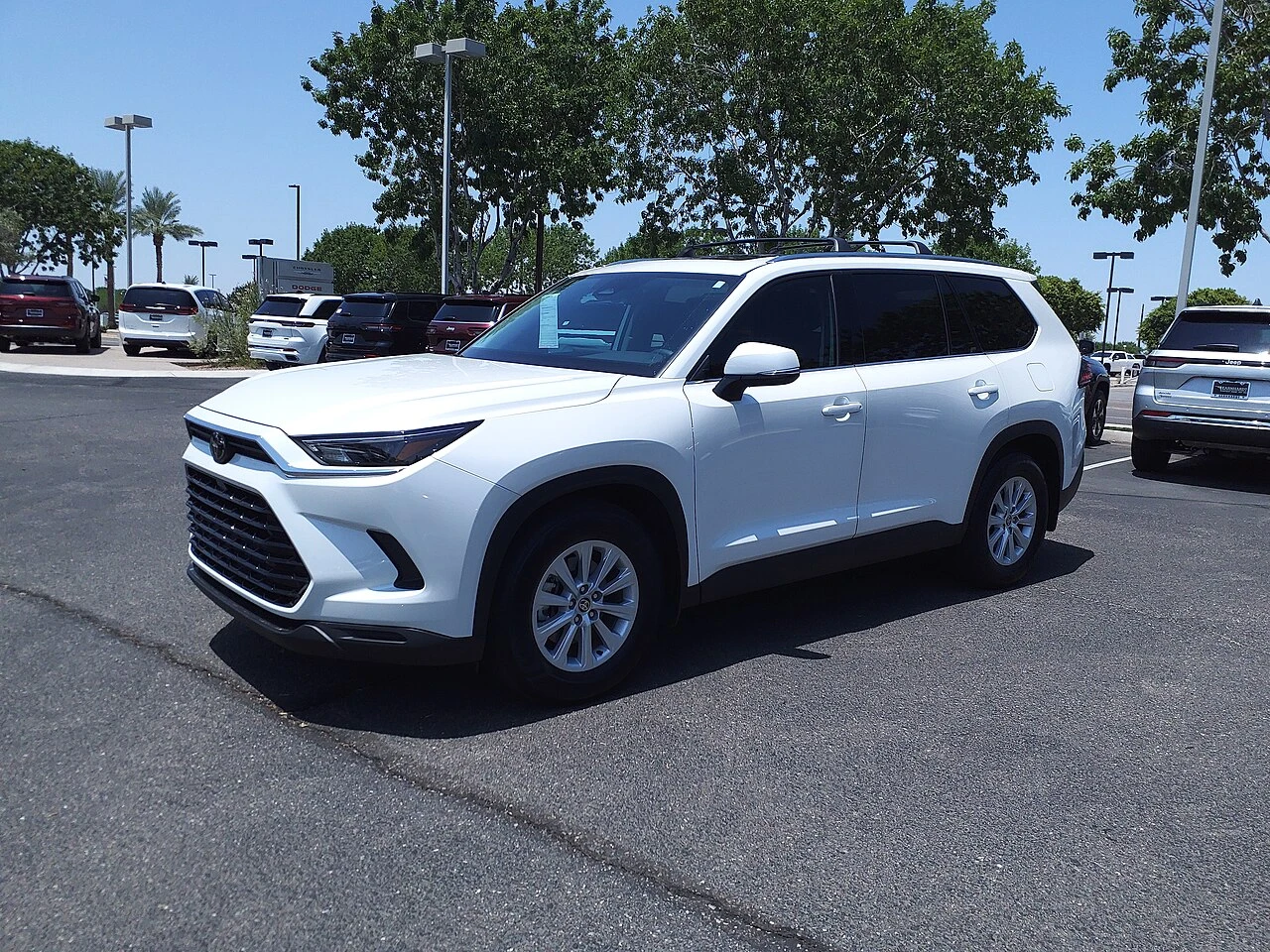
Choosing Between the Toyota Highlander vs Grand Highlander
When you are hunting for the perfect three-row family SUV, the decision frequently narrows down to the classic debate of the Toyota Highlander vs Grand Highlander. Both vehicles wear the same iconic badge, promise exceptional long-term reliability, and hold their resale value better than almost anything else on the road, but they cater to entirely distinct lifestyles. The standard model has been the default choice for suburban families for decades, offering a balanced mix of fuel efficiency, daily comfort, and manageable sizing. However, as families grow, kids become teenagers, and the demand for genuine, adult-sized third-row space escalates, a slightly larger cabin becomes necessary. That is exactly why the brand introduced a larger sibling to the lineup, offering massive interior dimensions. Choosing between them is not simply a matter of picking the bigger vehicle because bigger is inherently better; rather, you must analyze your specific daily driving habits, your parking constraints, and how frequently you actually fill every single seat. If you rarely carry full-grown adults in the back row, the original silhouette might still be your absolute perfect match. Conversely, if cross-country road trips with six passengers and all their heavy luggage are on your agenda, the newer, elongated variant brings unparalleled capability to the table. Here are the specifics to help you make an incredibly informed investment.
Comparing Space, Performance, and Value
Comprehending the fundamental mechanical and physical differences requires looking past the gorgeous exterior styling and examining the raw numbers. The standard model remains highly competent, yet the expanded variant offers a distinct value proposition focused primarily on massive interior volume and elevated passenger comfort.
Read also: Mazda CX 70: Specs, Features, and Performance; 2024 Toyota Highlander Limited: Specs, Features & Guide.
| Feature Specification | Standard Toyota Highlander | Toyota Grand Highlander |
|---|---|---|
| Third-Row Legroom | 28.0 inches | 33.5 inches |
| Maximum Cargo Capacity | 84.3 cubic feet | 97.5 cubic feet |
| Top Powertrain Output | 265 horsepower (Turbo Gas) | 362 horsepower (Hybrid MAX) |
The value proposition here is undeniably clear. The Grand Highlander delivers minivan-level interior room without sacrificing that rugged, aggressive SUV aesthetic, while the original Highlander excels as an agile midsize commuter that can comfortably accommodate extra passengers in a pinch. For example, if you frequently transport bulky sports gear, massive strollers, and carpool tall teenagers, the extra 5.5 inches of third-row legroom in the larger vehicle prevents cramped knees and constant complaints on long journeys. Another excellent example involves weekend home improvement runs; the massive 97.5 cubic feet of total cargo space in the larger variant allows you to slide in bulky items that would otherwise require renting a pickup truck. Conversely, if your typical cargo consists of just a few bags of groceries and two small children secured in car seats, the smaller footprint of the standard model provides quicker acceleration and greater agility.
Before signing any dealership paperwork, there are several key factors you must rigorously evaluate based on your actual lifestyle rather than hypothetical scenarios:
- Measure your specific garage space and common parking environments to ensure a vehicle over 200 inches long will fit comfortably without blocking walkways.
- Track how often you realistically utilize the third row for passengers over five feet tall, as this dictates the absolute necessity of the larger cabin geometry.
- Assess your daily performance needs, specifically whether you require the aggressive towing capability and rapid acceleration provided by the exclusive Hybrid MAX engine, or if standard hybrid efficiency easily covers your daily demands.
The Origins of the Highlander Lineage
The original vehicle debuted at the dawn of the new millennium, fundamentally shifting the entire automotive landscape. At the time, most utility vehicles were built on heavy, unrefined truck-based frames that rode harshly and consumed gasoline at a truly alarming rate. Engineers brilliantly utilized a car-based unibody platform derived from a flagship sedan, creating a remarkable machine that offered elevated ground clearance and capable all-wheel drive, alongside the smooth ride and fuel efficiency of a traditional family car. This pioneering engineering move established the crossover segment as a dominant force in the global market.
The Evolution of Family SUVs
Over the subsequent two decades, consumer expectations shifted dramatically across the industry. Families began rapidly abandoning traditional minivans in favor of sleek SUVs, but they still stubbornly demanded minivan-like interior volume. Competitors reacted by releasing massive three-row crossovers that suddenly made the standard model feel slightly cramped, particularly in the rearmost seating area. While engineers continually updated their flagship crossover with aggressive styling, advanced safety suites, and incredibly efficient hybrid powertrains, the physical constraints of its midsize footprint remained a persistent limiting factor for buyers needing maximum passenger capacity.
The Modern State of the Grand Highlander
To address this intense growing demand for genuine adult-sized space without forcing loyal customers to buy a different brand, the Grand Highlander was introduced. Rather than simply stretching the existing body panels and calling it a day, designers crafted an entirely distinct exterior profile that is noticeably boxier and far more imposing on the road. This strategic market addition allows the manufacturer to maintain the beloved original model for urban commuters who deeply value a nimble, easy-to-park vehicle, while simultaneously capturing the specific demographic that desperately needs comfortable, long-distance seating for seven or eight full-grown adults.
Platform Engineering and TNGA-K Architecture
Both vehicles share the highly acclaimed, heavily reinforced Toyota New Global Architecture (TNGA-K) platform, yet their specific engineering implementations diverge significantly. The modular, highly adaptable nature of TNGA-K allows the larger variant to confidently extend its wheelbase by roughly four inches and widen its track without ever compromising structural integrity. The extensive use of high-tensile steel and advanced laser screw welding techniques ensures that the extended body does not suffer from unwanted structural flexing or excessive body roll during sharp highway maneuvers. Despite the obvious size difference, both vehicles maintain an impressively low center of gravity, which heavily contributes to their surprisingly agile handling characteristics and superb ride quality.
Powertrain Efficiency and Hybrid Dynamics
The mechanical separation between these two impressive SUVs becomes most apparent when thoroughly analyzing their powertrain arrays. While both gracefully offer a robust 2.4-liter turbocharged gasoline engine and a remarkably efficient 2.5-liter traditional hybrid setup, the expanded model confidently introduces an entirely proprietary performance tier. The standard hybrid models smartly utilize electronically controlled continuously variable transmissions (eCVT) to meticulously maximize fuel economy, creating a wonderfully smooth, completely linear power delivery that proves ideal for stop-and-go city driving.
- The exclusive Hybrid MAX system heavily pairs a specifically tuned turbocharged 2.4-liter engine with an electric motor up front and a dedicated rear eAxle, generating a massive 362 horsepower and 400 lb-ft of torque.
- The Hybrid MAX brilliantly utilizes a direct-shift 6-speed automatic transmission instead of a traditional eCVT, prioritizing aggressive acceleration and towing response over maximum fuel economy.
- Aerodynamic wind tunnel optimization on the standard model yields slightly better highway wind resistance largely due to its sleek, sloping rear roofline, whereas the larger variant uses a purposefully squared-off tailgate to brilliantly maximize vertical cargo height.
- Both complex chassis setups feature sophisticated multi-link rear suspension systems meticulously tuned specifically for their respective curb weights to absorb harsh road impacts seamlessly and silently.
Daily Commuting and Maneuverability Limits
When navigating notoriously narrow city streets, utterly crowded school drop-off zones, or frustratingly tight underground parking garages, the standard crossover securely holds a massive distinct advantage. Its somewhat shorter overall length and noticeably tighter turning radius make parallel parking significantly less stressful for the average driver. If your daily commuting route heavily involves dense urban traffic and you realistically only use the third row for small children on incredibly rare occasions, the smaller footprint will effortlessly save you daily frustration and vastly reduce the likelihood of annoying minor parking lot scuffs.
Long-Distance Road Trip Comfort Requirements
For adventurous families that actively prioritize cross-country travel and extensive weekend getaways, the larger model is undeniably the vastly superior machine. The boxy roofline completely prevents tall passengers from painfully bumping their heads, while the vastly expanded cargo bay boldly means you do not have to painfully choose between comfortably carrying luggage and carrying your favorite people. Behind the third row alone, you can easily fit multiple full-sized suitcases. Furthermore, the thoughtful presence of numerous high-speed USB-C ports scattered in every single row, dedicated smartphone storage slots perfectly molded into the side panels, and specialized ceiling-mounted HVAC vents firmly ensures that passengers seated in the far back remain fully entertained, adequately cooled, and perfectly comfortable for hours on end.
Budgeting for Premium Trim Levels
Your overarching financial strategy should heavily dictate which specific vehicle you confidently pursue. The standard model naturally offers significantly lower entry-level pricing, making it highly accessible for incredibly budget-conscious buyers who desperately want ultra-reliable three-row transportation without instantly breaking the bank. However, if you are closely looking at the highly luxurious, top-tier Platinum trims, the pricing overlap quickly becomes apparent. You must carefully decide whether to spend your hard-earned money on premium leather interior materials packed into the standard size, or intelligently allocate those exact same funds toward securing sheer physical volume and noticeably upgraded powertrain performance found in the larger model. Carefully weigh the absolute necessity of luxury features against the pure utility of extra legroom.
Separating Myths from Reality
Myth: The larger SUV is literally just a lazily stretched version of the standard model utilizing the exact same interior parts.
Reality: While they share a fantastic foundational platform, the larger SUV distinctly features entirely unique exterior sheet metal, a heavily customized, premium dashboard layout, distinctly different seating configurations, and a completely exclusive high-performance engine option completely unavailable on the smaller vehicle.
Myth: Buying the significantly bigger SUV absolutely means you will constantly suffer from terrible fuel economy at the gas pump.
Reality: Thanks to world-class engineering, the traditional hybrid version of the larger model still achieves a phenomenal, highly rated 34 miles per gallon in combined driving, which is practically unheard of for a family vehicle of its massive physical dimensions.
Myth: The standard, original midsize model is completely obsolete and simply no longer worth buying.
Reality: For drivers who heavily prioritize highly responsive handling, significantly easier parking dynamics, vastly lower initial purchase costs, and marginally better daily fuel efficiency, the original midsize crossover confidently remains an incredibly strong, highly competitive option.
Which SUV offers better third-row space?
The larger model provides 5.5 inches of additional legroom, easily accommodating adults on long rides.
Can both vehicles tow 5,000 pounds?
Yes, properly equipped gasoline and Hybrid MAX models can comfortably tow up to 5,000 pounds.
Does the newer model replace the standard model?
No, both highly capable vehicles are sold simultaneously to precisely serve entirely different consumer needs.
Which SUV is easier to park in tight spaces?
The standard crossover is noticeably shorter and significantly easier to safely maneuver in tight spots.
Are the infotainment screens the exact same size?
Both impressively offer a massive 12.3-inch touchscreen display, though standard screen sizes on base trims may vary.
Do both models offer second-row captain’s chairs?
Yes, both vehicles readily provide the popular option for luxurious captain’s chairs or a functional bench seat.
Which one gets slightly better overall fuel economy?
The standard hybrid consistently holds a slight edge, reliably achieving up to 36 mpg combined.
Is the Hybrid MAX engine available on the standard model?
No, that specific high-performance powertrain is exclusively reserved solely for the larger variant.
How does interior ride quality compare between the two?
Both are remarkably quiet, but the larger model utilizes additional acoustic glass for a slightly more isolated cabin experience.
Are the advanced safety features completely identical?
Yes, both vehicles come fully equipped with the brand’s latest comprehensive suite of advanced driver assistance systems.
Choosing effectively between the Toyota Highlander vs Grand Highlander ultimately depends on deeply understanding your actual, everyday driving requirements. Honestly analyze your daily parking situation, typical passenger sizes, and total financial budget, then boldly schedule back-to-back test drives at your local dealership to finally secure the absolute perfect vehicle for your family!




Leave a Reply