

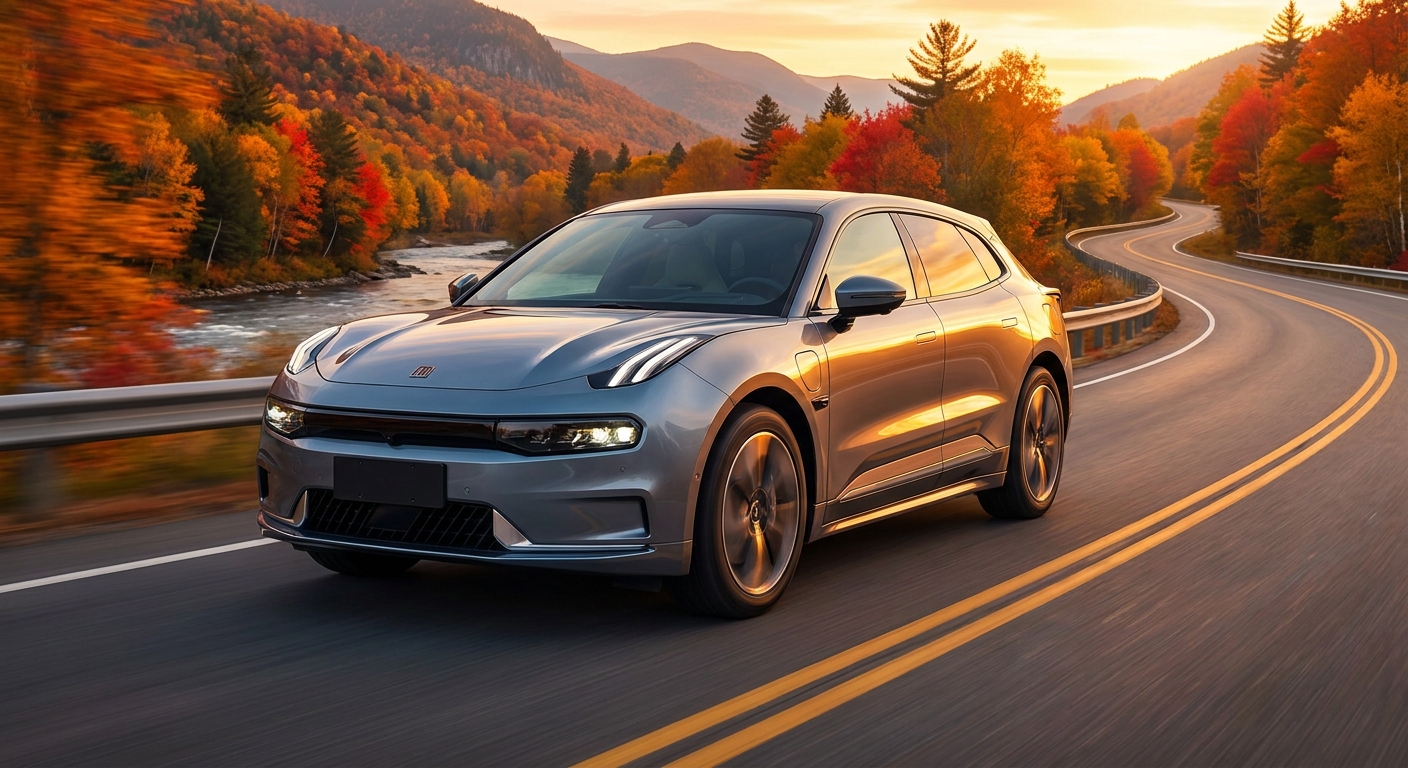
Honest Thoughts on the 2024 nissan rogue
So, you are thinking about grabbing a 2024 nissan rogue, and honestly, I get the hype completely. Let me tell you straight up: this compact SUV packs some serious surprises for daily driving, school runs, and massive family road trips alike. My thesis is simple: it blends fuel efficiency, interior comfort, and advanced tech better than almost all of its rivals sitting in the exact same price bracket. I vividly remember driving a rented rogue back when the roads in Kyiv were a chaotic maze of harsh winter snow and endless construction detours. Navigating the historic, uneven cobblestones near Podil felt buttery smooth, surprisingly so for a crossover of its substantial size. The suspension absorbed the harsh impacts effortlessly, while the cabin remained whisper-quiet against the bustling city noise outside. That specific experience stuck with me deeply, and seeing the latest iteration only solidifies my respect for its thoughtful engineering. You need something highly reliable that doesn’t guzzle gas or handle like a clumsy, top-heavy boat. That is exactly where this vehicle steps up to the plate. Forget the endless spec-sheet jargon for a minute. I want to talk to you like we are sitting over a cup of coffee, figuring out if this car genuinely deserves a spot in your driveway or garage. We are going to look at the real-world value, the daily quirks, the cargo space that swallows groceries like a black hole, and everything you absolutely need to know before signing any dealer paperwork.
Why should you care about this specific model? The value proposition of the car lies entirely in its masterful balance of premium cabin feel and budget-friendly running costs. For example, the updated infotainment system finally responds without frustrating lag, making GPS navigation and media control a total breeze while driving. Another prime example is the cutting-edge engine technology—it physically changes its internal mechanics on the fly to give you instant power when merging onto busy highways, and crazy good fuel economy when cruising on flat roads. Let’s look at exactly how the core features stack up on paper across different price points.
| Feature Category | Standard Base Trim | Premium Platinum Trim |
|---|---|---|
| Engine & Power | 1.5L VC-Turbo (201 hp) | 1.5L VC-Turbo (201 hp) |
| Infotainment Display | 8-inch touchscreen | 12.3-inch touchscreen |
| Seating & Upholstery | Durable cloth seats | Quilted semi-aniline leather |
Let’s walk through the exact steps to get the absolute most out of owning one. If you want to optimize your daily driving experience right from the start, follow these core steps:
- Master the ProPILOT Assist: Spend your first week testing the highway driving assist in light traffic. Building trust with the intelligent lane-centering system will completely change how you handle long road trips.
- Configure the Cargo Space: The proprietary Divide-N-Hide cargo system is brilliant. Set it to the lower tier for bulky luggage items or create a completely flat floor for easy loading of heavy boxes.
- Customize the Digital Dashboard: Don’t settle for the basic factory default screen. Pin your tire pressure, real-time fuel economy, and currently playing audio right where you can see them clearly behind the steering wheel.
Driving it feels incredibly grounded and secure. Even though we are already in 2026, looking back at the 2024 release shows it was heavily ahead of the curve. The steering is light enough for tight city parking maneuvers but firms up nicely at highway speeds to give you confidence. You aren’t getting a stiff, uncomfortable sports car, and that is perfectly fine. You are getting a highly competent, exceptionally comfortable cruiser that easily eats up hundreds of miles without exhausting your lower back or making your passengers carsick. The ride quality absorbs deep potholes effortlessly, which is a massive plus for urban commuters. Many competitors feel unnecessarily firm, trying too hard to mimic sports sedans, but this SUV stays true to its identity: a practical, family-first hauler.
The Humble Origins
When the nameplate first hit the streets in the late 2000s, it was a fairly basic, no-nonsense commuter vehicle. It replaced older models in several global markets and immediately targeted young families who desperately needed space but absolutely couldn’t afford a massive, gas-guzzling full-size SUV. The early generation was highly practical and incredibly reliable but, frankly, a bit bland visually. It relied heavily on proven, naturally aspirated engines and a standard continuously variable transmission that focused purely on maximizing miles per gallon rather than thrilling the person behind the wheel. It was a purely logical purchase.
The Radical Evolution
As the crossover craze exploded globally over the next decade, the design team had to adapt fast. The second generation bulked up significantly, adding optional third-row seating temporarily and introducing way more soft-touch materials inside the cabin. But the real game-changer happened with the release of the third generation. The structural engineers completely reworked the entire platform, stiffening the chassis for better handling and introducing the highly complex but fascinating turbocharged engine. They shifted their entire philosophy from just offering “cheap transportation” to delivering a near-luxury experience, especially in the upper trim levels. The exterior styling became sharp, aggressive, and highly distinctive.
The Modern State of the Crossover
Today, looking at the modern iteration, it stands as the brand’s best-selling vehicle for a very good reason. The styling features that aggressive split-headlight design that turns heads in parking lots. Inside, the acoustic glass and noise insulation are superb. The cabin utilizes premium textures, soft leathers, and metallic accents that easily rival European crossovers costing significantly more money. It successfully shed its old rental-fleet reputation to become a genuinely desirable, top-tier family car. The continuous refinement of its aerodynamics and high-tech safety suite proves that the manufacturer listened closely to consumer feedback over the decades. It’s not just a vehicle anymore; it’s a carefully engineered solution for modern family logistics.
Demystifying the VC-Turbo Engine
Let’s talk about the beating heart of this SUV: the 1.5-liter Variable Compression Turbo engine. Sounds like absolute rocket science, right? Honestly, it kind of is, but I will break it down so it makes complete, practical sense. A traditional internal combustion engine has pistons that travel up and down a fixed, unchangeable distance. This car uses a clever multi-link mechanical system that physically changes how high the pistons reach inside the cylinder. When you stomp heavily on the gas pedal to pass a truck, the engine instantly lowers the compression ratio, which prevents engine knocking and allows the turbocharger to shove massive amounts of air in for maximum horsepower. When you are just cruising steadily on the highway, it raises the compression ratio, burning fuel incredibly efficiently. It is literally two entirely different engines packed into one single block.
ProPILOT Assist Technology Explained
The driver assistance tech is another massive engineering marvel. It isn’t fully autonomous self-driving, but it dramatically reduces driver fatigue on long highway stretches. Using a brilliant combination of front-facing radar sensors and high-resolution windshield cameras, the car constantly calculates the exact distance to the vehicle ahead and monitors the painted lane markers.
- Radar Sensor Module: Scans the road far ahead to precisely measure the relative speed and braking distance of the car directly in front of you.
- High-Res Camera Module: Reads painted lane markings, changing traffic signs, and ambient street light to adjust your high beams automatically.
- Electronic Power Steering (EPS): Works harmoniously with the camera data to provide gentle, active steering inputs, keeping you perfectly centered in your lane.
- VC-Turbo Harmonic Actuator: The electric motor that physically moves the mechanical control shaft to alter the engine’s compression completely seamlessly.
This deep fusion of mechanical ingenuity and advanced software programming creates a driving dynamic that feels completely effortless. The onboard computer processes thousands of safety calculations per second just to make sure your family road trip is as safe and smooth as physically possible.
Day 1: Perfect the Seating and Mirrors
Spend your very first day dialing in the interior ergonomics. Adjust the NASA-inspired zero-gravity seat height, tweak the power lumbar support, and perfectly align your side mirrors to completely eliminate your blind spots. Save your exact settings to the driver memory profile immediately so you never lose them.
Day 2: Sync and Configure Infotainment
Sit in your driveway with your smartphone. Connect to the wireless Apple CarPlay or Android Auto system. Organize the digital home screen widgets on the gorgeous 12.3-inch display so your favorite navigation maps, weather updates, and audio apps are front and center.
Day 3: Master the Cargo System
Play around extensively with the Divide-N-Hide trunk floor. Practice taking the sturdy panels out, lowering them for extra vertical height, and setting up the vertical divider. You will thank yourself immensely the next time you buy fragile groceries that love to roll around.
Day 4: Highway ProPILOT Test
Take a short highway trip specifically to test the adaptive cruise control and active lane centering. Keep your hands firmly on the wheel, but let the car’s computer manage the braking speed and following distance. It takes a little getting used to, but it is magic.
Day 5: Test the Drive Modes
Flick the center console dial through the Eco, Standard, and Sport modes. Notice how aggressively the throttle response changes. If you have the all-wheel-drive model, take it safely on a dirt road to test the specialized Off-Road or Snow traction settings.
Day 6: Explore the Connected Smartphone App
Download the official smartphone application. Set up the remote engine start feature, check your fuel levels while sitting on your living room couch, and learn exactly how to flash the headlights remotely—perfect for losing your car in a massive shopping mall parking lot.
Day 7: Check Under the Hood
Pop the front hood and familiarize yourself with the absolute basic maintenance points. Locate the bright windshield washer fluid reservoir, the yellow engine oil dipstick, and the main battery terminals. Knowing exactly where these are gives you ultimate peace of mind on long trips.
Let’s clear up some utter nonsense floating around the internet about this specific vehicle.
Myth: The 3-cylinder engine is way too weak for safe highway passing.
Reality: Thanks to the powerful turbocharger and variable compression tech, it pushes out a highly respectable 201 horsepower and 225 lb-ft of torque. It merges onto fast-moving highways aggressively and entirely effortlessly.
Myth: The CVT transmission will break immediately or feel rubbery.
Reality: The manufacturer completely overhauled their Xtronic CVT. The modern version features a significantly wider gear ratio spread and robust twin oil pumps, making it highly reliable and much smoother than the older generation gearboxes. It actually simulates traditional gear shifts beautifully.
Myth: It is far too small for a growing family of four.
Reality: With rear doors that open almost 90 degrees wide and massive second-row legroom, fitting two bulky rear-facing baby car seats is surprisingly easy. The deep trunk easily swallows a massive double stroller plus a full week’s worth of family groceries.
Does it require premium gas?
No, regular 87-octane fuel works perfectly fine, safely saving you a ton of money at the pump every single week.
How much cargo space is there?
You get up to 36.5 cubic feet behind the second row, dynamically expanding to a massive 74.1 cubic feet with the rear seats folded completely flat.
Is AWD standard?
Front-wheel drive is the standard setup, but the highly capable Intelligent All-Wheel Drive system is an optional, affordable upgrade available across all trim levels.
Does it have wireless charging?
Yes, a super convenient wireless charging pad is available as an option on the SL trim and comes completely standard on the top-tier Platinum trim.
What is the fuel economy like?
You can reliably expect around 30 mpg in stop-and-go city traffic and an impressive 37 mpg on the open highway for the standard FWD models.
Are the seats actually comfortable?
Yes, the renowned NASA-inspired zero-gravity seats distribute your body weight perfectly evenly to drastically reduce muscle and joint fatigue on exceptionally long drives.
Can it tow a trailer?
It has a maximum towing capacity of 1,500 pounds, which is more than enough for a small utility trailer, a light camper, or a jet ski.
Does it have a panoramic sunroof?
Yes, a massive dual-panel panoramic moonroof that floods the interior cabin with gorgeous natural light is available on the higher trims.
To wrap things up nicely, this SUV offers a truly stellar mix of premium comfort, cutting-edge mechanical engineering, and sheer daily practicality. Whether you are battling brutal, icy winter roads or just surviving the chaotic daily school run, it simply delivers a stress-free experience. Ready to finally upgrade your daily commute and enjoy the road again? Drop a comment below with your absolute favorite feature, or hit up your local auto dealer for a test drive today!





Leave a Reply