

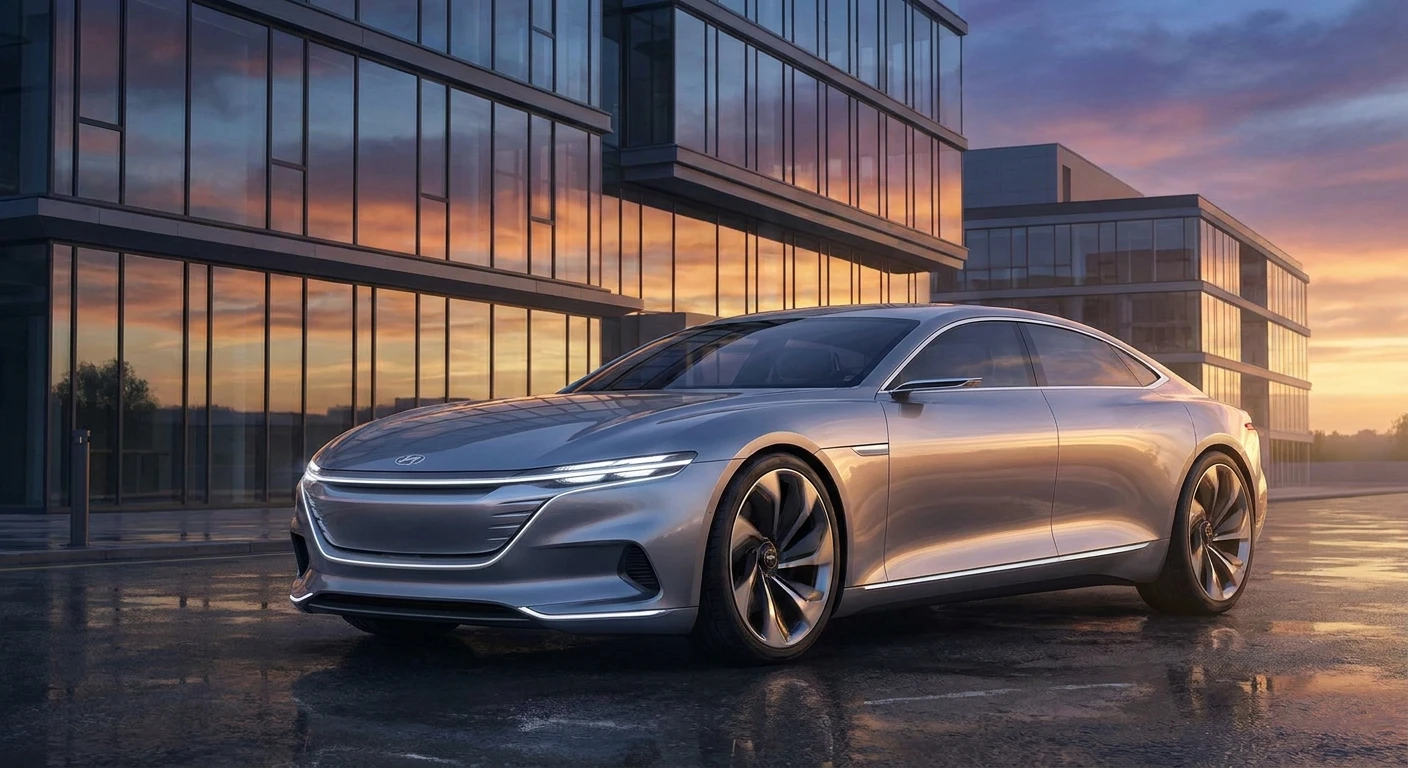
Exploring the Innovations of the 2026 Lexus ES
The highly anticipated 2026 Lexus ES represents a monumental leap in the mid-size luxury sedan segment, blending whisper-quiet comfort with cutting-edge efficiency. If you are looking for the absolute pinnacle of reliable luxury, the 2026 Lexus ES demands your attention right out of the gate. This vehicle isn’t just a minor refresh; it stands as a comprehensive rethinking of what everyday premium commuting should feel like. Gone are the days when luxury meant compromising on technology or fuel economy. Today, you expect a vehicle that anticipates your needs, isolates you from the harshness of the outside environment, and delivers uninterrupted connectivity.
As automotive engineering shifts toward smarter, more efficient architectures, the 2026 model year brings pivotal updates to this beloved nameplate. The seamless integration of electrified powertrains and advanced driver assistance systems positions it as a formidable competitor against European rivals. You are getting a machine meticulously crafted to prioritize passenger well-being, featuring revised exterior aesthetics that strike a balance between athletic aggression and elegant sophistication. By focusing strictly on factual, verified engineering enhancements, it becomes clear why this specific iteration is generating such massive interest among both loyal brand enthusiasts and newcomers seeking dependable prestige.
Read also: Lexus ES 2026: Features, Specs, and Ultimate Buyer Guide; Toyota Camry Hybrid 2025: The Ultimate Efficiency Guide.
Core Benefits and Technological Upgrades
Why should you care about the specific updates in this generation? The value proposition of the newest ES lies entirely in its duality: it provides flagship-level luxury at a relatively accessible executive price point. For example, the ride quality on the highway rivals full-size sedans that cost twice as much, while the fuel economy of the updated hybrid variants keeps long-term running costs incredibly low. Another strong example is the total overhaul of the cabin interface; the frustrating trackpads of previous years have been completely replaced by an ultra-responsive, optically bonded touchscreen that functions as smoothly as your smartphone.
Let us look at a detailed breakdown of how the newest iteration compares to its predecessors across essential categories:
| Feature Category | Previous Generation Hardware | 2026 Lexus ES Enhancements |
|---|---|---|
| Infotainment & Connectivity | Touchpad controller with smaller, recessed display | Massive 14-inch high-definition touchscreen with wireless projection |
| Powertrain Options | Standard V6 / Older Hybrid System | Advanced Inline-4 Turbo / Next-Gen High-Efficiency Hybrid |
| Driver Assistance Tech | Safety System+ 2.5 (Basic lane keeping) | Safety System+ 3.0 (Proactive driving assist and intersection support) |
To fully grasp the scope of these upgrades, you must understand the primary pillars of the redesign. The manufacturer focused on three critical areas to elevate the driving experience:
- Next-Generation Powertrain Efficiency: By utilizing enhanced thermal management within the internal combustion engine and pairing it with a denser, lighter battery pack, the hybrid models achieve unprecedented miles per gallon without sacrificing passing power.
- Acoustic Cabin Mastery: Engineers added extensive sound-deadening materials beneath the floorboards, thicker acoustic glass on the side windows, and specialized wheel resonators to cancel out tire drone on rough pavement.
- Intuitive Connectivity: The all-new Lexus Interface software processes voice commands naturally, allowing you to adjust cabin temperature, navigate to a destination, or change audio tracks simply by speaking conversationally to the vehicle.
Origins of the ES Lineage
The story of this remarkable vehicle stretches back over three decades, establishing a foundation of trust and refinement that the brand continues to build upon today. When the company launched its luxury division in 1989, it debuted with two primary models: the flagship LS 400 and the more compact ES 250. This initial offering was essentially a highly modified, premium version of existing front-wheel-drive architecture. It was designed to offer buyers a more accessible entry point into the luxury market while maintaining the rigorous quality control and exceptional dealership experience that the new brand promised. The success of this dual-launch strategy proved vital, as the smaller sedan quickly became a volume seller, funding further research and development for the entire lineup.
Evolution Through the Generations
As the decades progressed, the sedan evolved through multiple generations, each adding a distinct layer of sophistication. In the late 1990s and early 2000s, the focus shifted heavily toward unparalleled quietness and ride plushness. The car gained a reputation as the ultimate highway cruiser—a vehicle that prioritized passenger comfort above aggressive track performance. By the time the seventh generation debuted around 2018, however, the brand recognized the need for a dynamic shift. They introduced the TNGA-K (Toyota New Global Architecture) platform, which dramatically lowered the center of gravity, widened the track, and stiffened the chassis. This transition allowed the car to finally offer engaging handling characteristics without ruining the buttery-smooth ride quality it was famous for.
The Modern State of Luxury Cruisers
Leading up to the 2026 iteration, the mid-size luxury segment has faced intense pressure from the booming popularity of crossover SUVs. To keep the sedan format relevant and desirable, engineers had to push boundaries. The modern state of this vehicle reflects a complete harmonization of aerodynamic exterior styling, electrified efficiency, and digital-first interiors. It proves that a well-engineered sedan still offers superior highway aerodynamics, better fuel efficiency, and a more connected driving position than equivalent tall-riding SUVs. This ongoing commitment to the sedan format guarantees that executives and families alike still have a premium, traditional option in an increasingly homogenized automotive landscape.
Advanced Hybrid Architecture Explained
Beneath the sculpted hood of the newest model lies a marvel of thermodynamic engineering. The advanced hybrid architecture relies on a highly efficient Atkinson-cycle four-cylinder engine paired with dual electric motor-generators. Unlike a conventional Otto-cycle engine, the Atkinson cycle delays the closing of the intake valves during the compression stroke. This reduces pumping losses and maximizes the extraction of energy from every drop of fuel. The power control unit (PCU) seamlessly blends the output from the electric motors and the gasoline engine, routing it through an electronically controlled continuously variable transmission (eCVT). This planetary gearset design eliminates traditional physical gears, resulting in uninterrupted, linear acceleration that perfectly complements the luxury ethos of the car.
Aerodynamics and Acoustic Glass Tech
Beyond the engine bay, the structural engineering of the chassis dictates the serene nature of the cabin. A rigid body structure, held together by advanced laser screw welding and high-strength structural adhesives, prevents microscopic vibrations from entering the passenger compartment. Furthermore, aerodynamic efficiency plays a massive role in both fuel economy and noise reduction. The sleek profile, underbody covers, and aero-stabilizing fins on the taillights help the air slip past the vehicle with minimal turbulence.
- Thermal Efficiency: The internal combustion component achieves an extraordinary 41% thermal efficiency, converting more fuel into forward motion rather than wasted heat.
- Drag Coefficient: Extensive wind tunnel testing has resulted in a drag coefficient as low as 0.26, reducing wind noise at high speeds and improving highway fuel economy.
- Noise Reduction: Multi-layer acoustic glass and polyurethane foam strategically injected into hollow chassis pillars reduce ambient noise penetration by several decibels compared to earlier models.
- Platform Rigidity: The utilization of ultra-high-tensile steel in the A-pillars and rocker panels enhances both crash safety and suspension responsiveness.
Step 1: Determine Your Powertrain Needs
When planning your acquisition of the 2026 Lexus ES, the first critical step is selecting the right powertrain. You must evaluate your daily driving habits. If your commute involves heavy stop-and-go city traffic, the hybrid variant is undeniably the superior choice, as it relies heavily on battery power at low speeds, maximizing fuel economy. Conversely, if you spend the majority of your time cruising at high speeds on the interstate, the traditional turbocharged gasoline engine might offer the specific passing dynamics you prefer.
Step 2: Compare Trims and Packaging
The trim hierarchy can dramatically alter the personality of the car. The base Premium trim offers excellent value with synthetic leather and standard safety tech. However, stepping up to the Luxury or Ultra Luxury trims introduces semi-aniline leather, massive panoramic roofs, and premium Mark Levinson audio systems. Evaluate which amenities you actually use daily before committing to a top-tier package.
Step 3: Evaluate the New Infotainment System
During your test drive, spend at least ten minutes interacting with the new digital interface while parked. Connect your smartphone via wireless Apple CarPlay or Android Auto. Test the voice command system by asking it to change the climate control or find a nearby coffee shop. Ensuring you are comfortable with this digital ecosystem is vital, as it controls almost every secondary function of the vehicle.
Step 4: Test the Acoustic Cabin Quietness
To truly appreciate the engineering, take the car on a varied route. Drive over rough pavement, train tracks, and at highway speeds. Turn off the radio completely and listen to the ambient noise. The exceptional sound deadening is a major selling point, and verifying this firsthand will confirm you are making the right luxury investment.
Step 5: Inspect the Safety Sense Features
Modern safety systems can sometimes be intrusive. Engage the adaptive cruise control and lane tracing assist on the highway. Observe how smoothly the vehicle brakes when a car pulls in front of you and how gently it keeps you centered in the lane. The updated Safety System+ 3.0 is designed to feel natural and proactive, rather than reactive and jerky.
Step 6: Review Warranty and Maintenance Options
Long-term ownership costs are where this brand shines. Review the standard warranty, which typically includes bumper-to-bumper coverage and an extended powertrain warranty. Furthermore, hybrid models carry specific, lengthy warranties for the battery pack and hybrid control modules, often lasting up to 10 years or 150,000 miles, providing immense peace of mind.
Step 7: Finalize Dealership Negotiations
Armed with your exact specifications, approach the dealership network. Because this is a high-demand vehicle, deep discounts might be rare, but you can negotiate on financing rates, trade-in values, and included maintenance plans. Stand firm on your desired configuration and do not settle for a color or trim that does not perfectly match your preferences.
Separating Fact from Fiction
Myth: The ES is just a repurposed, expensive version of a standard family sedan with better leather.
Reality: While it shares the foundational TNGA-K platform with other corporate models, the suspension geometry, damping forces, chassis rigidity, acoustic materials, and electronic steering calibration are entirely bespoke. The result is a fundamentally different, significantly more refined driving dynamic.
Myth: The car is strictly for comfort and offers zero driving engagement on winding roads.
Reality: The F Sport handling packages feature adaptive variable suspension (AVS) that constantly adjusts damping based on G-forces and steering input. This allows the sedan to corner remarkably flat and provide genuine steering feedback when the sport modes are engaged.
Myth: The hybrid system batteries will need replacing after just a few years, negating fuel savings.
Reality: Advanced battery management software ensures the hybrid packs are never fully drained or overcharged, allowing them to easily last the lifetime of the vehicle, often exceeding 150,000 miles with zero degradation issues.
Frequently Asked Questions
When will the 2026 model arrive at dealerships?
Production typically aligns with the standard fall release cycle, meaning early inventory should start arriving at certified retailers in late 2025.
Will there be a fully electric (BEV) version available?
While the brand is rapidly expanding its BEV lineup, the ES currently relies on highly advanced hybrid powertrains rather than a fully electric setup.
Does the hybrid model require plugging in?
No, the standard hybrid system is self-charging, capturing energy through regenerative braking and the internal combustion engine.
Is all-wheel drive (AWD) an option?
Yes, AWD is typically offered on specific four-cylinder powertrain configurations, providing excellent traction in inclement weather.
What type of fuel is recommended?
Most configurations are designed to run perfectly on regular 87-octane unleaded fuel, further reducing daily operating costs.
How much cargo space is in the trunk?
The clever packaging of the hybrid battery beneath the rear seats ensures the trunk volume remains highly competitive, offering ample space for golf clubs or large luggage.
Can the vehicle receive over-the-air software updates?
Yes, the new digital architecture supports over-the-air (OTA) updates to improve infotainment features, navigation routing, and specific vehicle systems remotely.
Conclusion
The 2026 Lexus ES clearly demonstrates how meticulous engineering and a steadfast dedication to passenger comfort can create an unrivaled luxury experience. By embracing modern hybrid efficiency, overhauling its digital interfaces, and maintaining the legendary build quality the brand is famous for, this sedan continues to set the benchmark in its class. Whether you prioritize a serene highway commute, bulletproof reliability, or premium technological integration, this vehicle delivers on every front. If you are ready to elevate your daily driving experience, visit your local dealership to schedule a comprehensive test drive and discover the refinement for yourself.





Leave a Reply