

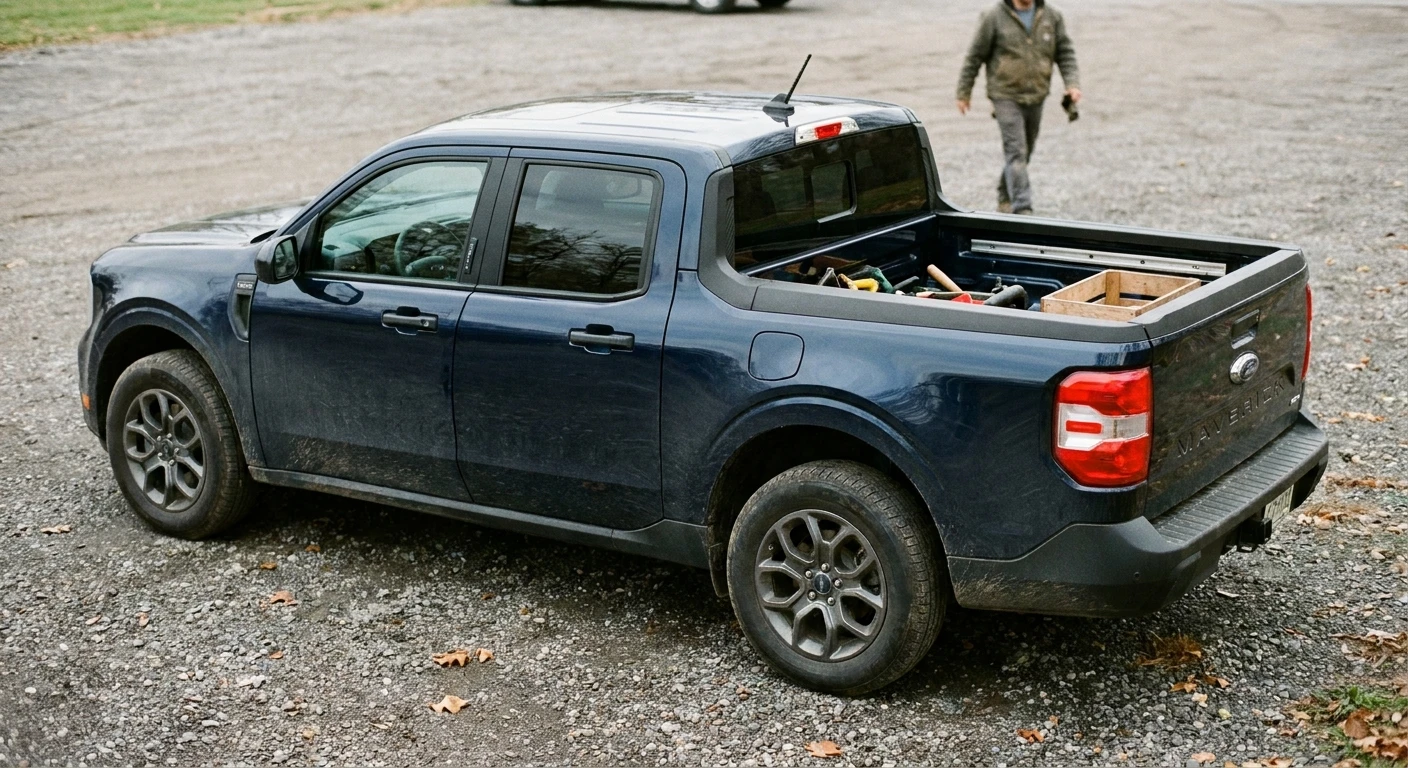
The Definitive Guide to the Ford Maverick 2024
If you want a compact pickup that easily navigates tight city streets while still hauling heavy loads, the Ford Maverick 2024 stands out as the exact vehicle you need. The automotive landscape shifted dramatically over the past decade, with traditional trucks ballooning in size and price. Consumers desperately sought an alternative that offered genuine utility without the massive footprint or prohibitive fuel costs. Ford answered this demand by combining the comfort of a crossover with the functional bed of a traditional pickup. This compact powerhouse redefines daily driving by offering spectacular fuel economy, a highly versatile modular bed system, and an accessible price point for modern drivers. Whether you are a weekend DIY enthusiast running to the hardware store or an urban commuter navigating narrow parking garages, the Ford Maverick 2024 provides a balanced, practical solution that refuses to compromise on everyday capability.
Understanding the core benefits of this pickup requires looking closely at its dual-engine strategy and exceptional design choices. Buyers face a choice between a robust 2.0-liter EcoBoost engine and a highly efficient 2.5-liter hybrid powertrain. While earlier iterations featured the hybrid as the standard base engine, the 2024 lineup shifted the EcoBoost to the standard position, making the hybrid a premium option. This choice allows drivers to tailor the truck specifically to their lifestyle. For instance, a small business owner delivering lightweight goods across a crowded city will save thousands of dollars at the fuel pump by choosing the hybrid variant. Conversely, an outdoor enthusiast who regularly tows lightweight campers or boats will benefit immensely from the EcoBoost engine paired with the 4K Tow Package. To understand the trim hierarchy, review the breakdown below:
Read also: Ford Maverick 2021: Complete Review and Buyers Guide; Ultimate Bronco Sport 2024 Review & Specs Guide.
| Trim Level | Standard Engine | Key Upgrades & Features |
|---|---|---|
| XL Base Trim | 2.0L EcoBoost (Standard) | Steel wheels, 8-inch touchscreen, basic cloth seats, rear under-seat storage. |
| XLT Mid-Level | 2.0L EcoBoost (Standard) | Alloy wheels, cruise control, power tailgate lock, upgraded interior accents. |
| Lariat Premium | 2.0L EcoBoost (Standard) | ActiveX seating, Bang & Olufsen premium audio, LED signature lighting, push-button start. |
Beyond the engine choices, the sheer utility of the vehicle makes it a standout choice for everyday tasks. Here are the top three reasons drivers consistently choose this truck over larger competitors:
- Unmatched Fuel Efficiency: The available hybrid powertrain delivers staggering city miles per gallon, turning what is traditionally a gas-guzzling vehicle segment into an incredibly economical daily driver.
- Innovative FLEXBED System: The truck bed features pre-stamped slots that allow owners to slide in standard 2×4 or 2×6 lumber, creating custom cargo dividers, bike racks, and multi-tier loading setups without buying expensive aftermarket accessories.
- Unibody Comfort and Agility: Because it shares a chassis with modern crossovers rather than utilizing a rigid body-on-frame design, the ride quality remains smooth, stable, and completely free of the harsh bouncing typically associated with unladen pickup trucks.
Origins of the Maverick Nameplate
The nameplate carries a rich history that dates back long before the modern pickup era. Originally, Ford introduced this badge in 1970 on an affordable, compact car designed to battle rising fuel prices and the influx of efficient import vehicles. That vintage two-door sedan became a massive sales success because it offered practicality and economy during a time of economic uncertainty. Decades later, when the manufacturer needed a name for a new vehicle promising affordability and efficiency, resurrecting this classic badge made perfect historical sense.
Evolution into a Compact Truck
For many years, the Ford Ranger served as the go-to small truck in North America. However, as the Ranger evolved into a substantially larger midsize vehicle, it left a massive gap at the bottom of the market. Consumers who wanted a truly small, car-like truck had virtually zero options. Recognizing this massive void, engineers began developing a vehicle based on the C2 platform, which underpins the Bronco Sport and Escape. This strategic move allowed them to create a pickup with the footprint of an SUV but the open-air hauling capability of a traditional truck, officially launching it for the 2022 model year.
The Modern State of the 2024 Edition
By the time the 2024 edition rolled onto dealer lots, the vehicle had already established absolute dominance in the compact segment. The most significant shift for this specific model year was the restructuring of the powertrain availability. To streamline production and meet overwhelming consumer demand, the turbocharged EcoBoost became the standard engine across all trims, while the highly sought-after hybrid became a standalone option. Additionally, the Tremor Off-Road Package gained further refinement, solidifying the truck’s position as not just an urban commuter, but a highly capable weekend adventure vehicle.
Hybrid Powertrain Efficiency Mechanics
The engineering behind the hybrid model represents a masterclass in packaging and efficiency. It utilizes an Atkinson-cycle 2.5-liter four-cylinder engine paired with a compact, powerful electric traction motor. Instead of a traditional automatic gearbox, this system uses an electronic continuously variable transmission (e-CVT) featuring a planetary gearset. This design eliminates traditional belts and pulleys, resulting in a highly durable, smooth transfer of power. Regenerative braking technology captures kinetic energy during deceleration, routing it directly back into the liquid-cooled lithium-ion battery pack located discreetly under the cabin floor.
Unibody Architecture and Structural Integrity
Traditional trucks utilize a heavy ladder frame with the cab and bed bolted on separately. The Ford Maverick 2024 breaks from this tradition by employing a unibody construction, meaning the cab and bed are formed from a single continuous piece of high-strength steel. This provides immense torsional rigidity, meaning the truck resists twisting when driving over uneven terrain. To guarantee it can still perform truck duties, engineers heavily reinforced the suspension mounting points and upgraded the cooling systems. The technical specifications highlight this robust engineering:
- The hybrid powertrain delivers a combined output of 191 horsepower and 155 lb-ft of torque, prioritizing low-end electric responsiveness.
- The 2.0-liter EcoBoost engine produces a vigorous 250 horsepower and 277 lb-ft of torque, providing rapid acceleration for highway merging.
- Despite its crossover origins, the standard payload capacity stands firm at 1,500 pounds, allowing you to haul soil, gravel, or appliances with ease.
- Equipped with the 4K Tow Package, the EcoBoost variant upgrades the transmission cooler and radiator, raising the maximum towing capacity to 4,000 pounds.
Step 1: Map Out Your FLEXBED Customization
The first thing you should do upon taking delivery is evaluate your cargo needs. Head to a local hardware store and purchase standard lumber. Slide the boards into the molded bed pockets to create separate zones for groceries, tools, or camping gear. This simple DIY project prevents items from sliding around during transit and maximizes your bed space.
Step 2: Utilize the FITS Accessory System
Look behind the center console to find the Ford Integrated Tether System (FITS) slot. This unique mounting point allows you to attach various accessories like extra cupholders, trash bins, or cord organizers. Ford even released the 3D printer geometry for this slot, meaning you can design and print completely custom accessories tailored to your specific lifestyle.
Step 3: Master the SYNC Infotainment Interface
Spend your third day sitting in the driveway familiarizing yourself with the standard 8-inch touchscreen. Connect your smartphone to set up Apple CarPlay or Android Auto. Customize the home screen layout, adjust the audio equalizer settings, and ensure your emergency contacts are properly synced to the Bluetooth system for hands-free calling.
Step 4: Calibrate Your Driving Modes
The vehicle features several selectable drive modes that alter throttle response and traction control. Test out Eco mode during your city commute to maximize battery regeneration. Switch to Sport mode on an open highway to feel the sharpened steering and delayed shifts. Familiarize yourself with Slippery mode so you are prepared for unexpected rain or snow.
Step 5: Load Your First Payload Safely
When loading heavy items, practice proper weight distribution. Keep the heaviest materials pushed forward toward the cab, resting slightly ahead of the rear axle. This maintains steering traction and prevents the front wheels from lifting. Use the multiple standard D-rings in the bed to tie down your cargo securely with ratchet straps.
Step 6: Test Your Towing Capabilities
If your model is equipped with a hitch receiver, take a weekend to practice towing a small utility trailer. Connect the 4-pin or 7-pin wiring harness and double-check your trailer lights. Practice reversing in an empty parking lot, using the backup camera to guide your hitch directly beneath the trailer coupler.
Step 7: Establish a Routine Maintenance Schedule
Finally, review the owner’s manual to establish a firm maintenance timeline. Note the specific intervals for tire rotations, oil changes, and cabin air filter replacements. If you own the hybrid, learn how to check the coolant levels for the battery inverter system to ensure long-term reliability and peak efficiency.
Myth: The unibody construction makes it a fake truck that cannot do real work.
Reality: The advanced engineering supports a 1,500-pound payload capacity, which actually equals or surpasses the payload ratings of several older midsize, body-on-frame competitors. It is fully capable of handling intense weekend projects.
Myth: Front-wheel drive versions lack the necessary traction for basic utility tasks.
Reality: The front-wheel drive setup manages excellent weight distribution heavily concentrated over the drive wheels, providing solid grip for everyday hauling and light dirt road traversal.
Myth: The hybrid battery consumes too much cabin space, ruining passenger comfort.
Reality: Engineers packaged the liquid-cooled battery pack perfectly beneath the floorboards, leaving the highly practical rear under-seat storage bins completely intact and usable.
Myth: You cannot fit large building materials in the short four-and-a-half-foot bed.
Reality: The multi-position tailgate can be locked in a half-down position, allowing you to haul standard 4×8 sheets of plywood securely by resting them flat above the wheel wells.
Does the 2024 model come standard with a hybrid engine?
No, Ford changed the lineup for 2024, making the 2.0-liter turbocharged EcoBoost the standard engine across all trim levels, with the hybrid powertrain available as an optional upgrade.
Can I get all-wheel drive with the hybrid powertrain?
For the 2024 model year, all-wheel drive is strictly paired with the 2.0-liter EcoBoost engine. The hybrid models are exclusively front-wheel drive.
What comes in the Tremor Off-Road Package?
The Tremor package adds a 1-inch factory lift, an advanced all-wheel-drive system with a twin-clutch rear drive unit, distinct suspension tuning, underbody skid plates, and aggressive all-terrain tires.
How large is the central infotainment touchscreen?
Every single trim level comes standard with a highly responsive 8-inch center touchscreen that features Bluetooth connectivity and smart device integration.
Does the truck feature wireless smartphone integration?
While the system supports Apple CarPlay and Android Auto natively, it requires a wired USB connection rather than functioning wirelessly on the standard trims.
What is the total fuel tank capacity?
The EcoBoost models feature a 16.5-gallon fuel tank, whereas the highly efficient hybrid models utilize a slightly smaller 13.8-gallon tank due to battery packaging constraints.
How much rear legroom does the cabin provide?
The rear seat offers 35.9 inches of legroom, which comfortably accommodates average-sized adults for daily commuting and weekend road trips.
The Ford Maverick 2024 proves that you do not need a massive, fuel-thirsty heavy-duty vehicle to get real work done. By blending intelligent storage solutions, exceptional fuel economy, and absolute driving comfort, it remains the ultimate choice for practical buyers. If you are ready to experience the perfect balance of utility and efficiency, contact your local dealership to schedule a test drive or use the online configurator to build your ideal compact truck today!




Leave a Reply