

The Paradigm Shift of the Hyundai Santa Fe 2024
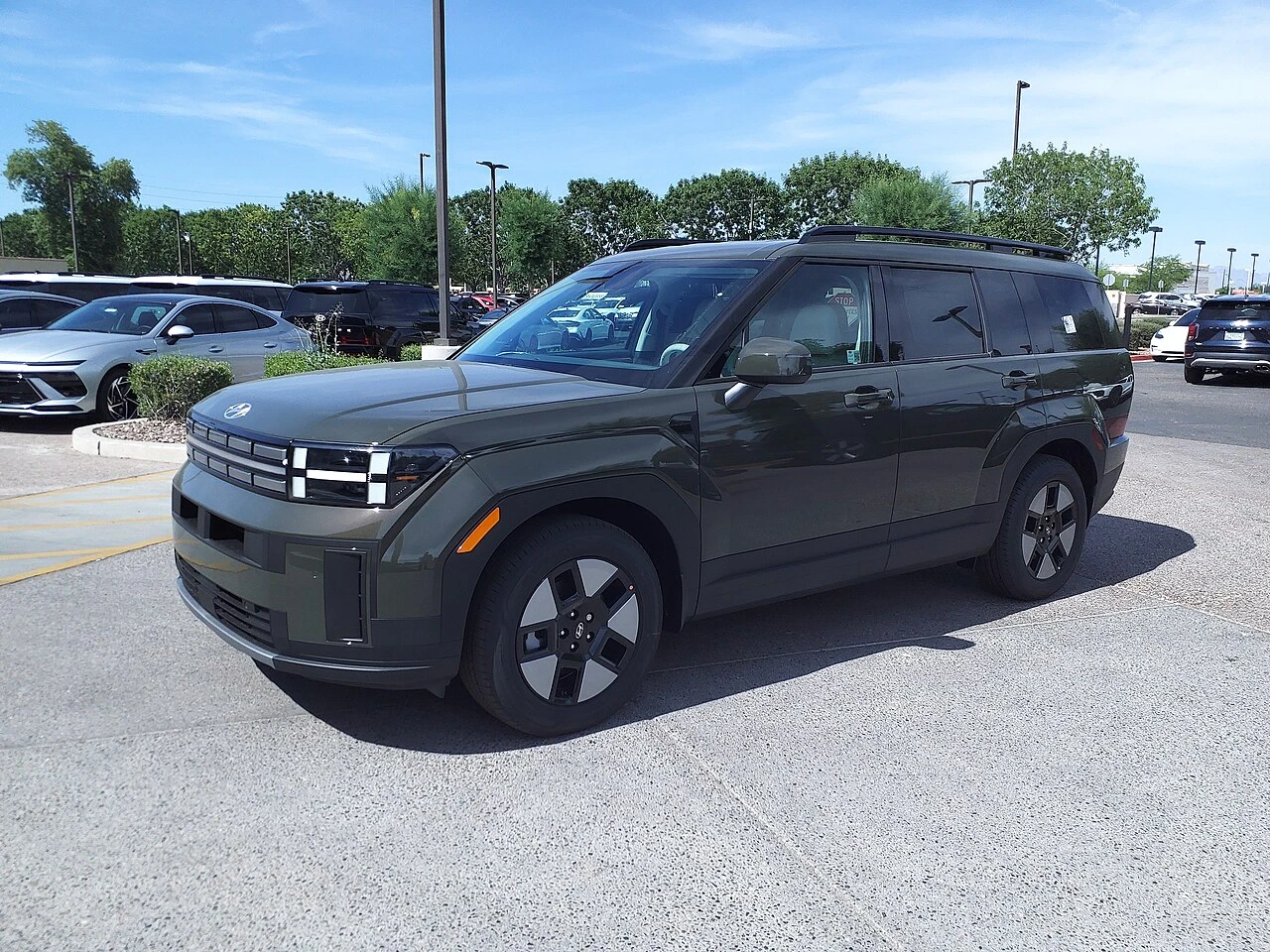
When evaluating modern midsize crossover SUVs, the Hyundai Santa Fe 2024 stands out as a radical departure from its predecessors, fundamentally reshaping what families expect from a three-row vehicle. Unveiled to a global audience with a design philosophy prioritizing maximum interior volume and outdoor lifestyle integration, this specific model year abandoned the sleek, sweeping curves of the previous generation in favor of a bold, unapologetically boxy silhouette. The dramatic geometric styling serves a highly functional purpose, creating a massive rear cargo aperture and maximizing headroom for third-row passengers. Characterized by its distinctive H-motif LED daytime running lights and a commanding road presence, the Hyundai Santa Fe 2024 challenges the established norms of its segment. Automotive engineers and designers worked to craft a vehicle that feels just as appropriate navigating dense urban environments as it does serving as a basecamp for weekend wilderness excursions. By extending the wheelbase and flattening the roofline, the manufacturer successfully engineered an interior space that feels exceptionally cavernous, positioning this iteration as a true disruptor in the fiercely competitive family SUV market. From its eco-friendly interior materials to its modernized powertrain options, every element was rethought from the ground up.
Core Benefits, Utility, and Premium Features
The structural architecture of this generation provides a unique value proposition for outdoor enthusiasts and large families alike, blending rugged aesthetics with premium comfort. A prime example of this utility is the widened rear tailgate aperture, which was specifically engineered to transform the cargo area into a covered terrace for camping, tailgating, or simply loading oversized gear with minimal effort. Another excellent example is the integration of dual wireless charging pads in the center console, allowing both the driver and front passenger to charge high-capacity smartphones simultaneously without fighting over cables. This level of thoughtful convenience extends throughout the entire cabin, ensuring that long road trips remain comfortable and connected for all occupants. The interior acts as a mobile sanctuary, shielding passengers from road noise through acoustic laminated glass and advanced sound-deadening materials.
Read also: 2025 Santa Fe: Complete Review, Specs & Buying Guide; Ultimate Bronco Sport 2024 Review & Specs Guide.
| Trim Level | Target Audience | Key Standard Feature |
|---|---|---|
| SE / SEL | Value-conscious families | 12.3-inch touchscreen display |
| XRT | Outdoor lifestyle enthusiasts | Increased ground clearance & all-terrain tires |
| Calligraphy | Luxury-focused buyers | Premium Nappa leather seating |
To truly understand the technological leap forward, one must look at the specific cabin amenities that set this vehicle apart from older models. The development team focused heavily on passenger wellness and digital integration. Here are the most notable interior advancements:
- Panoramic Curved Display: A seamless integration of a 12.3-inch digital instrument cluster and a 12.3-inch infotainment touchscreen, providing a massive, driver-centric digital interface for navigation and media.
- Premium Relaxation Front Seats: Engineered to simulate a weightless experience, these seats recline with an integrated leg rest, perfect for resting while the vehicle is parked during a long journey.
- UV-C Sterilization Compartment: Located securely above the glovebox, this industry-first feature allows passengers to easily sanitize small personal items like mobile phones, wallets, and sunglasses using ultraviolet light.
- Ergonomic Center Console: Designed with a bilateral opening mechanism, allowing both front and second-row passengers to access the storage compartment with equal ease.
Origins and Historical Context
Origins of the Lineage
The Santa Fe nameplate holds immense historical weight for the brand, initially debuting in late 2000 for the 2001 model year. Named after the city in New Mexico, it was the manufacturer’s first foray into the sport utility vehicle market, a highly strategic move designed to capture the booming North American demand for high-riding family haulers. Those early models were characterized by highly sculpted, muscular, and arguably quirky curves that clearly differentiated them from the boxy truck-based SUVs of the era. Despite initial skepticism from automotive critics regarding its unconventional styling, the original model proved to be an overwhelming commercial success, occasionally causing production shortages because factory output simply could not keep pace with consumer demand. It effectively cemented the brand’s reputation for offering robust standard features at highly competitive price points.
Evolution Through the Generations
As consumer tastes matured over two decades, the vehicle underwent several distinct evolutionary phases. The second generation, introduced for 2007, smoothed out the quirky lines for a more conservative, universally appealing look while significantly upgrading interior refinement. The third generation, launching in 2013, split the lineup into two distinct models: a shorter two-row Sport variant and a long-wheelbase three-row version, acknowledging that families needed different tiers of space. By the time the fourth generation arrived in 2019, the focus had shifted heavily toward premium aesthetics, introducing aggressive cascading grilles, split-level headlights, and interior material quality that rivaled established luxury marques. Each generation meticulously tracked the shifting expectations of the middle-class family buyer.
Modern State: The Paradigm Shift
The transition to the fifth generation, internally designated as the MX5 and released for the 2024 model year, represents a total philosophical pivot rather than a simple evolutionary update. Market research indicated that consumers were experiencing a resurgence of interest in outdoor lifestyles, heavily influenced by global events that drove people toward nature-based recreation. Designers famously approached this model by starting with the rear tailgate and working forward, ensuring the cargo area maximized utility before finalizing the front fascia. The resulting boxy, geometric design language heavily evokes classic British and American off-roaders, a stark contrast to the sleek, aerodynamic jellybean shapes dominating the rest of the crossover market. This calculated risk successfully repositioned the vehicle as a rugged lifestyle accessory.
Scientific and Technical Deep Dive
Powertrain Engineering and Aerodynamics
Propelling a large, boxy structure efficiently requires significant engineering ingenuity. The standard powertrain utilizes a 2.5-liter turbocharged inline four-cylinder engine mated to a highly responsive 8-speed wet dual-clutch transmission (DCT). This setup delivers robust low-end torque necessary for confident highway merging and light towing. For maximum efficiency, a 1.6-liter turbocharged hybrid powertrain is also utilized, integrating a sophisticated electric motor and a lithium-ion polymer battery pack. One of the most impressive scientific achievements of this generation is its aerodynamic performance. Traditional physics dictates that a vehicle shaped like a brick will suffer immense wind resistance. However, engineers achieved an impressively low drag coefficient of 0.29 Cd. They accomplished this through the integration of active air flaps in the front grille, specialized underbody aerodynamic shields, and meticulously sculpted wheel arches that seamlessly channel turbulent air away from the tire wells.
Advanced Driver Assistance Architecture
The vehicle serves as a rolling sensor array, featuring a complex network of radar, ultrasonic sensors, and high-definition optical cameras. This hardware forms the backbone of Highway Driving Assist 2, a sophisticated system capable of maintaining vehicle positioning, adjusting speed based on navigation data, and executing automated lane changes when the driver triggers the turn signal. The chassis itself was re-engineered using advanced metallurgical techniques, incorporating hot-stamped high-strength steel to create a rigid safety cell that disperses kinetic energy away from the cabin during a collision.
- Drag Coefficient: Achieved a highly efficient 0.29 Cd despite the blunt front fascia and vertical rear end.
- Torsional Rigidity: Increased structural stiffness by utilizing a higher percentage of advanced high-strength steel, improving both crash safety and handling dynamics.
- Wheelbase Expansion: Lengthened by roughly 48 millimeters compared to the previous generation, directly translating to increased second and third-row legroom.
- Acoustic Engineering: Application of sound-absorbing materials in the floorpan and liquid-applied sound deadener to reduce high-frequency tire roar by several decibels.
Practical Takeaways for Owners and Buyers
Selecting the Right Powertrain Configuration
When choosing your ideal setup, carefully analyze your primary driving environment. If your daily routine consists of stop-and-go city traffic, short school runs, and urban commuting, the 1.6-liter turbocharged hybrid powertrain offers superior fuel efficiency and smoother low-speed operation due to the electric motor’s instant torque. Conversely, if you frequently merge onto high-speed interstates, drive through mountainous terrain, or plan to tow small recreational trailers, the 2.5-liter turbocharged engine provides the necessary sustained highway passing power and higher towing capacity.
Optimizing Interior Configurations for Families
The interior layout must match your family’s specific logistics. Choosing the second-row captain’s chairs significantly reduces sibling friction by providing personal space and creates a natural pass-through alley for children to reach the third row without folding seats down. However, if maximum passenger capacity is a strict requirement, you must select the second-row bench seat. Keep in mind that the third row, while greatly improved in headroom due to the flat roofline, is still best reserved for children, teenagers, or adults on very short trips.
Maximizing the Cargo Capabilities
To fully utilize the massive rear opening, consider investing in custom-fit cargo organizers or a heavy-duty rubber cargo mat. When you fold the second and third rows completely flat, the resulting cavernous space is perfect for transporting large furniture or setting up a sleeping area for car camping. Utilize the standard roof rails by adding crossbars to transport bicycles, kayaks, or aerodynamically designed cargo boxes, keeping the messy gear outside and preserving the pristine interior for passengers.
Utilizing Advanced Technology Interfaces
Take the time to properly configure the Digital Key functionality. This system uses Near Field Communication (NFC) and Ultra-Wideband (UWB) technology, allowing you to securely lock, unlock, and start the vehicle using a compatible smartphone or smartwatch. This entirely eliminates the need to carry a physical key fob. Additionally, set up the personalized driver profiles in the infotainment system so that seat positions, mirror angles, and radio presets automatically adjust the moment your specific digital key is recognized by the vehicle’s sensors.
Myths and Reality
Myth: The exceptionally boxy and vertical exterior design ruins the vehicle’s fuel economy on the highway.
Reality: Thanks to active grille shutters, extensive underbody shielding, and precise wind tunnel testing, the vehicle achieves a highly competitive aerodynamic drag coefficient of 0.29, ensuring fuel efficiency remains strong despite the rugged aesthetic.
Myth: The new rugged appearance means it functions like a heavy-duty, body-on-frame off-road truck.
Reality: It remains a unibody crossover optimized primarily for on-road comfort, smooth handling, and light trail usage, not extreme rock crawling.
Myth: The third-row seating is spacious enough to comfortably accommodate adults on cross-country road trips.
Reality: While the boxy roofline significantly improves rear headroom, the third row remains best suited for children or for adults making short trips across town.
Myth: The interior is strictly utilitarian and lacks premium luxury features.
Reality: Higher trim levels like the Calligraphy feature ultra-premium materials, including Nappa leather, dual wireless chargers, and dual 12.3-inch panoramic displays that rival luxury brands.
Frequently Asked Questions
Does it support wireless smartphone integration?
Yes, it features wireless Apple CarPlay and Android Auto as standard equipment, projecting your phone’s interface seamlessly onto the main infotainment display.
What is the maximum towing capacity?
When properly equipped with the 2.5-liter turbocharged engine and the factory towing package, it can tow up to 4,500 pounds, perfect for small boats or campers.
Is the hybrid powertrain a plug-in system?
The standard hybrid model operates as a traditional hybrid (HEV), charging its battery via regenerative braking and the gasoline engine, requiring no external plug-in charging.
How many passengers can it comfortably seat?
Depending on the configuration, it seats up to seven passengers with a second-row bench, or six passengers if equipped with second-row captain’s chairs.
Does it come equipped with a spare tire?
Yes, unlike many modern vehicles that only provide a repair kit, it typically includes a compact spare tire mounted securely underneath the rear cargo area.
What exactly is the UV-C sterilization compartment used for?
This upper glovebox compartment uses ultraviolet light to kill bacteria on small high-touch items like smartphones, baby pacifiers, keys, and wallets within a few minutes.
Does it offer a genuine all-wheel-drive system?
Yes, the advanced HTRAC All-Wheel-Drive system is available, dynamically distributing torque between the front and rear axles to maximize traction in snow, mud, and heavy rain.
Conclusion
The Hyundai Santa Fe 2024 has successfully redefined what a modern family crossover can be, blending uncompromising interior utility with a striking, adventurous design. By moving away from the predictable styling of its competitors, it offers a refreshing alternative that excels in both urban commuting and weekend exploration. If you are searching for a versatile, technology-packed SUV that easily adapts to your changing lifestyle, reach out to your local dealership today to schedule a comprehensive test drive and experience this engineering marvel firsthand.




Leave a Reply