

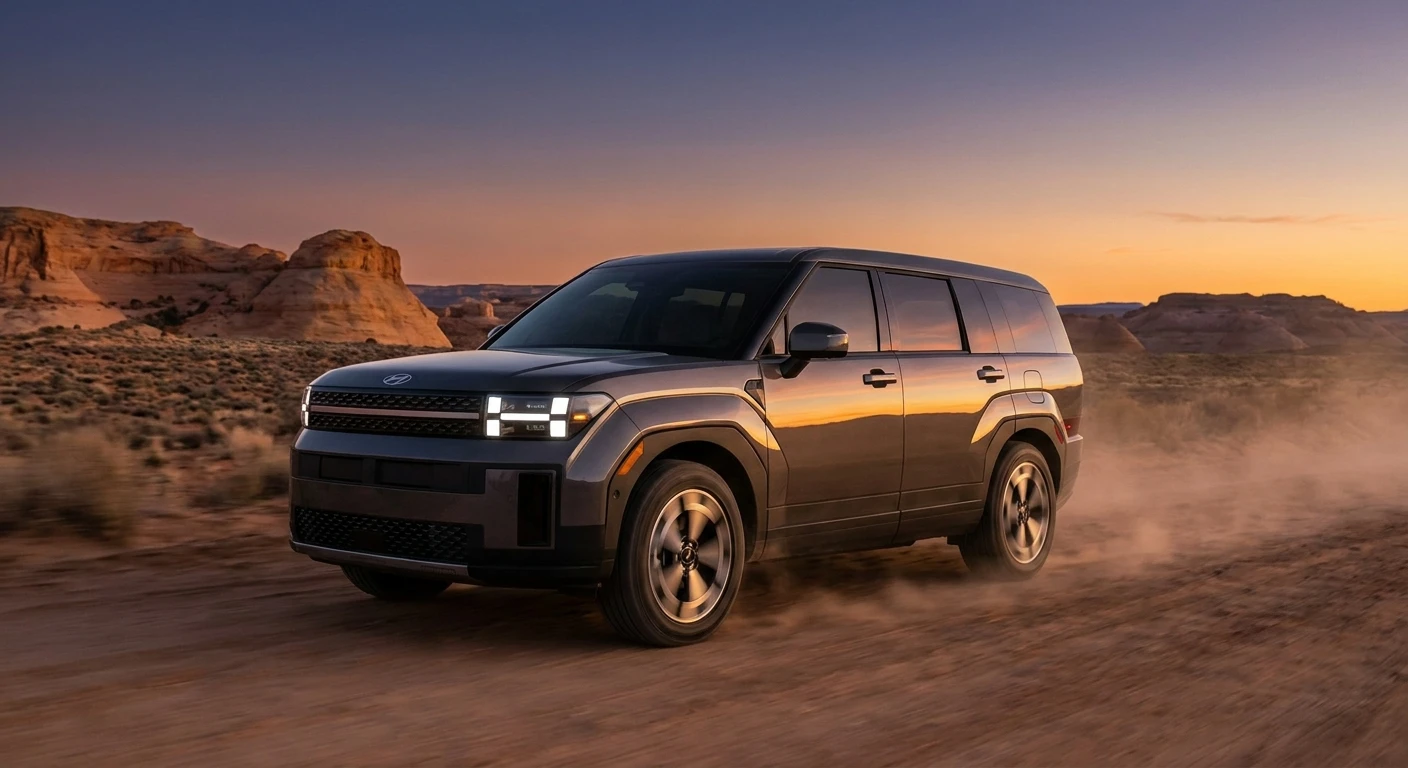
The 2025 Santa Fe Redefines the Mid-Size SUV Market
The 2025 Santa Fe arrives as a bold, uncompromising statement in the automotive industry, cementing a radical departure from soft curves to a distinctively rugged, geometric aesthetic. Building upon the massive architectural shift introduced in the preceding model year, the 2025 iteration refines the formula with enhanced technological integration, updated trim availability, and a relentless focus on maximizing interior volume. For families, commuters, and outdoor enthusiasts alike, this vehicle represents a fundamental shift in how mid-size, three-row crossovers operate on a daily basis. The squared-off roofline and elongated wheelbase directly translate into superior headroom, expanded legroom, and cavernous cargo capacity, proving that a striking design can simultaneously serve high-level, practical utility. Drivers evaluating the current sport utility vehicle landscape will find that this model effectively bridges the gap between premium luxury aesthetics and mainstream accessibility. By offering robust internal combustion and highly efficient hybrid powertrains, the manufacturer successfully caters to a diverse array of driving preferences and regional fuel economy requirements. This comprehensive breakdown explores the rigorous engineering, complex trim hierarchies, and practical ownership aspects of a vehicle that has dramatically altered the trajectory of modern family transport.
Core Benefits, Trims, and Real-World Value
Understanding the core value proposition of the 2025 Santa Fe requires looking closely at its trim hierarchy and feature distribution. Buyers consistently gain access to premium amenities without incurring the steep luxury price tag typically associated with European competitors. Two prime examples of this compelling value proposition are the inclusion of dual wireless charging pads in the center console—allowing both the driver and front passenger to charge their devices simultaneously without cable clutter—and the standard implementation of advanced driver-assistance systems across all trim levels. These high-end features routinely require expensive, standalone upgrade packages in rival vehicles, yet they are integrated seamlessly into the base architecture here. The vehicle operates on a philosophy of abundant space and uncompromising technological convenience.
Read also: Toyota Camry Hybrid 2025: The Ultimate Efficiency Guide; 2025 Kia Seltos Specs and Features.
- Unparalleled Cargo Accessibility: The enlarged, squared-off tailgate opening provides best-in-class width for loading bulky items. The manufacturer refers to this as a terrace concept, creating a wide, flat floor that is perfect for camping gear, large furniture, or tailgating events.
- Enhanced Third-Row Comfort: Because the roof does not slope aggressively downward at the rear, adult passengers can sit in the third row with adequate headroom. The seating position also avoids the typical knees-in-chest posture found in competing mid-size crossovers.
- Optimized Fuel Efficiency: Despite its brick-like, imposing appearance, strategic aerodynamic air curtains and smooth underbody paneling allow the hybrid variants to achieve highly competitive miles-per-gallon ratings.
| Trim Level | Primary Powertrain | Highlighted Standard Features |
|---|---|---|
| SE / SEL | 2.5L Turbo 4-Cylinder | 12.3-inch panoramic display, 3rd-row seating, durable H-Tex seating surfaces, power liftgate |
| XRT | 2.5L Turbo (AWD only) | All-terrain tires, increased ground clearance, rugged dark chrome exterior cladding, enhanced cooling |
| Calligraphy | 2.5L Turbo or 1.6L Hybrid | Premium Nappa leather, dual wireless device chargers, second-row relaxation captain’s chairs |
This strategic distribution of features ensures that whether a buyer is prioritizing budget, off-road capability, or top-tier luxury, there is a configuration specifically tailored to their demands. The Calligraphy trim, in particular, pushes the boundary of mainstream automotive luxury, offering materials and acoustic treatments that rival dedicated luxury marques.
Origins of the Nameplate
The lineage of this vehicle traces back to the early 2000s when it was first introduced as a rounded, budget-friendly option for small families. In its initial generations, the vehicle prioritized affordability and basic utility over distinctive styling or advanced dynamics. It served as a critical stepping stone for the manufacturer, establishing brand reliability and consumer trust in a highly competitive market segment. Throughout the 2010s, the model gradually moved upmarket, adopting sleeker, more aerodynamic lines and integrating higher quality materials, yet it remained relatively conservative in its overall visual presentation.
Evolution to the Boxy Era
The paradigm shifted entirely with the introduction of the fifth-generation platform. Market research indicated a growing consumer fatigue with the homogenous, jelly-bean shapes that dominated the crossover market. Families and outdoor enthusiasts signaled a strong desire for vehicles that projected rugged capability reminiscent of classic off-roaders, without sacrificing modern comfort and safety. The designers responded by drafting a radical, geometric silhouette featuring a prominent, vertical front fascia, distinctive H-motif daytime running lights, and a deliberately boxy rear cabin. This evolutionary leap was not merely cosmetic; the squared proportions fundamentally optimized the vehicle’s interior packaging.
Modern State and the 2025 Market Position
In its current 2025 iteration, the vehicle stands as a dominant force in the mid-size SUV category. It aggressively competes against established rivals like the Kia Telluride, Toyota Highlander, and Ford Explorer by offering a unique blend of polarizing, high-fashion design and supreme practicality. Having solidified its identity, the 2025 model year focuses on refining the user interface, expanding hybrid availability across more trim levels to meet stringent global emissions targets, and enhancing the structural rigidity for better crash test performance. It occupies a unique space where urban sophistication meets undeniable weekend utility.
Powertrain Engineering and Thermal Dynamics
Beneath the striking exterior lies a meticulously engineered powertrain lineup designed to balance robust torque with thermal efficiency. The standard internal combustion option is a potent 2.5-liter turbocharged inline-four engine. Unlike traditional naturally aspirated engines, this turbocharged unit utilizes an integrated exhaust manifold within the cylinder head, which accelerates catalyst warm-up times and improves overall thermal efficiency. Power is routed through an advanced wet 8-speed dual-clutch transmission (DCT). Unlike older dry-clutch systems that could suffer from low-speed shudder, the wet-clutch architecture utilizes an electronic oil pump to constantly lubricate and cool the clutch plates. This engineering choice allows the transmission to handle the engine’s high torque output reliably, especially during towing operations, while delivering lightning-fast, seamless gear shifts during highway acceleration.
Aerodynamics and Structural Rigidity
Achieving regulatory fuel economy standards with a vertically oriented front fascia required extensive aerodynamic manipulation. Engineers implemented active grille shutters that remain closed at cruising speeds to route air smoothly around the vehicle’s nose, opening only when engine coolant temperatures demand increased airflow. Extensive aerodynamic shielding covers the undercarriage, preventing turbulent air from creating drag beneath the chassis.
- High-strength steel integration in the chassis improves torsional rigidity by a significant margin compared to the previous generation platform, resulting in a quieter cabin and sharper handling responses.
- The hybrid variants employ a specialized 1.6-liter turbocharged engine paired with a permanent magnet synchronous traction motor, seamlessly transitioning between pure electric torque and internal combustion power.
- Specially designed air curtains located at the outer edges of the front bumper channel high-velocity air past the front wheels, creating an aerodynamic seal that drastically reduces drag-inducing turbulence.
- The body structure utilizes hot-stamped steel components in the A and B pillars to ensure maximum occupant protection during side-impact or rollover collisions.
Day 1: Assessing Cargo and Passenger Needs
The first step in acquiring a 2025 Santa Fe is conducting a realistic assessment of your daily spacial requirements. Evaluate whether you need the standard second-row bench seat, which maximizes passenger capacity to seven, or the premium second-row captain’s chairs available on higher trims, which reduce capacity to six but significantly enhance comfort and provide a convenient pass-through to the third row. Measure your garage dimensions, as the elongated wheelbase requires adequate parking space.
Day 2: Comparing Hybrid vs. Pure Internal Combustion
Dedicate time to calculating your average annual mileage and typical driving environments. The 2.5L turbocharged engine delivers brisk acceleration and a higher towing capacity, making it ideal for highway commuting and pulling small boats or trailers. Conversely, the 1.6L hybrid powertrain excels in stop-and-go city traffic, where the electric motor handles the brunt of the acceleration, resulting in drastically lower fuel expenditures over time.
Day 3: Evaluating the XRT Off-Road Trim
If your lifestyle involves weekend camping trips, traversing unpaved roads, or dealing with heavy winter snow, analyze the XRT trim. This specific configuration features a slightly lifted suspension for increased ground clearance, rugged all-terrain tires wrapped around smaller alloy wheels for better impact absorption, and upgraded cooling components to prevent transmission overheating on steep, low-speed inclines.
Day 4: Scheduling a Comprehensive Test Drive
Contact a local dealership to arrange an extended test drive. Ensure you test the vehicle in varied conditions: merge onto a highway to assess the turbocharger’s power delivery, navigate a tight parking lot to test the turning radius and the 360-degree surround-view camera system, and drive over rough pavement to evaluate the cabin’s acoustic insulation and the suspension’s damping capabilities.
Day 5: Testing the Advanced Driver Assistance Systems (ADAS)
During a secondary evaluation, focus entirely on the vehicle’s technological suite. Activate the Highway Driving Assist system to experience how the vehicle maintains lane centering and manages following distances automatically. Test the blind-spot view monitor that projects a live camera feed into the digital instrument cluster whenever the turn signal is engaged.
Day 6: Analyzing Total Cost of Ownership and Financing
Compile the financial data. Compare lease offers against traditional financing. Factor in the cost of insurance, taking into account the vehicle’s high safety ratings which often lower premiums. Calculate the estimated annual fuel costs based on the specific powertrain you selected, and factor in the value of the manufacturer’s complimentary scheduled maintenance program.
Day 7: Finalizing Trim Selection and Taking Delivery
Make your final selection based on the data gathered. Verify that the specific vehicle stock number matches your requested trim, color, and options package. During the delivery process, have the sales representative assist you in pairing your smartphone, setting up your user profile on the infotainment system, and demonstrating the operation of the power-folding rear seats and smart liftgate.
Myths & Reality
Myth: The aggressive, boxy shape of the vehicle completely ruins its highway fuel economy. Reality: Thanks to meticulously designed underbody panels, active front grille shutters, and functional air curtains around the wheels, the vehicle achieves a highly competitive drag coefficient, keeping fuel consumption low despite its imposing silhouette.
Myth: The third-row seating is purely decorative and only suitable for small children. Reality: The flat, extended roofline was explicitly designed to eliminate the sloping ceiling found in most mid-size SUVs, allowing average-sized adults to sit in the third row with adequate headroom and comfort for moderate journeys.
Myth: The dual-clutch transmission is jerky and uncomfortable in heavy, stop-and-go traffic. Reality: The modern wet-clutch 8-speed DCT utilizes electronic fluid cooling, which completely resolves the low-speed shuddering associated with older dry-clutch systems, providing smooth, refined take-offs.
Myth: The off-road oriented XRT trim is just an overpriced cosmetic appearance package. Reality: The XRT trim includes functional mechanical upgrades, including a genuine suspension lift for better ground clearance, specialized all-terrain tires, and enhanced cooling systems for sustained off-road climbing.
What is the base engine for the 2025 Santa Fe?
The standard engine is a robust 2.5-liter turbocharged inline four-cylinder, generating 277 horsepower and 311 lb-ft of torque, paired with an 8-speed wet dual-clutch automatic transmission.
Does it offer a plug-in hybrid (PHEV) option?
While the lineup includes a highly efficient traditional hybrid powertrain, the 2025 model year in North America currently focuses on standard internal combustion and self-charging hybrid variants, without a plug-in hybrid option.
How much can the vehicle tow?
When properly equipped with the 2.5L turbocharged engine and the factory towing package, the vehicle boasts a maximum towing capacity of up to 4,500 pounds, sufficient for small travel trailers or boats.
Are captain’s chairs available?
Yes, premium second-row captain’s chairs are available on the higher-tier trims, such as the Calligraphy, offering power adjustments and a specialized relaxation mode for ultimate passenger comfort.
Does the XRT trim have a lifted suspension?
Yes, the XRT trim features a suspension lift that increases the overall ground clearance by approximately 1.5 inches compared to the standard trims, enhancing its capability over rough terrain.
Is wireless Apple CarPlay standard?
Yes, the dual 12.3-inch panoramic curved display system supports fully wireless Apple CarPlay and Android Auto across all trim levels, eliminating the need for USB cables.
What is the warranty coverage?
The vehicle retains the manufacturer’s industry-leading warranty, including a 10-year/100,000-mile powertrain limited warranty and a 5-year/60,000-mile new vehicle limited warranty, plus complimentary maintenance for the first three years or 36,000 miles.
The 2025 Santa Fe stands as a monumental achievement in automotive design and engineering, successfully merging striking, unorthodox aesthetics with unparalleled everyday utility. By offering a comprehensive suite of advanced safety technologies, multiple highly efficient powertrains, and an interior volume that challenges larger vehicle classes, it represents one of the most compelling options on the market today. Whether navigating dense urban environments or embarking on cross-country adventures, this vehicle delivers a premium experience at an accessible price point. Contact your local dealership today to schedule a comprehensive test drive and experience the next generation of family transportation firsthand.




Leave a Reply