

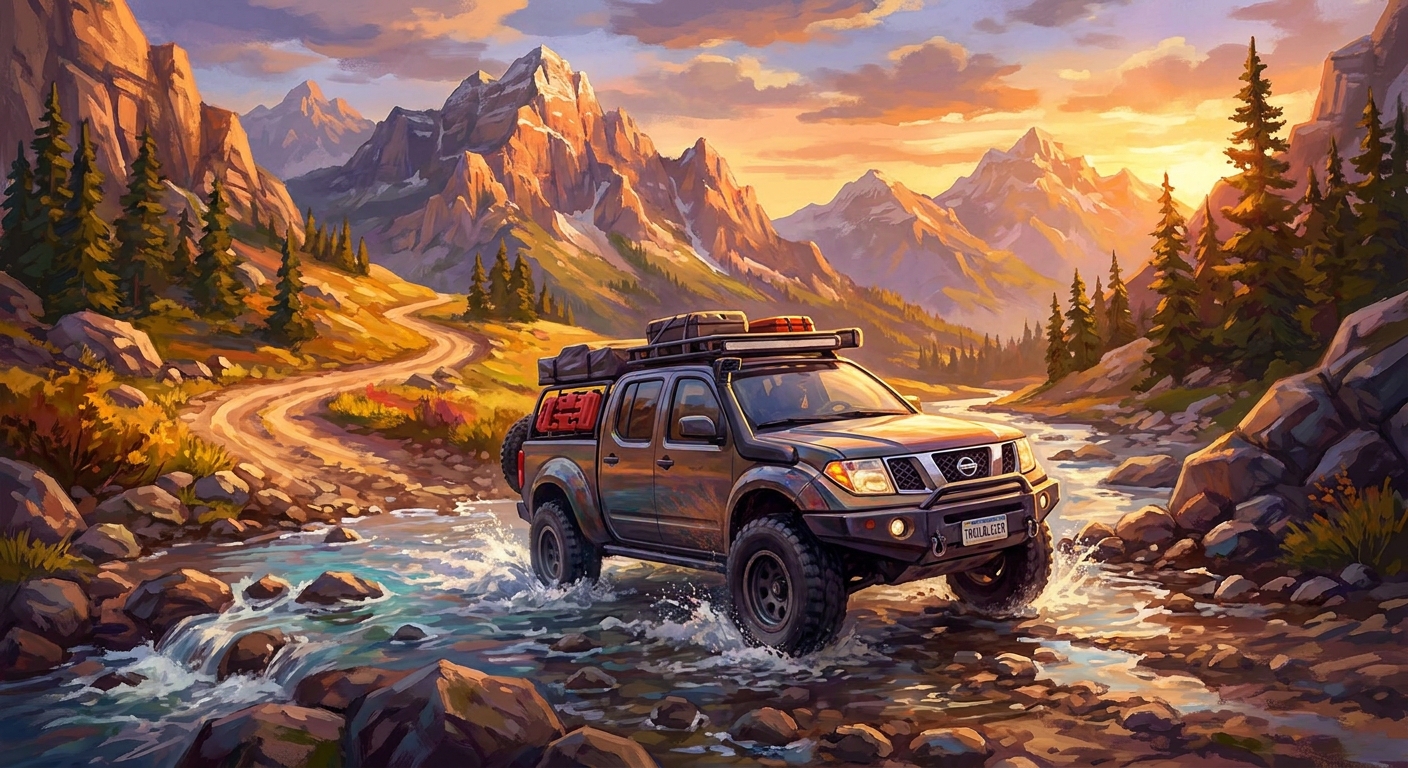
Why the ineos grenadier is Your Ultimate Off-Road Companion
Let me tell you right away, the ineos grenadier isn’t just another flashy SUV trying to look tough for the city streets. It is a purpose-built, heavy-duty machine designed for actual mud, jagged rocks, and whatever chaotic weather nature decides to throw at you. If you are tired of modern 4x4s feeling more like luxury computers than rugged tools, you are in the exact right place. Listen, as someone who spends most of the year testing vehicles in extreme environments, I can confidently say this vehicle changes the entire landscape of utility driving.
Just last month, I took one deep into the Carpathian Mountains here in Ukraine. The autumn rain had been pouring for three straight days, turning the logging trails into a thick, slippery soup. Local foresters in their heavily modified vintage trucks were sliding sideways and getting completely bogged down. I just engaged the central locking differential, kept steady pressure on the throttle, and cruised past them on a terrifying 40-degree muddy incline. They honestly could not believe their eyes. It was right then I realized that this machine perfectly bridges the gap between old-school mechanical reliability and brilliant modern engineering.
The core thesis here is simple: this 4×4 strips away the fragile gimmicks of contemporary cars and replaces them with indestructible components, sensible ergonomics, and sheer mechanical willpower. Whether you are planning a massive overlanding expedition across continents or you just need a dependable workhorse for a rural farm, it offers unparalleled peace of mind.
Core Benefits, Realities, and Essential Field Preparation
When you actually get behind the wheel, the value proposition becomes instantly clear. First off, you get absolute durability. You don’t have to worry about bumping a plastic bumper into a tree stump because you have solid steel protecting your vital components. Second, you get immense payload and towing capacity. You can drag a heavy trailer out of a ditch without the chassis flexing or groaning. Here is a breakdown of how it stacks up against its primary rivals in the utility space.
| Feature/Spec | Ineos Grenadier | Classic Defender (Custom) | Modern Wrangler |
|---|---|---|---|
| Chassis Type | Box-section ladder frame | Ladder frame (aging) | Ladder frame |
| Suspension Style | Solid beam axles (Carraro) | Solid axles | Solid axles |
| Engine Source | BMW 3.0L Inline-6 | Various/Rover V8 | Stellantis V6/I4 |
| Interior Philosophy | Aviation-style physical buttons | Utilitarian/Spartan | Screen-heavy modern |
The real magic happens when you push it to its limits. For example, during a river crossing, the precise air intake design ensures the engine breathes clean air even when the water is rushing over the hood. Another great example is the pre-wired auxiliary switch panel on the ceiling; you can literally plug in roof lights or a heavy-duty winch without ripping the dashboard apart or splicing delicate wires. It is built for people who actually use their gear.
If you are getting ready to take yours off the grid, here is a strict process to ensure you are fully prepared:
- Calibrate your tire pressure: Drop those all-terrain tires down to around 18-20 PSI depending on the mud or sand. This drastically increases your surface footprint.
- Map your auxiliary power: Assign your roof rack lights, external water pump, and air compressor to specific overhead switches so you aren’t fumbling in the dark.
- Check the recovery points: Familiarize yourself with the heavy-duty front and rear towing eyes, and make sure your kinetic recovery rope is easily accessible in the rear cargo space.
The Pub Origins
The story of how this vehicle came to be is genuinely fascinating. It all started in a pub in London called The Grenadier. Sir Jim Ratcliffe, an industrialist and passionate adventurer, was lamenting the discontinuation of the original, classic utility 4x4s. The market was suddenly shifting entirely toward luxury, leaving farmers, aid workers, and serious off-roaders without a heavy-duty mechanical workhorse. He decided right then and there to build a completely new vehicle from the ground up, entirely focused on uncompromising capability. It wasn’t about following trends; it was about filling a massive void that legacy automakers had completely abandoned.
The Engineering Evolution
Taking an idea from a pub napkin to an actual production line requires serious firepower. Ineos partnered with Magna Steyr in Austria, the legendary engineering firm responsible for some of the toughest military and civilian off-roaders in history. They didn’t cut a single corner. They tested prototypes on the freezing slopes of the Austrian Alps, the blistering deserts of Death Valley, and the punishing mud of the Scottish Highlands. Every component was scrutinized. If a part wasn’t rated for extreme abuse, it was thrown out and redesigned. The evolution was brutal, ensuring that the final product could handle literally anything.
The Modern State of the Fleet
Now, as we navigate through 2026, the vehicle has cemented its reputation globally. It is no longer just a cool concept; it is actively being deployed by emergency response teams, trans-continental overland expedition companies, and extreme sports enthusiasts. The factory in Hambach, France, has dialed in the manufacturing tolerances perfectly. The aftermarket community has also exploded, offering thousands of custom racks, drawer systems, and armor plating. It has proven that there is still a massive, hungry market for a vehicle that prioritizes function over pure aesthetics.
Ladder-Frame Chassis Geometry
Let’s talk about the actual bones of this beast. At its core, it utilizes a full box-section ladder frame chassis. Unlike unibody cars where the body and frame are one single piece of metal, a ladder frame separates the incredibly strong steel skeleton from the cabin. The wall thickness of the steel used here is massive. This geometry prevents the vehicle from twisting when you have three wheels on the ground and one hanging in the air over a boulder. It ensures the doors will still open and close perfectly even when the entire weight of the vehicle is precariously balanced on a rock ledge.
Powertrain and Torque Vectoring
Under the hood, you get the legendary reliability of BMW’s B58 turbocharged petrol or B57 twin-turbo diesel inline-six engines. But these aren’t sports car engines anymore. They have been entirely remapped for low-end grunt. You don’t need top speed; you need raw, pulling power at 1,500 RPM to crawl out of a ditch. This power is routed through a heavy-duty ZF 8-speed automatic transmission, which is widely considered the most robust gearbox on the planet.
- Tremec Transfer Case: A mechanical two-speed transfer case gives you true, locked-in low-range gearing for steep ascents.
- Carraro Beam Axles: Heavy-duty solid axles front and rear provide immense articulation and strength compared to independent suspension systems.
- Triple Locking Differentials: You can mechanically lock the center, rear, and front diffs, meaning all four wheels turn at the exact same speed, offering maximum traction in slippery conditions.
- Wading Depth: Engineered air intakes and sealed electronics allow for safe water crossings up to 800mm deep.
- Undercarriage Armor: Standard heavy-duty skid plates protect the radiator, oil pan, and fuel tank from jagged rocks.
Day 1: Mastering the Control Panel
When you first sit in the driver’s seat, the ceiling console looks like a helicopter cockpit. Spend your first day purely getting muscle memory for these controls. Figure out exactly where the differential lock buttons are, how to activate the off-road mode which disables the parking sensors and seatbelt chimes, and how the wading mode shuts down the engine cooling fans so they don’t destroy themselves when submerged in water. This familiarization prevents panic when you are actually out on a sketchy trail.
Day 2: Engaging the Transfer Case
Find a loose gravel road or a safe, unpaved area. Practice shifting the mechanical lever from high range to low range. It requires a firm, deliberate pull. Drive around slowly in low range to feel the massive increase in engine braking and torque multiplication. You will notice the throttle response becomes intentionally muted to prevent you from accidentally jerking the vehicle over bumpy terrain. This precise control is your best friend on rocky ascents.
Day 3: Navigating Mild Trails
Take the vehicle out on a standard forest trail. Focus on your wheel placement. Because of the solid beam axles, the steering feel is distinctly old-school; it requires constant, minor corrections. Learn where the extremities of your front fenders are. Use this day to understand the massive steering lock and how the suspension easily swallows deep ruts without throwing you around the cabin.
Day 4: Deep Water Wading
Find a shallow, hard-bottomed creek crossing. Before entering, walk the water to check for hidden drops. Engage your center differential lock. Enter the water at a steady, slow walking pace to create a bow wave in front of the bumper. Maintain that exact speed. The vehicle’s sealed doors and high air intake will handle this effortlessly, but the experience of seeing water halfway up your windows requires mental conditioning.
Day 5: Winch and Recovery Drills
Never hit a tough trail without knowing how to rescue yourself. Unspool your factory-integrated winch in a safe, flat field. Attach it to a sturdy tree using a proper tree-saver strap. Practice pulling the vehicle’s weight. Understand the hand signals required if a spotter is helping you. Test your kinetic recovery ropes on the incredibly over-engineered front recovery points. Doing this in a calm environment prevents catastrophic mistakes during a real emergency.
Day 6: High-Altitude Overlanding
Load up the rear cargo area with camping gear and head for the hills. This day is about testing the payload dynamics. Notice how the heavy-duty coil springs actually ride smoother when there is 300 kilograms of gear in the back. Test the side-mounted utility rails by attaching your traction boards or a high-lift jack. Cook a meal using the built-in 2000-watt AC power inverter directly from the trunk.
Day 7: Maintenance and Undercarriage Cleaning
Off-roading doesn’t end when you hit the pavement; it ends when the vehicle is clean. Spend this day power-washing the thick mud out from the ladder frame rails to prevent long-term rust. Check the fluid levels in your differentials and transfer case to ensure no water slipped past the breather tubes. Inspect the massive suspension control arms for any deep gouges. A well-maintained rig will last you generations.
Myths vs Reality
Myth: It is just a modern clone of the old Land Rover Defender.
Reality: While the boxy silhouette pays homage to classic utility vehicles, literally every single nut, bolt, and piece of engineering is distinct. It utilizes a custom chassis, German powertrains, and Italian axles. It is a completely bespoke platform.
Myth: The heavy weight makes it terrible on muddy trails.
Reality: While it is unquestionably a heavy vehicle, that mass is distributed exceptionally well. The weight actually pushes the aggressive tires firmly down through the loose top layer of mud to grip the harder earth beneath, providing phenomenal traction where lighter vehicles just spin out.
Myth: The interior electronics are too complex for a field vehicle.
Reality: It features an intentionally centralized screen, but every vital driving function, climate control, and off-road setting is controlled by chunky, physical buttons that are entirely separate from the main infotainment system. You can operate them while wearing thick winter work gloves.
Myth: You cannot service or fix it yourself.
Reality: Ineos specifically designed the vehicle with mechanics in mind. The engine bay is spacious, the oil filters are right on top, and they provide comprehensive open-source 3D repair manuals to owners. It was literally built for field serviceability.
What exact engine options are available?
You can choose between two brilliantly tuned 3.0-liter inline-six engines from BMW: a turbocharged petrol or a twin-turbo diesel, both prioritizing low-end torque.
Can I comfortably sleep in the back?
Absolutely. If you fold the rear seats flat, there is plenty of room for an average-sized adult to stretch out on a sleeping pad. There are also robust tie-down points for securing gear around you.
Is the payload capacity high enough for serious overlanding?
Yes, the payload capacity comfortably exceeds 800kg depending on the exact specification, allowing you to load up roof tents, drawer systems, dual batteries, and weeks of supplies without sagging the rear suspension.
Does it have modern tech like Apple CarPlay?
Yes, despite its rugged, analog appearance, the central 12.3-inch touchscreen fully supports wireless Apple CarPlay and Android Auto seamlessly.
How does it handle at highway speeds?
Because of the solid axles and recirculating ball steering, it requires more driver input than a modern unibody SUV, but it cruises comfortably at 75mph with surprisingly low wind noise for a boxy shape.
Where is the vehicle actually built?
It is manufactured in a state-of-the-art, heavily upgraded automotive facility in Hambach, France, ensuring incredible build quality and strict European manufacturing tolerances.
Are the standard Recaro seats comfortable for long trips?
The standard Recaro seats are ergonomically fantastic. They provide superb lateral support when bouncing off-road, yet remain incredibly supportive and comfortable for multi-day highway drives.
Can I attach a heavy roof tent directly to it?
Yes, the roof is structurally reinforced and features built-in utility rails. You can mount a heavy-duty roof rack and a hard-shell rooftop tent without worrying about crushing the rain gutters.
Conclusion
Ultimately, the era of fragile, disposable SUVs is being challenged. This machine proves that absolute utility, mechanical robustness, and brilliant engineering can perfectly coexist. If you demand a vehicle that works exactly as hard as you do, whether deep in the backwoods or crossing an entire desert, this is the undisputed king. Don’t just take my word for it—head out, book a test drive, and feel the raw mechanical confidence for yourself today!





Leave a Reply