

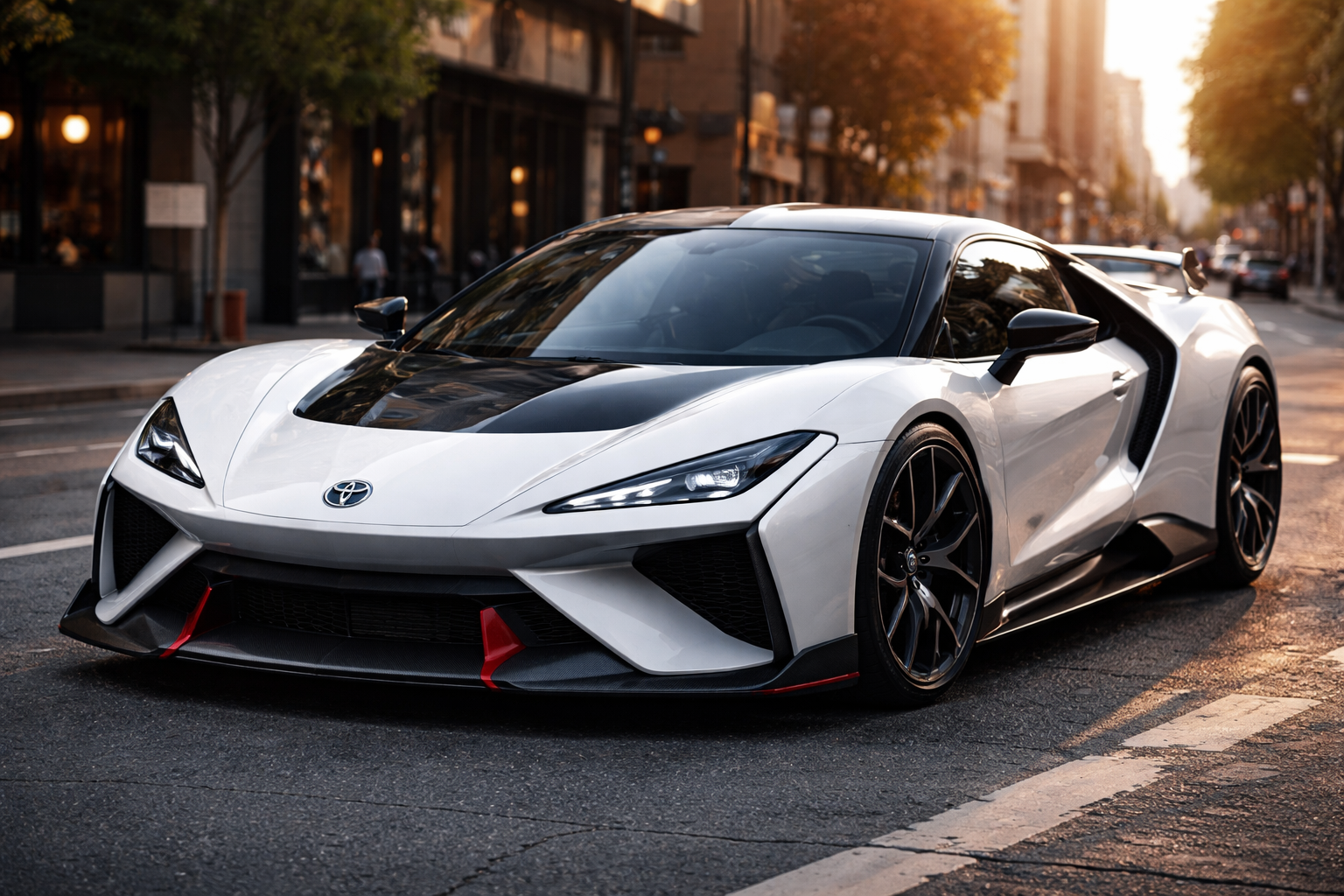
If you typed “Toyota MR2 2025” into a search bar, you probably weren’t looking for a history lesson. You were hoping for something better. A reveal. A launch date. A clean answer. Maybe even a spec sheet that finally made the comeback real. And honestly, that hope makes sense. The MR2 name still has real pull in the U.S. It’s one of those cars that never fully left enthusiast conversation, even after it disappeared from Toyota showrooms a long time ago.
But here’s the blunt version: there was no officially announced 2025 Toyota MR2 for the U.S. market. That’s the fact that needs to be on the table before anything else. No clean launch. No official U.S. model page. No confirmed pricing. No verified dealer rollout. If you’ve seen all that online anyway, you’ve mostly seen renderings, rumor chains, hopeful headlines, and recycled concept talk.
That doesn’t mean the MR2 discussion is fake. Not at all. It means the discussion is living in that very modern zone between fan obsession and corporate hinting. Toyota has absolutely kept sports-car energy alive. The GR86 and GR Corolla are real. The FT-Se concept was real. Trademark activity has added fuel. And Toyota people have not exactly acted shocked that enthusiasts want the MR2 back. But a 2025 production MR2? That’s where the line between “interesting signs” and “confirmed car” matters.
And honestly, that line is what makes this topic worth writing about. The Toyota MR2 2025 story is not really about a car you can buy right now. It’s about why a dead nameplate still creates this much heat, what official signals exist, what the rumor crowd keeps getting wrong, and what a modern MR2 would actually need to be if Toyota ever pulls the trigger.
So that’s what this article is. Not a fake first drive. Not fantasy horsepower numbers dressed up like facts. Just a clear look at what is real, what is rumor, and why the MR2 comeback question keeps hanging around like a favorite song Toyota still hasn’t played live.
First, the boring but important part: what’s official and what isn’t
Let’s start with the part enthusiasts often skip because it kills the mood. Toyota’s official 2025 U.S. lineup did not include an MR2. On the U.S. newsroom’s 2025 vehicles page, Toyota’s sports-car section included the GR86 and GR Corolla. That is the official sports-car reality for that model year in the U.S. The MR2, meanwhile, sits in Toyota’s historic archive, which tells you something all by itself.
That matters because once a model is real, carmakers don’t usually hide it in folklore. They publish pages. They issue press kits. They talk trim levels, pricing, arrival timing, and images. That’s not what happened here.
So if someone is talking about the “2025 Toyota MR2 price,” “2025 Toyota MR2 specs,” or “2025 Toyota MR2 review” like the car already launched, they are either speculating, borrowing from rumor coverage, or just making stuff up. That sounds harsh, but it’s useful. A lot of auto content right now is built on confidence rather than confirmation.
Here’s the clean split:
| Claim type | What fits here | How seriously to take it |
|---|---|---|
| Official | Toyota’s 2025 U.S. lineup, GR86, GR Corolla, FT-Se concept | High confidence |
| Industry hint | Trademark filings, concept-car interpretation, executive non-comments | Interesting but not confirmed |
| Speculation | Power guesses, launch timing guesses, rendering-based “leaks” | Low confidence |
| Fantasy content | Full reviews of a 2025 MR2 no one can buy | Basically none |
Once you sort the topic that way, the noise gets easier to handle.
So why does the Toyota MR2 2025 rumor keep coming back?
Because the idea makes too much sense emotionally. That’s the truth. Toyota is a company with real sports-car history, real performance credibility through GR, and a fan base that still loves lightweight, affordable, driver-first machines. The original MR2 hit a nerve because it offered something unusual: mid-engine balance without exotic-car pricing. That formula still sounds good now. Maybe even better now, because the modern car market is so full of crossovers, heavy platforms, and expensive performance badges.
And then there’s the brand timing. The Supra is winding down. The GR86 is loved, but it sits in one lane. The GR Corolla is wild, but it’s still a hot hatch. A compact mid-engine sports car would give Toyota something nobody else in its current U.S. mainstream lineup really has. That’s why the rumor doesn’t die. It fills a hole people can clearly see.
Also, let’s be honest, Toyota hasn’t exactly starved the rumor mill. The FT-Se concept gave people a shape to obsess over. Trademark filings gave writers something concrete enough to point at. And when Toyota people are asked about an MR2 revival and don’t slam the door, that keeps the conversation alive.
This is why the rumor has stamina:
- The MR2 name still means something to enthusiasts
- Toyota already has a credible GR performance image
- The current market leaves room for a lighter sports car story
- Concepts and trademarks keep creating just enough smoke
No one of those points proves a 2025 launch. Together, they explain why people keep looking.
The FT-Se factor: why one concept changed the mood
If you want the moment when the modern MR2 comeback chatter got louder, the FT-Se concept is a big part of it. Toyota showed the FT-Se as a two-seat sports-car concept with a low, dramatic stance and the kind of proportions that made people instantly think “mid-engine spirit,” even though the concept itself was presented as an electric sports car idea, not a production MR2 announcement.
And that’s the key nuance. A concept can do two things at once. It can be a real design study, and it can also become a projection screen for everyone’s hopes. That’s exactly what happened here. The moment people saw a sharp, low Toyota sports concept with real visual drama, the MR2 question came roaring back.
Was that unreasonable? Not really. Sports-car fans read body language the way political reporters read pauses. If a company with MR2 history shows a compact two-seat performance concept, people are going to connect dots. The only problem is that concept dots are not production dots. A concept is a maybe with good lighting.
Still, the FT-Se mattered because it gave the rumor something visual. Before that, MR2 comeback talk was mostly wishful. After that, it started to feel at least imaginable.
The trademark story is real, but it doesn’t finish the sentence
Late 2025 is where the rumor got its second wind. Reports pointed to Toyota trademark activity involving “MR2,” plus “GR MR2” and “GR MR-S” in different markets. That’s real enough to matter. Carmakers do not spend time protecting names for no reason at all.
But here’s the nuance people always flatten: a trademark is not a launch event. It’s not a press release. It’s not a VIN. It’s not a model year confirmation. It is a signal. A useful signal, yes. But still only a signal.
This is where rumor culture gets a little silly. A trademark filing becomes “basically confirmed.” A concept becomes “previewing the production model.” A quiet executive answer becomes “Toyota all but admitted it.” And suddenly people are comparing phantom curb weights.
The smarter read is more restrained. Trademark filings tell us Toyota likely wants to keep the MR2-related naming space protected. They suggest the company sees value in the name. They support the idea that internal thinking may exist around it. But they do not tell us exactly when, where, how, or even whether a production MR2 will arrive in a specific market.
That’s not boring. It’s just grown-up.
What a modern MR2 would actually need to be
This is where the conversation gets fun again — and where it’s okay to think a little, as long as we label it honestly. No, there was no official 2025 Toyota MR2 spec sheet. But yes, we can still talk about what a credible modern MR2 would need to look like if Toyota wants the name to land in the U.S.
First, it would need to stay compact. Not tiny in the old-school 1980s sense, because crash standards and modern expectations changed that. But compact in footprint, compact in attitude, compact in mission. The MR2 name does not fit a bloated “grand tourer in sporty clothing” vibe. It needs to feel light on its feet even before the first corner.
Second, it would need genuine driver focus. That sounds obvious, but it matters. People can forgive limited storage. They can forgive noise. They can forgive a slightly weird entry angle. They will not forgive a car that wears the MR2 badge and then feels numb, over-digitized, or built mostly for content creators doing three-quarter shots outside coffee shops.
Third, pricing would matter more than most brands seem to remember. The MR2 was never beloved because it was the most luxurious thing in the room. It was beloved because it gave ordinary enthusiasts access to an unusual layout and real fun. If Toyota ever revives it and prices it like a boutique object, it would miss part of the badge’s soul.
A believable modern MR2 formula would probably need:
- A compact two-seat layout
- A clear driver-first setup, not a luxury-first one
- A price point below exotic territory by a wide margin
- A personality distinct from both the GR86 and Supra
That last point is big. If the car just overlaps with what Toyota already offers, the business case gets shaky fast.
Would it need to be mid-engine to count?
This is the question that quietly runs the whole discussion. The MR2 badge means “midship runabout” at its core, and that history is not trivia. It’s the identity. So if Toyota revives the name, would enthusiasts accept anything less than a true mid-engine setup?
Some wouldn’t. Full stop.
And honestly, I get that. When a car’s layout is part of its legend, changing that layout can feel like changing the whole point. But the business side of me also sees the problem. Mid-engine cars are harder to package, harder to justify at lower price points, and harder to make broadly practical. That’s why the rumor matters so much when people see mid-engine-ish concept cues or prototype chatter. It implies Toyota might actually be willing to do the difficult thing.
Still, if we stay honest, that exact point is where speculation starts outrunning certainty. The dream version of a new MR2 is mid-engine. The official confirmed version of a 2025 U.S. MR2 does not exist. Both things can be true at once.
| If Toyota wants this comeback to work | Why it matters |
|---|---|
| Keep the car small and focused | The badge loses force if the car feels bloated or generic |
| Protect a real enthusiast identity | MR2 buyers care about feel, not just looks |
| Separate it clearly from GR86 and Supra | Internal overlap would weaken the pitch |
| Keep the price grounded | The MR2 legacy is tied to accessible fun |
| Respect the mid-engine heritage somehow | That’s a big part of why the name still matters |
Why U.S. buyers still care about the MR2 name
Because American enthusiasts are not only obsessed with horsepower wars. They also care about character. The U.S. market may be huge, noisy, and pickup-heavy, but it still has a strong lane for honest driver cars. You can see that every time a light coupe, hot hatch, or manual sports car gets treated like a small cultural event.
The MR2 taps into that. It has nostalgia, sure, but not the dead, museum kind. More the active kind. The kind that makes people say, “Why can’t somebody sell something like that again?” It’s the same reason older Japanese sports cars keep holding attention even as prices climb. People miss fun that feels engineered rather than focus-grouped.
The name also carries a different kind of Toyota energy than the company’s practical-core reputation. It reminds people Toyota can be weird in a good way. Sharp in a good way. A little brave. That matters, especially now, when performance identity is becoming more important to GR as a sub-brand story.
What to ignore when reading Toyota MR2 2025 coverage
This part is almost public service. If you’re reading about the Toyota MR2 2025 online, there are a few patterns worth treating with suspicion.
- Articles that talk like the car is on sale but can’t point to an official Toyota model page
- Stories with exact horsepower, price, and transmission claims without Toyota confirmation
- Renderings presented like leaked production photos
- “Review” content for a car no journalists have officially driven
That stuff is everywhere because it performs well. It fills the space between desire and reality. But if you actually care about the car, it’s better not to feed yourself fake certainty. Rumors are fun when they stay labeled. They become irritating when they cosplay as reporting.
FAQ
Is there an official 2025 Toyota MR2?
No official 2025 Toyota MR2 was announced for the U.S. market. Most “Toyota MR2 2025” coverage is based on rumor, concepts, and later trademark activity rather than a confirmed launch.
Why do people keep talking about a Toyota MR2 comeback?
Because the MR2 name still means a lot to enthusiasts, Toyota has an active GR performance image, and concepts plus trademark news have kept the rumor alive.
Did Toyota confirm a new MR2 for 2025?
No. Toyota did not officially confirm a 2025 production MR2. That’s the key distinction many rumor-heavy articles blur.
What role did the FT-Se concept play in the MR2 rumors?
The FT-Se concept gave fans a modern Toyota sports-car shape to latch onto, which made MR2 comeback talk feel more plausible even though the concept was not a confirmed MR2 preview.
Do trademark filings mean the new MR2 is definitely coming?
Not definitely. Trademark filings matter, but they are signals, not launch announcements. They show interest in the name, not a finished production plan.
Would a modern MR2 need to be mid-engine?
For many enthusiasts, yes, because the mid-engine layout is central to the MR2 identity. But that is still part of the speculation, not a confirmed product fact.
What Toyota sports cars were officially in the 2025 U.S. lineup?
Toyota’s 2025 U.S. sports-car lineup officially included the GR86 and GR Corolla, not an MR2.
Conclusion
The Toyota MR2 2025 story is interesting precisely because it isn’t clean. If Toyota had launched the car, we’d be arguing about trims and tires by now. Instead, we’re sitting in that murky but fascinating zone where history, rumor, brand strategy, and wishful thinking all overlap.
And maybe that says something useful. The MR2 name still has enough weight that enthusiasts keep asking for it even without official confirmation. That doesn’t happen by accident. It happens because the original car left a real mark, and because the market still feels open to something smaller, sharper, and a little less predictable than the average modern performance machine.
So no, there wasn’t a real 2025 Toyota MR2 you could just go buy in the U.S. But the question itself is not silly. It’s a signal. It tells Toyota there is still appetite for a compact sports car with character, not just content-friendly styling and a giant monthly payment.
Whether Toyota answers that signal with a real MR2 revival is still an open question. But the demand behind the question? That part looks very real.





Leave a Reply